Delayed Living Through Others' Prisons
Following empirical advice from others instead of one's own evident intuition can cost years or even a lifetime before one finally starts living authentically.
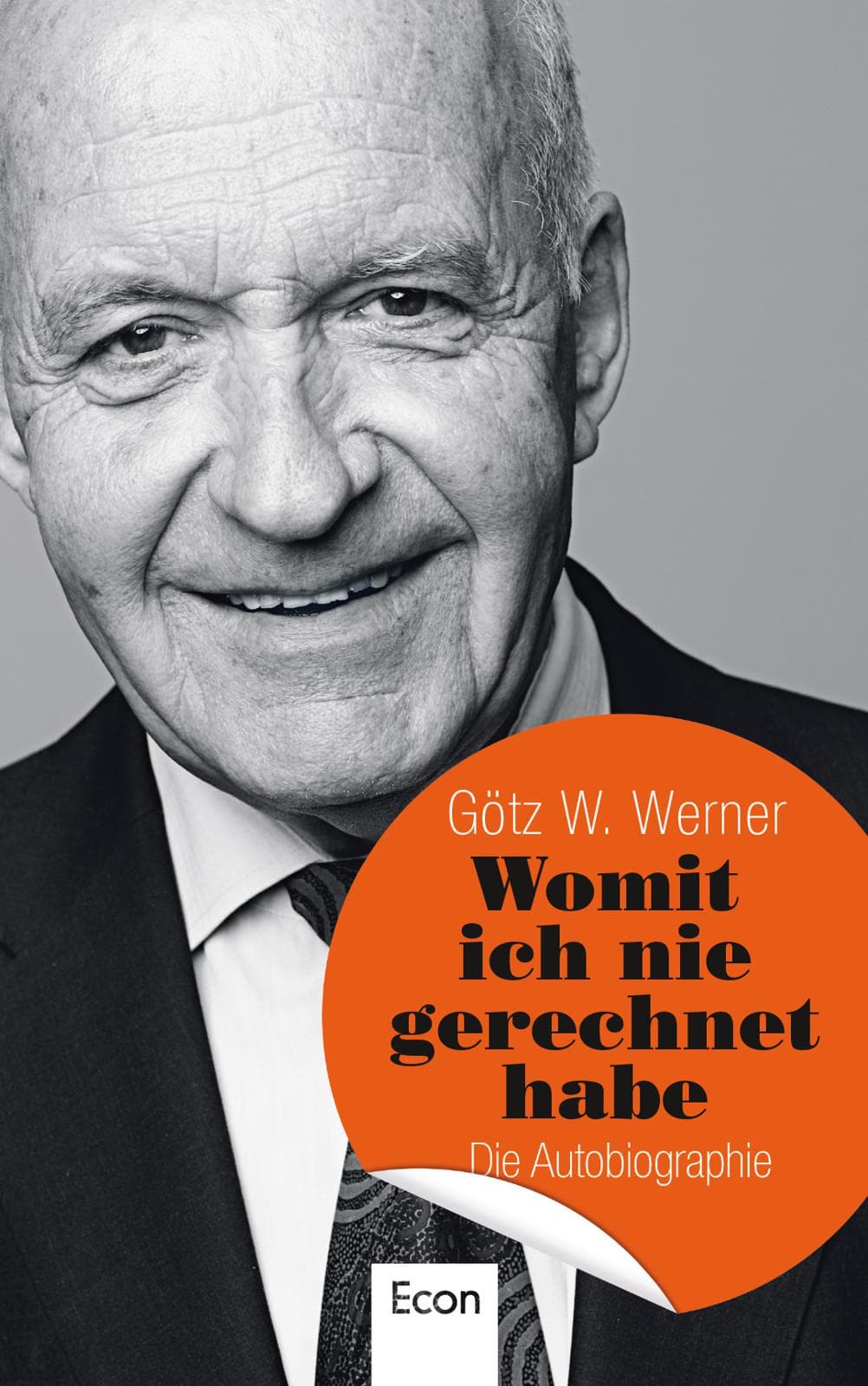
Werner Götz, German entrepreneur and philosophical thinker who built his career on intuition-driven decision-making, advocating for 'evidence over empiricism' as the foundation for entrepreneurial action and life design.
Following empirical advice from others instead of one's own evident intuition can cost years or even a lifetime before one finally starts living authentically.
“Someone took almost their entire life to finally start living their life. Tragic. But fortunately, they eventually found the courage and strength to embrace it. The most important thing: at least he had the experience of evidence. For him, it was always evident: medicine is his field! In other people, sometimes the sense for evidence is almost completely buried. Or they have never experienced it. Because although ev…”
“That’s exactly what it’s about: One must make oneself aware—of the people and the world around oneself. It requires an interest in people and an interest in the world. And it requires warmth and light. First, one must develop interest in other people and in the world. One must be able to warm oneself to what comes one’s way. Then, to the warmth comes the light, by illuminating the world and people with one’s thinkin…”
“I call such situations experiences of evidence. Evident is something that convinces through immediate perception. It does not require lengthy argumentation, any special method, prior knowledge, or expertise to recognize something as evident. When something is evident, it no longer needs examination or lengthy analysis. Although it is quite likely that you wrote a detailed checklist for apartment hunting. It lists ev…”
“For this, you have to let people and the world come close to you and see: Does it touch me? Do I reject it? What does it do to me? This requires spiritual openness. This is not an academic or scientific path. It is not about learning vocabulary or grammar or about acquiring techniques and methods, but about developing and training this spiritual openness. When you step out into the world, life throws a multitude of…”
“But often one is also unsettled by advice from those around them. Then you buy a house that everyone has recommended to you. Or you start a training course that your parents or teachers consider to be forward-looking, but which you yourself are actually not interested in. Many people are trapped in a prison of experience that others have built for them. Some build their own. They must first learn to look through the…”
“Because in everything we do: What is important about it? The future! And not the prolongation of what has already been experienced. Only a bureaucrat acts from the past. The entrepreneurially disposed person always starts anew. He acts on the basis of today and what he anticipates from the future—strengthened by the skills he has developed in the past. With empiricism one grasps the past, with evidence one copes wit…”
“> Don’t let yourself be impressed by any expert who tells you: “My dear friend, I’ve been doing it this way for twenty years!”—You can do something wrong for twenty years, too. > Kurt Tucholsky”
“One must, like Christopher Columbus or Henry the Navigator, venture into the unknown. Back then, the Earth was still considered flat. There was only coastal shipping. Yet a person, even though aware of the flat Earth, dares to venture further and further out to sea. He sees no land, nothing at all. He simply continues sailing in the trust that he will make progress. Through this “crossing over the thresholds,” as th…”
“> The best journeys of discovery are made by looking at the world through different eyes. > Marcel Proust”
“You might know this: that moment when you know that something is right. That something fits. Maybe you’re currently looking for an apartment. You’ve viewed countless apartments, but suddenly you stand in one and think: “This is it! I want to live here!” Or you want to buy a new bike, you’ve already tried this one and that one, until suddenly you sit on a bike and you’re sure: “This is it. This is the right one for m…”
“You can’t say: I want to do something really great now, I’ll just lie in the freezer for a day. A cool guy doesn’t take initiative. He has to be encouraged first. Only when a spark flies or passion is ignited does action follow.”
“> The best journeys of discovery are made by looking at the world through different eyes. > Marcel Proust”
“You might know this: that moment when you know that something is right. That something fits. Maybe you’re currently looking for an apartment. You’ve viewed countless apartments, but suddenly you stand in one and think: “This is it! I want to live here!” Or you want to buy a new bike, you’ve already tried this one and that one, until suddenly you sit on a bike and you’re sure: “This is it. This is the right one for me!” And with a bit of luck, you’ve already met a person with whom you suddenly and unexpectedly felt: “This is the person I want to spend the rest of my life with!””
“I call such situations experiences of evidence. Evident is something that convinces through immediate perception. It does not require lengthy argumentation, any special method, prior knowledge, or expertise to recognize something as evident. When something is evident, it no longer needs examination or lengthy analysis. Although it is quite likely that you wrote a detailed checklist for apartment hunting. It lists everything that is important to you: location, size, price, amenities. You certainly also had specific demands regarding sportiness and stability for the new bicycle in advance. And possibly you also had clear ideas about the appearance, character, or hobbies of the man or woman of your dreams. But in the concrete situation, you have an experience of evidence before you even considered the first point on your checklist. Only afterwards do you go through the criteria one by one and check whether what seemed obvious stands up to critical scrutiny—where it quite often happens that certain real aspects do not correspond to the ideally conceived conditions. Then you start to correct the checklist, for example by attaching less importance to individual criteria. “A sturdy luggage rack on the bike isn’t really that important to me. After all, I don’t really go on such long bike rides that I would need to carry a heavy bag.” Or by turning the negative points into positives: “It would be more convenient if the nearest supermarket were within walking distance from the new apartment. But it’s only two bus stops away. And it’s much healthier anyway if I ride my bike there, then I get a bit of exercise at the same time.” Or we throw all the good arguments into the balance in order to make up for one or two shortcomings: “Okay, I can’t discuss soccer with the woman, but she looks great, has a big heart, and is incredibly smart!””
“Because in everything we do: What is important about it? The future! And not the prolongation of what has already been experienced. Only a bureaucrat acts from the past. The entrepreneurially disposed person always starts anew. He acts on the basis of today and what he anticipates from the future—strengthened by the skills he has developed in the past. With empiricism one grasps the past, with evidence one copes with the future. We move through the world, have our experiences, and derive some insight from them. One tries to ensure this insight, then feels secure and moves on. The path leads to a new encounter, one discovers an interest in the matter and then has an intuition. This intuition tells you: Now you must continue here! That is not an empirical experience; that is an experience of evidence. The evidence gives me insight. One does not act from experience, but from insight. Perhaps you are not in love yet, but you meet the other person and say: This has something to do with me. From the evidence comes insight. Everyone says it can’t be done, but you feel that maybe it could. It is an inner conviction of doing the right thing.”
“But often one is also unsettled by advice from those around them. Then you buy a house that everyone has recommended to you. Or you start a training course that your parents or teachers consider to be forward-looking, but which you yourself are actually not interested in. Many people are trapped in a prison of experience that others have built for them. Some build their own. They must first learn to look through the bars of empiricism in order to discover new fields of action beyond the distant horizon. Sometimes it takes years before one is able to revise empirical decisions and turn to the evident ones.”
“Someone took almost their entire life to finally start living their life. Tragic. But fortunately, they eventually found the courage and strength to embrace it. The most important thing: at least he had the experience of evidence. For him, it was always evident: medicine is his field! In other people, sometimes the sense for evidence is almost completely buried. Or they have never experienced it. Because although every person has the ability to a greater or lesser extent, experiences of evidence are not the same for everyone. You can become more sensitive to them, you can become receptive to experiences of evidence. The only question is, how do you do that?”
“That’s exactly what it’s about: One must make oneself aware—of the people and the world around oneself. It requires an interest in people and an interest in the world. And it requires warmth and light. First, one must develop interest in other people and in the world. One must be able to warm oneself to what comes one’s way. Then, to the warmth comes the light, by illuminating the world and people with one’s thinking—the light of the spirit, the light of thought.”
“You can’t say: I want to do something really great now, I’ll just lie in the freezer for a day. A cool guy doesn’t take initiative. He has to be encouraged first. Only when a spark flies or passion is ignited does action follow.”
“For this, you have to let people and the world come close to you and see: Does it touch me? Do I reject it? What does it do to me? This requires spiritual openness. This is not an academic or scientific path. It is not about learning vocabulary or grammar or about acquiring techniques and methods, but about developing and training this spiritual openness. When you step out into the world, life throws a multitude of balls at you. It is only about catching the right ones. These are offers that fate presents to you, and it then takes presence of mind and evidence to say at the crucial moment: “Yes, now I’ll grab it!””
“One must, like Christopher Columbus or Henry the Navigator, venture into the unknown. Back then, the Earth was still considered flat. There was only coastal shipping. Yet a person, even though aware of the flat Earth, dares to venture further and further out to sea. He sees no land, nothing at all. He simply continues sailing in the trust that he will make progress. Through this “crossing over the thresholds,” as the philosopher Johann Gottlieb Fichte put it, one gains insights that allow one to shape life more creatively, productively, energetically, and insightfully in the future. In this way, many wonderful things have happened to me that I never expected—simply because I did not try to calculate them in advance.”
“> Don’t let yourself be impressed by any expert who tells you: “My dear friend, I’ve been doing it this way for twenty years!”—You can do something wrong for twenty years, too. > Kurt Tucholsky”