“If you show hesitancy or fear, you may already be half-defeated. If you put on a bold front, and fight with everything you have, you can win. Moreover, once you have won a few battles, you are usually left alone: in the jungle, no animal thoughtlessly attacks the lion.”
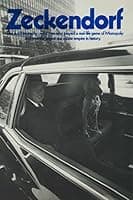
William Zeckendorf, visionary New York real estate developer who built Webb & Knapp into one of America's largest property empires through audacious financial engineering and urban renewal projects before losing it all.
Era
1940s-1960s America: postwar urban expansion, birth of urban renewal, cheap leverage, rising interest rates, and the emergence of complex real estate finance.
Scale
Built Webb & Knapp into a real estate empire spanning major urban renewal projects, assembled the UN headquarters site, and pioneered financial structures that became industry standard — before bankruptcy in 1965.
Ask this book
32 highlights
Suggested questions
Notes
“This made me keenly aware that it paid to look at the real-estate business not as an end in itself but as a device for bridging gaps between the needs of disparate groups. The greater the number of separate groups (or their needs) that one could interconnect (or satisfy), the greater the profit to the innovator-entrepreneur.”
“He said, "I don't think we have the money, but I'll give you a takeout by Alleghany—can you use that on a loan?" A takeout is an agreement to buy a note on maturity; Alleghany, in other words, was lending us their credit.”
“I have never been afraid of debt, because debt is what gives you leverage, and I also knew our projects were excellent ones.”
“We accepted stock in the business in lieu of rent. Meanwhile, some of the underwriters had backed off, and the company was in hock to the contractors who were building the shows. The builders and suppliers were threatening to close things down before the show even started. Freedomland still seemed like a good promotion: to get our money out, we put more in. We took forty percent of the company's stock and advanced t…”
“Generally there are three categories of real-estate investors—those who borrow nothing, those who borrow the maximum, and those who borrow conservatively. The nonborrowers, such as the Astors, who owned all their properties free and clear, could ride through almost any storm. Predictably, those speculators who borrowed the absolute maximum on their projects were among the very first to get wiped out. And yet, it was…”
“"I don't care what you paid for it, what matters is the value of the building now. If you created a new value by getting a good lease, we will lend on that value."”
“In matters great as in matters small, around the world as in Montreal, I find it is not logic but emotions, sometimes carefully rationalized to resemble logic, that more often than not decide most issues.”
“(1) sell and mortgage the land (for five million dollars), (2) sell and mortgage the inner lease (for 6.5 million dollars), and (3) sell an operating lease (for 3.6 million dollars).”
“My observation has always been that after a certain key point you must move ahead as if a project were assured—in order to assure it—because if you wait around for all the pieces of the puzzle to fit before closing a deal, you can wait forever.”
“Our local people were trained and primed so they were aware who owned what, who their bankers were, who was buying, who was selling, and what the status was of any major and many minor properties in town.”
“James Muir.”
Themes
Bold Front as Survival WeaponBridge Disparate Needs Into One DealBorrow Credit When Cash Runs DryDebt as Offensive Leverage Not BurdenRescue Into OwnershipConservative Borrowers Suffer MostCreated Value Over Cost BasisEmotions Disguised as LogicSlice the Same Building Five Ways for CashMove Before the Puzzle Is CompleteStreet-Level Intelligence Network
People
Companies
Highlights
“James Muir.”
“Società Immobiliare,”
“An unexpected combination of trends and events, coupled with our own actions, caused us to founder. Any two or three of these developments, we could have ridden out, but the total combination and sequence of happenings swamped us.”
“Excepting barter, which I have sometimes resorted to, the acquisition of sizable amounts of property calls for sizable amounts of money. While learning the virtues of buying for cash and selling for credit, I was discovering that there are multiple sources and uses for money in real estate. In addition to our Astor earnings, we used, as I have previously indicated, bank money, first-mortgage money, second-mortgage money, and sectional mortgages (regular first and second mortgages divided into two or more sections and sold to small investors). Another way of garnering quantities of ready cash is to make money for others, and we had done this by syndicating special projects with both individuals and groups.”
“When you cross the ocean on a steamship, you will notice that on some days, though there may be a prevailing wind, the ocean waves may actually come from five or six different directions at once. As these waves move by and through one another, they sometimes cancel each other out. At other times they augment each other and can create high crests and low troughs in the ocean. When the proper combinations of waves come together, these peaks and valleys on the ocean's surface can be enormous. To a passenger in a modern, high-speed steamship, such waves are merely an interesting phenomenon. To the skipper of a low-in-the-water sailing ship, however, the sudden appearance of the wrong combination of waves in such a gusty sea can spell disaster.”
“The investment banker can divide and sell the ownership and rights in a corporation in a great many ways, a piece at a time. For instance, he can sell first-mortgage bonds to an insurance company, at the prime rate of interest. He could also offer debentures, which, though they take a second position to the bonds, offer a higher rate of interest in compensation. For investors interested in a speculative fillip (in case the company does very well), there are convertible debentures that can be turned into common stock. He can issue preferred shares (convertible or straight), which tend to be especially attractive to corporate investors, because preferred dividends passing from one corporation to another are taxed only seven percent. Finally, there is the common stock, the basic equity of a corporation, but the availability of capital does not stop there; there are also bank loans, accounts receivable (which may be financed with a factor), warrants to buy stock, and various other ways to draw investment capital into a corporation.”
“My observation has always been that after a certain key point you must move ahead as if a project were assured—in order to assure it—because if you wait around for all the pieces of the puzzle to fit before closing a deal, you can wait forever.”
“"I have an indiscreet question to ask," he said. "There are only indiscreet answers. What's your question?"”
“The secret of any great project is to keep it moving, keep it from losing momentum,”
“From 1962 on, as we sailed into increasingly difficult weather, the Webb & Knapp story is that of a ceaseless series of sharp tacks, sudden jibes, and difficult reaches by an increasingly”
“"I'd rather be alive at eighteen percent than dead at six percent."”
“He said, "I don't think we have the money, but I'll give you a takeout by Alleghany—can you use that on a loan?" A takeout is an agreement to buy a note on maturity; Alleghany, in other words, was lending us their credit.”
“Uris brothers,”
“Henry Mandell lost the Parc Vendome”
“As it turned out, unexpected and phenomenal delays (especially in urban-renewal projects) between the start and actual finish of our building programs greatly increased carrying and interest costs for these projects.”
“If you show hesitancy or fear, you may already be half-defeated. If you put on a bold front, and fight with everything you have, you can win. Moreover, once you have won a few battles, you are usually left alone: in the jungle, no animal thoughtlessly attacks the lion.”
“Julio Lobo,”
“We accepted stock in the business in lieu of rent. Meanwhile, some of the underwriters had backed off, and the company was in hock to the contractors who were building the shows. The builders and suppliers were threatening to close things down before the show even started. Freedomland still seemed like a good promotion: to get our money out, we put more in. We took forty percent of the company's stock and advanced them money to pay off a few million in due bills. This process continued: we ended up owning Freedomland.”
“but I feel about it the way a man does with eight daughters: he wouldn't take a million for one of them or give two cents for an additional one.”
“Generally there are three categories of real-estate investors—those who borrow nothing, those who borrow the maximum, and those who borrow conservatively. The nonborrowers, such as the Astors, who owned all their properties free and clear, could ride through almost any storm. Predictably, those speculators who borrowed the absolute maximum on their projects were among the very first to get wiped out. And yet, it was the conservative investors who ultimately suffered the most.”
“(1) sell and mortgage the land (for five million dollars), (2) sell and mortgage the inner lease (for 6.5 million dollars), and (3) sell an operating lease (for 3.6 million dollars).”
“Wall Street Maneuver,”
“The Tishmans,”
“In moments of crisis, one's world tends to become simplified, and its people and events fall into distinct categories.”
“This made me keenly aware that it paid to look at the real-estate business not as an end in itself but as a device for bridging gaps between the needs of disparate groups. The greater the number of separate groups (or their needs) that one could interconnect (or satisfy), the greater the profit to the innovator-entrepreneur.”
“Our local people were trained and primed so they were aware who owned what, who their bankers were, who was buying, who was selling, and what the status was of any major and many minor properties in town.”
“"I don't care what you paid for it, what matters is the value of the building now. If you created a new value by getting a good lease, we will lend on that value."”
“The only trick was not to be so awed and frightened by the present that you were not able to see the future that lay within it.”
“Having little capital of our own, we reverted to the tactics and style of the early 1940's and became packagers and promoters for other people.”
“In matters great as in matters small, around the world as in Montreal, I find it is not logic but emotions, sometimes carefully rationalized to resemble logic, that more often than not decide most issues.”
“I have never been afraid of debt, because debt is what gives you leverage, and I also knew our projects were excellent ones.”
“Jakob Isbrandtsen of American Export Isbrandtsen.”