Hire the Best Then Stay Out of the Way
Books Teaching This Pattern
Evidence
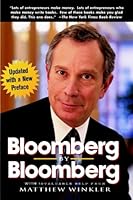
Bloomberg by Bloomberg
Michael R. Bloomberg · 2 highlights
"Think logically and dispassionately about what you'd like to do. Work out all steps of the process-the entire what, when, where, why, and how. Then, sit down after you are absolutely positive you know it cold, and write it out. There's an old saying, "If you can't write it, you don't know it." Try it. The first paragraph invariably stops you short. "Now why did we want this particular thing?" you'll find yourself asking. "Where did we think the resources would come from?" "And what makes us think others-the suppliers, the customers, the potential rivals-are going to cooperate?" On and on, you'll find yourself asking the most basic questions you hadn't focused on before taking pen to paper."
"As you discover you don't know it all, force yourself to address the things you forgot, ignored, underestimated, or glossed over. Write them out for a doubting stranger who doesn't come with unquestioned confidence in the project's utility-and who, unlike your spouse, parent, sibling, or child, doesn't have a vested interest in keeping you happy. Make sure your written description follows, from beginning to end, in a logical, complete, doable path.Then tear up the paper."
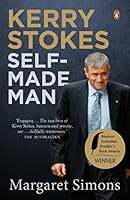
Kerry Stokes
Margaret Simons · 3 highlights
"He had not, for the most part, built businesses from the ground up. He was not a creator of new enterprises. Rather, he had done deals, cultivated relationships, capitalised on booms and aggregated money-earning assets. His great talent was that he could see ways of structuring a deal or a business enterprise that looked obvious in hindsight, yet which nobody had hit on before. He sensed a boom well before others. He had weaknesses, both in capacity and in emotions. Particularly, there was a lack where most of us have a sense of identity and place. He was a hoarder, a gatherer around himself of objects. He liked acquisition. Yet he also had an ability to reconfigure, and to move on when self- or business interest required. He was unlike Murdoch and Packer in that, when it came to business, he was mostly unsentimental. He saved sentiment for the art collection. Which is not to say he was unemotional. There was a chip on his shoulder, an abiding sense, despite his wealth and power, of being hard done by, and a determination to take it up to the establishment. But with all that he was good fun – laconic and outwardly even tempered. His employees liked him, and most were steadfastly loyal and well looked after. He was a dealer, rather than a manager, but he made up for any lack by the quality of the people he hired as his closest assistants, and the manner in which he kept them close."
"They were down and I was up. I saw an opportunity as a businessman, if I had the right people and let them run it.’17 It was clear, though, that the Bunbury group"
"Perth FM radio was a source of effortless cashflow for the Bendats and the Stokes, but their involvement was as investors, observers and learners rather than managers. Treasure ran the station, and as directors Stokes and Bendat attended board meetings, listened and learned. ‘Brian Treasure taught me everything I know,’ Bendat has said."