Super Bowl Hangover Destroyed a Season
Winning the first championship created complacency that undermined the following season, teaching Walsh that culture must be actively reinstalled after success, not assumed.
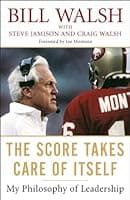
Bill Walsh, Steve Jamison, Craig Walsh
48 highlights · 12 themes · 3 cited people/companies
Bill Walsh, legendary NFL head coach who transformed the San Francisco 49ers from the league's worst team into a dynasty, pioneering the West Coast offense and a leadership philosophy built on teaching perfection as a behavioral standard.
Winning the first championship created complacency that undermined the following season, teaching Walsh that culture must be actively reinstalled after success, not assumed.
A devastating loss nearly consumed him in backward-looking grief; he learned that a leader's visible comportment directly infects the entire organization's attitude and must be forcibly redirected forward.
“Victory is produced by and belongs to all. Winning a Super Bowl (or becoming number one in the marketplace, or reaching a significant quarterly production quota, or landing a big account) results from your whole team not only doing their individual jobs but perceiving that those jobs contributed to overall success. The trophy doesn’t belong just to a superstar quarterback or CEO, head coach or top salesperson. And t…”
“It began with this fundamental leadership assertion: Regardless of your specific job, it is vital to our team that you do that job at the highest possible level in all its various aspects, both mental and physical (i.e., good talent with bad attitude equals bad talent).”
“Bill Walsh loved lists, viewed them as a road map to results.”
“During this early period I began hiring personnel with four characteristics I value most highly: talent, character, functional intelligence (beyond basic intelligence, the ability to think on your feet, quickly and spontaneously), and an eagerness to adopt my way of doing things, my philosophy.”
“He had this little way of taking the pressure off with a comment or, on occasion, some sarcasm. Humor was one of his assets. One time, to emphasize the dress code, he had all the assistant coaches come into a meeting wearing outfits that were ridiculous. One was dressed like a bum, another like a hippie, and somebody was wearing tights, a dress, and falsies—that may have been Bill. He said something like, “Now, we d…”
“Competition at the highest level in sports or business produces gut-ripping setbacks. When you’re fighting for your survival professionally, struggling when virtually no one else knows or cares, and there’s nobody to bail you out, that’s when you might remind yourself of my own dark night of despair. When you stand and overcome a significant setback, you’ll find an increasing inner confidence and self-assurance that…”
“The culture precedes positive results. It doesn’t get tacked on as an afterthought on your way to the victory stand. Champions behave like champions before they’re champions; they have a winning standard of performance before they are winners.”
“When confronted with a “problem”—for example, how do we score touchdowns without a good running game or a strong passer? what is our communication process on the sidelines during a game when crowd noise becomes overwhelming? what are the specific duties of my executive vice president for football operations? and hundreds and hundreds more—Bill Walsh dissected the issue into its relevant parts, found a solution, and…”
“Bill didn’t jump on you for a mistake; he came right in with the correction: “Here’s what was wrong; this is how to do it right.” Over and over, without getting all upset, he taught…”
“if you aim for perfection and miss, you’re still pretty good, but if you aim for mediocre and miss? Well, he didn’t allow us to think like that.”
“Bill ran a pretty tight ship, but he knew when to let up. He didn’t beat up players mentally or physically in practice. In fact, his approach was unique because often we didn’t even wear pads in practice—there was no contact—especially as the season went on. Word got around the league, and other players wanted to be 49ers because Bill had this enlightened approach: He wanted us healthy on Sunday, so he didn’t work u…”
“Consequently, I approached building the 49er organization with an agenda that didn’t include a timetable for a championship or even a winning season. Instead, I arrived with an urgent timetable for installing an agenda of specific behavioral norms—actions and attitudes—that applied to every single person on our payroll. To put it bluntly, I would teach each person in the organization what to do and how to think. The…”
““You can’t let your buddies down. Demand and expect sacrifice from yourself, and they’ll do the same for you.”
“On that page he set the standard for how he wanted things done, and his standard was simple: perfection. That’s what he taught us individually and as a group—to believe it could be achieved and then achieve it (or come close). He had in his mind this ideal—an image of perfect football—coupled with the nuts-and-bolts details of how to accomplish it, which he then taught.”
“Bill ran a pretty tight ship, but he knew when to let up. He didn’t beat up players mentally or physically in practice. In fact, his approach was unique because often we didn’t even wear pads in practice—there was no contact—especially as the season went on. Word got around the league, and other players wanted to be 49ers because Bill had this enlightened approach: He wanted us healthy on Sunday, so he didn’t work us to death on Wednesday like most other coaches. And that was just the start of his advanced way of thinking. Everything he did was well thought out and ahead of the curve.”
“Bill raised everybody’s standard, what we defined as acceptable. Perfection was his acceptable norm, and he got us thinking we could achieve it by teaching us what perfection was and how to reach it—not just how to locate a receiver, but every other aspect of doing your job at the top level, whatever that job was in the organization. It was something special, teaching a person, a whole team, an entire organization, to want to be perfect, to want to get to the next level, and the next one. And then do it.”
“The place you dreamed of but didn’t know you could reach? Bill Walsh taught me how to reach it. He taught all of us how to reach it.”
“Running a football franchise is not unlike running any other business: You start first with a structural format and basic philosophy and then find the people who can implement it. —BILL WALSH”
“His mind for technical football was extraordinary, but beyond that was his ability to organize and manage his staff, players, everybody—to get the whole organization on exactly the same page. On that page he set the standard for how he wanted things done, and his standard was simple: perfection. That’s what he taught us individually and as a group—to believe it could be achieved and then achieve it (or come close). He had in his mind this ideal—an image of perfect football—coupled with the nuts-and-bolts details of how to accomplish it, which he then taught.”
“Bill didn’t jump on you for a mistake; he came right in with the correction: “Here’s what was wrong; this is how to do it right.” Over and over, without getting all upset, he taught…”
““Taken right down the primrose path by Paul Brown. But here’s the lesson I learned.” And he told me the lesson.”
“He talked about winning his first Super Bowl and how it destroyed the next season:”
““But here’s the lesson I learned.” And he told me the lesson. Bill talked about his final game as an assistant coach with the Bengals, when he became flummoxed in the last moments of a game against the Oakland Raiders: “But here’s the lesson I learned.” All those lessons, all that accumulating leadership expertise.”
“He did not view the organization and the individuals within it as two separate entities, but as one and the same: “People are the heart of your organization,” he instructed me. This perspective affected his leadership profoundly.”
“Bill Walsh loved lists, viewed them as a road map to results.”
“When confronted with a “problem”—for example, how do we score touchdowns without a good running game or a strong passer? what is our communication process on the sidelines during a game when crowd noise becomes overwhelming? what are the specific duties of my executive vice president for football operations? and hundreds and hundreds more—Bill Walsh dissected the issue into its relevant parts, found a solution, and then taught the solution to the appropriate individuals. His creative and commonsense brilliance as a problem solver was unsurpassed and a major component in the installation of what he called the Standard of Performance.”
““Your job is not civil service or even big corporate business. We exist to support and field a football team. In other words, we don’t ‘exist for the sake of existing.’ We are not maintaining.” He told me this addressed his concern that most people simply go through the motions at their jobs, just putting in time—existing—with a “business as usual” attitude. Not if you’re on his team.”
“I would never write anything that suggests the path to success is a continuum of positive, even euphoric experiences—that if you do all the right things everything will work out. Frequently it doesn’t; often you crash and burn. This is part and parcel of pursuing and achieving very ambitious goals. It is also one of the profound lessons I have learned during my career, namely, that even when you have an organization brimming with talent, victory is not always under your control. Rather, it’s like quicksilver—fleeting and elusive, not something you can summon at will even under the best circumstances. Almost always, your road to victory goes through a place called “failure.””
“There is no guarantee, no ultimate formula for success. However, a resolute and resourceful leader understands that there are a multitude of means to increase the probability of success. And that’s what it all comes down to, namely, intelligently and relentlessly seeking solutions that will increase your chance of prevailing in a competitive environment. When you do that, the score will take care of itself.”
“I’ve observed that if individuals who prevail in a highly competitive environment have any one thing in common besides success, it is failure—and their ability to overcome it.”
“The ability to help the people around me self-actualize their goals underlines the single aspect of my abilities and the label that I value most—teacher. —BILL WALSH”
“How to Know if You’re Doing the Job When I give a speech at a corporate event, I often ask those in attendance, “Do you know how to tell if you’re doing the job?” As heads start whispering back and forth, I provide these clues: “If you’re up at 3 A.M. every night talking into a tape recorder and writing notes on scraps of paper, have a knot in your stomach and a rash on your skin, are losing sleep and losing touch with your wife and kids, have no appetite or sense of humor, and feel that everything might turn out wrong, then you’re probably doing the job.” This always gets a laugh, but not a very big one. Those executives in the audience recognize there is a significant price to pay to be the best. That price is not something they laugh at.”
“In my mind—or gut—and in spite of the pain, I knew I had to force myself to somehow start looking ahead—to overcome my grief over the debacle in Miami—or it would severely damage our efforts to prepare properly for the battle with New York; my comportment would directly affect the attitudes and performance of everyone who looked to me for answers and direction. I had to do what I was being paid to do: be a leader.”
“It does take strength to shift your attention off the pain when you feel as though your soul has been stripped bare.”
“it meant working one minute at a time—literally—to regain composure, confidence, and direction.”
“Competition at the highest level in sports or business produces gut-ripping setbacks. When you’re fighting for your survival professionally, struggling when virtually no one else knows or cares, and there’s nobody to bail you out, that’s when you might remind yourself of my own dark night of despair. When you stand and overcome a significant setback, you’ll find an increasing inner confidence and self-assurance that has been created by conquering defeat. Absorbing and overcoming this kind of punishment engenders a sober, steely toughness that results in a hardened sense of independence and a personal belief that you can take on anything, survive and win.”
“The competitor who won’t go away, who won’t stay down, has one of the most formidable competitive advantages of all. When the worst happens, as it did to me, I was helped by knowing what it took to be that kind of competitor—to not go away, to get up and fight back.”
“MY FIVE DOS FOR GETTING BACK INTO THE GAME: 1. Do expect defeat. It’s a given when the stakes are high and the competition is working ferociously to beat you. If you’re surprised when it happens, you’re dreaming; dreamers don’t last long. 2. Do force yourself to stop looking backward and dwelling on the professional “train wreck” you have just been in. It’s mental quicksand. 3. Do allow yourself appropriate recovery—grieving—time. You’ve been knocked senseless; give yourself a little time to recuperate. A keyword here is “little.” Don’t let it drag on. 4. Do tell yourself, “I am going to stand and fight again,” with the knowledge that often when things are at their worst you’re closer than you can imagine to success. Our Super Bowl victory arrived less than sixteen months after my “train wreck” in Miami. 5. Do begin planning for your next serious encounter. The smallest steps—plans—move you forward on the road to recovery. Focus on the fix. MY FIVE DON’TS: 1. Don’t ask, “Why me?” 2. Don’t expect sympathy. 3. Don’t bellyache. 4. Don’t keep accepting condolences. 5. Don’t blame others.”
“Consequently, I approached building the 49er organization with an agenda that didn’t include a timetable for a championship or even a winning season. Instead, I arrived with an urgent timetable for installing an agenda of specific behavioral norms—actions and attitudes—that applied to every single person on our payroll. To put it bluntly, I would teach each person in the organization what to do and how to think. The short-term results would contribute both symbolically and functionally to a new and productive self-image and environment and become the foundation upon which we could launch our longer-term goal, namely, the resurrection of a football franchise.”
“Standard of Performance.”
““You can’t let your buddies down. Demand and expect sacrifice from yourself, and they’ll do the same for you.””
“Exhibit a ferocious and intelligently applied work ethic directed at continual improvement;”
“War As I Knew It)”
“As he matured as an on-court leader, he made everyone part of the victory.”
“The culture precedes positive results. It doesn’t get tacked on as an afterthought on your way to the victory stand. Champions behave like champions before they’re champions; they have a winning standard of performance before they are winners.”
“Everybody was connected, each of us an extension of the others, each of us with ownership in our organization. I taught this just as you should teach it in your own organization.”
“Almost always, your road to victory goes through a place called “failure.””
“A philosophy is the aggregate of your attitudes toward fundamental matters and is derived from a process of consciously thinking about critical issues and developing rational reasons for holding one particular belief or position rather than another.”
“The difference between offering an opinion and making a decision is the difference between working for the leader and being the leader.”
“Victory is produced by and belongs to all. Winning a Super Bowl (or becoming number one in the marketplace, or reaching a significant quarterly production quota, or landing a big account) results from your whole team not only doing their individual jobs but perceiving that those jobs contributed to overall success. The trophy doesn’t belong just to a superstar quarterback or CEO, head coach or top salesperson. And this organizational perception that “success belongs to everyone” is taught by the leader.”
“The leader who will not be denied, who has expertise coupled with strength of will, is going to prevail.”
“It began with this fundamental leadership assertion: Regardless of your specific job, it is vital to our team that you do that job at the highest possible level in all its various aspects, both mental and physical (i.e., good talent with bad attitude equals bad talent).”