Cash Flow Not Earnings as Currency
Books Teaching This Pattern
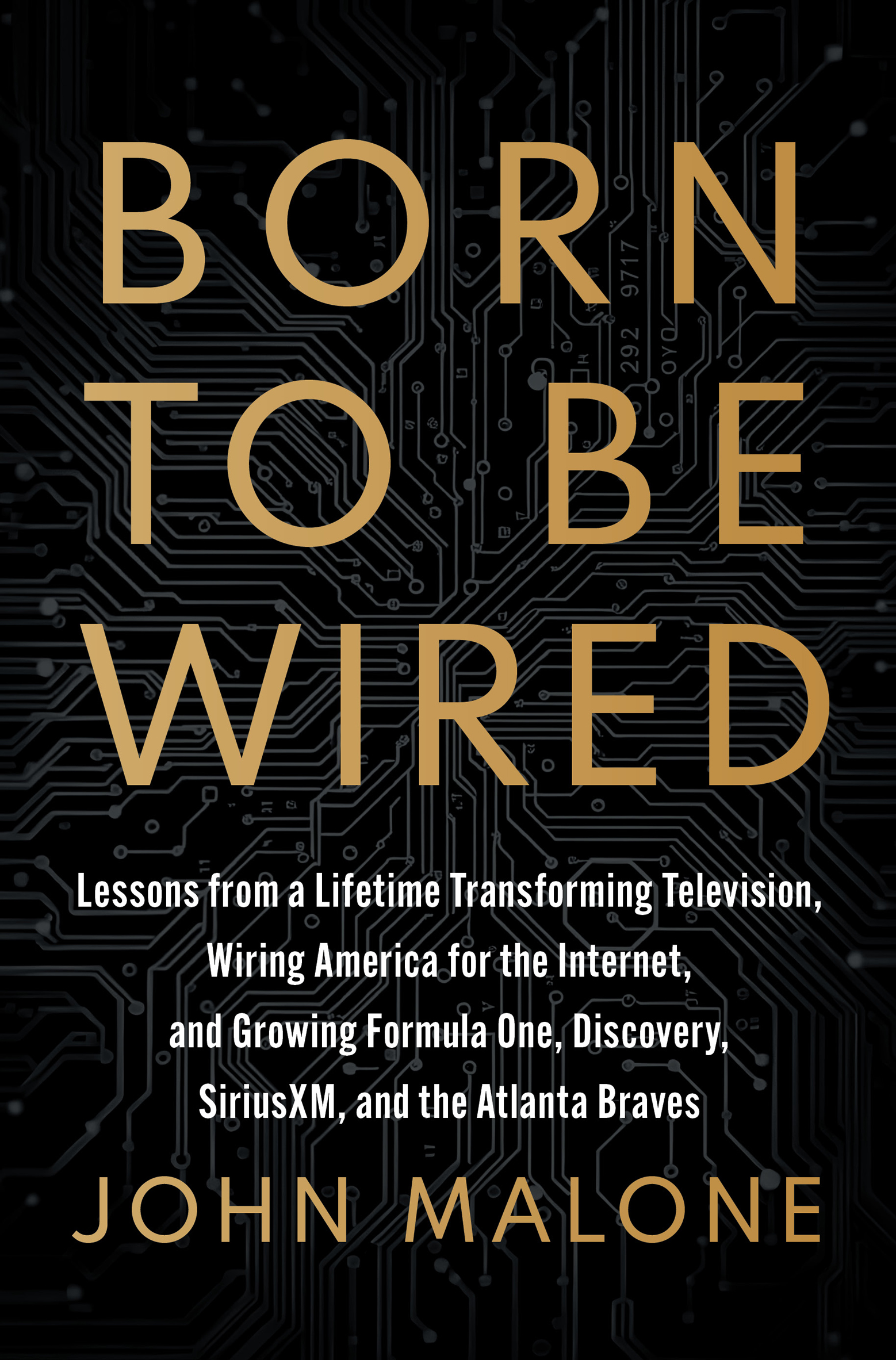
Born to Be Wired
John Malone
4 evidence highlights

The Outsiders_ Eight Unconventional CEOs and Their Radically Rational Blueprint for Success
Thorndike, William N.
5 evidence highlights
Predator's Ball
Connie Bruck
3 evidence highlights
How to Lose $100,000,000 and Other Valuable Advice
Unknown
2 evidence highlights

Charlie Munger
Tren Griffin
3 evidence highlights
Evidence
Born to Be Wired
John Malone · 4 highlights
"I started to rely on a single powerful metric, almost like blood pressure in a human, that I thought could instantly, accurately reflect the health of a cable operator: cash flow. The shorthand for this metric would become known as EBITDA—“earnings before interest, taxes, depreciation, and amortization” (and pronounced “ee-bit-dah”). That is, earnings before we deducted all those expenses to lower our tax bill. Robust, tax-sheltered cash flow became the lifeblood for early cable operators, enabling them to manage big upfront capital and operating costs, service their debt, and invest in growth despite the long timelines often required to achieve profitability."
"I had always looked at the cable-TV business as being fundamentally different from other industries, and more akin to the real estate business, where you buy property and collect rent or lease payments in the form of monthly fees. It was obvious to me that if we were going to be measured on earnings, it would be real tough to stay in the cable industry and grow. We needed to promote a different metric to get investors interested."
"Now, in a lot of those deals, we focused hard on one measure: cash flow, or specifically, EBITDA (earnings before interest, taxes, depreciation, and amortization). It gives a clearer picture of operating performance and a firm’s ability to borrow or invest. Some people say I all but invented the term. I can’t swear to it, though it is true that I helped make it a whole new form of currency on Wall Street."
"Government tax laws gave cable companies a big advantage over phone companies: they could “depreciate” their systems quickly over a shorter life, treating the gradual loss of value in their equipment as an expense, even though it wasn’t an actual cash cost, with greater tax advantages. This accounting method reduced their reported earnings and, in turn, their taxes. On top of that, they could also deduct real cash expenses like interest payments before calculating taxable income, cutting their tax bills even more. So, when investors pointed out that TCI had high interest payments, big cable equipment budgets, and no earnings, I would point out that these accounting-based losses resulted in TCI hardly paying any taxes to the government. And as long as cable operators collected predictable “rent” in the form of monthly fees from customers, and they met interest payments and grew from acquisitions, the value of the company’s stock would increase."
Charlie Munger
Tren Griffin · 3 highlights
"Intrinsic value is the present value of future cash flows."
"a private market intrinsic valuation for a Graham value investor requires that the asset generate free cash flow."
"Be motivated when you’re buying and selling securities by reference to intrinsic value instead of price momentum."
How to Lose $100,000,000 and Other Valuable Advice
Unknown · 2 highlights
"We believed that with a tax-free pension fund it was far better to get immediate high cash flow than to invest in common stocks in competition with millions of others. Why hope that a very low divi- dend cash flow plus possible future appreciation in market value might make up the difference? This policy worked so well that whenever Textron took over a company they not only had no fu- ture cost for their salaried employees' pensions, but the actuaries were willing to give us credit for a 6 percent return on some twenty-nine other nonsalaried pension plans that we inherited when acquiring businesses."
"ship of the company for which they worked. In our case, the plan provided that the employee could put in up to 10 percent of his sal- ary and the company would match up to 50 percent of the em- ployee's contribution. In addition, any employee could put up an additional 10 percent of his salary without the company matching it if he wished to have a larger interest in the company. The beauty of this program is that the trustees have to invest the funds in the open market in Textron common stock as fast as the money comes in. They are given no discretion to try to out- guess the swings in the market. In effect, the employee is dollar averaging his purchases of Textron stock at two-thirds of the mar- ket over the entire period in which he is employed and participates. The other feature that makes this plan attractive is that all of the dividends received are reinvested in Textron common stock. The company gets a tax deduction on its federal tax return for all of the contributions made for the benefit of its employees, but the em- ployee pays no tax on that contribution, nor on the dividends re- ceived for his benefit in the plan until he retires."
Predator's Ball
Connie Bruck · 3 highlights
"Earnings might be unimpressive (and therefore the stock price low) but if there is a great deal of depreciation, for example, then cash flow can be high. And it is cash flow, in its ability to service debt by making interest payments, that makes a highly leveraged acquisition viable. In his original issuance of junk bonds, Milken had recognized the importance of cash flow, more than earnings, in assessing whether the leveraged companies he was underwriting would be able to meet their debt payments. Now that he had moved from $25 million offerings to multibillion-dollar deals, the calculation was not so different—just bigger."
"Milken’s theory was that many companies don’t go broke on the operating-profit line; rather, it is often financial charges that kill them. If there were a way of reducing or removing those charges, these companies might survive and ultimately return to health. Drexel investment banker Paul Levy, who would come to specialize in this area, stated that its key is the concept of the “flexible balance sheet,” or adapting to a company’s changing needs. If a company is being choked by its interest-payment obligations, why not make those payments in common stock? Or why not just exchange the old debt paper for common stock, and eliminate the charges entirely? In this new-age finance, nothing is written in stone. “People used to issue bonds, and after twenty years they would repay them,” Levy said. “That’s hogwash!” The bondholders would tend to accept these offers, no matter how displeasing, because they would find themselves between the proverbial rock and a hard place. As Levy explained, these exchange offers are essentially an arbitrage. If a buyer purchased at par a bond which then came to trade at sixty cents on the dollar, he would probably be willing to exchange it for a piece of paper trading at sixty-five cents—especially if he thought his alternative was to be stuck holding the bonds of a bankrupt company."
"He was acquisition-oriented, using leverage to go after companies and then using the cash flow to pay down the debt. Also, his personality was right—he was extremely ambitious, willing to take risks. It was a natural.”"
The Outsiders_ Eight Unconventional CEOs and Their Radically Rational Blueprint for Success
Thorndike, William N. · 5 highlights
"the outsiders (who often had complicated balance sheets, active acquisition programs, and high debt levels) believed the key to long-term value creation was to optimize free cash flow, and this emphasis on cash informed all aspects of how they ran their companies—from the way they paid for acquisitions and managed their balance sheets to their accounting policies and compensation systems."
"this led the outsider CEOs to focus on cash flow and to forgo the blind pursuit of the Wall Street holy grail of reported earnings. Most public company CEOs focus on maximizing quarterly reported net income, which is understandable since that is Wall Street’s preferred metric. Net income, however, is a bit of a blunt instrument and can be significantly distorted by differences in debt levels, taxes, capital expenditures, and past acquisition history."
"Henry Singleton, in a rare 1979 interview with Forbes magazine: “After we acquired a number of businesses, we reflected on business. Our conclusion was that the key was cash flow. . . . Our attitude toward cash generation and asset management came out of our own thinking.” He added (as though he needed to), “It is not copied.”"
"“Cash return on capital became the key metric within the company and was always on our minds.”3 This was a first for the entire industry, which had historically had a myopic focus on revenue growth and new product development."
"When I met with Smith in his office, he showed me the 1962 annual report, his first as CEO, in which he refers repeatedly to cash earnings (defined as net earnings plus depreciation) as the key metric in evaluating company performance, not net income."