Control Without Majority Ownership
Books Teaching This Pattern
Evidence
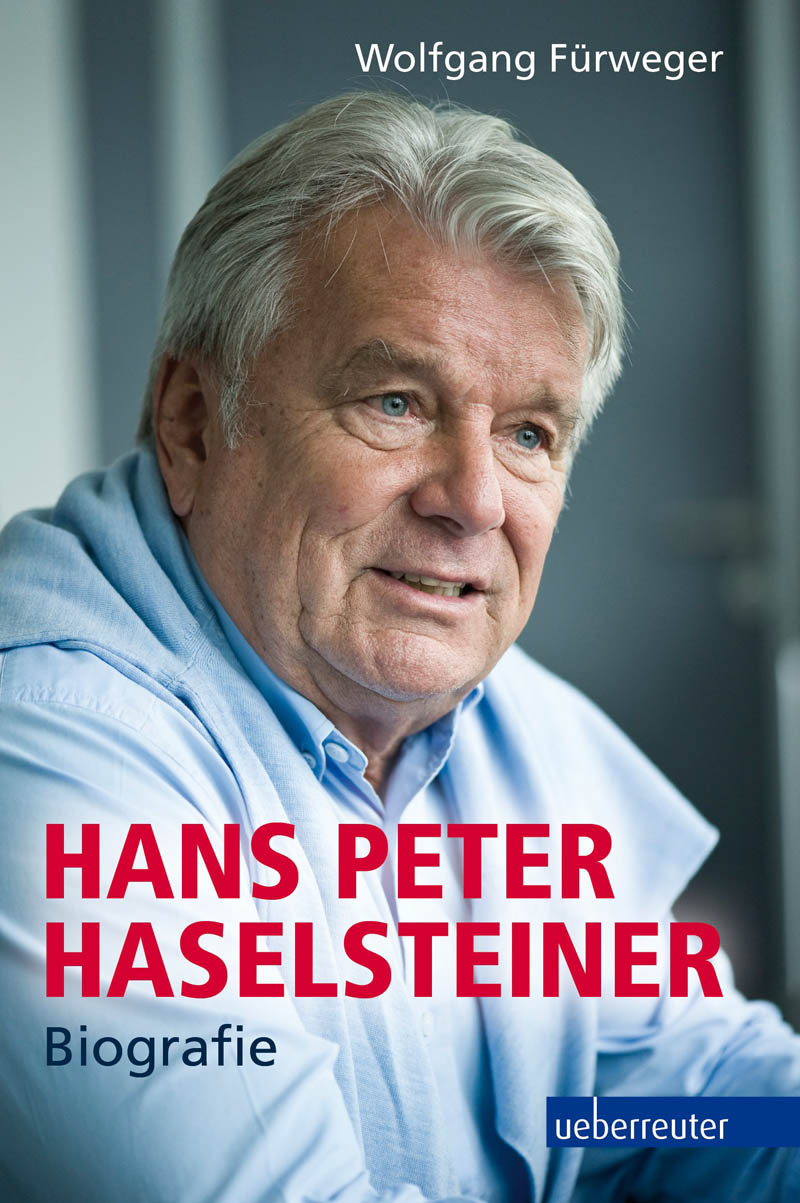
Hans Peter Haselsteiner Biography
Wolfgang Fürweger · 3 highlights
"Deripaska saw the 30 percent stake in Strabag SE as a strategic investment. The Haselsteiner group received 1.05 billion euros in fresh capital, as the Russian’s entry was through an increase in share capital. The shares of the previous owners — the Haselsteiner family held 50 percent plus one share, the Raiffeisen sector held 50 percent minus one share — were proportionally reduced to 35 percent each. The principle that each share had one vote was maintained. Deripaska did not agree to purchase non-voting preferred shares. Incidentally, the construction business was not foreign to him: At home, he already owned the Transstroy construction group, which generated 1.5 billion euros annually. In comparison, Strabag was building around one billion a year in Russia at the time. Haselsteiner: “Together, we are already number one in the Russian market.” And they wouldn’t compete with each other but would complement each other wonderfully, he painted a picture of a rosy future: While Deripaska’s group was mainly focused on large-scale residential construction in Moscow, Strabag had so far mainly realized high-rise projects for upscale demands. And the personal relationship between the two company heads was also harmonious. Haselsteiner praised Deripaska as a “pleasant interlocutor”: “He is an industrialist without attitude. I certainly prefer to do business with Deripaska than I would with Dick Cheney (oil magnate and then US Vice President – ed.).”"
"The big goal was clear: Hans Peter Haselsteiner wanted to make his Strabag the largest construction company in Europe. To achieve this, he couldn’t avoid gaining a foothold in the continent’s largest market: Russia. The conditions seemed ideal in 2006. The company received its new, modern structure, which should make it flexible and powerful. Haselsteiner wanted to raise the necessary funds for expansion in the East from the capital market. At the beginning of 2006, he announced that he wanted to return Strabag SE to the Vienna Stock Exchange, which he had left in 2003 with Bau Holding. In the medium term, his family and the Raiffeisen sector, as core shareholders, were to reduce their holdings from the current 100 percent to up to 40 percent: “We will commit to a minority role because that belongs to a modern stock market standard. Stock markets do not want a majority owner,” Haselsteiner had learned from Bau Holding’s unsuccessful stock market appearance. But: “We will continue to be core shareholders—for as long as I live or have something to say.” As a reminder: the shares of the German Strabag, which still existed, had always been traded on the stock exchanges in Frankfurt and Cologne."
"With the takeover, the company leader returned to operational business. He had withdrawn from this in 1994 when he was elected to parliament for the Liberal Forum. At that time, Erwin Soravia took his place as CEO. He now stepped back into a secondary role as deputy chief. His brother Karl Soravia became a new member of the Bau-Holding board, which was expanded from four to six members, and Haselsteiner also brought in Ernst Nußbaumer, the then head of Austrian Strabag. Erhard Grossnigg, an investor and turnaround specialist, became the new chairman of the Bau Holding’s supervisory board – a close friend and business partner of Haselsteiner, who will often appear in this book. Haselsteiner himself was elected to the top of the supervisory board of the German Strabag."

"The two came to a secret agreement. In the eyes of the Dassler family, Adidas France owned just 49 percent of Le Coq Sportif. But André Guelfi gave 2 percent of his own package to Horst, and granted him an option to acquire the remaining 49 percent at any time. The 2 percent and the option were issued to Horst person- ally, as opposed to Adidas. In other words, unbeknownst to his family, Horst had taken over control of Le Cog Sportif. The agree- ment marked the beginning of an intense partnership between the two men."
"Yearning for yet more influence, Horst Dassler resolved to build up an unofficial team dedicated to international sports relations. While all of his disciples were taught to make friends, the sports politics squad, patched together in the seventies, went much fur- ther. Their activities were geared entirely toward the infiltration of leading sports organizations."