Bau Holding IPO Miscalculation
Haselsteiner learned that stock markets reject majority-owner structures, leading him to commit to reducing family holdings to a minority stake in the next IPO attempt.
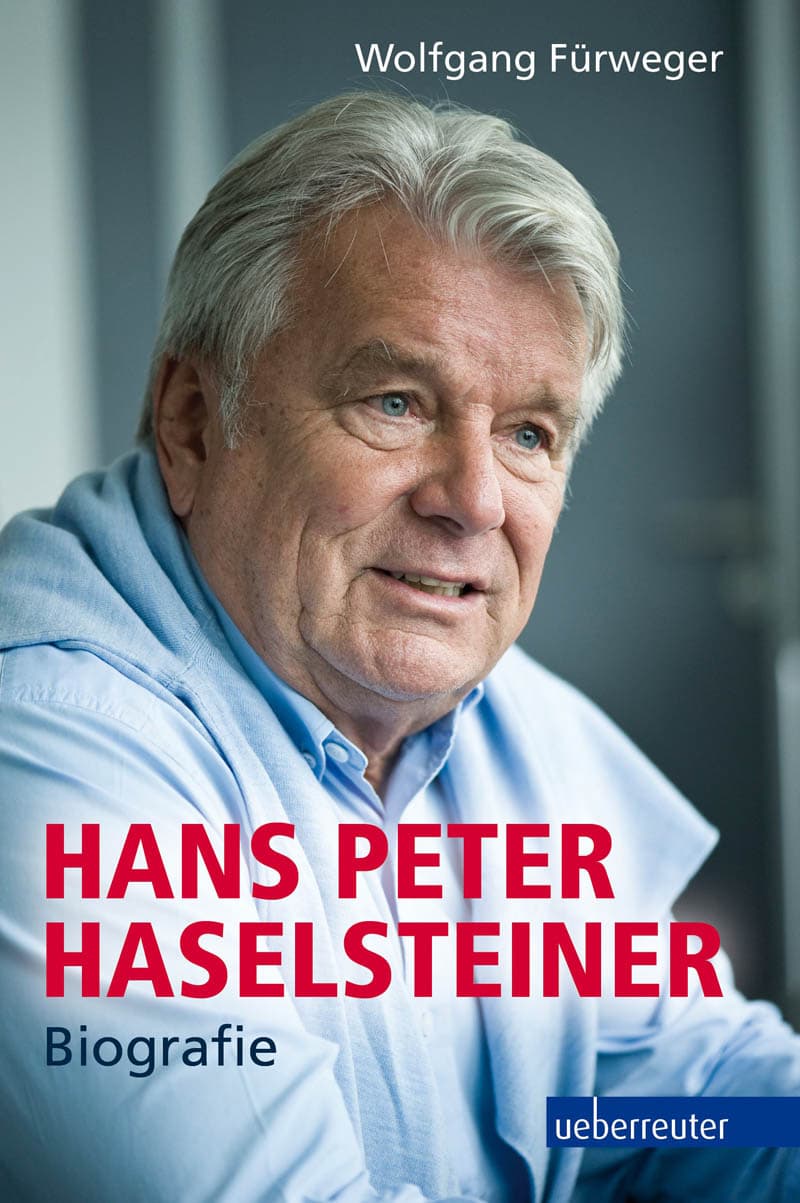
Wolfgang Fürweger
26 highlights · 11 themes · 10 cited people/companies
Austrian construction industrialist who took over his father-in-law's mid-sized Carinthian building firm Ilbau and built it into Strabag SE, one of Europe's largest construction groups spanning 900+ companies across dozens of countries.
Haselsteiner learned that stock markets reject majority-owner structures, leading him to commit to reducing family holdings to a minority stake in the next IPO attempt.
Separating road construction from road operation only on paper — not operationally — failed to convince Asfinag, which took the toll system fully in-house, teaching Haselsteiner that regulators demand real structural separation, not cosmetic reshuffling.
The Lerchbaumer family found the stock exchange listing a 'psychological problem,' teaching Haselsteiner that founder families need emotional preparation, not just financial logic, before diluting ownership.
“Deripaska saw the 30 percent stake in Strabag SE as a strategic investment. The Haselsteiner group received 1.05 billion euros in fresh capital, as the Russian’s entry was through an increase in share capital. The shares of the previous owners — the Haselsteiner family held 50 percent plus one share, the Raiffeisen sector held 50 percent minus one share — were proportionally reduced to 35 percent each. The principle…”
“Haselsteiner not only wanted to create the largest construction empire in Europe and conquer Russia, but his corporation was also to represent the entire breadth of the industry—every type of construction and the entire value chain. Strabag had already occupied the end of this chain with the acquisition of DeTeImmobilien; now it was necessary to become active at the beginning, which includes the cement industry. In…”
“For his expansion plans in the East and also due to an economic downturn during this time, which was one of the reasons for stepping abroad, Haselsteiner transformed his Ilbau Group from late 1986 from a difficult-to-manage conglomerate of individual companies and their various subsidiaries into a real corporation with streamlined structures and short decision-making paths: The parent company Bauindustrie Holding AG…”
“Haselsteiner’s first entrepreneurial achievement: In 1977, he took over the construction company Soravia. It was almost as large, also based in Spittal an der Drau, and was Ilbau’s fiercest competitor. He is still proud today of how he vanquished and ultimately absorbed the competitor, wrote Die Zeit. The fight was fierce: “It was him or me, that’s all it was about. It was a fight for survival. If I had lost the gam…”
“At the beginning of 1990, Haselsteiner announced plans to tackle the market in the still-existing East Germany with five regional construction companies. He founded new German companies in Berlin, Dresden, Magdeburg, Rostock, and Schwerin, behind which, as he mischievously noted at the time, “by chance Austrian capital is standing.” He equipped each new East company with 100 million schillings (seven million euros)…”
“Under the umbrella of the holding company, the brands Dywidag, Züblin, and Heilit+Woerner Bau GmbH are maintained alongside the group’s main brand, Strabag – the latter had come to Strabag with Walter Bau. However, the entire company network consists of more than 80 subsidiaries – from A like Abfall Behandlung Recycling GmbH to Z like Züblin Umwelttechnik GmbH. At first glance, this may seem confusing, but in the wo…”
“The construction tycoon was certainly under no illusion that the merger would be complete with the formal restructuring. “It will still take years for the full implementation of the corporate structure.” In 1999, he estimated the costs of the restructuring to be up to 300 million schillings (23 million euros) – a substantial sum for that time: “We have endeavored to take the best from all parts of the group. All cos…”
“During this time, the Austrian construction tycoon was also a regular feature in the German media. Some did not quite know how to deal with a man who, on one hand, was from the country of Jörg Haider and was friends with him, yet on the other hand was also known for having worked on the futile attempt to establish an Austrian FDP. “Some praised him for having reorganized the German construction landscape, while othe…”
“Back to Haselsteiner’s entry into Ilbau: In March 1974, Anton Lerchbaumer unexpectedly died from complications that arose after what was supposed to be a routine surgery for a stomach ulcer. “Only then did I have to decide whether I wanted to join the company. My father-in-law would have always liked that. I didn’t want it to avoid a potential conflict with him.” Lerchbaumer did have a son, who has since passed away…”
“Whether as a eloquent liberal politician, energetic entrepreneur, art promoter, philanthropist, or private competitor of ÖBB, Haselsteiner has been a fixture in Austrian public life for decades. Although born and raised in Tyrol, he has been considered a prime Carinthian businessman for many years: He built the medium-sized construction company he took over from his father-in-law in Spittal an der Drau into the Stra…”
“Nevertheless, it falls far too short to see Haselsteiner only as a construction entrepreneur. In fact, he is one of the most active, enterprising, and versatile entrepreneurs in Austria. Directly or indirectly, he is involved in more than 900 (!) companies and corporations. For instance, in 2008, together with partners, he took over the troubled and scandal-ridden Constantia Privatbank, restructured it, and at times…”
“In short: Haselsteiner is known in Austria and also in large parts of Germany like the proverbial colorful dog. However, hardly anyone knows more about him than that he is both a politician and a construction entrepreneur. Where does he come from? In which areas is he active? Where does the money for his diverse investments and engagements come from? What drives him? With this book, I have set myself the task of she…”
Margret Hucko & Martin Noé
Shares Hans Peter Haselsteiner, Strabag, and Karstadt.
Thomas Veszelits
Shares Karstadt and Berlin.
Rory Sutherland
Shares Red Bull, Skoda, and Volkswagen.
L'Ebé Bugatti
Shares Bugatti.
Ebbe Dommisse
Shares Skoda and Czechoslovakia.
Gregor Schöllgen
Shares Volkswagen and Czechoslovakia.
“Whether as a eloquent liberal politician, energetic entrepreneur, art promoter, philanthropist, or private competitor of ÖBB, Haselsteiner has been a fixture in Austrian public life for decades. Although born and raised in Tyrol, he has been considered a prime Carinthian businessman for many years: He built the medium-sized construction company he took over from his father-in-law in Spittal an der Drau into the Strabag Group within 30 years, making it one of the largest construction companies in Europe. With the exception of a brief foray into politics, he has dedicated his entire professional life primarily to the construction industry.”
“Nevertheless, it falls far too short to see Haselsteiner only as a construction entrepreneur. In fact, he is one of the most active, enterprising, and versatile entrepreneurs in Austria. Directly or indirectly, he is involved in more than 900 (!) companies and corporations. For instance, in 2008, together with partners, he took over the troubled and scandal-ridden Constantia Privatbank, restructured it, and at times held 75 percent of the shares in the successor credit institution, Semper Constantia Privatbank. Again, with other business friends, he made the state-run ÖBB railway company face competition as a co-founder of the private railway company WESTbahn. He participated in major hotel projects, possesses shares in two ski resorts, a thermal spa, real estate companies, and indirectly even in the German department store chain Karstadt and the legendary KaDeWe (Kaufhaus des Westens) in Berlin.”
“In short: Haselsteiner is known in Austria and also in large parts of Germany like the proverbial colorful dog. However, hardly anyone knows more about him than that he is both a politician and a construction entrepreneur. Where does he come from? In which areas is he active? Where does the money for his diverse investments and engagements come from? What drives him? With this book, I have set myself the task of shedding light on the largely unknown life of Haselsteiner to the general public. What makes his life story particularly interesting: The construction industrialist is not only one of the most multifaceted and contradictory personalities in the country, but due to the many areas in which he was or is active, his life path is also a reflection of the Austrian economic and political history of the past four decades.”
“When allegations of violence and abuse related to Catholic boarding schools surfaced starting in 2010, the federal boarding school in East Tyrol also made negative headlines. For decades, a regime of fear and violence had prevailed there, as Schmidl recalled: “If we talked after eight in the evening, the official bedtime, and the night shift caught us, we had to go out in pajamas into the cold hallway, stand or kneel and wait until he released us. The word of this ‘guardian’ had absolute power; potestas vitae necisque (power over life and death - ed.), we later learned in Latin class. We at least understood what that meant.””
“In almost all reports about Haselsteiner, you can read that he came to the construction company Isola & Lerchbaumer – short: Ilbau – in Spittal an der Drau (Carinthia) in 1972 as a tax consultant and met his future wife there. The story sounds good, but it is not true. The truth is rather: He had already fallen in love with Ulrike “Ulli” Lerchbaumer, who comes from a dynasty of Carinthian construction entrepreneurs, during his studies. All male representatives of the family bore the first name Anton. Ulrike’s father was already the sixth Anton Lerchbaumer. The first had founded a craft business in the construction sector in 1835, which is why the founding year of Strabag SE is also given as 1835 in the English version of Wikipedia. In 1954, at the peak of the economic boom following the end of the Second World War, which was to go down in history as the economic miracle, the construction company Lerchbaumer became Ilbau through the entry of a new partner.”
“Ulrike Lerchbaumer brought her then-boyfriend into the company in 1972, as he tells it: “I got to know my father-in-law through my future wife and then received an assignment from him in my bread-and-butter job – at that time as a revision assistant – to transform the company Isola & Lerchbaumer into a joint-stock company according to the Structural Improvement Act, as it was called at the time. This was important insofar as value-added tax was introduced on 1. 1. 1973. We carried out this restructuring retrospectively in September 1972. Then I was a member of the first supervisory board.””
“Back to Haselsteiner’s entry into Ilbau: In March 1974, Anton Lerchbaumer unexpectedly died from complications that arose after what was supposed to be a routine surgery for a stomach ulcer. “Only then did I have to decide whether I wanted to join the company. My father-in-law would have always liked that. I didn’t want it to avoid a potential conflict with him.” Lerchbaumer did have a son, who has since passed away. But at that time, he was only 17 years old and thus far too young to become an entrepreneur. So the 30-year-old son-in-law took over the company, which was already a nice medium-sized enterprise with 440 employees at the time – regionally leading, but only number 30 in the already small Austrian market. This was about to change quickly. The new boss had little experience in construction but an unmistakable instinct for business, entrepreneurial foresight, and above all the necessary bit of courage to implement his ideas and visions: “It’s much less romantic than one might think. Since I had already been on the supervisory board for two years, I knew the company quite well. I agreed because the need was urgent and someone had to step into the breach.””
“Haselsteiner’s first entrepreneurial achievement: In 1977, he took over the construction company Soravia. It was almost as large, also based in Spittal an der Drau, and was Ilbau’s fiercest competitor. He is still proud today of how he vanquished and ultimately absorbed the competitor, wrote Die Zeit. The fight was fierce: “It was him or me, that’s all it was about. It was a fight for survival. If I had lost the game, my career would have been over.” With the takeover, the Soravia family became minority owners of Ilbau; and the then-junior chief Erwin Soravia would go on to become one of Haselsteiner’s closest companions in the following decades. Incidentally, he is almost the same age as Haselsteiner and the father of the well-known brothers Erwin Jr. and Hanno Soravia, who lead the Soravia Group. The company, based in Vienna, operates throughout Europe and specializes in real estate development, facility management, and corporate investments (Private Equity).”
“Even during the lifetime of his father-in-law, Ilbau had already extended its reach to Vienna. Haselsteiner then founded a subsidiary in the federal capital in 1975. With this, he took over additional smaller domestic construction companies, so that by the mid-eighties a construction group emerged which, for the Austrian standards of that time, was large, but still far from what Strabag represents today. However, it should not be forgotten that until the fall of the Iron Curtain in 1989 and the EU accession in 1995, the Austrian economy knew hardly any larger private enterprises. After World War II, almost the entire industry was nationalized to prevent it from being seized as former German property by the Allies. The financial sector was also placed under public control. Truly large private fortunes, as known today from Red Bull founder Dietrich Mateschitz, Novomatic founder Johann Graf, the Porsche, Piëch, and Swarovski families, or Haselsteiner, could not develop in this environment.”
“For his expansion plans in the East and also due to an economic downturn during this time, which was one of the reasons for stepping abroad, Haselsteiner transformed his Ilbau Group from late 1986 from a difficult-to-manage conglomerate of individual companies and their various subsidiaries into a real corporation with streamlined structures and short decision-making paths: The parent company Bauindustrie Holding AG (BIHAG) was established, later simply called Bau Holding. Beneath Bau Holding were Ilbau GmbH, Negrelli Bau AG, and Asphalt & Beton GmbH. Each of these three subsidiaries, in turn, had several regional subsidiaries. With an annual turnover equivalent to just under 440 million euros and 5,000 employees, Bau Holding was the second-largest construction group in Austria at the time of its founding. With fresh capital from Girozentrale, in 1987, Haselsteiner ventured into Hungary, two years before the fall of the Iron Curtain: “We Austrians felt responsible for what used to be the monarchy.” With this move, he was ahead of leading domestic companies from other industries such as the car dealership Porsche Holding (Porsche Austria) or Red Bull, which only expanded their businesses to Hungary after the end of Communism.”
“At the beginning of 1990, Haselsteiner announced plans to tackle the market in the still-existing East Germany with five regional construction companies. He founded new German companies in Berlin, Dresden, Magdeburg, Rostock, and Schwerin, behind which, as he mischievously noted at the time, “by chance Austrian capital is standing.” He equipped each new East company with 100 million schillings (seven million euros) in initial capital. For the time, this was an enormous expansion of a domestic company into foreign markets. The company managed to raise the money at the Vienna Stock Exchange, where Bau Holding was listed from mid-September 1990. For his wife’s family, who had previously owned 40 percent of Bau Holding through the Carinthian Industrial Holding, the stock exchange listing was “a certain psychological problem,” Haselsteiner later admitted.”
“The doubts seemed to be quickly dismissed. The move to East Germany initially became a successful model. The new companies, which were formally subordinate to Ilbau as a subsidiary of Bau Holding, grew to 700 employees within a few months. Just one year later, the East German subsidiaries were conducting so much business that the total group’s revenue shot up by 15 percent. Haselsteiner then targeted other markets, including Poland and the then still-existing Czechoslovakia, alongside Hungary where he was already active. In Hungary alone, Bau Holding was active with five own companies. Shareholders enjoyed substantial profits shortly after the IPO - in 1991, a dividend of 20 percent was paid. It was a golden time - sales expectations were corrected upwards almost monthly. By the end of the financial year 1991/92, Bau Holding had generated more than ten billion Schillings (700 million euros). For Austrian standards at the time, this was an incredible revenue. And the group was highly profitable: the profit amounted to 400 million Schillings (29 million euros). By 1993/94, the revenue had grown to 15 billion Schillings (1.1 billion euros) - an increase of 50 percent in just two years. Profits also continued to rise - although not quite as sharply: They now amounted to 450 million Schillings (32 million euros).”
“At the start of the Great Depression in 1929, the company already employed 1,400 people. In the 1930s, the headquarters were then moved to Cologne. After the collapse of the Third Reich, Strabag’s headquarters remained in the Rhine metropolis, which at the time belonged to the British occupation zone. In 1949, the company went public. In 1963, the German Strabag founded an Austrian branch in the prosperous steel city of Linz. This branch was also listed on the Vienna Stock Exchange from 1986 onwards. Initially, Haselsteiner had set his sights on this Austrian Strabag because its parent company was considered a restructuring case: “There was not unwarranted hope that they were willing to part with their Austrian subsidiary,” Haselsteiner said at the time. However, this deal did not come to fruition, but the red-white-red construction magnate snatched up the parent company instead.”
“The takeover of Strabag was entirely financed from the cash flow of Bau Holding. Haselsteiner then wanted to recoup the money through an IPO of Ilbau, which was supposed to take place within a year. To achieve this, he planned a restructuring of the group: Bau Holding was to be at the forefront. Below it, there should be three equivalent companies: the German Strabag, the Austrian Strabag, and Ilbau. According to the “Bau Holding 2000 Eurofit” plan, both the Bau Holding and the three subsidiaries were to be listed on the stock exchange. However, after skeptical opinions from major investment banks, Haselsteiner had to revise this plan: In the year 2000, only Bau Holding was to be listed on the stock exchange.”
“With the takeover, the company leader returned to operational business. He had withdrawn from this in 1994 when he was elected to parliament for the Liberal Forum. At that time, Erwin Soravia took his place as CEO. He now stepped back into a secondary role as deputy chief. His brother Karl Soravia became a new member of the Bau-Holding board, which was expanded from four to six members, and Haselsteiner also brought in Ernst Nußbaumer, the then head of Austrian Strabag. Erhard Grossnigg, an investor and turnaround specialist, became the new chairman of the Bau Holding’s supervisory board – a close friend and business partner of Haselsteiner, who will often appear in this book. Haselsteiner himself was elected to the top of the supervisory board of the German Strabag.”
“The construction tycoon was certainly under no illusion that the merger would be complete with the formal restructuring. “It will still take years for the full implementation of the corporate structure.” In 1999, he estimated the costs of the restructuring to be up to 300 million schillings (23 million euros) – a substantial sum for that time: “We have endeavored to take the best from all parts of the group. All costs will be more than offset by the expected synergy effects.” His credo was to become resistant to crises in individual states by spreading the business over several countries: “If, for example, Germany has a headache, we simultaneously have aspirin in Hungary.””
“The split corporation with the Austrian Bau Holding and the German Strabag was merely an interim step for Haselsteiner. His long-term goal was to create a unified construction group of European dimensions. This group should not only handle the actual construction business, including planning, but also capture the profits of suppliers, such as the cement industry, and downstream areas, like real estate management. There was a whole series of acquisitions, mergers, spin-offs, restructurings, and new formations. Even Haselsteiner is unlikely to remember the exact number—external observers found it hard to keep track. Below are only the largest and most spectacular acquisitions listed—detailing every single expansion step of Bau Holding and Strabag, which later became Strabag SE, would exceed the scope of this book.”
“To dispel these reservations, Haselsteiner announced in 2004 that all concession and operator consortia would be separated from the Strabag group and newly consolidated in A-Way. In addition to the planned entry into the domestic truck toll system, this also affected stakes in the operating companies of the A2 motorway in Poland (from Frankfurt/Oder to Warsaw) and the M5 in Hungary (from Budapest to Röszke at the southern national border) at that time. A-Way was declared an equal holding alongside Strabag, thus becoming a “mixed group,” as Haselsteiner explained. To signal this, BIBAG (Bauindustrie Beteiligungs AG) was renamed FIMAG (Finanz Industrie Management AG). Ultimately, the separation of road construction and road management only took place on paper, so that Asfinag remained concerned and took over Europass and thus also the operation of the toll system 100 percent itself in 2005, even though the contract with the Italians had been signed for a ten-year term. The new owners renamed the system GO Maut – a name it still bears today. The designation Europass reverted to Autostrade International.”
“During this time, the Austrian construction tycoon was also a regular feature in the German media. Some did not quite know how to deal with a man who, on one hand, was from the country of Jörg Haider and was friends with him, yet on the other hand was also known for having worked on the futile attempt to establish an Austrian FDP. “Some praised him for having reorganized the German construction landscape, while others called him an insolvency profiteer,” wrote Die Zeit: however, Haselsteiner could not understand this criticism and always countered it with his economically liberal credo: “I always explained to the banks and major suppliers that they had no reason to be upset with me, but rather I had every reason to be upset with them. For they artificially kept incompetent competitors alive for years and prevented a necessary market cleanup.””
“Under the umbrella of the holding company, the brands Dywidag, Züblin, and Heilit+Woerner Bau GmbH are maintained alongside the group’s main brand, Strabag – the latter had come to Strabag with Walter Bau. However, the entire company network consists of more than 80 subsidiaries – from A like Abfall Behandlung Recycling GmbH to Z like Züblin Umwelttechnik GmbH. At first glance, this may seem confusing, but in the world of large corporations, it is entirely common for numerous brands to gather under the umbrella of a holding company. For example, the Dutch-British consumer goods corporation Unilever operates with 40 brands: from Axe, Becel, or Coral, via Lätta, Lipton, and Lux, to Thea, Timotei, and Unox. The largest European automotive group, Volkswagen, has ten other brands alongside its main brand VW, from Audi, Bentley, and Bugatti, through Scania, Seat, and Skoda, to Porsche.”
“The big goal was clear: Hans Peter Haselsteiner wanted to make his Strabag the largest construction company in Europe. To achieve this, he couldn’t avoid gaining a foothold in the continent’s largest market: Russia. The conditions seemed ideal in 2006. The company received its new, modern structure, which should make it flexible and powerful. Haselsteiner wanted to raise the necessary funds for expansion in the East from the capital market. At the beginning of 2006, he announced that he wanted to return Strabag SE to the Vienna Stock Exchange, which he had left in 2003 with Bau Holding. In the medium term, his family and the Raiffeisen sector, as core shareholders, were to reduce their holdings from the current 100 percent to up to 40 percent: “We will commit to a minority role because that belongs to a modern stock market standard. Stock markets do not want a majority owner,” Haselsteiner had learned from Bau Holding’s unsuccessful stock market appearance. But: “We will continue to be core shareholders—for as long as I live or have something to say.” As a reminder: the shares of the German Strabag, which still existed, had always been traded on the stock exchanges in Frankfurt and Cologne.”
“Deripaska saw the 30 percent stake in Strabag SE as a strategic investment. The Haselsteiner group received 1.05 billion euros in fresh capital, as the Russian’s entry was through an increase in share capital. The shares of the previous owners — the Haselsteiner family held 50 percent plus one share, the Raiffeisen sector held 50 percent minus one share — were proportionally reduced to 35 percent each. The principle that each share had one vote was maintained. Deripaska did not agree to purchase non-voting preferred shares. Incidentally, the construction business was not foreign to him: At home, he already owned the Transstroy construction group, which generated 1.5 billion euros annually. In comparison, Strabag was building around one billion a year in Russia at the time. Haselsteiner: “Together, we are already number one in the Russian market.” And they wouldn’t compete with each other but would complement each other wonderfully, he painted a picture of a rosy future: While Deripaska’s group was mainly focused on large-scale residential construction in Moscow, Strabag had so far mainly realized high-rise projects for upscale demands. And the personal relationship between the two company heads was also harmonious. Haselsteiner praised Deripaska as a “pleasant interlocutor”: “He is an industrialist without attitude. I certainly prefer to do business with Deripaska than I would with Dick Cheney (oil magnate and then US Vice President – ed.).””
“At that time, the entry into Strabag was not the only strategic investment of the enterprising Russian investor: Almost simultaneously, he purchased 9.99 percent of the globally active German construction company Hochtief for almost 400 million euros. In September 2007, he acquired 20 percent of the so-called A-shares of the also globally active automotive supplier Magna International, which was still controlled by Frank Stronach at the time, for 1.4 billion dollars. Unlike Stronach’s B-shares, these had virtually no voting rights. The Russian was welcomed with open arms everywhere. In the case of Strabag, the investors welcomed the new major shareholder in their own way: The shares of the German Strabag reacted to the announcement of Deripaska’s entry with a price jump of more than five percent on the day of the announcement. Almost simultaneously, the company headquarters was able to announce that the just-ended financial year for Strabag SE had ended with a new record result. Of the 10.4 billion euros in annual sales, 40 percent were in Germany, 20 percent in Austria, 30 percent in Eastern Europe, and 10 percent in the remaining markets.”
“But no one yet knew about the impending catastrophe. And so Strabag, equipped with the necessary free capital and the financially strong Raiffeisen Group in the background, first went on a shopping spree. At the beginning of 2008, through company acquisitions, it gained access to the Italian, Albanian, and Swedish markets. In Germany, another larger construction company was acquired 85 percent: The Kirchhoff company from Baden-Württemberg, with its 1,600 employees and an annual turnover of 350 million euros, was a specialist in road construction and had special know-how in the construction of runways. In addition, it operated 15 gravel, chipping, and ballast plants, which meant it could partly produce its own raw materials, making the investment even more appealing: “With the majority takeover of the company, Strabag SE participates in one of the leading companies in southern Germany and opens up a regional market where it has not been comprehensively represented,” said an official Strabag statement at the time.”
“With the Kirchner Holding, another medium-sized German construction company was acquired a few weeks later, which was primarily active in Poland and was intended to strengthen Strabag’s position in that country. Additionally, the new subsidiary had a focus on the future sector of environmental technology. In Austria, the Haselsteiner Group took over half of the publicly traded Graz-based toll technology expert Efkon. The company had, among other things, designed the Austrian section control systems and supplied 500,000 GO-Boxes for the truck toll system to Asfinag. This allowed Strabag to enter into the operation of the Austrian toll system through the backdoor—a belated satisfaction for Haselsteiner. The Styrians were also the main suppliers for the German truck toll system. “The acquisition enables Strabag to position us as a full-service provider of state-of-the-art infrastructure facilities and toll systems, from design to implementation to operation,” the head of the group expressed satisfaction.”
“Haselsteiner not only wanted to create the largest construction empire in Europe and conquer Russia, but his corporation was also to represent the entire breadth of the industry—every type of construction and the entire value chain. Strabag had already occupied the end of this chain with the acquisition of DeTeImmobilien; now it was necessary to become active at the beginning, which includes the cement industry. In May 2010, Strabag SE, together with Lafarge SA, founded the Lafarge Cement CE Holding GmbH. Lafarge is headquartered in Paris and is not only the world’s leading building materials manufacturer but also “coincidentally” the market-leading building materials manufacturer in Central and Eastern Europe, Strabag’s core markets. With a 30 percent stake, Strabag became the smaller partner in the joint venture, into which the French building material giant integrated, among other things, its Austrian subsidiary Lafarge Perlmooser AG, the largest cement manufacturer in Austria with an annual production of 1.6 million tons and locations in Vienna, Upper and Lower Austria, and Burgenland. Additionally, one Lafarge cement plant in the Czech Republic and one in Slovenia were incorporated into the new cement holding.”