Blind Spot to Conglomerate Complexity
Berger underestimated how trading and expansion fed unsustainable real estate growth, realizing only too late that operational complexity masked the real risks.
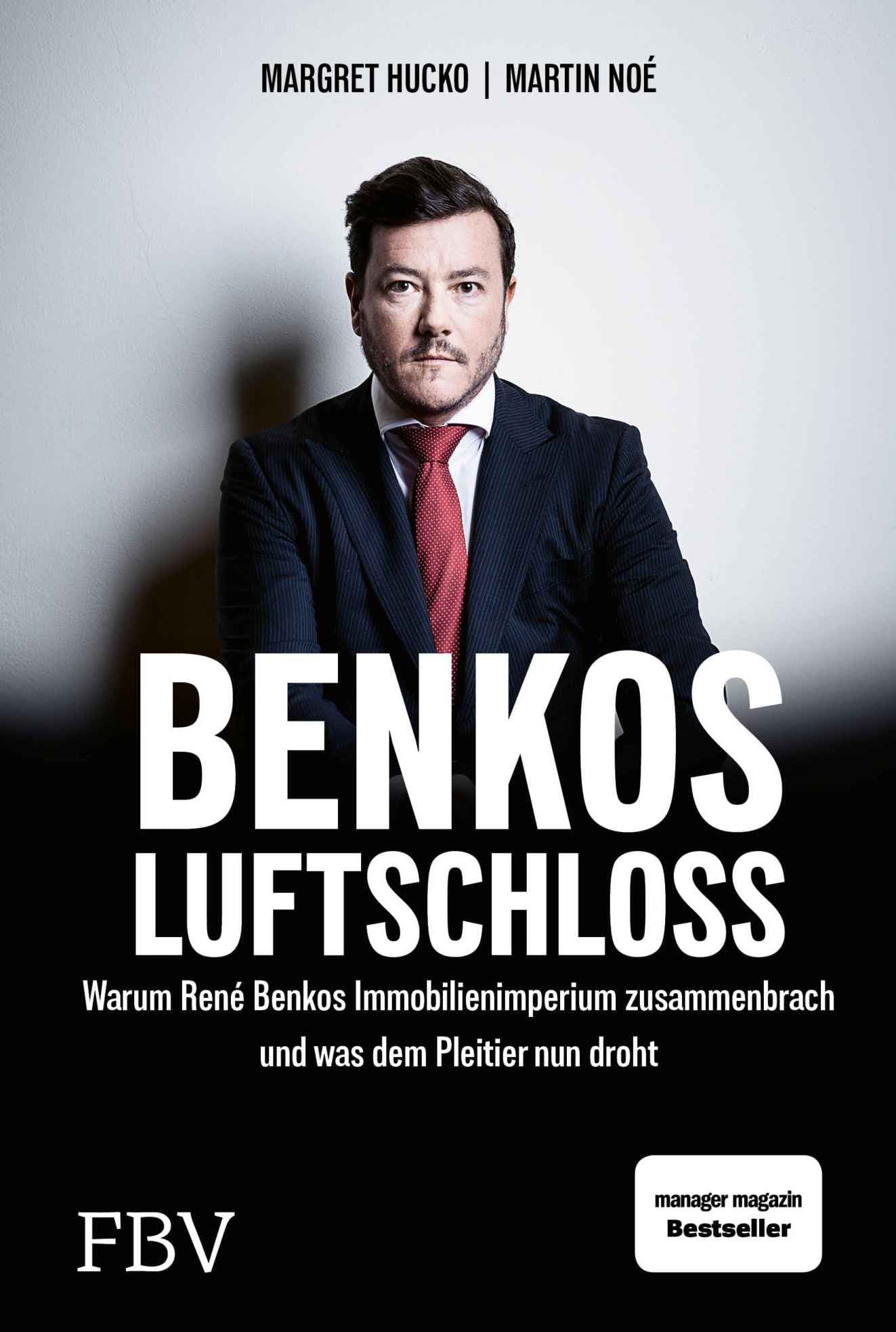
Margret Hucko & Martin Noé
137 highlights · 12 themes · 257 people/companies
Roland Berger is a German strategy consultant and investor who became a key early backer and board advisor to Austrian real estate magnate René Benko’s Signa Group, leveraging deep networks and risk acumen to shape major European business deals.
Berger underestimated how trading and expansion fed unsustainable real estate growth, realizing only too late that operational complexity masked the real risks.
He trusted Benko’s dazzling storytelling for too long, not recognizing critical warning signs until capital was at risk.
“Berger first invested 5 million euros, then soon doubled to 10 million euros at the next capital increase, later he invested further millions in the retail business and also in Signa Development, which is involved in project business. A medium two-digit million amount soon accumulates. Every year there's a 6 percent return on invested capital, while at the same time the value of the shares increases dramatically. In…”
“The investors also play along. "I understood the danger of over-indebtedness earlier. Practically, Benko generated a negative cash flow every year, so he relied on additional loans or capital increases," says Roland Berger, who thus became suspicious long before the first Signa bankruptcy. "But Benko has repeatedly shown that he could acquire fresh money."”
“Berger, who enjoys taking risks but is a realist, knows his value to Benko very well. Thanks also to the almost inexhaustible network of the advisor, Benko can gain connections in politics and new investors. Thus, Robert Peugeot from the namesake auto dynasty likely places his trust and invests in Benko's company also because his good old acquaintance Roland Berger is among the shareholders. And for Klaus-Michael Kü…”
“But why did Benko make such unusual, legally borderline promises to his financiers that he would buy back their shares? And at the increased price due to the appreciation of the properties, not at the lower entry price? The answer is simple: Without the so-called put options he offered, Benko would have found much fewer investors. Roland Berger, at any rate, today answers the question of whether he would have given…”
“Berger has a lot of experience with entrepreneurial boundary crossers. At that time, he invested several million Euros in another young entrepreneur who often operated on the edge of legality and insolvency: Lars Windhorst and his Sapinda group, which later became known to a broader public as an investor in the soccer club Hertha BSC.”
“Recognition, yes, blind following turned with the failures into aversion, into anger. The master was disenchanted, and it seemed nothing was left of his strengths. For a long time, he was admired because he remained cool in crisis situations and found solutions when others became nervous. René always had an idea, says a financial expert who has completed many transactions with him. Now, with the looming bankruptcies…”
“Most of the shareholders did not have Benko's private foundation as a contracting partner, but the holding company. Roland Berger, who had invested in low percentages in the Signa companies Prime, Development, and Retail, managed to partially exit. Apparently, he pressed for payment from Benko early on and exchanged about half of his Prime shares for money. Berger benefited from the high market value of the shares,…”
“René Benko created something great and then destroyed much of it.”
“René Benko created something great and then destroyed much of it. Solid business operations and trust in the solidity of the real estate business were left by the wayside. Even though the business and legal processing will take years and it is likely that Benko will have to face court, he did not build the castle in the air called Signa alone. He readily found financiers, including wealthy private individuals, bank…”
“Solid business operations and trust in the solidity of the real estate business were left by the wayside. Even though the business and legal processing will take years and it is likely that Benko will have to face court, he did not build the castle in the air called Signa alone. He readily found financiers, including wealthy private individuals, bank managers and insurance people, foundation managers, and Arab sheik…”
“Benko invited them to his yacht "Roma" or his estate high above Lake Garda, or he quickly flew to Dubai or Abu Dhabi, to Hamburg or Vienna on his private plane. And all the economic experts willingly gave him capital, apparently without really examining his business model.”
“cunning and harder-working too. A Wolf of Vienna, unlike the one Leonardo DiCaprio portrayed as a banker on Wall Street, but just as hungry. One who beguiled people with his charm and his talent. And in doing so, he took advantage of their greed and their fear of missing out on a business opport”
“René Benko created something great and then destroyed much of it.”
“René Benko created something great and then destroyed much of it. Solid business operations and trust in the solidity of the real estate business were left by the wayside. Even though the business and legal processing will take years and it is likely that Benko will have to face court, he did not build the castle in the air called Signa alone. He readily found financiers, including wealthy private individuals, bank managers and insurance people, foundation managers, and Arab sheikhs. Benko invited them to his yacht "Roma" or his estate high above Lake Garda, or he quickly flew to Dubai or Abu Dhabi, to Hamburg or Vienna on his private plane. And all the economic experts willingly gave him capital, apparently without really examining his business model. Just as auditors and real estate appraisers played their roles in the illusion theater of the Austrian entrepreneur. The lawmakers in Germany and Austria, who left gaps through which the clever newcomer slipped, also bear some of the blame.”
“René Benko created something great and then destroyed much of it. Solid business operations and trust in the solidity of the real estate business were left by the wayside. Even though the business and legal processing will take years and it is likely that Benko will have to face court, he did not build the castle in the air called Signa alone. He readily found financiers, including wealthy private individuals, bank managers and insurance people, foundation managers, and Arab sheikhs. Benko invited them to his yacht "Roma" or his estate high above Lake Garda, or he quickly flew to Dubai or Abu Dhabi, to Hamburg or Vienna on his private plane. And all the economic experts willingly gave him capital, apparently without really examining his business model. Just as auditors and real estate appraisers played their roles in the illusion theater of the Austrian entrepreneur. The lawmakers in Germany and Austria, who left gaps through which the clever newcomer slipped, also bear some of the blame.”
“Solid business operations and trust in the solidity of the real estate business were left by the wayside. Even though the business and legal processing will take years and it is likely that Benko will have to face court, he did not build the castle in the air called Signa alone. He readily found financiers, including wealthy private individuals, bank managers and insurance people, foundation managers, and Arab sheikhs.”
“Benko invited them to his yacht "Roma" or his estate high above Lake Garda, or he quickly flew to Dubai or Abu Dhabi, to Hamburg or Vienna on his private plane. And all the economic experts willingly gave him capital, apparently without really examining his business model.”
“cunning and harder-working too. A Wolf of Vienna, unlike the one Leonardo DiCaprio portrayed as a banker on Wall Street, but just as hungry. One who beguiled people with his charm and his talent. And in doing so, he took advantage of their greed and their fear of missing out on a business opport”
“As an AWD employee, he got to know the local Innsbruck real estate tycoon Johann Zittera, who had made money by expanding attics in central locations. Benko convinced Zittera with his charming, confident demeanor. Even then, Benko knew how to fill the room with his mere presence. This was a skill that would later help him in acquiring his investors.”
“As an AWD employee, he got to know the local Innsbruck real estate tycoon Johann Zittera, who had made money by expanding attics in central locations. Benko convinced Zittera with his charming, confident demeanor. Even then, Benko knew how to fill the room with his mere presence. This was a skill that would later help him in acquiring his investors.”
“When Zittera closed his business around the year 2000, Benko took off – he started his own business. He maintained the business model he had learned – buy cheap, renovate, sell expensive. However, he refined it and expanded the development of attic apartments into expensive penthouse properties including medical and health centers. Thus, Benko early acquired a purchase option on the well-known Tyrolean wellness oasis "Lanserhof" when the owners needed money. He profitably passed this on. With this, he became an early millionaire in schillings.”
“One person who acted like a catalyst for Benko's career is Karl Kovarik, a very wealthy heir to a gas station empire, who financed the young Innsbruck businessman after Benko had previously sold a penthouse apartment to Kovarik's brother-in-law. The gas station king invested about 25 million euros in Benko's first company, Immofina, renamed Signa in 2006. Benko and Kovarik each held half.”
“Gusenbauer procured several contacts for Benko and remained the most eager lobbyist for Signa until its failure, however, he could not provide him with any money. Benko needs new financiers for his constant drive for growth. Not always do the financiers have an impeccable reputation. In 2009, the Greek shipowner George Economou joined Benko, whom he met at an event organized by HSH Nordbank in Athens. The meeting was titled "Real Estate meets Shipping," to which the US real estate giant Hines was also invited, along with Benko.”
“After the conviction, private investors become even more important for him. When shipowner Economou wants to pull out in 2015, Benko brings two more investors into the holding: on one hand, the then Lindt & Sprüngli CEO Ernst Tanner, who is considered an impeccable businessman, and on the other hand, the Swiss Falcon Private Bank. It is indirectly state-owned by Abu Dhabi, does not enjoy the best reputation, and will soon have to answer allegations of money laundering.”
“In the year 2013, René Benko and Roland Berger take a seat at one of the white-laid tables. They dine on upscale bourgeois food at Borchardt, a whole plate-filling Wiener Schnitzel being one of the most popular dishes. Occasionally, one of the other guests comes to the table around lunchtime and greets Berger, who then introduces the young man and successful entrepreneur by his side. Just then, Benko's Signa had entered the department store chain Karstadt and would soon take over all shares from the failed US entrepreneur Nicolas Berggruen. Thus, Benko suddenly becomes a highly relevant real estate investor in German city centers.”
“Berger first invested 5 million euros, then soon doubled to 10 million euros at the next capital increase, later he invested further millions in the retail business and also in Signa Development, which is involved in project business. A medium two-digit million amount soon accumulates. Every year there's a 6 percent return on invested capital, while at the same time the value of the shares increases dramatically. Initially costing Berger about 20 euros each, they are worth over 80 euros just under ten years later, at least on paper.”
“Berger has a lot of experience with entrepreneurial boundary crossers. At that time, he invested several million Euros in another young entrepreneur who often operated on the edge of legality and insolvency: Lars Windhorst and his Sapinda group, which later became known to a broader public as an investor in the soccer club Hertha BSC.”
“Together with investment banker Florian Lahnstein and the former Bertelsmann and interim Karstadt boss Thomas Middelhoff, Berger brought the first SPAC to Europe; the name stands for "Special Purpose Acquisition Company".”
“Berger, who enjoys taking risks but is a realist, knows his value to Benko very well. Thanks also to the almost inexhaustible network of the advisor, Benko can gain connections in politics and new investors. Thus, Robert Peugeot from the namesake auto dynasty likely places his trust and invests in Benko's company also because his good old acquaintance Roland Berger is among the shareholders. And for Klaus-Michael Kühne, majority owner of the forwarding company Kühne & Nagel, the name Robert Peugeot matters when he joins the circle of investors years later.”
“competent. In Switzerland, Benko early wins over Ernst Tanner, who has made Lindt & Sprüngli a globally known chocolate brand. The Swiss family Eugster, who have made a lot of money with coffee machines and other household appliances, will finally become one of Benko's most important investors with a 10 percent stake in Signa Holding.”
“In Austria, he goes into business with the co-owner of the construction company Strabag, Hans Peter Haselsteiner. In 2013, Haselsteiner buys into Prime. With this, Benko has gained perhaps his most important shareholder ever. For Haselsteiner, who has also become one of the biggest construction entrepreneurs in Germany with acquisitions such as Züblin, has a lot of money and a network that reaches deep into politics. He was himself a member of parliament for the Liberals in the National Council, the Austrian parliament. And political connections are as important to a builder like Benko as daily bread is to others.”
“Torsten Toeller, founder and owner of the pet food chain "Fressnapf", had just sold his Trinkgut stores to the retail giant Edeka and was looking for profitable investments.”
“People are eating out of Benko's hand, and the billionaires are feeding him fresh money. His narrative of Signa as the real estate company, which, thanks to the entrepreneurial genius of its founder, is better than all the others, fits perfectly with his clientele. One of his early fans, the entrepreneur Torsten Toeller, recounts Benko's strengths today with which he could dazzle: "I overestimated the energy and strategic understanding of a young supposed exceptional entrepreneur for too long and didn't recognize the story behind the story that René Benko has always told so eloquently."”
“However, not everything is going well for him in these years. In 2013, the Vienna Higher Regional Court convicted him to a one-year suspended sentence, a verdict later confirmed by the Supreme Court in the following year. According to the court, Benko aimed to resolve a Signa tax issue in Italy quickly and in his favor. He had promised 150,000 euros to a former Croatian Prime Minister to influence the Italian Prime Minister Silvio Berlusconi. The Viennese judge referred to it as a "textbook case of corruption."”
“Also, most active politicians are not bothered by the conviction. This becomes apparent year after year at Benko's coveted invitations to Törggelen in November, a South Tyrolean tradition that the shrewd entrepreneur imported to Vienna into the sumptuous Palais Harrach, his corporate headquarters. There, people meet to taste the young wine under high ceilings, drink and eat, and willingly get photographed, so that the significance of the host becomes visible in Austrian media. The Chancellor at the time, Sebastian Kurz from the ÖVP, is present at the tasting of the new wine, as is the temporary FPÖ leader Heinz-Christian Strache, who would later cause a stir across Europe with his Ibiza video.”
“It is also known that shortly after his forced resignation as chancellor, Kurz was paid by Benko because his company, following bankruptcy, filed for a residual claim of 1.65 million Euros. This money is supposed to be his as part of a brokerage fee for a 100-million-Euro loan from the United Arab Emirates.”
“In 2011, Benko, an avid skier, bought a dilapidated hotel in the winter sports resort of Oberlech and transformed the area into "Chalet N," affectionately named after the initial of his wife's name. Theoretically, the house can be rented for 350,000 euros a week, but in practice, Benko mainly uses it himself during the winter. His family spends several weeks there every year, and he often invites business partners or employees for strategy meetings. Thus, they gather in a larger group before the merger of Karstadt and Kaufhof to consider the next steps.”
“In the morning, the master of the house bangs his ski boots closed by 7 am at the latest and by 10:30 am, when the lifts in Lech start to fill up, he's back at the desk or on the phone. {{id_001}} doesn't need much sleep.”
“Even on {{id_001}}'s yacht "Roma," where regular meetings occur during the summer half-year, the sun and the Mediterranean are just ingredients added to the usual: work. {{id_001}} usually arrives by private jet – with the larger Bombardier or sometimes with the smaller Cessna. But always with several bodyguards, with whom {{id_001}} surrounds himself early on. His bodyguards, about five in number, often come from an Austrian elite unit, the Cobra Commando, which protects high-ranking politicians.”
“Benko is clearly in his element, with the certainty in his mind that he has made it. But above all, business is also conducted on the yacht. Benko often receives important employees aboard the ship by the hour. A brief chat, how is the family doing, then Benko quickly gets down to business. It was always about business topics, tells someone who was frequently on board and was flown in for this.”
“René Benko and his guests, wherever they idly floated, sought and found something that French sociologist Grégory Salle calls “demonstrative seclusion.” Using a superyacht, and especially owning one, is “one of the most obvious, most important external signs of wealth,” writes Salle in his widely read study on superyachts. For the critic of capitalism, it is also a synonym for the aloofness of the wealthy economic elites: it represents a spatial retreat on a small scale, which implements a societal detachment on a large scale.”
“Benko, in any case, had created a world of his own, which many aspired to access. Because they wanted to belong. Or, if they had already been rich for a long time, because they wanted to get even richer with the help of the generous and obviously very shrewd man.”
“At least once, he was a guest with other partners in the villas that Benko had built above Lake Garda – really, to sell them at a high price. Benko had Berger picked up by helicopter for a working meeting of the advisory board in the "Villa Eden" at Gardone Riviera on the western shore of the lake that was named by Benko.”
“Benko, the dropout from Innsbruck, accumulates wealth like a Silicon Valley magnate. Or like one of those hedge fund owners from the USA who earn billions of dollars in good years – and whom Benko styles his life after. Why not? Benko's business ideas promised him and his investors very decent returns for the coming years as well.”
“Above all, however, trillions and quadrillions are flowing into the real estate business worldwide – which is now considered a safe bank. The reckless lending by banks to home buyers, the subsequent packaging of these loans, and their resale to other investors, which triggered the financial crisis of 2008/09, are being forgotten. Everyone trusts in concrete. New, actually well-intended investment regulations by regulatory authorities for insurers like Allianz even lead them to turn more towards the real estate business.”
“Real estate companies are experiencing an unprecedented boom worldwide. Because they can take on high debt with almost no interest payments. And they are receiving equity capital from wealthy investors like never before. This applies to real estate companies from China to Germany. In this country, even long mediocre companies like Vonovia, which primarily own unassuming apartment blocks, manage to suddenly become a major player in the DAX-30, the top stock market segment, through a series of acquisitions.”
“Right next door is Benko's hotel, the Park Hyatt, which used to house the Austrian Länderbank and now rents rooms for a price between 500 and 1000 euros per night. Thus, a significant increase in value emerged, not just on paper, within a few years.”
“The financing also seemed market-typical to me, if the numbers matched the actual financing: 50 percent bank debt, 20 to 30 percent mezzanine, and 20 to 30 percent equity."”
“Mezzanine means intermediate floor, is a term from architecture, and includes forms of financing that are somewhere between equity and debt capital. Thus, insurance companies provide mezzanine that has a higher interest rate than first-class mortgage loans, but have the disadvantage that they are subordinate in the event of insolvency. Especially in the real estate sector, mezzanine is highly favored because it can be displayed in the balance sheet as equity, although it must be repaid. Thus, Benko was able to regularly claim 40 to 50 percent equity to the public, although he had to repay a significant portion of the money: A legal and quite market-typical form of misleading.”
“Benko's gold rush in concrete has, in addition to macroeconomic reasons, very specific ones as well. A long-standing senior executive at Signa lists three arguments for investors: Benko paid up to 6 percent dividends each year, whereas real estate usually only yields 2 to 3 percent. The shares increased in value year after year. Moreover, Benko concluded secret deals with individual financiers like Roland Berger, Klaus-Michael Kühne, or Torsten Toeller. He gave them the option to exit and return their shares if they wanted to. This made the shares fungible, as if investing in stocks – very unusual in the real estate business, which is typically long-term and therefore requires long-term capital planning.”
“The side deals with individual shareholders are unknown to the others. Benko knows how to make every investor feel that they, and only they, are favored and treated exceptionally well. Benko evidently offers the best of all worlds: high growth, secure dividends, and the option to exit at any time. An outstanding and unprecedented combination in economic history, justified by the innovative business model of Signa.”
“The letter concludes with a promise: "Signa makes the impossible possible – it has been, is, and will remain so. Promised."”