Google Glass Aesthetic Disaster
Technology products that don't look like normal glasses will fail — function must serve form in eyewear, not the reverse.
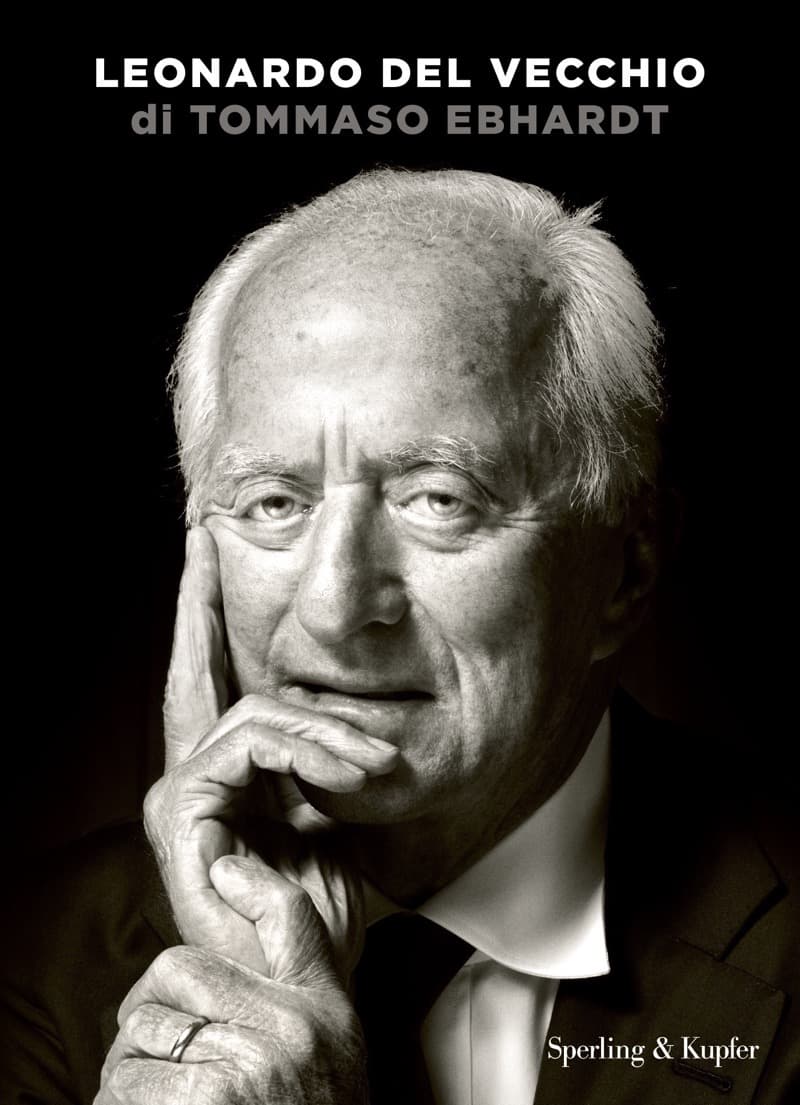
Tommaso Ebhardt
452 highlights · 18 themes · 53 cited people/companies
Italian orphan-turned-industrialist who built Luxottica from a tiny subcontracting workshop in the Dolomites into the world's dominant eyewear empire, merging with Essilor to create a $75B+ global leader controlling frames, lenses, and retail.
Technology products that don't look like normal glasses will fail — function must serve form in eyewear, not the reverse.
Refusing to delegate created an unmanageable span of control that ultimately required bringing in a professional CEO to rationalize the organization.
Del Vecchio's deepest regret was dedicating all of himself to the company at the expense of being present for his children — the orphan who built a surrogate family at work failed to build one at home.
“in 1995, Leonardo pulls off a move that catches the competitors off guard. He launches a surprise hostile offer to buy the US Shoe Corporation, which owns LensCrafters, the largest optical store chain in the world. The acquisition would allow Del Vecchio to close the circle in his vertical integration strategy.”
“The signature on eyewear, both prescription and sunglasses, definitively transforms them from a medical device into a fashion accessory. The consequence for the industry is a soaring increase in margins and a race to capture luxury brands.”
“"Essentially, the agreements with the workers are written in marble tablets: I give you everything, you give me everything," explains Camuffo, who has collected in a book the considerations of Del Vecchio about his entrepreneurial style.”
“His approach to the area of Belluno during those months happens gradually. It is said that, before setting up the factory in Agordo, he worked for a few months at the Metalflex headquarters in Venas, in Cadore. They had him do everything, from delivering parcels to customers at the post office to receiving sales and purchase documents. Months of apprenticeship that allowed the man from Milan to better understand the…”
“Here the Del Vecchios prepare briefcases for the representatives, choose collections and models. Leonardo mainly follows his own intuition, and it works. While in Cadore they specialize in plastic, Luxottica focuses on metal glasses. In a very rigid sector, where competitors produce a limited range of products, Luxottica bets on "low cost and many models." Three sample collections are prepared each year, two prescri…”
“Leonardo is fourteen years old and has a life to devour with one specific goal: to never again be forced to suffer the hardships of childhood. He has an obsessive desire to succeed. He is hungry for affirmation, ready for any sacrifice necessary to shake off poverty, hunger, misery.”
“They start with the machinery, which is rebuilt and modernized. Then they begin to study the brand's values, the style, they analyze all the past models they can find, Ray-Ban didn't even have a real archive. For a year they practically withdraw the brand from the market, selling the pieces they find scattered in various factories, and that's about it. And then, in 2001 they are ready to start again.”
“Guerra implements strategies that allow the company to avoid being overwhelmed by the tsunami caused by the credit crunch and the collapse in consumer spending. As he explains in several interventions, a company can die overnight because of its balance sheet, and not because of its income statement. What does that mean? Save the cash, make sure to have full bank accounts when the storm hits. He manages to do so and…”
“when you talk to him and find yourself discussing the prospects of Italian capitalism, the entrenched positions in the world of finance, the cross vetoes, the inability to look beyond one's own bell tower, Del Vecchio cites the new masters of Silicon Valley to highlight the difference in speed compared to some of our local managers. Del Vecchio speaks with Zuckerberg, follows Elon Musk, studies Bezos. He feels like…”
“Del Vecchio sends Francavilla and another collaborator on a scouting mission. In ten days they travel the world, from Ireland to Texas, up to Hong Kong. "When I got back, I realized that there was nothing to save. They worked very poorly, the factories were in bad shape, poorly organized, not managed," Francavilla tells me. "We returned and prepared a quick analysis for Del Vecchio," he explains. "When I met him, I…”
“On his desk, next to the circular room where all the eyewear collections are displayed and updated weekly according to sales data, he shows me a small engraving. It's written, in blue on a silver background: SIMPLICITY, TRANSPARENCY, CLARITY, HUMILITY. "These words have always been our secret." Next to it, a one euro coin is displayed in a small case with the inscription: EVERY EURO SAVED IS AN EXTRA EURO IN PROFIT.…”
“in order to guarantee it a stable and lasting future, even when he would be no longer there, he must follow one of the best practices of family capitalism: separating ownership from management, shareholders from the management team, a golden rule of the great families of the bourgeois aristocracy, like the Agnellis.”
Tommaso Ebhardt
Shares Tommaso Ebhardt, Milan, and Italy.
Airy Routier
Shares Armani, France, and New York Times.
Patrick McGee
Shares Steve Jobs, Elon Musk, and Andrea.
Alain Jemain
Shares Italy, France, and Paris.
Ebbe Dommisse
Shares Italy, France, and Paris.
Jimmy Soni
Shares Steve Jobs, Johnson, and Elon Musk.
“"What counts is what one does, not what one says." CESARE PAVESE, The House on the Hill”
“"Do you know what this thing Maradona did is called?" "Free kicks?" "No, it's called perseverance. I will never have it, and you must have it, Fabiè." PAOLO SORRENTINO, The Hand of God”
“Ray-Ban is essentially synonymous with sunglasses, one of those brands that have become common nouns, like Jeep for off-road vehicles, Scotch for adhesive tape, and Rimmel for mascara. The American company Bausch & Lomb patented the anti-glare Ray-Ban sunglasses in 1937 at the request of aviation ace John Macready.”
“The richest man in Italy - together with the Ferreros of Nutella - has accumulated a personal fortune of over 30 billion dollars starting from the lowest possible point on the social ladder.”
“The American acquisition of 1999 also made it known to the general public overseas: the Italian Luxottica, already listed for almost a decade on the New York Stock Exchange, buys a run-down Ray-Ban for 640 million dollars with an offer that outmaneuvers the main interested competitors, including the rival Safilo, who already thought they had the brand in the bag.”
“Del Vecchio relaunched the brand starting, as always, from the product. At the time of acquisition, Ray-Bans were purchased for less than 30 dollars in American discount stores. Leonardo transformed it into a luxury brand, expanding the range of products and introducing them into the corrective lenses market. It sells about fifty million Ray-Ban frames every year, more than ten times as many as when it bought the company for a price that seemed crazy to many competitors. Not to him.”
“Ray-Ban, like Persol and dozens of the most famous luxury brands from Armani to Prada, is part of the lines produced by Luxottica under the careful guidance of an entrepreneur who, if he had been born in New York, would fully represent the American dream of the self-made man.”
“A billionaire who at eighty-seven has no intention of letting go. On one hand, he is always ready to seize growth opportunities for his company, to embrace technological change by allying with social era global leaders – as demonstrated by the glasses developed with Meta, at the time Facebook –, on the other hand, he remains at the center of the financial world's attention due to his activism as an investor in banks and insurances.”
“Studying his deeds, you understand that every strategy of his starts with the product: two auctions and a well-made setting, better than anyone else; you realize that his choices always head in one direction: excellence.”
“Leonardo has had, and still has, the courage to take risks because he knows no boundaries. He knows that to be number one, you must reach every corner of the globe; it is necessary to reinvent the industry with every technological change. That is why he is back in the saddle at the threshold of eighty years, to make a new dimensional and strategic leap.”
“In Venice, ladies and gentlemen were already using them in the 18th century, when moving in gondolas along the canals. "Glasses for ladies" to shield the eyes and not damage the whiteness of the noblewomen's complexion from the sun's reflection on the water. Even the doges wore them.”
“A few years later, in March 1317, a license was granted to Francesco, the son of master Nicolò Di Nicola, a Venetian surgeon, to make oglarios de vitro on the island north of the Venetian lagoon. Thus, Francesco is the first eyeglass manufacturer in history whose name has come down to us, a forerunner of the Venetian tradition that in the twentieth century will lead Italian frames to conquer the world.”
“One must wait until the eighteenth century for the system we still use today to take shape: two temples that rest on the ears. It took nearly five centuries of attempts to arrive at the modern eyeglasses, stable and comfortable for the wearer. In Nuremberg, small companies began mass-producing eyeglasses, and in London the first temples appeared in a promotional brochure of the English optician Scarlett, but they did not yet rest on the ears.”
“There's a world out there to be conquered, new consumers eager to spend for their first car, the first refrigerator, the first ski boots, the first sunglasses.”
“The land of districts – the boots in Montebelluna, the chairs in Friuli, the eyeglasses in Belluno area, the sweaters in Treviso, the elegant shoes of the Brenta Riviera – is being chipped away by the low-cost productions from Eastern countries, devastated by the credit crisis and the collapse of the system of relationship banking, weakened by a lack of generational turnover, embittered by a globalization that leaves no room for those who didn't have the courage to grow.”
“In the photos of that day, you see Mister New Economy with a brisk pace and casual clothes next to an entrepreneur who has been on the forefront since the 1950s.”
“In the months of fear during the pandemic, when he was confined to his buen retiro on the French Riviera, he did so by videoconference, but always with the new frames in hand, brought directly from Agordo by a trusted driver. A relay between the Dolomites and the sea to make the Tuesday meetings less virtual. Leonardo never gives up, never.”
“In industrialized nations, over 70% of adults use glasses, not considering the over two billion women and men in India, other Asian countries, and Africa who have visual deficits but still cannot access the optical industry: an immense need and an endless market that continues to grow.”
“In 1950, in China, between 10 and 20% of the population had vision problems. Nowadays, among teenagers and young adults, the percentage rises to about 90%, as The Guardian writes in an investigation with the evocative title: "The spectacular power of The Big Lenses".”
“I am going to meet the man who from nothing created all of this with the strength of his determination, between the obsession to become the best and a fear that never passes: the fear that someone better might come along and take everything away from him—the global leadership, the most promising markets, the stock market value, his fortune. Leonardo, the outstanding figure in Italian entrepreneurship of the twentieth century.”
“"What you don't take for yourself, others will take from you," he will explain to me with a calm and determined voice. "You mustn't nurture potential competitors. If you get distracted or rest on your laurels, as I've seen several entrepreneurs who started with me do, without even realizing it, someone comes along to snatch your market away from you. It becomes very, very difficult to recover once they have overtaken you."”
“That's exactly why among his managers he has a team that spends their days looking for new targets, exploring new possibilities. "We have a team that constantly works on acquisitions, looks for new opportunities, evaluates markets where we can grow. There is still much to do, vast expanses especially in Asia," the man whose company has a decisive influence on the future of the optical industry worldwide tells me, producing over a hundred million glasses a year: 275,000 a day, Saturdays and Sundays included.”
“They did not understand that they were bringing a true disruptor into their home – the genius destroyer of the status quo –, an entrepreneur capable of conquering market leadership, of outliving their own company and dozens of others that prevailed in those years, of gradually taking market share. Of never being satisfied.”
“"The difference between me and many entrepreneurs who started with me? They felt they had made it when they could afford the apartment by the sea, in Jesolo. I never got tired of moving forward."”
“He was given the same name as his father. He was taken to the orphanage when he was seven years old. The lively youngest child needed guidance, as he was at serious risk of becoming a street kid, exposed to a thousand dangers. Grazia was never there. She was a factory worker. She had to work to feed the boys. She left early in the morning and returned late at night. She didn't know who to leave the little one with. She feared that by standing in the street all day, a "misfortune" could happen to him, as stated in an anguished letter sent to the orphanage in March 1942, in which she requests to accept "the shelter" of her son in the institution.”
“choice left to chance, to the tenth of a second in which the American Pippo planes taking off from the base of Foggia would drop a cluster of bombs in the sky over Milan, to return home lighter. Just a couple of kilometers further north, a bomb slips into the stairwell of an elementary school near the Naviglio della Martesana. It's 11:30 in the morning and the children with their teachers are descending the stairs to reach the air-raid shelters in the basements. The blast hits them squarely. In the Gorla neighborhood, two hundred die, almost all of them children.”
“Del Vecchio stops at fifth grade, completed by the lake. It is his great regret not being able to continue his studies. He learns the trade of engraving thanks to the vocational training courses, where he astonishes the teachers with his precision. At fourteen, he leaves the college, four years early, because he has already found a job. When he grows up, he wants to become "an excellent specialized mechanic," he writes in his resignation letter.”
“In 1949 he gets on a bicycle and every morning crosses the city to work at Johnson, which has been making medals in Porta Nuova for over a century. In the evening, he specializes at the Brera Academy, where the owner gives him the chance to grow, to refine his own drawing skills. Leonardo is in a hurry to move on. The rest is history: that of the orphan who for years becomes Italy's top taxpayer, only to later choose Monaco for residence and Luxembourg as the fiscal seat for his holding.”
“He is closer to ninety than eighty and always speaks of the future.”
“He thinks about the next international scale, but doesn't lose sight of the details that made him a billionaire.”
“He opens his iPhone and checks the sales data in real-time in individual countries. He is worried about Spain, observes how sales are going in the flagship store in Madrid, monitors the performance of his Spanish representative's deliveries.”
“"I can follow every model we sell, what sells the most in a particular store, it's the program we use with the executives, we have the rankings of each country, of each line, we keep everything under control."”
“From the general to the particular, and vice versa.”
“He misses nothing, woe to try to hide any problem or underestimate it, because "the boss" – as they call him in code in Agordo, as always – will notice it at the first check.”
“when he doesn't understand something, when a manager's ego is put before the interest of the company, when personal benefits are sought and one does not think of the good of the company, he becomes ruthless.”
“The impression is that of dealing with a top manager in full activity, not a patriarch at the end of his career who nostalgically remembers the heroic times of his great charge. In fact, he has no desire to talk about himself and his past. It will be one of the major difficulties in unraveling the tangle of his life: the reluctance to tell his story, to draw a line, to look back. He does not yet feel ready to take stock, he only wants to look forward.”
“despite the successes of his Luxottica, Del Vecchio never feels at ease, never.”
“He is constantly afraid that someone, something might take everything away from him, destroy his "factory," strike at his employees, for whom he has always felt responsible, one by one.”
“Acquisitions are often a reactive foul to some aggressive move by competitors.”
“On his desk, next to the circular room where all the eyewear collections are displayed and updated weekly according to sales data, he shows me a small engraving. It's written, in blue on a silver background: SIMPLICITY, TRANSPARENCY, CLARITY, HUMILITY. "These words have always been our secret." Next to it, a one euro coin is displayed in a small case with the inscription: EVERY EURO SAVED IS AN EXTRA EURO IN PROFIT. That's it. Simple, almost taken for granted. Yet on these rules they built an empire.”