Dot-Com Crash Wipeout
Masa's conviction-driven, all-in investment style led to a humiliating reverse when dot-com stocks collapsed — teaching that even visionary bets face devastating timing risk.
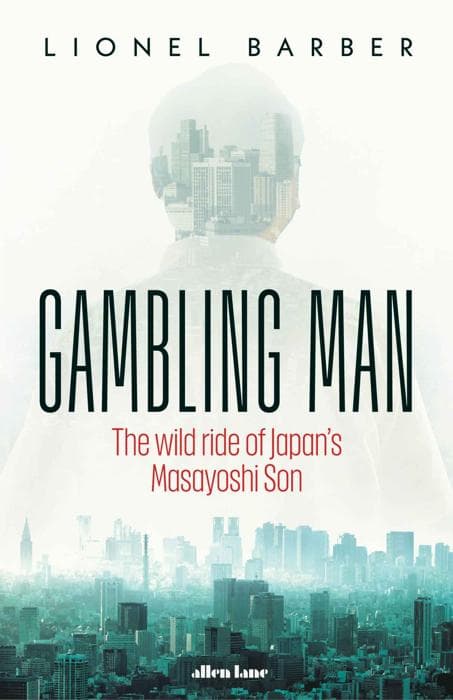
Masayoshi "Masa" Son, Japanese-Korean founder of SoftBank, who became the twenty-first century's ultimate conjurer of capital — masterminding a transnational tech-and-finance empire from pachinko-family origins through sheer will-power, techno-utopianism, and insane risk-taking.
Masa's conviction-driven, all-in investment style led to a humiliating reverse when dot-com stocks collapsed — teaching that even visionary bets face devastating timing risk.
“By his own account, Masa enjoyed his early childhood, playing hide-and-seek in the haystacks and fishing in the local Daigi river. His first encounter with overt discrimination left a scar, both mental and physical. One afternoon, on his way home from kindergarten, Masa was attacked by Japanese kids taunting him for living in the Korean ghetto. One threw a stone which struck his forehead and drew blood. It was a mom…”
“This mixture of stubbornness and inspiration illuminates the essence of Masa’s character and his approach to business. Convinced of his own techno-centric world view, he truly believes he can see into the future and make it reality in the present. ‘Masa thinks that if something could happen, it should happen. And if it should happen, it will happen,’ says a long-time SoftBank colleague, ‘and if it will happen, then…”
“In the third month, Mitsunori readjusted the pinball machines so he made ¥50m and then he went back to losing another ¥50m in his fourth month. Mitsunori was prepared to lose everything to make a fortune. His son would be no different. Pachinko culture was embedded in his DNA.”
“SoftBank’s CEO and founder was drawn irresistibly to historical analogies. He often compared himself to the nineteenth-century samurai warrior and reformer Ryoma Sakamoto, whose rebellion swept away the old feudal order in Japan, paving the way for the restoration of the Emperor’s authority in 1868. In the decades that followed, Japan rapidly modernized, spawning thousands of new businesses and spurring its ascent a…”
“The level of his personal indebtedness was reckless, his financial targets insanely ambitious. After two weeks, he’d fallen well short. The gambler improvised, ordering his pachinko engineer to rearrange the pins so every customer won $100 to $200. After a month, he’d lost ¥50m ($350,000 on contemporary exchange rates), but Lions was the most popular gambling joint in town. ‘I was down to my last ¥50m,’ Mitsunori re…”
“More than 50 years later, perched on a wooden armchair, Mitsunori Son, 87, reflected upon the moment he realized his second son Masayoshi was cut from different cloth, a young boy possessed of stubbornness, self-belief and unlimited ambition. Masa was six years old and he was sumo-wrestling with his elder brother in the family home. Masa lost the fight, but he refused to give up. Nothing would stop him, not even whe…”
“Masa suffered hardship in those first five years, but it was nothing compared to the suffering of his parents’ generation. Their sacrifice was a powerful motivating force for the young boy, leaving him with a profound sense of obligation. Whatever he accomplished in life, however much money he made, he felt he could never erase the debt he owed his parents and grandparents.[14](private://read/01jg9b8njt7zc5haz30afb9…”
“By the time Masa was in his early teens, Mitsunori was supporting up to 20 members of the extended Son family. Every weekend they would pitch up on the outskirts of Tosu in their flashy foreign cars to visit the grandparents still content to live in the Korean ghetto. This picture is far removed from later accounts of Son family poverty. On the contrary, the Son family’s wealth provided the security for Masa’s futur…”
“Jeff Sine, co-founder of the Raine Group, long-time personal banker and adviser to Masa”
“Almost a year earlier, when dot-com stocks began their dizzying ascent, a group of young Japanese had formed the Bit Valley Association, an attempt to create a community of tech-minded entrepreneurs to interact with, help and inspire each other. Their model was Silicon Valley in California. Every month, the group held a networking event, where analysts, bankers, investors, salesmen and traders turned up, each eager…”
“‘In the US, 99% of [internet] companies receive VC [venture capital] funding. That’s money you don’t have to pay back, even if your company failed,’ Masa intoned. ‘There are many entrepreneurs [in the US] who failed with four companies but on their fifth time managed to go public on Nasdaq and become a billionaire. I want you to keep challenging yourself.’ But, he added, people should still follow the rules.[5](priv…”
“It was a humiliating reverse – one that for most people would be crushing. For Masa it was simply one more twist in the roller-coaster pattern of failure and success that has characterized his tumultuous life. In the decades after the dot-com crash the diminutive SoftBank boss reinvented himself. He became the twenty-first century’s ultimate conjurer of capital, masterminding a new-age, transnational tech-and-financ…”
Hidenori Itagaki
Shares SoftBank, Ryoma Sakamoto, and Japan.
Patrick McGee
Shares Silicon Valley, Japan, and South Korea.
三木雄信
Shares SoftBank and Japan.
Unknown
Shares Japan and South Korea.
Edited by Nikkei Business Publications
Shares Silicon Valley and Japan.
Ebbe Dommisse
Shares Japan and South Korea.
“Jeff Sine, co-founder of the Raine Group, long-time personal banker and adviser to Masa”
“Almost a year earlier, when dot-com stocks began their dizzying ascent, a group of young Japanese had formed the Bit Valley Association, an attempt to create a community of tech-minded entrepreneurs to interact with, help and inspire each other. Their model was Silicon Valley in California. Every month, the group held a networking event, where analysts, bankers, investors, salesmen and traders turned up, each eager for tips on hot internet stocks. On this occasion, the gathering was held at Velfarre disco in Roppongi, ‘the district that never sleeps’.[2](private://read/01jg9b8njt7zc5haz30afb9n29/#pro_2)”
“SoftBank’s CEO and founder was drawn irresistibly to historical analogies. He often compared himself to the nineteenth-century samurai warrior and reformer Ryoma Sakamoto, whose rebellion swept away the old feudal order in Japan, paving the way for the restoration of the Emperor’s authority in 1868. In the decades that followed, Japan rapidly modernized, spawning thousands of new businesses and spurring its ascent as the leading economic power in Asia. Masa’s internet evangelism was, however, more than about making Japan great again; it was a bid to revive animal spirits in a Japanese economy still semi-comatose after the collapse of the real-estate bubble.”
“‘In the US, 99% of [internet] companies receive VC [venture capital] funding. That’s money you don’t have to pay back, even if your company failed,’ Masa intoned. ‘There are many entrepreneurs [in the US] who failed with four companies but on their fifth time managed to go public on Nasdaq and become a billionaire. I want you to keep challenging yourself.’ But, he added, people should still follow the rules.[5](private://read/01jg9b8njt7zc5haz30afb9n29/#pro_5)”
“It was a humiliating reverse – one that for most people would be crushing. For Masa it was simply one more twist in the roller-coaster pattern of failure and success that has characterized his tumultuous life. In the decades after the dot-com crash the diminutive SoftBank boss reinvented himself. He became the twenty-first century’s ultimate conjurer of capital, masterminding a new-age, transnational tech-and-finance empire that still touches many of the most dynamic parts of the world economy. Through will-power and guts Masa turned into a figure who embodies a gilded age of tech-utopianism, benign globalization and borderless finance.”
“a seductive blend of humility and hubris, common sense and insane risk-taking for whom national borders, technological frontiers and ethical boundaries are there to be crossed.”
“Years later, well after his first million, Masa confided to an old friend that he was plagued by a recurring nightmare, waking up in a start with the stench of pig excrement in his nostrils. When he described the experience, his friend said the dream was in fact a memory. Try as he might, Masa could not escape his past.[13](private://read/01jg9b8njt7zc5haz30afb9n29/#ch02_13)”
“Masa suffered hardship in those first five years, but it was nothing compared to the suffering of his parents’ generation. Their sacrifice was a powerful motivating force for the young boy, leaving him with a profound sense of obligation. Whatever he accomplished in life, however much money he made, he felt he could never erase the debt he owed his parents and grandparents.[14](private://read/01jg9b8njt7zc5haz30afb9n29/#ch02_14)”
“By his own account, Masa enjoyed his early childhood, playing hide-and-seek in the haystacks and fishing in the local Daigi river. His first encounter with overt discrimination left a scar, both mental and physical. One afternoon, on his way home from kindergarten, Masa was attacked by Japanese kids taunting him for living in the Korean ghetto. One threw a stone which struck his forehead and drew blood. It was a moment of humiliation but also self-realization: Masa spoke Japanese and he had inherited a Japanese name (‘Yasumoto’), but he was still a pariah.”
“The Son family’s path out of poverty was breeding and selling hogs. Because pigs reproduce faster than cattle or sheep, and Mitsunori was working 18 hours a day selling the animals for slaughter, the family’s finances rapidly transformed. Masa’s father had free family labour, free feed from restaurant scraps, and no rent because his family were squatters. It was all income, no expenses. Having set himself a target of ¥5m ($14,000) in five years, Mitsunori ended up making ¥40m ($111,000).[fn2](private://read/01jg9b8njt7zc5haz30afb9n29/#ch2_2f)”
“Watching his father, the young Masa would have learnt several things: the terrifying fear of destitution, the outsider’s relentless struggle for survival, the bitter truth that no one will help you but yourself, as well as the endless corner-cutting, hustle and re-invention required of an entrepreneur operating on the margins of society. By contrast, his mother Tamako is a more distant figure, absent in the literal sense (she is said to have found Mitsunori’s misogyny difficult and sometimes left the family home to stay with relatives), but also in the emotional sense. Grandma Lee, ever present, always worrying about money, left an enduring impression.”
“More than 50 years later, perched on a wooden armchair, Mitsunori Son, 87, reflected upon the moment he realized his second son Masayoshi was cut from different cloth, a young boy possessed of stubbornness, self-belief and unlimited ambition. Masa was six years old and he was sumo-wrestling with his elder brother in the family home. Masa lost the fight, but he refused to give up. Nothing would stop him, not even when his father tried to pull him away. Mitsunori still remembered the look in Masa’s eyes. ‘They were like an animal’s, a wolf’s eyes,’ he chuckled. ‘I thought to myself: “Wow, this bastard is not human.”’[15](private://read/01jg9b8njt7zc5haz30afb9n29/#ch02_15)”
“‘He [Masa] would keep staring at me, with those eyes, as if they were telling me to keep calling him a genius,’ Mitsunori remembered, ‘and so I ended up having to call him a genius.’ Just in case the foreign visitor failed to absorb the message, the doting father added: ‘Because Masa is convinced that he’s a genius, the good ideas follow. If you truly believe you’re strong, you’re a genius, then failure just bounces off you, you drive failure away through sheer will-power.’”
“This mixture of stubbornness and inspiration illuminates the essence of Masa’s character and his approach to business. Convinced of his own techno-centric world view, he truly believes he can see into the future and make it reality in the present. ‘Masa thinks that if something could happen, it should happen. And if it should happen, it will happen,’ says a long-time SoftBank colleague, ‘and if it will happen, then in Masa’s mind, it’s already happened. He’s already visualized it.’[16](private://read/01jg9b8njt7zc5haz30afb9n29/#ch02_16)”
“Masa agrees he was encouraged by his father to believe that he was exceptional. ‘He always said: “Masa you’re the best, you’re number one, you’re brilliant.” So I had a natural belief: I’m number one. Why should I compromise to be number two?’[17](private://read/01jg9b8njt7zc5haz30afb9n29/#ch02_17)”
“[](private://read/01jg9b8njt7zc5haz30afb9n29/#ch02_20)Pachinko operated in a legal grey zone, opening a space for ethnic Koreans shut out of the traditional economy. In time, they would come to dominate an industry amounting to 4 per cent of Japan’s GDP, more than Las Vegas and Macau combined.[21](private://read/01jg9b8njt7zc5haz30afb9n29/#ch02_21)”
“The level of his personal indebtedness was reckless, his financial targets insanely ambitious. After two weeks, he’d fallen well short. The gambler improvised, ordering his pachinko engineer to rearrange the pins so every customer won $100 to $200. After a month, he’d lost ¥50m ($350,000 on contemporary exchange rates), but Lions was the most popular gambling joint in town. ‘I was down to my last ¥50m,’ Mitsunori recalled. ‘I was prepared to go bankrupt and make a run for it.’[24](private://read/01jg9b8njt7zc5haz30afb9n29/#ch02_24)”
“In the third month, Mitsunori readjusted the pinball machines so he made ¥50m and then he went back to losing another ¥50m in his fourth month. Mitsunori was prepared to lose everything to make a fortune. His son would be no different. Pachinko culture was embedded in his DNA.”
“By the time Masa was in his early teens, Mitsunori was supporting up to 20 members of the extended Son family. Every weekend they would pitch up on the outskirts of Tosu in their flashy foreign cars to visit the grandparents still content to live in the Korean ghetto. This picture is far removed from later accounts of Son family poverty. On the contrary, the Son family’s wealth provided the security for Masa’s future career as an entrepreneur in Japan.”
“Mitsunori didn’t want Masa to follow him into business. At night, exhausted from working 18-hour days, he reached for the bottle. Then he’d start weeping. ‘Money is something I can make, or you can make, but that’s not something you should chase. I support the family and this is enough. To make money is sacrificing our [Yangban] pride,’ he told Masa. ‘When you grow up, you don’t need money. We don’t need money.’”
“Mitsunori advised Masa to enter politics and become president of South Korea.”