Bankruptcy Counsel on Speed Dial
Without a hit product, operational efficiency is meaningless—Apple nearly died not from bad manufacturing but from forty products and no strategy, until Jobs cut to four.
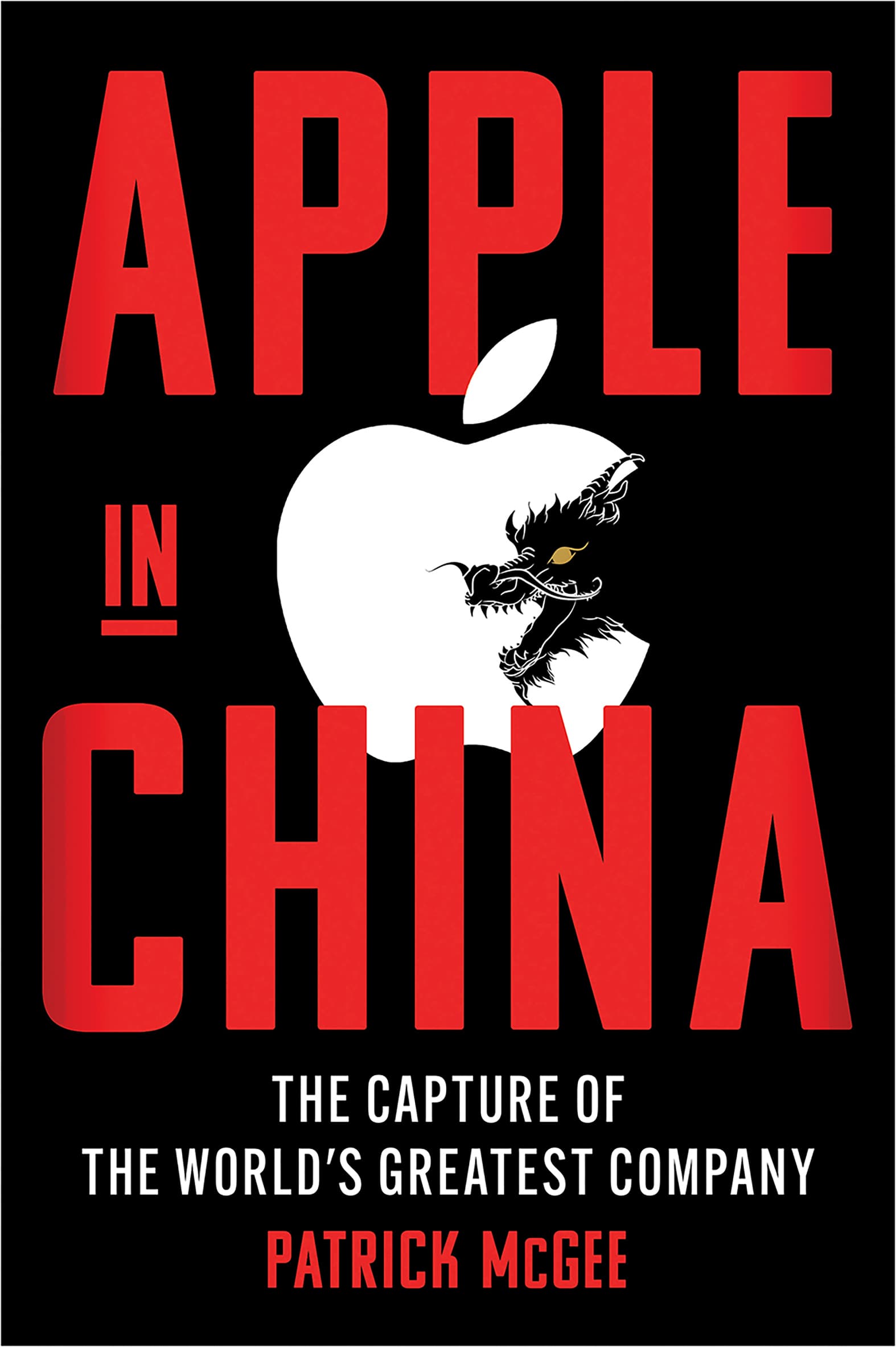
American tech company that outsourced manufacturing to China so deeply it inadvertently trained the world's largest industrial workforce, built a $3 trillion empire on design-first hardware, and now finds itself trapped inside the very supply chain superpower it created.
Without a hit product, operational efficiency is meaningless—Apple nearly died not from bad manufacturing but from forty products and no strategy, until Jobs cut to four.
Obfuscating deteriorating China sales on earnings calls—calling the business 'very strong' while internally knowing otherwise—destroyed investor trust and invited a securities lawsuit.
Attempting to replicate China's ecosystem by starting with final assembly rather than building component supplier competency first inverts the historical sequence that made Japan, Taiwan, and China successful.
“Cook established exceedingly high expectations the first time he held an operations meeting of worldwide managers. In the weekly review, attendees went over what had gone wrong in the prior days, what needed to be fixed immediately, and what was coming up. These meetings were typically ninety minutes; sometimes they could stretch beyond two hours. On the day Cook took over, the weekly review went nearly thirteen hou…”
“Foxconn began offering final assembly on the cheap for the same reason Costco sells hot dogs: It gets people in the door. Foxconn then upended the world of tooling by giving it away for free. That is, Gou would offer to pay the up-front costs of establishing the custom molds, dies, fixtures, and other equipment necessary to start building a product at scale. “That can be half a million or a million dollars,” says a…”
“Apple wasn’t just creating millions of jobs in the country; it supported entire industries by facilitating an epic transfer of “tacit knowledge”—hard-to-define but practical know-how “in the art of making things, in organizing practical matters, and in the way people produce, distribute, travel, communicate, and consume,” as the China-born Federal Reserve economist Yi Wen defines”
“So in 2016, when iPhone margins were 33 percent, Chinese rivals Oppo, Vivo, and Xiaomi were earning 7 percent, 6 percent, and 2 percent margins, respectively. In other words, the Apple Squeeze was instrumental to how Apple attained industry-leading margins. The message was: *We won’t pay you much, but the experience will be invaluable*.”
“During his time at IBM, he studied negotiation like it was both an art and a science. Later, describing tricks of the trade, he likened negotiations to “verbal jujitsu” and reflected on his ability to convince adversaries that his ideas were their own. He understood the power of emotion and could feign anger, disbelief, or frustration at will. One time he even took his shoe off and threw it against the wall. Sometim…”
“Novak, pissed off and offended, was demoted, and replaced by David Hoenig, a thirty-three-year-old mechanical engineer who’d been with Apple since 1994. Hoenig brought new energy to the team but was no less mystified by what ID was trying to accomplish. “The product could not be built,” he says. The problem wasn’t just that you couldn’t *mass*-manufacture it. “It was as fundamental as you couldn’t build one *in the…”
“Supporters of the R&D hubs say the negative view of them reflects the insecurities of engineers in Cupertino, who were losing their power as more decision-making got done in China. Before the hubs were built, Apple had been sending so many engineers to China on temporary trips that Cupertino convinced United Airlines to begin direct flights from San Francisco to Chengdu, three times a week, arguing that Apple would…”
“Foxconn’s system could handle other tweaks to the configuration as well, such as different processor speeds and memory upgrades, so regardless of what the customer ordered, Foxconn could put it together without delay. The production lines Foxconn built were just for Apple, and around each assembly line, it formed a hub of sites to build everything else that was needed: the molding factory, plus production lines for…”
“For Dell, ever focused on efficiency, China’s advantages were all about cost and scale—that is to say, they were about *margin*. But Apple looked at the armies of affordable, available labor and saw a different potential: *unconstrained design*. Or to put it differently: Western PC companies were shifting to China because of what was *available*; Apple shifted because of what was *possible*.”
“Cook had cautiously chosen to broadcast Apple’s $275 billion deal with Beijing quietly, so Cupertino needed to take other action as well. In effect it deployed a two-track approach. The private investment demonstrated its positive impact across multiple industrial clusters, while a second track would more publicly showcase new partnerships, more job creation, and the local R&D hubs. Liu might not have known all the…”
“Blevins couldn’t be at every meeting, so he taught his subordinates the values he’d picked up working at a used-car lot as a teenager. When the procurement team would meet in Hong Kong or Shenzhen, each would be given the same amount of currency, then sent off to the local market for a set time. Whoever came back with the most silk ties was the winner. This game would be played over and over again, inculcating a sen…”
“Every high-ranking executive aligned against Jobs to convince him to let Apple write iTunes software for Windows—an idea he loathed. He backed down only after multiple experts demonstrated the revenue potential of expanding the iPod and iTunes markets. “Screw it,” he told colleagues. “I’m sick of listening to you assholes. Go do whatever the hell you want.””
Edited by Nikkei Business Publications
Shares Apple, China, and Steve Jobs.
Richard Koch
Shares Apple, Steve Jobs, and IBM.
Peter Thiel, Blake Masters
Shares Apple, China, and Steve Jobs.
Don Valentine
Shares Apple, Steve Jobs, and IBM.
Tommaso Ebhardt
Shares Apple, China, and Steve Jobs.
張忠謀
Shares Ford, Taiwan, and IBM.
“Building on a long-forgotten or neglected legacy of technique from classical antiquity, with additions imported by the so-called barbarians, or acquired from more advanced cultures to the east, they succeeded in developing by the fourteenth century—certainly by the fifteenth—a corpus of knowledge and skills that not only put them far ahead of their teachers, but conferred on them a decisive superiority of power. It is on this basis that Europe changed from a hapless victim to global aggressor, from a poor backwater, obliged to make its balance of payments in slaves for want of marketable exports, to the affluent workshop of the world. —David Landes (1924–2013), Harvard economic historian”
“Without a strong manufacturing industry, there will be no country and no nation. —Made in China 2025, Beijing policy document, 2015”
“In the years since, two narratives within Apple have developed regarding what happened in those eighteen days. One is that CEO Tim Cook underwent something of a twenty-first-century show trial: Beijing had deliberately accused Apple of something it knew wasn’t true, to demonstrate its power. The whole episode was a spectacle designed to make Cupertino understand its junior position in the partnership and then publicly kowtow. Some hard-liners in China certainly saw Cook’s apology this way: On social media one rejoiced that Apple had been compelled to “bow its arrogant head.””
“It’s not merely that Apple has exploited Chinese workers, it’s that Beijing has *allowed* Apple to exploit its workers, so that China can in turn exploit Apple.”
“Apple itself estimates that since 2008 it has trained at least 28 million workers—more people than the entire labor force of California. China brilliantly played its long-term interests against Apple’s short-term needs.”
“Internal documents obtained for this book reveal that Apple’s investments in China reached $55 billion *per year* by 2015, an astronomical figure that doesn’t include the costs of components in Apple hardware—the so-called Bill of Materials, which would more than double the figure.”
“Apple’s investments in China, every year for the past decade, are at least quadruple the amount the US commerce secretary considered a once-in-a-generation investment.”
“By contrast, Taiwan’s critical, multi-decade role industrializing China through investment and worker training is widely recognized. At least three major books have been written on the subject in English since 2017.”
“Even Xi Jinping, who seeks to annex Taiwan and has little reason to flatter its citizens, has acknowledged that China’s forty years of opening and reform “has to be chalked up to our Taiwan compatriots and Taiwan companies.” Taipei calculates that between 1991 and 2022, total business investment from the corporate sector exceeded $203 billion, a huge number by any standard—barring Cupertino’s.”
“As I write this, Apple is expected to pull in $414 billion of global revenue in 2025, a company record. Since 2007, the iPhone alone has already earned a cumulative $2 trillion in sales. Apple’s business is so large and lucrative that in 2024 its $94 billion of net profit exceeded all revenue at NVIDIA—the chips architect worth $3 trillion that rivals Apple for world’s most valuable company.”
“As one former Apple engineer puts it: “We’ve trained a whole country, and now that country is using it against us.””
“Today, Apple works with more than 1,500 suppliers in fifty countries. But all roads lead through China: 90 percent of all production occurs in the country, and its much-vaunted assembly operations in Vietnam and India are no less dependent on the China-centric supply chain.”
“But if hindsight is twenty-twenty, a former senior designer at Apple says it looks like Beijing’s strategy was to “brain drain” Taiwan, learn everything that is needed, then “cash them out,” and take over.”
“Only a dozen multinationals earn more than $10 billion a year in China, and Apple tops the list with around $70 billion.”
“O’Sullivan, a self-deprecating, straight-talking Irishman who would spend fifteen years working in Apple operations on three continents and rise to the level of vice president, was in talks to sell the Fountain factory to SCI Systems, a contract manufacturer with little brand-name resonance relative to the profound role it played in the early history of personal computers.”
“Apple’s corporate death was such a real possibility that it sought bankruptcy counsel. It hired a leading lawyer, Harvey Miller, of the law firm Weil, Gotshal & Manges. The company wasn’t quite at the point of telling Miller to draw up the necessary papers, but it explored options to understand what a Chapter 11 filing could offer. Fred Anderson, who joined Apple as chief financial officer in March 1996, would later say: “This company was in a death spiral.””
“Apple itself could have played this dominant role; in fact, it *had* played this role. At the behest of Steve Wozniak—overruling Jobs—the Apple II featured an open architecture with eight expansion slots and a floppy drive. This allowed third-party software and hardware companies to build applications for it, widening its appeal beyond hobbyists and gamers to the workplace. That openness gave rise, in October 1979, to a breakthrough digital spreadsheet tool, VisiCalc, the first “killer app” for personal computers. Along with EasyWriter, an early word processor, VisiCalc helped transform the Apple II from a plaything to a workhorse.”
““SCI really is what made it operate—it was really the essence, the glue, of what made the computer run,” says Jay Elliot, who worked at both IBM and Apple in the 1980s. “They really introduced automated manufacturing.””
“SCI’s founder CEO Olin B. King then did something that would set a template for an entire industry. Adding to his knowledge of circuit boards, he had SCI take on adjacent tasks: it learned more about assembly operations, caught up with the latest methods in distribution, and started to win orders for subassembly and, later, to build entire computers—including for the PC clones that mimicked IBM. When SCI was building only circuit boards, it was just a supplier; when it started making another company’s designs, it gave birth to a new industry: electronics contract manufacturing.”
“In the early days, King met all kinds of resistance. America really cared about manufacturing in the early 1980s. His idea wasn’t just new, it was offensive. “I’ve been thrown out of a lot of places,” King once recalled. “It was not socially acceptable to tell a manufacturer to give up his manufacturing.” But the economics of what he offered were deeply alluring. It was costly to run your own factory. Full-time workers are a fixed cost, paid for year-round even when product demand is low and the workers are idle. King offered manufacturing as a service. His clients had to pay for only what they needed, when they needed it. The more clients he had, the more efficiently he could allocate resources, and the more his team would acquire manufacturing know-how. He could unburden companies of fixed costs, and—depending on the contract—take on the liabilities of product defects.”
“SCI was joined by the likes of Solectron, Flextronics, Celestica, and Jabil—all North America–based contract manufacturers who collectively killed off the entire concept of the do-it-yourself, vertically integrated computer company.”
“By the time Jobs had left, Apple had already started building strong ties in Japan. Jobs had visited Tokyo frequently in the early 1980s, enamored with the Sony Walkman and the emergence of automated manufacturing capabilities. Jay Elliot recalls being with Jobs at a traditional kaiseki multicourse dinner with executives from Sony at an over-the-top restaurant that hosted only one group per night. The start was inauspicious. Elliot, six-four and wearing size 14 shoes, couldn’t fit into the ceremonial attire. “They didn’t know what to do about it—they were so upset,” Elliot recalls. He and Jobs sat on tatami mats and wore ritualistic masks between courses. The highlight, he says, was being given an ornate wooden hammer to break open a clay pot, revealing a delicately cooked dish inside.”
““That’s how it all started—our relationship with contract manufacturing,” Gassée says. “As opposed to just getting the pieces like a disk drive and then assembling it ourselves. It started a culture of relying on, mostly, Japanese manufacturers.” The cost and quality of what Sony did, he says, awakened many to the capabilities of the Japanese in particular and outsourcers in general. “They were very good, and it was clear to me that we—the Americans—had no way to compete with what they did.””
“Frustrated by Apple’s in-house manufacturing deficiencies, Gassée advocated for the Portable’s laptop successor, the PowerBook, to be outsourced to contract manufacturers in Japan. This ignited a contentious debate in Cupertino, and Gassée, a Frenchman, was branded “anti-American.” But he won the debate, partially. Apple designed three PowerBooks—the 100, the 140 and the 160, in order of price—and had the 100 assembled in Japan. Sony canceled other projects to take on the challenge and freed up seven of its top engineers. Working from a half-page document of Apple specifications, Sony crammed the innards of a $4,500 Mac desktop into the form factor of a five-pound laptop. The whole project went from drawing board to production in just thirteen months, wowing Apple. It was priced at $2,300.”
“As Apple established more of a presence in the country, Joe O’Sullivan from operations moved to Tokyo in 1993 to head up supplier quality—meaning he was to oversee production and ensure it was up to snuff. “I was in Japan about five minutes, and it was like, ‘Apple can teach the Japanese nothing,’ ” he says.”
“The Newton group had been shunned by the rest of the company, like it was a spin-off. But this curse was partly a blessing. Asking to have the Mac assembled in Asia would be fraught with politics, but nobody really cared where the Newton was built. Baker had freedom. The United States, he says, was bureaucratic and already falling well behind Asia in cost and quality. “If you decided you wanted to contract companies in Asia or in the US, you would hear back from the Asian companies within a day or two,” he says. “Then you’d hear back from the US companies two weeks later.””
“Amelio declared that he needed a hundred days of reflection before he’d lay out his plan. That left an already-distressed company, which had recently cut 1,200 jobs, rudderless for fourteen weeks. The hundred days came and went without any brilliant ideas emerging from the CEO’s office. Amelio cut Apple’s dividend and took other actions to improve finances, but he failed to steer the company in a clear direction. Desperate for a plan, Amelio hosted what he called “coffee klatch” meetings on Fridays, to which he’d invite employees at random in the hopes that someone, somewhere, had an idea.”
“But Amelio deserves credit for three major actions—in hardware, finances, and software. The sale of the Fountain factory was the first. It gave Apple critically needed cash and would later spur a whole new strategy in how to build computers. Then Amelio and finance chief Fred Anderson orchestrated two deals to stave off bankruptcy: a week before Apple owed Japanese lenders $150 million, in April 1996, they got a six-month extension. Then in June, they raised $661 million in an oversubscribed bond sale. But Amelio will always be remembered for the third action. He realized that a multiyear effort to improve the Mac’s operating system was hopeless, and that Apple needed to acquire a new OS altogether. That insight set into motion the action that would get him sacked, even as it saved the company. He brought back Steve Jobs.”
“Previewing the action he would take at NeXT in 1993, Jobs took Pixar out of the hardware business. He cut staff by two-thirds and narrowed their efforts to storytelling. The result was a major deal with Disney, and out of that came *Toy Story*, the first feature-length computer-animated film and a smash hit at the box office. Jobs, who owned 80 percent of the company, took it public, and instantly became a billionaire. Its success reframed the public perception of Jobs.”
“By late 1996, NeXT had all but abandoned its goal of building an OS. Steve Jobs had told his staff “the ships are burning,” a metaphor signaling there was no turning back, in announcing WebObjects as the company’s new direction. But then a young staffer learned something intriguing: Apple needed a new operating system.”
“When Apple came calling, Jobs entranced Amelio and Apple’s board in a private presentation. “It was just mind-blowing to watch,” recalls a participant. “The heads started to nod affirmatively. They were very much taken with what he had to say, and taken with him—as people were—with his persona. It was obvious the board was going to approve it.””
“As the details were being worked out, a group of NeXT employees sat in a room together, chatting. They’d all worked with Steve, and they just didn’t understand what Amelio was thinking. None believed Jobs would ever be a number two. Not anywhere, probably, but certainly not at the company he cofounded as a twenty-one-year-old.”
“He was an envisioning a plug-and-play computer for the internet age, competitive on cost because less complexity meant less hardware—and software updates would be handled centrally. “I can’t communicate to you how awesome this is unless you use it,” he said. But Jobs wasn’t yet wholly convinced by his own vision. He was just spitballing with developers.”
“Jobs had little reason to know what Ive was capable of, and even less reason to care. Three weeks earlier, on July 9, 1997, Jobs stood before several dozen Apple staffers in shorts and sneakers, displaying an unkempt beard. “Tell me what’s wrong with this place,” he stated firmly. Without waiting for an answer, he exclaimed: “It’s the *products!* The products suck!” Then he offered remarkable clarity of vision, scribbling out a two-by-two chart on a whiteboard. Apple, he declared, would make desktop and portable computers, each coming in consumer and professional versions. Everything else was dead. In an instant, the number of Apple products in development was cut from forty to four. Reception to the strategy was mixed, but at least, finally, there *was* a strategy. “It felt like we may have all been driving off a cliff,” says product designer David Hoenig. “But at least we were all going together in the same direction for once.””
“Taking in all that he saw, then looking at Ive, Jobs said, “Fuck, you’ve not been very effective, have you?” In the world of Steve Jobs, this was a compliment. He was recognizing them, surmising that their problem was an inability to communicate their own worth. According to Ive, the two started collaborating that day on an all-in-one computer code-named Columbus, because it represented the New World. At a software review meeting afterward, Jobs beamed about what a “great group” ID was, then told them about Columbus.”
““We will be first and [a] bull’s-eye will be drawn around what we are doing.””
“Then Jobs started talking about what a disaster Apple was and how much had to change. It was all a lead-up to a pregnant pause. “I want to show you something that will change this company,” he told them. His hands moved toward the bowling ball bag, but then he stopped. “I don’t trust the Apple people in the room,” Jobs said curtly. “So, all of you Apple people—get out of here.””
“Jobs’s newfound enthusiasm brought out the best parts of his character: curiosity, leadership, and an ability to articulate a product path. But it brought out his worst traits, too: arrogance and a habit of belittling others. De Luca, the head of Apple marketing, recalls his embarrassment. The “Apple people” Jobs was referring to were account managers for some of Apple’s biggest clients, and their boss was humiliating them. Griffiths felt bad for them. A third person present says: “Even the account manager, who is going to pay their mortgage based on whether Michigan buys this stuff or not, was told to leave.””
“The ads took Apple’s humiliatingly small market share and recast it as an advantage, as if being in this minority put you in a class of misunderstood mavericks. It ignited a conversation about Apple at a time when the company had nothing particularly “different” to sell. The campaign was brilliant, but for one snag. Among the people highlighted was the Dalai Lama, the Buddhist spiritual leader in exile from Tibet ever since China crushed an uprising in 1959, killing thousands. The ad campaign was global, but the Tibetan leader was “conspicuously absent” in Asia, having been removed “for fear of offending China,” *The New York Times* reported. There was a minor uproar that Apple, in an ad campaign meant to showcase its values, was instead hiding them. One newspaper columnist said if Apple was really brave, Think Different would have included “Tank Man,” the unarmed protester who stood defiantly before a formation of armored tanks amid the Tiananmen Square crackdown less than a decade earlier. Now *there* was a rebel. A troublemaker.”
“He took the issue directly to Danny Coster, the New Zealand–born industrial designer who was leading the iMac project. It was Coster, a surfer, who among other things had come up with the computer’s Bondi Blue color, naming it after a beach in Sydney. “Chris, you’re gonna have to do this,” Coster said. “This is what we want. And we know it can be done.” Novak, humbled, gathered every senior tooling engineer at Apple into a single conference room. He showed them the design and asked for ideas on how to pull it off. “And every one of ’em said: ‘No, can’t do it.’”