Nearly Chose Ford's Safe Path
The safer, more comfortable choice can be the most dangerous one for long-term growth; sometimes indignation reveals what rational analysis obscures.
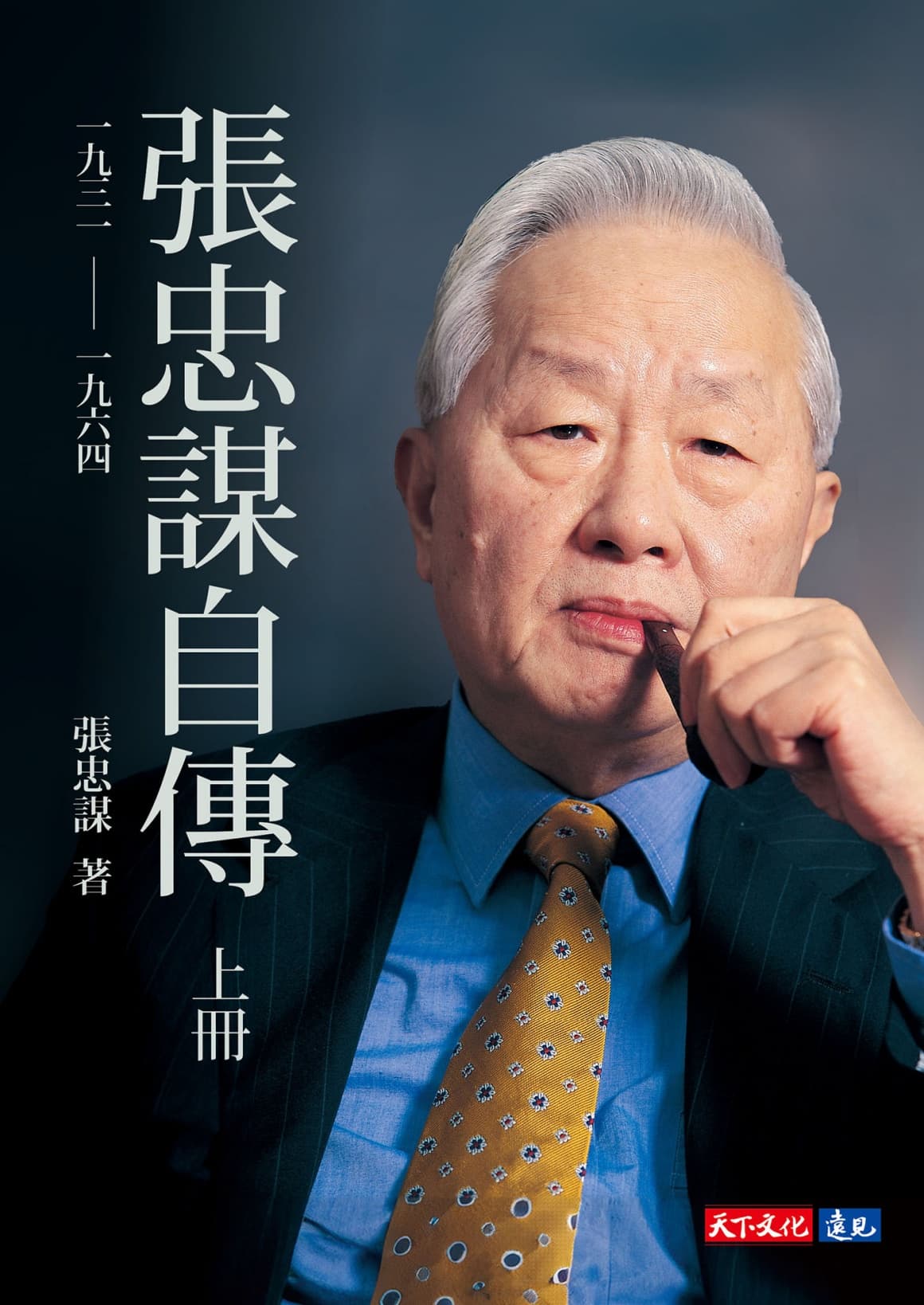
張忠謀
111 highlights · 14 themes · 11 cited people/companies
Founder of TSMC (Taiwan Semiconductor Manufacturing Company), Morris Chang entered the semiconductor industry at age 24 when it was only three years old, rose through TI and the early chip era, and ultimately created the foundry model that transformed global technology manufacturing.
The safer, more comfortable choice can be the most dangerous one for long-term growth; sometimes indignation reveals what rational analysis obscures.
A closed academic door forced him into industry, where his impact proved far greater than a research career would have allowed.
Individual excellence is wasted without organizational ambition, strategic customers, and leadership that understands the technology.
“In my first half year at TI, according to my neighbor, I became a “crazy worker.” I went to work at 8 a.m. every morning and went home at 7 p.m. for dinner. At 8 p.m. I went back to the plant to check the night shift’s results, and only went home after the third shift started at midnight. Of the two engineers under me, one worked hours similar to mine, and the other specialized in the second and third night shifts.…”
“Then why do we call this industry the “semiconductor industry,” and not the “transistor industry”? In fact, in the 1950s the semiconductor industry was almost the same as the transistor industry, and indeed some people called it the transistor industry, but most practitioners still called it the semiconductor industry. Why? Because of technological optimism! Most of the industry believed that the transistor would no…”
“Before I turned eighteen, I had already fled disaster three times, lived in six cities (Ningbo, Nanjing, Guangzhou, Hong Kong, Chongqing, Shanghai), and changed schools ten times. I had experienced gunfire (Hong Kong) and bombings (Guangzhou, Chongqing), and crossed battle lines (from Shanghai to Chongqing). I had a carefree childhood (Hong Kong), and also tasted the impassioned life of a middle school student durin…”
“This kind of team spirit in sharing hardship moved me, but it also brought immense pressure. Besides the operators, the foremen even more often asked what could be improved. Production director James Reese appeared on our production line every day, paying special attention to the progress of yield. Reese was one year older than I was, with an MIT bachelor’s degree in electrical engineering and a Harvard MBA. He quic…”
“Having “outsmarted myself” like that—if it were me now, I might just laugh it off, accept it, and without another word still go to Ford. But the young, hot-blooded me became furious from embarrassment. And in that fury, I began to “think in reverse.” I was confident about the work at Ford, but was I unwilling to take a risk and go to Sylvania to do something I wasn’t confident about? I thought I got along very well…”
“Just as the literary giant Hemingway described Paris as “a moveable feast,” I describe my year at Harvard the same way. After that, I went through various stages—MIT, employment, entering Stanford for a Ph.D., and working at Texas Instruments—but no matter where I went or what I did, I carried this “feast” with me and continually enjoyed the knowledge, interests, and insights that this “feast” gave me. Even decades…”
“Another observation I had about TI was that its upper management was quite proficient in semiconductor technology. Usually, in a technology company, the grassroots staff have specialized knowledge, but the upper levels are not necessarily experts. TI in the 1950s, however, was a semiconductor company where people at all levels were insiders.”
“TI’s breakthrough in silicon transistors immediately redrew the map of the semiconductor market. Before that, TI was an obscure small company; after that, TI soared and dominated the semiconductor industry for more than twenty years. TI’s breakthrough also had a deeper meaning: it established a model for countless small technology companies thereafter—that it is possible for the small to take on the big, and that th…”
“After arriving, he would shut himself in a room for a long time to think hard, with Western classical music playing beside him. He often listened to Beethoven, Brahms, and Mahler, and his favorite was Bach. He rarely socialized, liked to be alone; he engaged in a bustling enterprise that turned everyone upside down, yet lived a tranquil life light as clouds and gentle as wind. His eyes captured any hint of an innova…”
“And what a vigorous company Texas Instruments was! Employees seemed to walk a bit faster than at Sylvania, and their backs seemed a bit straighter too. “Tired” was practically an adjective you never heard. At that time, the standard workweek in the United States was forty hours, but TI’s working hours were at least fifty; it was common for someone to bring a canvas cot to work in the morning, planning to sleep in th…”
“My time at Sylvania can be said to have been the beginning of my fervent learning of semiconductor technology. After spending the first few months focusing on Shockley’s Electrons and Holes in Semiconductors, most of what I learned came from academic papers published at the time or from my daily R&D work. Fortunately, my new boss held a Harvard PhD and was quite proficient in transistor theory, which benefited me gr…”
“If I ask myself honestly, why was it that I could achieve some results as soon as I “first tried to make my name” at TI? In my first half year at TI, what I knew and what I could do was not much different from the latter part of my time at Sylvania; at Sylvania, my colleagues and I under Cory also designed and developed quite a few decent transistors, but in the end those achievements all faded into obscurity. Why?…”
Patrick McGee
Shares United States, Texas Instruments, and Harvard.
John Malone
Shares IBM, Bell Labs, and Microsoft.
Barry Diller
Shares United States, Microsoft, and America.
Don Valentine
Shares Sylvania, Intel, and IBM.
Edited by Nikkei Business Publications
Shares United States, Microsoft, and Stanford.
Thorndike, William N.
Shares United States, Intel, and IBM.
“People busy doing things rarely have time to think about the past, but in the quiet of the night, when I occasionally look back, what I miss most is not the period after thirty-three, when my career began to achieve some success, but rather the first half of my life.”
“Before I turned eighteen, I had already fled disaster three times, lived in six cities (Ningbo, Nanjing, Guangzhou, Hong Kong, Chongqing, Shanghai), and changed schools ten times. I had experienced gunfire (Hong Kong) and bombings (Guangzhou, Chongqing), and crossed battle lines (from Shanghai to Chongqing). I had a carefree childhood (Hong Kong), and also tasted the impassioned life of a middle school student during the War of Resistance (Chongqing); still more, I tasted the sorrow of leaving home and country, not knowing when I would return (from Hong Kong to the United States).”
“At eighteen I entered Harvard University in the United States. Among more than a thousand classmates with blue eyes, I was the only Chinese. For a whole year I had only American friends, used only English, and absorbed Western culture like a sponge. Even now, several decades later, that year at Harvard remains the most unforgettable and most exciting year of my life.”
“At nineteen I entered the Massachusetts Institute of Technology, where I learned my livelihood skills at the highest institution”
“At twenty-four I entered the semiconductor industry; at that time the semiconductor industry itself was only three years old.”
“Brother Yu Youcheng invited me to write a preface for his new book, “I See Intel” (published by CommonWealth Publishing) [1]. He said, “About two thousand words will”
“Just then, one night I reopened the Hemingway collected works [2] that I loved, and turned to his short story “The Snows of Kilimanjaro.” The protagonist is a writer who develops gangrene at the foot of Mount Kilimanjaro in Africa, cannot move, and waits to die while gazing at the snow-covered peak. The following are his hazy thoughts before death: Now he could never write the stories, the ones he had saved up to write when he could write them better. Maybe at least he had not written them badly. Maybe he would never be able to write them any better, and that was why he had been putting off writing them. In any case, everything was unknown now.”
“Yingdai’er is Intel (Intel), *My View of Yingdai’er*, 1995, Commonwealth Publishing.”
“From Xuzhou to Luoyang, we used every kind of transportation we could: when we could take a truck we took a truck; when there were rickshaws or tricycles we took rickshaws or tricycles; when there were no vehicles at all we walked. When crossing the front line, we of course chose a section where there was no fighting, but there was absolutely no guarantee that there would not be gunfire or artillery; that section was entirely on foot. The journey from Xuzhou to Luoyang took several days. Each night we stayed either in small inns, or in small shops, or in temples. During wartime, in places close to the front line, troops often came to inspect travelers. I remember that one night, the ones who came to inspect us turned out to be the Nationalist army; for the first time since leaving Shanghai, smiles appeared on my parents’ faces!”
“In late March 1943, we set out from Shanghai. At the time of departure we only knew the general route; as for how long the whole journey would take, what means of transportation we would use, and where we would stay along the way, we had only incomplete and uncertain information that my father had inquired about. The first leg of the trip was the most reliable: taking a train to Nanjing, then transferring to a train to Xuzhou. Xuzhou was in Japanese hands at that time, but it was already very close to the front line where the Chinese and Japanese forces were fighting. After passing Xuzhou, the goal was Luoyang. Luoyang was in Chinese hands, so from Xuzhou to Luoyang we had to cross the battle line.”
“that time I deeply understood the truth of “The road to Shu is hard, harder than climbing to the blue sky,””
“Over the past several decades of life, I have already traveled a million miles, but no matter how comfortable or even luxurious travel in recent years has been, the journey I miss the most, the one that has the greatest meaning for me, and the one that left the deepest impression in my mind, is still the trek from Shanghai to Chongqing when I was eleven.”
“My mother decided to let me attend Nankai’s summer class: on the one hand I could review my schoolwork, and on the other hand there was also the chance of doing well and being recommended. Nankai’s rule was that all students had to live on campus. This was based on practical considerations: although Shapingba was only twenty or thirty kilometers from Chongqing, transportation was inconvenient at the time, and commuting was impossible for the vast majority of students. But setting practical considerations aside, requiring students to live on campus was actually a very good educational policy. In my experience, the periods when I learned the fastest, felt the happiest, and made the most good friends were all periods when I lived in the school dormitory.”
“After my father arrived in Hong Kong, he very firmly believed that I must study science and engineering so that after graduation I could make a living. Where could I go to study science and engineering? At that time Hong Kong had only one university, the University of Hong Kong; not only were science and engineering not strong there, but the entire school was not very highly regarded. Forced into it, my father believed I had only one path: to go to the United States to attend university. He still had the ability to cover my first year’s tuition, fees, and living expenses. As for after one year, it would depend on how things went for him in Hong Kong; and after I had become more accustomed to the American environment, I should be able to apply for scholarships, or work part-time while studying. My mother told me frankly that even my first year’s expenses were already a heavy burden for my father: “Fortunately you are an only son; otherwise we would not have the ability to send you abroad.””
“Under these circumstances, my parents decided to send me overseas. My third uncle, Mr. Zhang Sihou, was then a professor at Northeastern University in Boston, and he chose for me to apply to Harvard University. Why choose Harvard? First, Harvard is a world-famous institution; second, Harvard is in Boston, and my third uncle could look after me nearby. But Boston also had another world-famous school, one that specialized in science and engineering: the Massachusetts Institute of Technology. Why, after my father had clearly told my third uncle that I was going to study science and engineering, did my third uncle still not choose MIT for me? About this, I later asked my third uncle. He smiled and said, “The you I knew was the you at Nankai in Chongqing, when you loved the humanities. Later I heard you wanted to study business. It wasn’t until you got to Hong Kong that I heard you wanted to study science and engineering. I thought you should have time to gradually establish your own interests. Rather than rush you into the very specialized MIT, it would be better to let you have a buffer period at Harvard. Besides, Harvard’s science and engineering are also top-notch—it’s just not as specialized as MIT.””
“Looking back many years later, those seven months in Hong Kong at the age of eighteen were an important dividing line in my life. My old world collapsed as the mainland changed hands, and a new world was waiting to be built. Before Hong Kong, like millions of young people my age, I focused on preparing to study and work in China; after Hong Kong, I took the first step toward living abroad for the long term. Before Hong Kong, I wanted to go into business; after Hong Kong, I began a lifelong career in technology. Before Hong Kong, my parents were my whole world, and I relied on them for everything; after Hong Kong, I discovered that my parents could no longer help me, and I could only rely on myself.”
“In 1949, the United States stood at the pinnacle of prestige and authority. Only four years had passed since the end of World War II; it was the most important victorious nation, and also the only country whose homeland had not been destroyed during the war. Militarily, America’s army, navy, and air force had already displayed their might across battlefields around the world during the war, and it was also the only country to possess the atomic bomb. Economically, although its population accounted for only 5% of the world, its gross national product accounted for 40% of the world’s total. The standard of living of the American people at that time was unmatched by any other country: a U.S. worker’s wages for a few months could buy a car, and in two or three years could buy a house. Almost every household had a refrigerator and a washing machine, and many families were also purchasing the rapidly emerging television sets of that era. Employment among married women was still not common, so most families had only one working person, yet even a single salary could enable the whole family to enjoy a fairly comfortable material life.”
“The freedom of the American people was conditional—it required obeying the law, and the law was quite clear, with little ambiguity, and enforcement was quite strict. For someone like me, a survivor of war who had come through a chaotic era, the rule of law in the United States in 1949 seemed like another world. Of course, there was often crime news in the newspapers, but in the lives of most of the people in the city of Cambridge where I lived, it seemed that no shadow of crime intruded. “No need to bolt the door at night, and nothing left lying on the road would be picked up” truly was a depiction of life at that time.”
“On the pedestal of the Statue of Liberty in New York Harbor are the following lines of poetry: “Keep your ancient lands, keep your legendary splendor!” She cries out silently, “Give me your tired, poor, fearful people, They want to breathe the air of freedom. Send those who have lost their homes and long endured storms over here, I raise my lamp, Waiting quietly beside this golden gate!” [1]”
“In that one year at Harvard, the amount and breadth of my reading were something I never again matched later. I read Hemingway, Fitzgerald, Galsworthy, Sinclair Lewis, Jane Austen, Shakespeare, and Shaw; Churchill’s memoirs of World War II; famous speeches by modern American presidents; American history; Wells’s world history; several English books about China; and I also ventured into a few classical giants such as Gibbon’s The Decline and Fall of the Roman Empire, Adam Smith’s The Wealth of Nations, and even Marx’s Capital. Besides these major works, I subscribed to two newspapers, The New York Times and The Christian Science Monitor published in Boston, as well as Time magazine.”
“Just as the literary giant Hemingway described Paris as “a moveable feast,” I describe my year at Harvard the same way. After that, I went through various stages—MIT, employment, entering Stanford for a Ph.D., and working at Texas Instruments—but no matter where I went or what I did, I carried this “feast” with me and continually enjoyed the knowledge, interests, and insights that this “feast” gave me. Even decades later, when I returned to Taiwan, although changes in time and place made it feel as if I were in another world, this “feast” still did not lose its freshness. It was as though I were still immersed in a rich, ever-changing, refined, and captivating atmosphere.”
“At that time, among the professors in MIT’s mechanical engineering department there were many master-level figures. In applied mechanics there was Den Hartog; in fluid mechanics there was Shapiro; in thermodynamics there were Keenan and Kaye; in materials science there were Orowan and Chao. A few months ago, a vice chancellor from the University of California, Berkeley came to visit me. He was a few years younger than I and also came from mechanical engineering, though not from MIT. When he discovered that I studied mechanical engineering at MIT from 1950 to 1955, we could not help recalling the past. He said that at that time he greatly envied MIT’s faculty and academic standards, and he also agreed that the 1950s truly deserved to be called the golden era of MIT’s mechanical engineering department.”
“At that time I was “in the mountains without knowing the mountains,” and did not know that I was living in a golden age, but I did have a deep impression of the master-level professors.”
“In the eyes of the masters, the content and level of undergraduate—and even master’s—teaching materials were quite basic, but they all had the ability to “make profound things simple,” making it easy for students to understand. This ability to “make profound things simple” seems to be something only those who thoroughly understand a topic can possess.”
“The master-level professors’ attitude toward handling questions also left a deep impression on me. American students like to ask questions; the level of questions varies, some are very childish, but some are also quite profound.”
“Master-level professors never despised any question. They of course answered simple questions quickly; for more difficult questions, they also remained unhurried and composed, thinking while speaking, and at the same time writing on the blackboard the staged conclusions of their thinking. After a few minutes like this, a problem we considered very difficult would be solved by him. If he had not completely figured it out at the time, he would say, “Let me go back and think about it some more, and I’ll tell you in the next class.””
“A master is indeed a master—he seems never to be stumped; the harder the question, the more it is an opportunity for him to demonstrate his method of thinking.”
“Smart students can also learn from it a way to solve problems, and grow through learning under the dual education of “teaching by words” and “teaching by example.””
“In my senior year, I once had the idea of transferring to the physics department or the electrical engineering department. Among all the science and engineering courses I had taken, I liked physics and mathematics more. Of course these two sciences are required in the physics department, and the electrical engineering department also takes more of them than mechanical engineering. But I discovered that if I changed majors, I would have to delay graduation by at least one year, perhaps even two. Given the premise of graduating as soon as possible, I gave up that idea.”
“Although Chinese people believed that in America the only way forward was teaching and research, who said I could not be a pioneer and blaze another trail? After rejecting transferring to another school for a PhD, the remaining choice—for me the only choice—was: to find a job.”
“Just as in my naive thinking before choosing to study mechanical engineering, machines are used everywhere. But places that use machines do not necessarily need mechanical master’s graduates, and the prospects for mechanical engineering graduates are not necessarily better than those of other engineering departments. At that time, America’s rising aircraft industry and enormous automobile manufacturing industry employed large numbers of mechanical engineers; the steel industry and machine tool industry, which had begun to decline, also employed quite a few mechanical engineers.”
“The fourth was a company whose name I had heard, but the unit that wanted to hire me was opening up an industry I knew nothing about. This company was “Sylvania,” famous for light bulbs, televisions, radios, and vacuum tubes; the industry they wanted to develop was transistors made with semiconductors as the material. In mechanical engineering courses I had heard of “semiconductors,” but other than the name I knew nothing. As for “transistors,” I had not even heard the name. Then how did I go to Sylvania to apply for a job? It was entirely because of an offhand remark by my third uncle. In the period when I had failed the doctoral exam and was at a loss and unsure what to do, one day I went to my third uncle’s home, and he suddenly said: “A few days ago a Chinese friend came to see me and said he recently joined Sylvania working on transistors, and he said there are several Chinese people there. You might as well go and give it a try.” So I called Sylvania, and a few days later I went for an interview. The executive who interviewed me was the director of the semiconductor laboratory, a slightly chubby middle-aged American, very imposing, and he also seemed to know semiconductors well (later I learned that at that time people who understood semiconductors were as rare as phoenix feathers and unicorn horns, and this director was not among them). He told me that his task was to turn the “laboratory” into a large factory, and in the process the manufacturing process would certainly need to be automated. And I was a mechanical engineering master’s graduate and had studied “automatic control,” which might be of some help to automation. With that one conversation, it neither aroused much interest in me nor stirred much hope. However, unexpectedly, the offer letter came—and the monthly salary was even one dollar higher than Ford’s: four hundred eighty dollars.”
“Having “outsmarted myself” like that—if it were me now, I might just laugh it off, accept it, and without another word still go to Ford. But the young, hot-blooded me became furious from embarrassment. And in that fury, I began to “think in reverse.” I was confident about the work at Ford, but was I unwilling to take a risk and go to Sylvania to do something I wasn’t confident about? I thought I got along very well with the supervisor at Ford, but judging only from the personnel manager’s coldness, how unreliable was that fleeting impression! I thought Ford was large and my career would be secure, but semiconductor development might be fast and perhaps would give me more opportunities to grow. Turning it over again and again for a few days while the humiliation was still fresh, I actually arrived at a conclusion that would have been impossible a few days earlier: go to Sylvania!”
“Life’s turning points can sometimes be so unpredictable! A short phone call, plus a young man’s momentary impulse, ended up binding me to semiconductors for a lifetime!”
“The characteristics of a semiconductor are exactly as its name suggests: its electrical conductivity lies between that of a conductor (such as metal) and an insulator (such as wood or stone). Semiconductors have another characteristic: their conductivity can be changed by adding “impurities.” Scientists had known of the existence of semiconductors for many years, but did not know how to use them. It wasn’t until 1948 that scientists at Bell Labs, making use of the properties of semiconductors, built the transistor—and everything changed.”
“The applications of the transistor were immediate and obvious: it was far smaller, far lighter, and consumed far less energy than the vacuum tubes that were already very important at the time, and it would soon eliminate vacuum tubes. Moreover, because transistors are small, light, short, and energy-saving, they can do many things vacuum tubes cannot do—for example, serve as the main components of computers, missiles, satellites, and so on.”
“In short, once the transistor was invented, its practical importance was recognized by the scientific and technological community. In just a few years, “semiconductor” changed from an academic term into an industry.”
“Then why do we call this industry the “semiconductor industry,” and not the “transistor industry”? In fact, in the 1950s the semiconductor industry was almost the same as the transistor industry, and indeed some people called it the transistor industry, but most practitioners still called it the semiconductor industry. Why? Because of technological optimism! Most of the industry believed that the transistor would not be the only invention based on semiconductors—there must be others. Sure enough, semiconductor lamps and semiconductor lasers followed one after another, and more importantly, the integrated circuit was invented in 1958. Today, integrated circuits already account for 85% of the semiconductor industry. The transistor, which dominated the scene forty years ago, accounts for only 5% of semiconductors.”
“Today, many people call Taiwan’s semiconductor industry the integrated-circuit industry. They are not wrong: the overwhelming majority of semiconductor manufacturers’ products are indeed integrated circuits. However, when it comes to the development of technology, I too am an incurable optimist. I firmly believe semiconductors are endlessly profound; integrated circuits are only their embodiment today. One day—perhaps in a few years, perhaps in a few decades—another invention based on semiconductors will appear. So I like this broader term: the semiconductor industry.”
“The importance of the transistor’s invention was no less than that of the electric light, the telephone, or steam power. The three inventors—Bardeen (John Bardeen), Brattain (Walter Brattain), and Shockley (William Shockley)—also jointly received the Nobel Prize in Physics in 1956.”