Blind to Fox's Debt Trap
Never accept a leadership position without fully examining the underlying financial structure — Davis's generous offer concealed a near-bankrupt company whose debt became Diller's problem to solve.
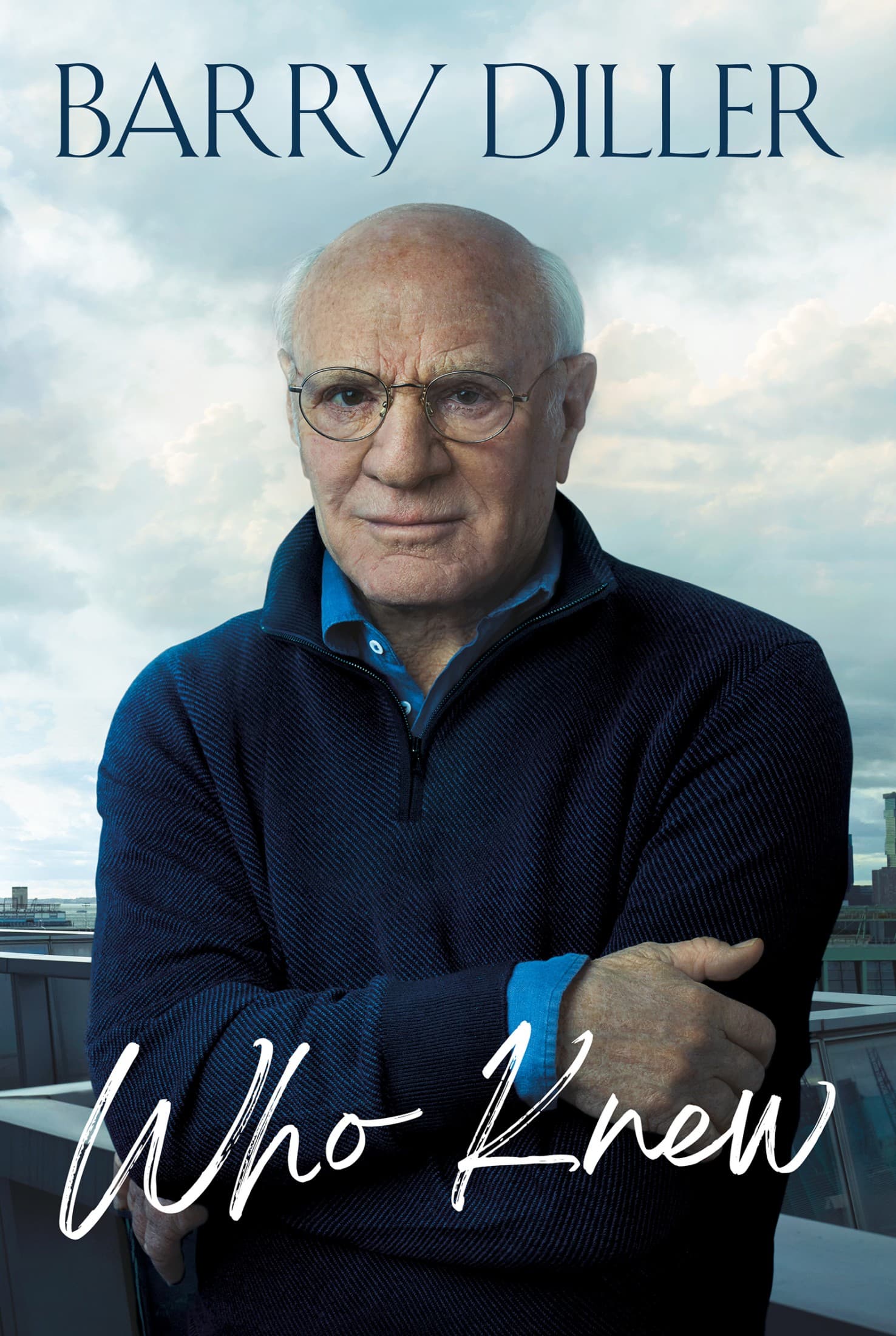
Hollywood entertainment mogul who built Paramount into a seven-year #1 studio, launched Fox Broadcasting as the fourth U.S. network, then reinvented himself as an internet entrepreneur building IAC into a $100B+ portfolio of digital businesses.
Never accept a leadership position without fully examining the underlying financial structure — Davis's generous offer concealed a near-bankrupt company whose debt became Diller's problem to solve.
Momentum in a deal chase can push past rational analysis, but stopping a bidding war — even when assets exceed cost — can be the right call when the investor coalition lacks true alignment of interests.
Never enter a merger relying on good faith without contractual protections — when you lack voting control, written agreements without enforcement mechanisms are worthless.
“I couldn’t understand why opening a picture nationally, using television, wasn’t a better idea than what they’d been doing. I had learned long ago that ad making was mostly about saying no to the ad makers. As in, “No, it’s just not good enough,” and “No, you can’t go home until you make it better.” The standard process at Paramount was to review three or four concepts that the ad department corralled from outside v…”
“It’s a harsh and binary concept, and not subject to equivocation. Either you are the principal or you’re not. The rationalizing powers of a good employee are endless. Good employees make decisions on a company’s behalf as if they own it. I’d been doing that since my earliest days at ABC. I acted like a principal, but I wasn’t one. I was an employee, and whatever position and power I had could be revoked at any time.…”
“Sometimes the staff would ask, “Is it commercial?” and I would brutalize them, because rather than using their instincts, they were trying to predict the public’s appetite, which I said then and say now, over and over again, simply isn’t possible. Neither is using research to help make decisions. No amount of research on ideas is worth the paper (or computer screen) it’s printed on. Data can tell you what *has happe…”
“One dumb step in front of the other, making mistakes, bouncing off the walls, course-correcting as we went along, head down. That was my process and… over time Process became my one true mantra.”
“My training stipulated that we had to be involved in every detail. At best, this management style created a productive tension between the studio executives and the talent that made the movie. I abhor the popular concept that filmmakers should be left alone to do their work. There are very few who do not benefit from a more objective opinion; whether they appreciate or acknowledge it is beside the point.”
“And on that very special day, literally that very day, Edgar Scherick, the czar of ABC, was fired! Quite incredibly, they reached down in the organization and picked none other than the young and untried Leonard Goldberg to be the new head of programming. What a stupendously inexplicable stroke of luck. Serendipity, my lifelong lodestar, had made its first appearance.”
“I’d told Ralph and Brian that I’d promised myself to never again sign an employment agreement and that I’d report to a board, but not to an individual. QVC was a public company, and the other major owner was John Malone’s Liberty Media. Malone had become the overlord of cable media. He controlled the largest cable network, and with Liberty, he owned most of the programming. He was known both as the Cable Cowboy and,…”
“Garth looked twelve, and Kevin looked even younger. I’m naturally disposed to hiring people who don’t necessarily qualify or have lots of prior experience; it comes from my own history. I like to give people “too much” responsibility because I took on “too much” when I was at ABC in my early twenties. I liked my process of drowning until I could figure out where the current was moving.”
“Over time, the distinct images of the three networks had blended together. Initially, CBS had been Tiffany, NBC was live “specials” and color, and ABC was the shoot-from-the-hip network that would try anything. ABC had become number one, and as the other two tried to compete, the programming for all three networks had grown very similar. I’d always been a contrarian counterprogrammer and believed this opened the opp…”
“At ABC, Paramount, and Fox, I had known what could be done with video screens: we told stories on them. But when I went to QVC in that eventful year of 1992, I watched a screen do something I’d never realized it could do. It wasn’t just a passive one-way delivery system of content. At QVC I witnessed the primitive convergence of telephones and televisions and computers all working together. They were interactive. Th…”
“After some few months, the legal entanglements came unstuck, and I also became chairman of the Home Shopping Network. I was definitely humbled, but I was back in business and I liked being back on the attack. I also more than liked being discounted again. I was in firm control of two public companies, and while of no size or circumstance, I had enough clay to get going. First up, though, was fixing the forlorn and b…”
“As I was racing around in those early days trying to build up our assets I was also planning to turn the television stations we’d bought with Silver King into a national network. It was unbridled, brainless ambition. Hauling endless bricks of programming up such a steep hill just wasn’t worth the toil. Thankfully, a better brick, a gold one, got thrown over our transom. Jerry Perenchio, a truly great entrepreneur an…”
John Malone
Shares Barry Diller, ABC, and QVC.
Christopher Winans
Shares Barry Diller, ABC, and CBS.
Thorndike, William N.
Shares Charlie, ABC, and QVC.
Patrick McGee
Shares Disney, San Francisco, and Coca-Cola.
Thomas Veszelits
Shares New York, United States, and Liberty.
Joanne Black
Shares Rupert Murdoch, News Corp, and New York.
“What took my father from his San Francisco–based construction-supply business to Los Angeles was the postwar housing boom in Southern California, where servicemen coming back from World War II were starting families and looking to use their government loans to buy homes in that sunny land of plenty. Back then, the great valley basin was mostly endless citrus orchards and thousands of acres of undeveloped land. My father, his brother, and three entrepreneurial colleagues essentially bought and built entire sections of Southern California—the San Fernando Valley, Palos Verdes, West Covina—replacing vast orange orchards with hundreds of thousands of tract homes, sometimes in ten-thousand-unit parcels divided into four basic models, mostly indistinguishable from each other. Men like my father made fortunes delivering the American dream to young couples in cookie-cutter houses in made-from-scratch communities. My father was far from the dominating force, that was his brilliant elder brother, and he always felt in his shadow.”
“I knew almost nothing of the life she had before I was born. She said her mother was Jewish, but I hardly ever saw her, and my mother rarely spoke of her father. He had been run over by a trolley car in San Francisco when she was three years old. If he was ever mentioned at all, she simply called him by his surname, “Mr. Addison.” My grandmother quickly remarried a well-off walnut merchant and with monstrous selfishness put her only daughter in an orphanage. She was five years old. My mother remained locked away there until she was sixteen. She never forgave her mother and never discussed with me her time in the orphanage. I often wondered if she’d been molested there; the surface gaiety, niceness, and kindness she displayed toward others seemed to hide a basic lack of emotional plumbing, as if it had been soldered shut.”
“The reserved atmosphere that deeply permeated our family has made it forever hard for me to break out of it with anyone else. We were the deformed results of generations of emotionally stunted families, from my grandparents to my parents and from them to me. It wasn’t until late in life that those barriers would be torn down and a new family would form around me.”
“As my fear of the consequences from my incipient homosexuality mounted—*from the age of eight I knew and didn’t know and didn’t know and knew—*this compulsion grew to alarming proportions; I spent many hours making absolutely certain I was obeying my increasingly exacting rules. I thought I was the only human behaving in this obsessively delusional way. The word picture I conjured was an anvil hanging by the most tenuous wire over my head and the discovery of my sexuality would snap that wire and the anvil would come crashing down. In the context of the fantasy, it was perfectly symmetrical. A perfectly crazy symmetry, perhaps, but there it is.”
“School wasn’t particularly competitive, and there was little anxiety about any future real-life complexities that might have worried less advantaged households. My group wasn’t the smartest, we weren’t the dumbest, we weren’t the nerds or the outcasts or the neurotics; we were the popular, seemingly carefree kids who floated easily from moment to moment. If we had secrets, and I had a few whoppers, they weren’t shared.”
“I wasn’t jealous, but I knew that whatever had rotted my brother’s brain wasn’t going to be fixed with bribes. I hated how he dominated and subverted their lives, and I sensed all the attempts to help him would fail. My brother was their life burden, and the source of their guilt, but no matter what he did, they couldn’t or wouldn’t let go; they always held on to hope.”
“It was at Pandro Berman’s that I first met Nora Ephron, who would become one of the great chroniclers of late twentieth-century life. She was about a year older than me, and we became friends. I would walk her home along the Santa Monica paths, and we would have long emotional talks about the flirtations she was having and I was not. What I was having weren’t the normal flirtations of postadolescence.”
“; I believed I could get away with anything. I refused to do homework, I hated then and still do the idea I had to study something I had no interest in. I excelled at nothing other than being able to find shortcuts around any hard work. But what really educated me, what saved me, I think, is that I read everything in sight. I loved reading because it was something I could do on my own”
“There was only one area that authentically excited me, and that was the world of entertainment. Simply, it resonated, not just as nothing else did, but as something I was instinctively drawn to. At least half of my friends’ parents were involved in front of or behind cameras, and to me they were a lot more interesting than the other half, who were involved in making light fixtures, egg farming, and other industrial pursuits. From the time I started to ride my bicycle from one famous Beverly Hills house to another, my eyes were starlit with every aspect of the entertainment industry.”
“For some forgotten reason we owned a precision-toolmaking company that made pitot tubes, one-foot-long metal cylinders that measure speed and altitude, for airplanes. Early one morning, I was assigned to take a rack of them to be silver-plated. There were twenty, and each cost $5,000. I carefully put them in the back of the van and set off on the freeway for the fifteen-mile drive. But… I’d forgotten to secure the rear doors and when I turned and went over a bump at high speed, one of the doors flung open, and out onto the freeway went the pitot tubes. And my summer job.”
“*Hmmm,* I thought, *Abe Lastfogel and Danny Thomas*. More dots. *Danny Thomas and me and Abe Lastfogel’s mail room.* Aha! The dots connected.”
“happened to his children. Quickly I said, “Yes, we’re all fine here, but… will you do me a favor?” He said, in his Talmudic, solemn way, “Of course, my son, of course I will.” “I want to work in the mail room at William Morris.” Thomas, at that time the agency’s biggest client, said, “That’s easy. Can I go back to my massage now?” The next day, I was called by the head of personnel at William Morris. He ever so politely asked me to come in whenever convenient. I said, “How about now?” Thirty minutes and a few desultory questions later I was hired. And just like that my life began.”
“I arrived with an enormous interest in everything entertainment, but no interest in ever doing the actual work that brought revenue to the company. I was probably the only kid to get a job in that mail room who emphatically did *not* want to be an agent. You need a certain assertiveness, and since I had no sense of self, it was inconceivable that I could ever ask anyone to trust me with their professional life.”
“Most important of all, I discovered that if I was trying to solve a complex problem, I seemed compelled, *literally compelled,* to drill down to its essence, because when I got there—at the base level of understanding—my instinctual abilities would give me a surprisingly accurate sixth sense, allowing me to tease out the very core of the matter.”
“Once I had that, once my intense magnifier was put to the issue, I had absolute conviction what to do. The stakes were small then, but I was discovering there was more to me than just puppylike enthusiasm.”
“I wasn’t really working, I was studying. I had the world’s greatest entertainment “library” at hand—the William Morris file room. It was a huge place with hundreds of metal file cabinets that housed the entire history of the entertainment business. I found excuses to disappear into it and deeply read every file from *A* to *Z*.”
“Then, one Christmas holiday, into the mail room walked David Geffen, a scrawny nineteen-year-old who looked more like a malnourished twelve. He introduced himself, saying he worked in the New York office, but wanted to use the holiday to find out what the L.A. office was like. I thought, *Whoa, now that’s ambition.* I could actually feel the hunger for success vibrating out of him. I’d never met, then or since, someone with more focus, more pure drive and ferocious intelligence than David. Unlike me, who loves process, David is the most efficient problem solver ever born. No artificial intelligence will ever exceed his ability to go faster from problem to solution, or from poverty to so many billions. Despite all the biological aggression and occasional occupational conflict that has bubbled between us at various times over sixty years of knowing each other, I treasure him now as my best friend.”
“I learned about Elvis Presley from the very beginning of his career—deals, contracts, the movie business, the concert business, the record business, his life, and the intricacies of the bizarre history of his manager, Colonel Parker. I knew before almost anyone else that the reason Elvis essentially would not tour outside the United States was that the very southern-sounding good ol’ boy Colonel Parker was actually a Dutchman named Andreas Cornelius van Kuijk, and he had entered the country illegally. Since he had no passport, he wouldn’t be able to get back into the United States.”
““If you write it down, you won’t have to remember it.””
“For those who can now never think of me as anything other than a boss, I have to say I was a better-than-good assistant. I was always a presentable young man in the strict suits and ties we all wore. My hair had begun to go in my earliest twenties and so I looked older than I was. There was no task I wouldn’t do, tiny or large, no length to which I wouldn’t go in order to make Mr. Weltman’s life better. I’ve always longed to have me as my own assistant, because no one had a keener eye for every detail than I did. I anticipated perfectly. I discovered that I had this aptitude to sublimate everything into being supportive. Because I had so little self, I knew I couldn’t be a principal, but I also knew I sure could suss out how to make the principal’s life better, just as I’d made my mother’s life better when I was a child. Where other people might assert themselves, I served.”
“I just didn’t want to be an agent. Agents sell. You can’t sell if you’re impervious to being sold. I’m sure the cleverest selling can get to me in some way, but if I know that someone is trying to sell me something, I immediately lose interest. Consequently, I am a lousy salesman, especially if the sale is a direct appeal, an assertion of self.”
“And on that very special day, literally that very day, Edgar Scherick, the czar of ABC, was fired! Quite incredibly, they reached down in the organization and picked none other than the young and untried Leonard Goldberg to be the new head of programming. What a stupendously inexplicable stroke of luck. Serendipity, my lifelong lodestar, had made its first appearance.”
“The elegant and suave William S. Paley, CBS’s chairman, would never have introduced himself to a new employee in the public elevator, because Paley had his own private elevator. Also, he was a time-honored snob and would have looked at my unruly suit and bad shoes and wondered what the hell I was doing in his classic Eero Saarinen building. At NBC, I would never have been greeted by Robert Sarnoff, its leader at the time and son of the founder, David Sarnoff. I would have quivered in the ornate lobby of the grand RCA Building, wondering which of the fifteen elevators I was supposed to take.”
“One of the many wonderful things at ABC was that if you wanted responsibility, you could simply take it. There were few rules, little governance, and almost no bureaucracy. The strictness came via the ethnic hierarchy: although the top bosses were all Jewish, the actual operations and running of the networks had white Anglo-Saxon presidents. Lower down on one side were the sales departments, populated primarily by gentiles, who interacted with the ad agencies and sponsors, where almost no one was Jewish.”
“The education I was getting hourly and the borrowed power I was using were a shock to my system, not to mention how it was shocking those around me. I exploded in every direction with ferocious energy. All that pent-up ambition I never thought I possessed shot out of me like a cork from a champagne bottle.”
“My total ambition at that point was to be the person who takes care of the “Person,” meaning the principal. In that role I was fearless, intuitively knowing how to move all the levers of people and power in my sole pursuit of satisfying the Person’s needs and goals.”
“Never during that time did I even once think I would be anything more than that, certainly not the Person himself. I could please people and intuitively knew what their issues and problems were. And I had the ability to figure out in minute detail how to execute whatever was needed to help them. I could “stand in” better than anyone else, but when the lights were turned on and the shot was to be taken, I never thought I’d be the One.”
“When I first moved to New York, I thought that city was going to be my permanent home, but soon found I was never going to have geographical permanence. For the next thirty years I would be a nomad, my only constant the planes that connected New York and Los Angeles. While historically the command-and-control systems for networks were in New York, filmed and taped series were mostly produced in L.A. Equally important, Leonard was now seriously dating Marlo Thomas, and he wanted to be with her as much as possible.”
“One of the most important staples in programming in the 1960s was showing motion pictures after they’d played in the theaters. There were only two ways for audiences to see movies: you either went to the theater when the films were released or waited months or even years for them to show up on the networks. Movies, of course, were the major entertainment and cultural form that everyone worldwide paid almost daily attention to—home video hadn’t yet been invented, so movies shown on television were its most watched and valuable commodity for the studios that produced them and the networks that aired them.”
“My first actual task, other than being the best assistant in the world, was to improve ABC’s library of movies. No one else in the company had concentrated on that, and there was an opening, so I claimed it. I hadn’t yet turned twenty-four.”
“It all began when Leonard Goldenson placed an urgent call to speak with Len Goldberg. Len wasn’t in the office, and Goldenson needed someone from the program department in *his* office immediately, and there I was. Goldenson said, “Please come up right away. I have Charles Bluhdorn in my office.””
“Charles Bluhdorn (pronounced *blue-dorn*) was one of the great industrialists of the twentieth century. In his late and most exuberant thirties, Bluhdorn had just bought Paramount Pictures, and he was in Goldenson’s office more than ready to deal. Actually, he was desperate: Paramount had been declining for years, making one expensive dog of a movie after another, which opened the door for the always rapacious Bluhdorn to take it over.”
“An Austrian immigrant, he had rag-traded his way into building Gulf + Western Industries into a huge conglomerate, doing everything from making car bumpers and pistons for jet engines to growing sugar. It took him only eight years to buckle together this giant agglomeration of businesses. He was like a rug merchant who couldn’t be in any room without the urge to trade something. He was truly brilliant, had momentous energy, was charming and funny with his full-on Austrian accent, and had a voracious desire to bend everything and everyone around him to his will. He never walked into any room passively, never met anyone without trying to seduce them, devour them, mold them this way and that.”
“In I walked, not only having never been in Mr. Goldenson’s office, but never having spoken to him again after our meeting in the elevator on my first day at the company. Bluhdorn had the energy of an electric grid and could hardly keep his seat as Goldenson told me they’d agreed ABC would buy a group of Paramount movies. Goldenson handed me the list and instructed me simply, “Follow up.””
““Everyone at this pathetic company I just bought is an idiot, so just call me,” Bluhdorn said. I couldn’t believe this giant industrialist wanted to handle this by himself. What I didn’t know was that Paramount was a vanity buy for him, opposed by his board. Until now all the other bread-and-nickel businesses he’d acquired had always been bought below book value. The only way he could justify buying the studio was to sell the television rights to its library of movies at a price close to what he’d paid for the whole company, a conniver’s connivance.”
“There was a long pause, and he said, “Stay where you are. I’m coming over right now to straighten this out.” Charles Bluhdorn coming to my office. Couldn’t be. But, half an hour later, he strode into my office, almost violently threw off his jacket, sat down, and began to tell me in ever-increasing volume how he had bought “that stinker company Paramount” with borrowed money and that it was secured by the contemplated sale of these films to television. So he had no room to change the deal by a nickel; or, he said with a devil’s smile, not a nickel more than 10 percent.”
“Pinned down by his small, bright, piggish eyes and looking for a politic way to get out of the commitment he seemed to think he’d made with Goldenson, I said, “Well, a deal this large has to go to the board of ABC for approval”—where that surety of statement came from I’ll never know—“and I, speaking for the program department that has to schedule these films, I will say: we can’t air them.””
“Now, I’ve played that moment in my head many times over the years. It wasn’t a flush of hidden courage that came over me; I was still someone who would change almost any of my opinions to please a powerful person. But fairness and honesty were the only solid principles my generally absent father gave me. This raging energy ball named Charles Bluhdorn had somehow bamboozled my venerable old chairman into accepting this ludicrous deal. It wasn’t fair and it wasn’t right and I was loudly and righteously angry that he might get away with it. I stood my ground. He got up, screaming, and strode toward the door. “I’m going up to Goldenson’s office, and we’ll *see* if he’s actually going to renege on the deal!” Calmly, I said, “I don’t think you want to confront Mr. Goldenson, since you’ve taken such advantage of him. Maybe instead of yelling at me, you and I should just sit down and see if we can find some other way to solve this.””
“Bluhdorn insisted: “You’ve got to take all of them.” The kernel of an idea forming, I asked if he planned to make new movies at Paramount or if he was just going to strip-mine the assets. That got him all frothy again and he bellowed, “Do you think I’m some small-time player? I’m going to revive Paramount and make it the biggest studio in town!” (And, he did.) I pounced on this and said, “Great. We’ll agree to contract all those films if we have the right to swap the new movies for the old turkeys. In other words, I’ll guarantee the dollars, betting you’ll make better movies we can successfully run, which will partially offset the costs of making them, since these old movies are basically worthless.” While I didn’t fully understand it at the time, this was exactly the concept Bluhdorn had used to build up Gulf + Western: trading the made-up paper value of his stock and using it to buy better assets than the crummy ones he’d been able to buy at the beginning.”
“Somewhere in the middle of that animated discussion, Leonard Goldberg returned and peered into my office. He later told people proudly, “There was this big mogul and my little assistant yelling at each other while devouring pastrami sandwiches—who knew?” Somehow, defending what I thought was right and fair for my company, I became fearless, while at the same time I was able to calibrate just how far I could go. I never came off as arrogant or disrespectful to Bluhdorn, but I was able to hold firm against his tidal wave of aggression. In that negotiation, I found out something about myself that has surprised me ever since. I actually love confrontation. Arguing principles forcefully, loudly, and passionately was becoming the definition of me. As long as I wasn’t arguing “self,” I was fearless.”