Catching the Falling Knife
After the 1987 crash, buying shares that seemed cheap (Chase at 60c, BIL at $3) taught him to wait until an asset hits the floor before picking it up—pain is the only real teacher.
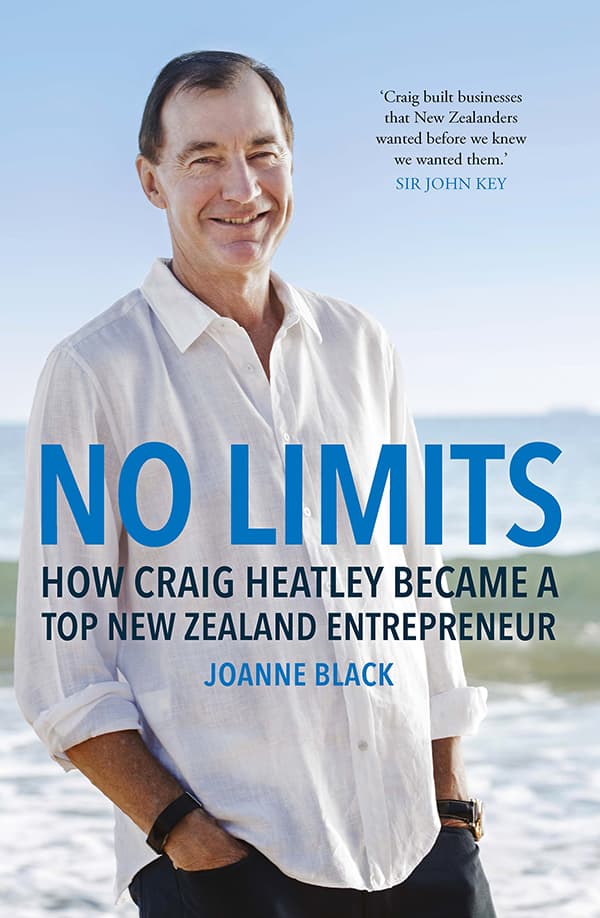
Joanne Black
181 highlights · 18 themes · 299 people/companies
New Zealand entrepreneur who built Sky Television from scratch into the country's dominant pay TV network, after first creating and floating Rainbow Corporation during the 1980s boom, turning a $200 land deposit as a schoolboy into a $330M+ fortune.
After the 1987 crash, buying shares that seemed cheap (Chase at 60c, BIL at $3) taught him to wait until an asset hits the floor before picking it up—pain is the only real teacher.
Investing $2-3M initially, then pouring in $10M more as the company floundered, taught him that once you're emotionally invested in a loser, cutting losses is nearly impossible but essential.
Not telling partners Gibbs and Farmer about selling his Sky shares—driven by information security concerns—damaged trust unnecessarily; spur-of-the-moment decisions affecting partners must be thought through.
“Heatley and Jarvis were introduced to Sam Chisholm, the Kiwi then-chief executive of Kerry Packer’s Channel Nine. Sky paid around $350,000 to Chisholm and some of his people to act as consultants—effectively to broker the introductions Sky needed to set up meetings. It felt like a lot of money to pay for not much but it was the price of opening doors.”
“On Sky’s side, Heatley led the negotiations with lawyer Roger Craddock, and on the HKP side there seemed to be a small army. When things were tough, Heatley and Craddock would call in Gibbs to play the bad cop to Heatley’s good cop. ‘The two telecom companies plus the two TV companies would come to Hawaii with 12 people each, which is ridiculous,’ Gibbs recalls. ‘They would come with 50 people.’”
“To set up towers in remote high spots was not only beyond Sky’s financial resources but the process of getting resource consents would have taken years, quite aside from the physical and financial challenges of getting power and infrastructure to the difficult-to-access sites. In that field, TVNZ subsidiary Broadcast Communications Ltd (BCL) literally held the high ground. It had the towers and access agreements alr…”
“Heatley, who lights scented candles in every room when he is at home and has a weekly standing order for large bouquets of fresh flowers, says he would be the last person to tell others to forego frivolities in order to save. However, he says, people should be conscious of the hidden cost of their frivolous consumption. The hidden cost is the interest that would have accrued had the money been saved instead of spent…”
“‘Rainbow would have completely crashed and gone like the others because it was a bubble company and the share price was totally in bubble territory and he’d paid big prices for all those stakes in the companies he had,’ Alan Gibbs says. ‘The clever thing he did was to sell out to Brierley before the crash so he must have had some presentiment of it. If he’d stayed five more minutes, he’d have been on his belly. He w…”
“As far as Heatley recalls, during the construction phase he and Sheffield never had a ‘what-are-we-going-to-do-if-the-money-runs-out-before-we-finish’ conversation. Just as with the Foxton subdivision, Heatley never considered failure to be a possible outcome. ‘It sounds nuts, I know, but we just blindly went on,’ he says.”
“Heatley’s exposure to Brierley’s from the inside was causing him to re-evaluate the way the company operated. One deal in particular shocked him. Brierley’s owned 30 per cent of British life insurance company Equity & Law. By law, an investor could not buy more than 33 per cent of a British company without bidding for all of it. Heatley recalled Brierley saying that BIL would bid for Equity & Law because two other c…”
“That purchase was noteworthy not only for Heatley’s age, but because it was the first example of the simple and direct way that he would go about many of his business forays in later life. He would see an opportunity, find out who knew about it, and pick up the phone to talk to them.”
“Learning how they operated, Heatley became determined that Sky would stagger the lengths of its contracts to prevent the studios acting in concert when the contracts expired. They might share other information but it appeared to him that the studios did not share information about the end dates of the contracts they were signing. That allowed Sky to do a three-year deal, which was about the norm, with one studio, wh…”
“At the time he was on seven different boards and in one day he resigned from all of them, including Sky, and pledged that only in exceptional circumstances would he ever sit on another. It had been flattering to be invited on to boards but he had not always felt like he contributed and the commitment was time-consuming.”
“Back on the island, Heatley has brought his son Josh and some of Josh’s friends up from Auckland. They head off to play pool, though if Josh was with only his father, they would most likely first play chess. No chance for a competition slides by the pair. If they swim in the surf, they compete to see who can bodysurf furthest up the beach. They are keen on poker. In their Auckland house, at Maui and here on Moturua,…”
“He cautions against investors having such faith in their own judgement that they hang on for too long to investments that are losers including, sometimes, their own companies. A successful friend of Heatley’s dumps any investment that has dropped in value by 10 per cent. ‘He rides his winners and cuts his losses and that is much easier to say than to do. Generally, people tend to think they are right, and one of the…”
“Nothing captured the headlines like the big companies. Brierley’s, Omnicorp, Judge Corp, Equiticorp and Chase were familiar corporate names.”
“The faces of New Zealanders such as Alan Gibbs, Trevor Farmer, David Richwhite, Michael Fay, Bruce Judge, Bob Jones, Gary Lane and Allan Hawkins were, for a time, as familiar as our biggest sports stars.”
“That purchase was noteworthy not only for Heatley’s age, but because it was the first example of the simple and direct way that he would go about many of his business forays in later life. He would see an opportunity, find out who knew about it, and pick up the phone to talk to them.”
“A former long-term girlfriend of Heatley’s, Linda Beazley, feels his father’s death significantly influenced the way Heatley thought about wealth and security. He equated money with freedom, she says. ‘He wanted to look after Vera and his sister and I think he was strongly motivated by this drive to create wealth so that he would never again feel the material and emotional insecurity that he experienced when his father died.’”
“The entrepreneurial way is to figure out your own path.’”
“One Saturday, he dropped off his mother and drove through to Foxton. He ambled along the main street, killing time. Pausing to look in the window of a real estate agency, Rod Weir & Co., he saw an advertisement for a block of land with ‘subdivision potential’ near the local racecourse. It cost $10,000. Heatley at the time would have had about $800 if he had sold his shares and added the proceeds to his Post Office savings. He opened the door and walked in. Just as Ron Jarden had taken Heatley’s call a few years earlier, so the agent took him seriously now, even though Heatley openly admitted that he was at school and had little money. But he had time and was interested in the property so the agent drove him to look at the land, which was covered in weeds and scrub. Heatley was impressed by the size of it and could see, when the agent pointed it out, how it could be turned into a residential subdivision. He could also see how he could make money from it. This, at last, was the potential for real earnings. Driving home, he excitedly told his mother about the land and its potential. She was incredulous that he would consider anything so absurd but probably comforted herself knowing that nothing could come of it because her son could not possibly afford it. But Heatley could not let the idea go. At school and in the evenings, he considered what he would need to do to create a subdivision. He contacted a surveyor and the next time Heatley went to Levin, they met. Once again, Heatley’s easy manner, his frankness in admitting this was all new to him and his ability to see past the numerous obstacles in his way gained him a sympathetic hearing. Did the real estate agent and the surveyor, perhaps learning that his father had died, feel sorry for him? Or did they simply think that if this foolish kid was prepared to risk his deposit, they might as well take it off him? Heatley does not know but after several long discussions with the surveyor about section sizes, prices, utilities and planning rules, he felt sufficiently confident to make an offer. Heatley confessed he had nothing like the $10,000 asking price. The agent said he would accept $1000 as a deposit. Heatley went to a bank to ask for a loan and was turned down. He went back to the agent and said he could offer $200 now and the balance of the $10,000 would have to wait until some of the sections could be sold. There must have been no sign of a better offer. The agent accepted the terms and with that Heatley became the schoolboy-owner of several scrub-covered acres of undeveloped land in Foxton, with a $9800 debt that he had no way of paying unless his foray into property development, about which he had so recently known nothing, was successful.”
“One Saturday, he dropped off his mother and drove through to Foxton. He ambled along the main street, killing time. Pausing to look in the window of a real estate agency, Rod Weir & Co., he saw an advertisement for a block of land with ‘subdivision potential’ near the local racecourse. It cost $10,000. Heatley at the time would have had about $800 if he had sold his shares and added the proceeds to his Post Office savings. He opened the door and walked in. Just as Ron Jarden had taken Heatley’s call a few years earlier, so the agent took him seriously now, even though Heatley openly admitted that he was at school and had little money. But he had time and was interested in the property so the agent drove him to look at the land, which was covered in weeds and scrub. Heatley was impressed by the size of it and could see, when the agent pointed it out, how it could be turned into a residential subdivision. He could also see how he could make money from it. This, at last, was the potential for real earnings. Driving home, he excitedly told his mother about the land and its potential. She was incredulous that he would consider anything so absurd but probably comforted herself knowing that nothing could come of it because her son could not possibly afford it. But Heatley could not let the idea go. At school and in the evenings, he considered what he would need to do to create a subdivision. He contacted a surveyor and the next time Heatley went to Levin, they met. Once again, Heatley’s easy manner, his frankness in admitting this was all new to him and his ability to see past the numerous obstacles in his way gained him a sympathetic hearing. Did the real estate agent and the surveyor, perhaps learning that his father had died, feel sorry for him? Or did they simply think that if this foolish kid was prepared to risk his deposit, they might as well take it off him? Heatley does not know but after several long discussions with the surveyor about section sizes, prices, utilities and planning rules, he felt sufficiently confident to make an offer. Heatley confessed he had nothing like the $10,000 asking price. The agent said he would accept $1000 as a deposit. Heatley went to a bank to ask for a loan and was turned down. He went back to the agent and said he could offer $200 now and the balance of the $10,000 would have to wait until some of the sections could be sold. There must have been no sign of a better offer. The agent accepted the terms and with that Heatley became the schoolboy-owner of several scrub-covered acres of undeveloped land in Foxton, with a $9800 debt that he had no way of paying unless his foray into property development, about which he had so recently known nothing, was successful. What he had on his side was that the surveyor and agent wanted it to work too. The surveyor said his fees would be $1500. Heatley told him he would pay $2000 but not until some sections were sold. Debbie thinks their mother, who was always ready to stand behind her son, helped out with the odd bill. But putting in a road, sewerage, water and stormwater were jobs for professionals. He had to raise some money.”
“Within two years, all but one or two of the 11 sections were sold and his $200 investment had become $17,000 profit. Looking back, he can scarcely believe that as a schoolboy he even considered creating a subdivision, let alone that he achieved it. But at the time he did not think he was doing anything unusual because the people he was dealing with treated him seriously and were professionals. ‘But how could I have thought that was normal, or even that I could succeed? It’s crazy! Perhaps I was arrogant. I just don’t know. But it worked.’ It seems that Heatley never considered that he might fail. ‘I don’t have a creative bone in my body and I don’t think I’ve ever had much ability, but I’ve never put limitations on what I do have,’ he muses. ‘I’ve also never been afraid to call up the right person if I think they have information or something I need. That’s not to say I’m always successful. Often I am not but unless you try, you’ll never know.’”
“‘He had us wound around his little finger, secretarially,’ Debbie says. He was getting used to the idea that when he explained what he wanted, people would do it.”
“As far as Heatley recalls, during the construction phase he and Sheffield never had a ‘what-are-we-going-to-do-if-the-money-runs-out-before-we-finish’ conversation. Just as with the Foxton subdivision, Heatley never considered failure to be a possible outcome. ‘It sounds nuts, I know, but we just blindly went on,’ he says.”
“Looking back, Heatley considers the mini-golf course to have been one of the biggest risks of his life. It also proved the old adage that when you have nothing you risk everything, because there is so little to lose. Sheffield feels the same way. ‘We clearly didn’t have enough money to complete it so it was an extremely ill-founded venture, really. It was done on a dollar, a hope and a prayer.’”
“For Heatley, Rainbow’s End was the third successful new business in succession but he did not pause to congratulate himself. Each success became simply more momentum propelling him towards the next venture. He has no recall of ever walking around one of the mini-golf courses with a sense of pride but only ever of thinking, how can we make this better? What else should we do? ‘I never stopped long enough. In part, the male curse in life, in my opinion, is living in the future too much. We tell our sons, “Be strong, don’t cry, you need to be the breadwinner, you’ll be the one who provides for your family,” and all that. By definition those things are about the future, so subliminally males are taught to live in the future and I was an extreme example of that. I was always thinking about the future and never taking five minutes today to say, “Well, that’s pretty good.” It took me about 45 years to work this out. I was always running towards something bigger. And that was true right through the eighties.’ As a boy depositing his paper-round money in his Post Office savings account, he had chafed at how slowly his savings were accumulating. Now, having successful small companies was also not enough. He was looking for acceleration and his timing could not have been better.”
“In 1983 the partners had more audacious plans than major attractions. They were starting to think about floating their company on the New Zealand Stock Exchange. One of the drivers for listing was better access to capital. By now, with money coming in from both Tamaki Drive and Rainbow’s End, banks were willing to lend for the infrastructure costs associated with developments at the adventure park, but the cost of borrowing was high. If the company became public it could raise money in its own right.”
“. The relationship with Perkins became an important one for Heatley. Perkins was known and respected in Auckland business circles. Importantly, Heatley felt that even though he himself was young, Perkins took him seriously and had faith in him. Heatley thought of Perkins as a mentor. It was through Perkins, Heatley thinks, that Tapper and George’s faith in him also grew. ‘A lot of people in business can be trustworthy but I wouldn’t trust them with my life,’ Heatley observes. ‘But Bruce Perkins, Margaret George and Margaret Tapper? They are salt-of-the-earth people and I would trust them with my life. Absolutely.’ Perkins’ son, Clark, who was at Goldman Sachs until starting private equity company Mercury Capital in 2010, became Heatley’s close friend.”
“By late 1983, the decision to take the company public was made. Rainbow Corporation was formed to buy the capital of Manawa Holdings Ltd, which in turn owned the separate companies running the Tamaki Drive site, Rainbow’s End and the Wet ‘n’ Wild water slides. But even with all three operations, Rainbow Corporation was tiny by the standard of publicly listed companies and it had been in operation only a short time. Studying Rainbow’s past performance could be done over a cup of tea. Nevertheless, the sharemarket was starting to move. There were 27 initial public offerings (IPOs) in 1983 and many of the new companies were doing well. Rainbow would be one of 31 local IPOs in 1984 and it would succeed beyond its founders’ most optimistic hopes.”
“Heatley was charging ahead with optimism and enthusiasm, carrying others along with him who were being led out of their comfort zone.”
“Margaret Tapper, who had a degree in Classics, and Margaret George, a nurse, had originally wanted a profitable company of a size they could manage along with their domestic commitments. Heatley was charging ahead with optimism and enthusiasm, carrying others along with him who, as Perkins had foreseen, were being led out of their comfort zone. There were few female directors on any public companies at the time, let along two women on one board. ‘I was company secretary of Rainbow and I hardly knew what it meant,’ says Tapper.”
“Tapper recalls that it was Coote who suggested that if they brought Allan Hawkins in, his name alone would add two cents to the share price at listing. Hawkins had just launched Equiticorp and was, in Heatley’s words, ‘the golden boy of the finance scene’. Equiticorp itself was booming. Hawkins later plummeted from grace to end up in jail after Equiticorp failed, but that was in a future no one at Rainbow could then imagine. ‘We went to see him and asked if he’d be chairman if we floated,’ Heatley remembers. ‘He sort of yawned, but he must have taken a bit of shine to us because he said yes.’”
“Rainbow Corporation’s prospectus proposed the issue of 12.5 million shares. Of those, five million would be sold at 50c per share to the public, and the rest would be sold for 20c per share to the founders. Hawkins would be chairman and the five board members would be Heatley, who would also be managing director, John Sheffield, Peter Coote, Margaret George and Margaret Tapper. John Sorensen and Ken Wikeley would be principal shareholders. The prospectus records that the company had agreed to issue 625,000 options ‘to a company indirectly owned by the Managing Director Mr Craig Heatley’. The options were exercisable at 50c each at any time prior to July 1989.”
“The threat of the float being kiboshed never became public but it caused two weeks of great anxiety behind the scenes amid furious letter-writing by both parties’ lawyers. Heatley was affronted on behalf of his friends. Although he and Sheffield were just getting established, Tapper and George’s reputations were impeccable. But the official held a powerful position and because the market already knew that the float was imminent, if Rainbow’s partners could not persuade him that the company’s forecasts were genuine, the float would have to be cancelled. If that happened, the partners’ names might forever be tainted by the association.”
“The entreaties of Rainbow’s lawyers prevailed. The way was clear for the listing to proceed although, ever since, Heatley has been sympathetic to those who are wrongly accused. Rainbow was small but it was also genuine and, as time proved, its growth prospects were far better than even the directors had dared to hope or the accountants had dared to forecast.”
“On the day of Rainbow’s debut Heatley was managing director of the most recently listed company in New Zealand, his shares on paper were worth more than a million dollars and he was just short of his twenty-eighth birthday.”
“Beazley had lived in Hawaii for a year as a teenager and after the others returned to Auckland, she and Heatley went on to Maui where Heatley stepped off the plane and fell instantly in love with the island. Despite Beazley’s sense of foreboding at the Rainbow’s End launch, the relationship seemed to be going strongly. ‘I found Craig very easy to live with on a day-to-day basis. He was a live-and-let-live person and I didn’t have to be anyone other than myself to please him,’ Beazley says. Her instinct was that, deep down, they both wanted the same things, which were, eventually, children and a strong family unit. Certainly, Heatley thought he would marry her. It never occurred to him that they would not always be together.”
“Beazley had lived in Hawaii for a year as a teenager and after the others returned to Auckland, she and Heatley went on to Maui where Heatley stepped off the plane and fell instantly in love with the island. Despite Beazley’s sense of foreboding at the Rainbow’s End launch, the relationship seemed to be going strongly. ‘I found Craig very easy to live with on a day-to-day basis. He was a live-and-let-live person and I didn’t have to be anyone other than myself to please him,’ Beazley says. Her instinct was that, deep down, they both wanted the same things, which were, eventually, children and a strong family unit. Certainly, Heatley thought he would marry her. It never occurred to him that they would not always be together.”
“Beazley had come from a financially successful family and the trappings of wealth were not of interest to her in the way they were to Heatley. In fact, Beazley was trying to find her own way and specifically did not want to re-create in her own relationship the roles of her parents, with her father driven by his business interests, Beazley Homes, and her mother in charge of domestic and family concerns. But with Heatley now leading a listed company and Beazley casting around for fulfilment, it was easy for them to fall into traditional gender roles. Beazley loved Heatley partly for his lack of sophistication. He liked sport—playing it and watching it. He liked eating the same food and going to the same restaurants and he loved nothing more than to be cooked for. She found him affectionate and charming and one of the things she loved about him was that he was always in control. In 1985, she moved into his house in Kohimarama.”
“The naturally contemplative Heatley, now a newly minted millionaire, was wondering what life was all about. The question has occupied him over the years, though his answer has not significantly changed. ‘My answer is that life is about love, laughter, relationships, experiences, family and friends. That’s the essence of life to me and, in the most basic sense, none of those require money. I know it makes life easier and it gives you options, but the best experiences that I have had in life are experiences or moments shared with someone else.’”
“Rainbow did work out, however, and spectacularly so. Between May 1984 and July 1987 it was as though fertiliser and warm rain had been applied to the newly seeded companies on the New Zealand Stock Exchange. Most flourished. Rainbow morphed from a small leisure company to a significant corporate player. The company that had been worth $6 million when it listed in 1984 was worth $600 million by July 1987. Along the way it bought bigger and bigger assets for higher and higher prices. Talented people joined Rainbow including Gary Lane, who had been a partner at Coopers & Lybrand, and Lloyd Morrison from the broking firm Ord O’Connor Grieve. As the share price rose, the company would place more shares to raise more capital to fund more acquisitions. It also took on more and more debt.”
“It was a time of absurdly easy credit, particularly for companies that had a track record and strong personal relationships with bankers. ‘The Bank of New Zealand would lend us anything,’ George wryly observes. ‘The bankers almost became personal friends.’ Businessman Alan Gibbs, who would become an investor in Heatley’s next project, Sky Television, describes the mid-eighties as a crazy, speculative period. ‘Between the drop in the exchange rate [after the 1984 election] and the sharemarket crash in October ’87, New Zealand had the biggest boom in its history and one of the biggest booms anywhere,’ Gibbs says. ‘Everybody’s share price went through the roof. You could make dough out of anything.’ Some companies that had depended on import licensing for their monopolies proved to be unprofitable once genuine competition appeared. As they faltered they were picked up cheaply by the new corporates. The behemoth Brierley Investments Ltd (BIL) was expert in that field. Atlas Majestic, the first stock that Heatley had purchased as a boy, was one of the companies that Gibbs took over.”
“business world’s high-flyers, including Ron Brierley, Frank Renouf, Allan Hawkins, Alan Gibbs, Bob Jones, Michael Fay, David Richwhite, Colin Reynolds and Bruce Judge.”
“After Heatley’s first call, Linton lay awake thinking about roller coasters. ‘What were the rules? There were none. I loved that. You could invent them.’ He devised his own ‘acceptability measure’ for rides on roller coasters, making up a 0–10 scale to rate the thrill factor and the re-ride factor. The search took the trio around Western Europe and Scandinavia where Heatley would talk to manufacturers about cost, Forrest would look at technical specifications and Linton would judge rides by his own instincts but also by watching the patrons, rating their responses by their expressions and their animation when he could not understand the language. He was a master mariner, commercial pilot and a cross-channel hovercraft captain, so had a good understanding of physics and engineering.”
“The leisure business was providing a healthy cashflow but Heatley was already looking farther afield. While one of the main reasons for floating had been to raise money to pay back high-interest borrowings, in the back of his mind he had hoped that if the park was successful it would embolden his colleagues to consider other investments. He and the other directors knew that the leisure industry had a natural cap in a city with a relatively small population. It was hard to see what more could be wrung out of Rainbow’s End. In July 1986 the leisure side of the business was split off as Questar Corporation, which planned to look offshore for further sporting/leisure and tourism opportunities. It was majority-owned by Rainbow but listed separately on the stock exchange. An ill-fated foray into commercial property, Rainbow Properties, which developed the Majestic Centre in downtown Wellington, was also spun off from Rainbow with Ken Wikeley as managing director.”
“Commercial property investor Sir Bob Jones is scathing about Rainbow Properties and says the company had no idea what it was doing. He says people are inclined to think that the commercial property field is simply a matter of bricks and mortar, but to invest successfully involves an understanding of intangible things including history and context. His company has worked out its own formulas, he says. ‘We’ve found it terribly easy to make vast sums of money. Some years after Rainbow Properties had gone, Craig said to me, “You know, I never really understood commercial property. I just don’t get it.” It’s a very revealing remark. Craig is sort of black and white. He’s a puritan. It’s hard to imagine him running rampant in any sense. He’s always under control. And I don’t think it’s because he is concerned about what people think, he’s just highly self-controlled and is probably quite content with life. He’s low on ego count.’”
“When Rainbow floated, there was a single sentence in the prospectus that, in hindsight, said more about the potential direction of the company than the rest of the prospectus put together. It reads: ‘The primary objectives of the Rainbow Corporation Group of Companies are to develop and operate leisure activities for the benefit of shareholders and patrons but other profitable activities will be pursued provided they are compatible with the Group’s existing operations and expertise.’ It was not so much a get-out clause as a get-in one. Rainbow had given itself permission to do anything and so long as it was making money, its shareholders were unlikely to complain.”
“Just as, back at university, Heatley’s suggested business ventures had been more audacious than his friends’, so too were his ideas now. ‘Craig was ahead of his time in shares in the sense that he actually had quite grandiose views about what could happen with certain companies, and I say that in a positive manner, not a negative manner,’ says Paul Collins, who was chief executive of Brierley Investments, the highest flyer of the eighties stock market hero companies. ‘Even though at Brierley’s we were regarded as being a large corporate raider, we tended to be relatively conventional so we looked at a business and looked at its assets whereas Craig would look at the potential. His mind was quite open and expansive.’ Collins cites George Bernard Shaw’s saying that some men look at things as they are and ask ‘Why?’ while others look at what might be and ask ‘Why not?’ Heatley is one of the latter, Collins says. Heatley himself puts it differently. He had sought out staff and colleagues with complementary skills because he knew his own weaknesses. ‘I am the world’s worst administrator—the worst. If I have a strength, and I don’t know that I do, but if I do it’s probably the big picture. It’s the tectonic plates as opposed to the grains of sand.’”
“Sometimes, the corporations created their own opportunities. Omnicorp was symbolic of the time. It was New Zealand’s largest public float when it listed in 1985, with its three major shareholders being Equiticorp and Chase Corporation, each with a 20 per cent stake, and Rainbow Corporation with 15 per cent. The remaining 45 per cent sold to the public. Its directors were Heatley, Allan Hawkins, Peter Francis and Colin Reynolds. The names of the directors and the shareholding by their respective companies were all that Omnicorp had to its name besides its issued capital of $50 million. It had no other assets and no stated raison d’être except to allow its three major shareholders to make investments they could not make individually. Although it was not said publicly at the time, the main shareholders were interested in acquiring Fletcher Challenge if they could. It never happened. But whatever its intentions, or lack of them, investors flocked and its 50c shares went straight to $1.50 on listing.”
“Heatley thinks Hawkins was fixated on controlling companies in which he had an interest. ‘Why else would he want to pay a 300 per cent premium for cash? Whereas I was thinking, Where do you ever see this—you buy something for 50c and someone offers you $1.50 for it five minutes later? So I said, “Right, sold.” It not only gave us profit but all the money back that we had put in. It was a great day for us.’ A year after its listing, Omnicorp’s purposeless nature seemed more obvious and more troubling. *The Evening Post* quoted Chase Corporation’s Peter Francis as conceding that the other commitments of Omnicorp’s directors had made it difficult to find time to make investment decisions.[1](private://read/01jectdbce729daxqkxt7cbe8r/#mn5)”
“Another of Rainbow’s purchases, for a brief time, was a small stake in *The New Zealand Herald* publisher Wilson & Horton. Heatley had always been interested in the media from a consumer’s perspective and now thought he would like to be a long-term shareholder in the publishing company and get to know its chairman, Michael Horton. Heatley thought there could potentially be a good partnership. He liked publishing, liked the media and respected what Wilson & Horton had achieved. But after buying 3 per cent at a good price, no overture was forthcoming from Wilson & Horton. ‘I think Michael took the view that there was no way he was going to let me in.’ After a short time, Rainbow sold its stake and moved on to other investments.”
“Unrelated, and many months later, Heatley took a late call at home from brokers Buddle Wilson. It transpired that somehow Brierley’s had learned that Michael Horton was booked on a flight from Auckland to Los Angeles. As soon as the plane had taken off, Brierley’s had launched a raid on Wilson & Horton shares. Horton could mount no defence because he did not even know the raid was happening. The brokers were acting on his behalf but without his knowledge. ‘Suddenly, Wilson & Horton, through Buddle Wilson, think I might be able to stave off Brierley’s,’ Heatley says. ‘Brokers are furiously trying to buy shares and they are calling and suggesting that I become a white knight but I was not interested without an agreement with Michael, which I could not have because he was on a plane.’ It was not the last time that an unfortunate turn of events for Wilson & Horton would become an opportunity for Heatley.”
“He was enjoying himself now. Both the company’s wealth and his own were increasing rapidly. He was building the secure personal financial base that, as a child, he had not had. Single deals, like getting in and out of Omnicorp, were making more money than all Rainbow’s leisure activities put together. This was far easier, and more fun.”
“At that time, there were many examples of the market mispricing public companies, with share prices either too low or too high to be justified by the respective company’s value. It still happens today but it was more frequent in the eighties for a number of reasons. Identifying which stocks were mispriced was key to Sir Ron Brierley’s success. He and his team picked over the data of companies, looking for a mismatch between their real value and the price of their shares. ‘That’s been Ron Brierley’s modus operandi all his life,’ says Heatley. ‘I’m not as clever as him, and I’m not an analyst but some of those mismatched prices were obvious.’”