Not Starting Think Tank Sooner
Delay in pursuing personal intellectual projects can limit impact despite business success.
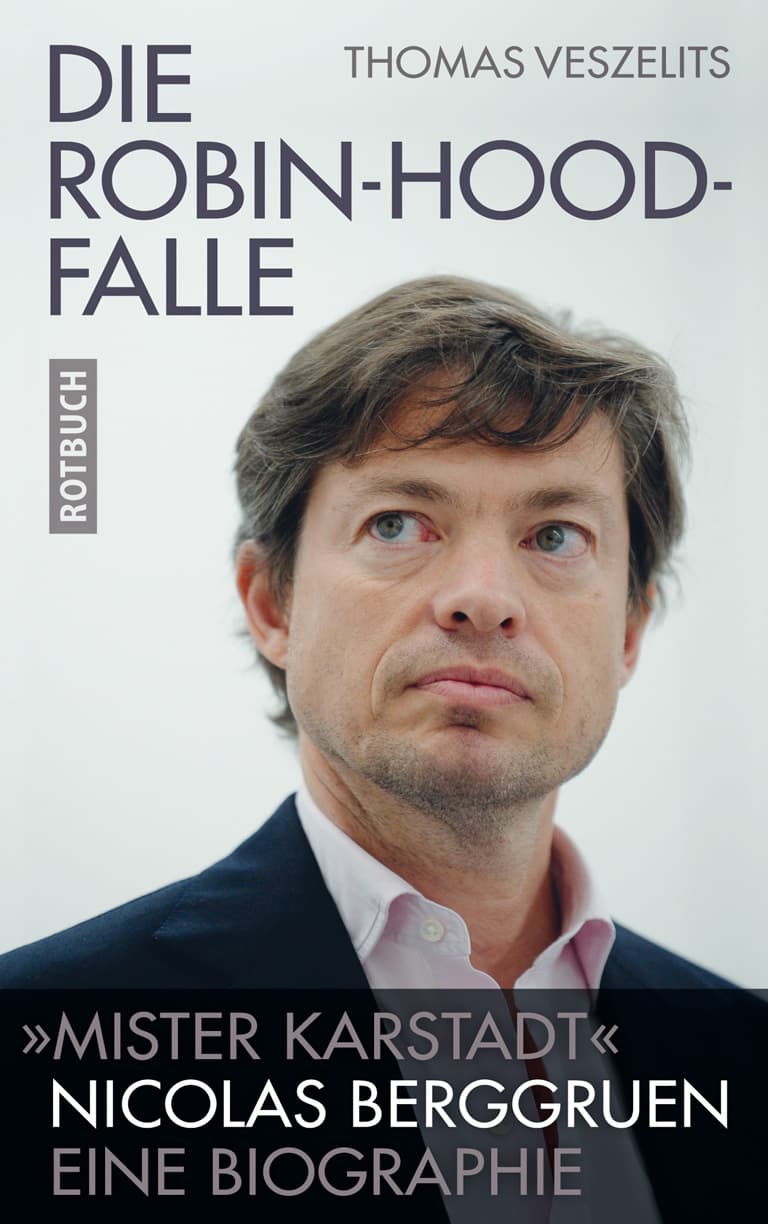
Thomas Veszelits
179 highlights · 16 themes · 43 cited people/companies
Nicolas Berggruen is a Franco-German-American investor, billionaire, and philanthropist known for orchestrating high-profile turnarounds of distressed companies and building a global investment empire, while seeking influence in governance and policy reform.
Delay in pursuing personal intellectual projects can limit impact despite business success.
Recognizing personal lack of fit as a hands-on manager led to a focus on delegation.
“We are experts in the 'turnaround' of companies in crisis: Almost all of the companies that I take over first have to be restructured to survive."”
“Karstadt is a lady of advancing years. The advisors to Nicolas Berggruen are aware of this. That's why they recommend a PR stunt. Subsequently, Nicolas Berggruen announces that they have been able to secure fashion designer Max Azria for Karstadt.”
“At 8:05 p.m., the Essen district court lifts the insolvency proceedings. With the judge's decision, Nicolas Berggruen is the new owner of Karstadt Warenhaus GmbH as of October 1. Around 40,000 creditors waive two billion euros. The workforce waives 150 million euros. The purchase price for Karstadt is announced as a symbolic sum – Berggruen acquires Karstadt for one euro! The common saying on the street murmurs: "Fo…”
“Monday, June 24, 2013 "Karstadt owner Berggruen earns handsomely with Berlin real estate," reports Wall Street Online. Since 2005, his holding company has invested around 300 million euros in the acquisition and renovation of about 100 residential and commercial buildings in Berlin and Potsdam. Their value is now estimated to be around 450 million euros. The most recently published balance sheets of twelve Berggruen…”
“The basis for Berggruen's financial transactions is not New York, but London. There, he learned the tricks of the investment industry at the age of 17. From London, he controls his funds, buys shell companies, and diversifies his holdings. He also orchestrated his investments in India via London. The key figure is the Egyptian Tarek Shoeb, a savvy asset manager.”
“Cash flow is my best friend”
“In his investments, Nicolas Berggruen has so far not invested his own money, but first set up funds with his partners; only after that did he go on a shopping spree. Johannes Neckermann, son of mail-order tycoon Josef Neckermann, experienced the takeover of the Neckermann department stores by Karstadt firsthand during the Frankfurt "Nights of the Long Knives" in 1976.”
“Safra's influence continues to play a major role in the financial world to this day. He knows how and where to weave deals in secret. Nicolas Berggruen has a remarkable instinct for letting businesses mature. He masters the art of waiting like few others. With Safra Bank, he will quietly land a super coup.”
“Nathan Gardels is now also one of the veterans of the World Economic Forum in Davos. In 1985, he founded the periodical New Perspectives Quarterly, which has been available since 1999 at www.digitalnpq.org and is allegedly read by 35 million people in fifteen languages. This is also the principle that Berggruen follows with his institute: Former heads of state, ministers, and diplomats comment on current world event…”
“While Nicolas Berggruen turns to politics, his team works reliably in the background like Swiss clockwork. There isn't a single investment in his empire where Nicolas Berggruen stands alone as financier. He always has partners at his side who handle the executive operational tasks for him. And no matter which stone you turn at his "construction sites" – a word, incidentally, that he likes and uses frequently – a com…”
“the Berggruen company network. It consists of: – Berggruen Acquisition Holdings S.A.R.L., Director: Ton Trentelman – Berggruen Holdings North America Ltd., Director: Jared Bluestein - BH Stores I N.V., Managed by Intertrust, Curaçao, Dutch Antilles - BH Stores IV B.V., Managing Director: IMS Benelux Holding Coöperatieve U.A. - IMS Benelux Holding Coöperatieve U.A., Director: Ton Trentelman - Karstadt Holding Ltd., D…”
“reviving a run-down department store not only requires skill and dexterity but also luck in a multiplied form. Anyone who dares to take on such a company must know the upcoming trends and the buying behavior of customers. No American department store chain has been able to gain a permanent foothold in Germany. Woolworth had to close its doors, America's leading supermarket giant Walmart has failed in this country, a…”
Margret Hucko & Martin Noé
Shares Nicolas Berggruen, Karstadt, and KaDeWe.
Thor Bjorgolfsson
Shares Germany, Deutsche Bank, and Turkey.
Patrick McGee
Shares Germany, China, and Turkey.
Andrew Rule
Shares Carlyle Group, Germany, and China.
Ebbe Dommisse
Shares Germany, Deutsche Bank, and Elizabeth Taylor.
Tommaso Ebhardt
Shares Germany, Benetton, and China.
“By now, at least half of all Germans know when his name is mentioned that he is "Mister Karstadt". Since September 2010, Nicolas Berggruen has owned this German retail icon, which was founded in 1881 and which he took over for a symbolic euro to prevent its downfall for the time being.”
“However, he is like his father: A nomad who moves through the world of money and art. Born with an untamable will for independence, he knows how to persuasively convince others of his intentions. With his successes, the conviction matures within him that he is above all and can achieve anything.”
“In addition, great opportunities are presenting themselves to him. Because the world is not as large as it seems at first glance. It is governed by about 5000 people. This ratio must be made clear: seven billion people depend on the will of 5000 individuals. That is not even one percent of the total population.”
“Of this group again, just under two thirds belong to the group of billionaires. Worldwide, the Hurun Global Rich List has identified 1453 megawealthy. One of these is Nicolas Berggruen.”
“BIOGRAPHY "Politics is the art of managing one's environment." HUNTER S. THOMPSON”
“His message is always: "The challenges are getting bigger, and they are coming at us faster. We don't have much time left."”
“Hans Jürgen Krysmanski speaks of 3000 billionaires worldwide, of whom not even half are publicly known by name.”
“"He was an extraordinary person anyway. He was never the father with the pointing finger for us children. He was not a teacher who gave us long lectures. He imparted two things for life that were important for my career path. First: When you buy something, pay attention to quality. And second: Learn to concentrate. Those who want too much can end up empty-handed." NICOLAS BERGGRUEN”
“"I have always been on my own. Just like my father. He believed that I had to make my own experiences with success and failure."”
“At this time, Picasso's paintings do not yet fetch the astronomical sums that they do today. Although he is already a millionaire, he lives beyond his means and is constantly in need of money. He cannot paint as much as he needs. He comes up with the idea of duplicating some of the graphics and objects that have already been sold. The commercial success of a piece of art is meant to attract more customers. To this end, Picasso starts to trade with his copyrights. Heinz Berggruen is among the lucky ones who manage to get a license from Picasso in January 1960 to cast limited editions of selected bronze sculptures. In addition, Berggruen has acquired reproduction rights for some graphic series. In his memoirs, he notes: "Duplicating Picasso’s graphic sheets was like having a license to print money."”
“Lord Max Rayne.”
“George Townshend,”
“But that Berggruen and Rayne had a good contact with each other is revealed by the career of his son Nicolas: At the unusually young age of 17 (!), right after his graduation, he packs his bags and moves to the English metropolis to do an internship at London Merchant Securities, the financial investment firm of Max and Robbie Rayne – also father and son.”
“In the early 1970s – as an economic crisis loomed and the art market was also in crisis – Heinz Berggruen was obsessed with one thought: Picasso. By now, millions were being paid for a painting by the artist, and Berggruen wanted to invest in this art asset as well. However, contact with Picasso was becoming increasingly difficult. The genius was grumpy, his assistant shielded him from the public eye. Berggruen desperately wanted to meet him and spent his vacation in Cannes – alone without family. Then on April 8, 1973, Picasso succumbed to heart failure. His estate was immense, comprising almost 1,900 paintings, 3,200 ceramics, 7,000 drawings, 1,200 sculptures, and 30,000 prints. A gigantic art inheritance, which, however, entailed a problem: not everything labeled Picasso is also a treasure. The determination of prices is a matter for experts, dealers, and auctioneers. Legends play a crucial role in the valuation. A realization that gives Heinz Berggruen no peace, from then on he would call himself "Picasso's friend."”
“And his plan works out: for his exhibitions, the vivacious widow lends him numerous works by Klee. She will not give him any as a gift, as she is obsessed with jewelry, exchanging Kandinsky's originals only for jewels from the house of Van Cleef & Arpels. It remains to be noted: Before Berggruen styled himself as a "Picasso friend," he focused on Klee. In doing so, he was eyeing America. There, Klee is still relatively unknown. Berggruen wants to open the eyes of Americans to the genius.”
“Institut Le Rosey”
“Once again, he proves to be a master of long-term strategy. Time works for him: the longer a Picasso or Matisse hangs as a loan in a prestigious museum in London or New York, the more valuable it becomes. He provides museums with the finest pieces as a loan for up to ten years; afterward, their value at least doubles the initial estimate. That is one of the secrets of the art trade: the paintings must "hang," the level of recognition determines the price.”
“Myths can sometimes be like moles. We don't see what they wreak, how they slowly undermine everything and change our perspective on things. As is well known, myths develop without any claim to truth. They are there to inspire the imagination, and hence they have always been invented by peoples, even to explain things that are not understood.”
“Heinz Berggruen - Life and Legend by Vivien Stein”
“"My mother is like any good mother concerned that I don’t get enough sleep." NICOLAS BERGGRUEN”
“"If you are lucky enough to have lived in Paris as a young man, then wherever you go for the rest of your life, it stays with you, for Paris is a movable feast." ERNEST HEMINGWAY”
“An anecdote that is often mentioned in connection with Nicolas Berggruen, and which was also included in a profile on Nicolas Berggruen on 3Sat, is that little Nicolas is said to have often "sat on Picasso's lap." The Munich evening newspaper (from June 8, 2010) also picked up the episode and wrote: "Born the son of the great art collector Heinz Berggruen, little Nicolas sat on the lap of Picasso." On Zeit Online it says: "Son of the famous art dealer Heinz Berggruen. Sat as a toddler on the lap of family friend Pablo Picasso." Stern (from June 10, 2010) finally states: "As a small child, he sits on the lap of Pablo Picasso."”
“An anecdote that is often mentioned in connection with Nicolas Berggruen, and which was also included in a profile on Nicolas Berggruen on 3Sat, is that little Nicolas is said to have often "sat on Picasso's lap." The Munich evening newspaper (from June 8, 2010) also picked up the episode and wrote: "Born the son of the great art collector Heinz Berggruen, little Nicolas sat on the lap of Picasso." On Zeit Online it says: "Son of the famous art dealer Heinz Berggruen. Sat as a toddler on the lap of family friend Pablo Picasso." Stern (from June 10, 2010) finally states: "As a small child, he sits on the lap of Pablo Picasso."”
“As a "School for Life," Le Rosey is one of the most prestigious educational institutions in the world. Prince Rainier III of Monaco, Shah Reza Pahlavi of Persia, Crown Prince Alexander II of Yugoslavia, Prince Karim Aga Khan IV, King Albert II of Belgium, King Fuad II of Egypt are among the alumni. But also the offspring of Elizabeth Taylor, John Lennon, and Diana Ross attended school here, and the heirs of family dynasties such as Rothschild, Benetton, Rockefeller, Onassis, and Niarchos shared the dormitory rooms.”
“As a "School for Life," Le Rosey is one of the most prestigious educational institutions in the world. Prince Rainier III of Monaco, Shah Reza Pahlavi of Persia, Crown Prince Alexander II of Yugoslavia, Prince Karim Aga Khan IV, King Albert II of Belgium, King Fuad II of Egypt are among the alumni. But also the offspring of Elizabeth Taylor, John Lennon, and Diana Ross attended school here, and the heirs of family dynasties such as Rothschild, Benetton, Rockefeller, Onassis, and Niarchos shared the dormitory rooms.”
“The teaching material is imparted bilingually, in French and English. Managing the syllabus requires discipline: from 7 am until 10 pm, the students are challenged. In addition to a top-notch education, Roséans receive something else: valuable contacts that have been established during the study period and usually last a lifetime. The network, Association Internationale des Anciens Roséens (AIAR), guarantees a perspective of success. It is part of the school's ethos to fuse the adepts with one another through intensive leisure activities. This concept is further supported by a tradition that is unique worldwide for a boarding school. Since 1917, the campus is switched according to the season: between January and March, one moves to Gstaad in the Château, where the school operation around the country estate Rex is spread across several chalets. "Moving 400 students and 200 staff members is no child's play. Perhaps it's even a bit foolish to cling to this 90-year-old tradition, but that's exactly what we like. Le Rosey is creative and sometimes eccentric, and nothing expresses this more clearly than the annual move to the Bernese Oberland," explains Philippe Gudin de la Sablonnière, the general director of the boarding school, in an interview. Once a protégé of this educational institution himself, he knows what he is talking about, having steered the fortunes of this establishment for over thirty years.”
“"His charisma is outstanding. He infects you with his energy and passion, carries you away with his optimism." LIZ MOHN”
“He internalized Picasso's credo: "What an artist is, is more important than what he does."”
“With the help of Picasso's business acumen and the support of art-loving Lord Max Rayne, Heinz Berggruen steers his son's future in the right direction. Nicolas Berggruen could not have had a better education: From the son of the financial patriarch, Robbie Rayne, described as highly intelligent, he learns everything that he has learned from his own father. Lord Rayne was considered a luminary among London's financial jugglers.”
“"The secret of art is not in seeking, but in finding." Pablo Picasso”
“Sounds ridiculous today, but I invested in a small property in Brooklyn. Then it went on. Everything still very small. Then bigger. Then the stock market. It went forward."”
“Heinz Berggruen's inner compass unerringly signaled to him where the big money was in America: with the Texas oil magnates. They were among the forefathers of American wealth and extravagance.”
“Picasso’s gallery owner, Heinz Berggruen found it easy to do business with the Texas collector tycoons.”
“He also learns where the money for such mega-projects comes from: from investors who are eager for profit. You just have to lay out the right bait.”
“"The biggest factor in our lives is culture, where we are born, what our environment looks like." NICOLAS BERGGRUEN”
“"I am more of an idealist than a sly fox. The main thing is that I am effective." NICOLAS BERGGRUEN”
“He implemented this strategy in Berlin from 2005 onwards, as a collector of "buildings with character."”
“During Reagan's administration, income tax was reduced from 70 to 33 percent. The so-called capital gains tax was also reduced. The greater the profit, the less tax had to be paid. This was intended to give the economy the opportunity to raise new investment capital. While on the one hand a huge private fortune was accumulating, on the other hand, the national debt was dramatically increasing.”
“He also remembers Heinz Berggruen and his spontaneous way of simply sitting down with complete strangers and talking to them. "He was interested in everything, knew what was going on, who had arrived, was incredibly charming, a bright mind, he only drank coffee."”
“Heinz Berggruen was "addicted to contact." He even once invited the hotel doorman to his room "to show him something he had never seen in his life."”