Georg's Trust Seizure
Transferring businesses into a trust at his son Georg's urging cost Thyssen ownership and control of the family empire, teaching that structural concessions to heirs can be irreversible.
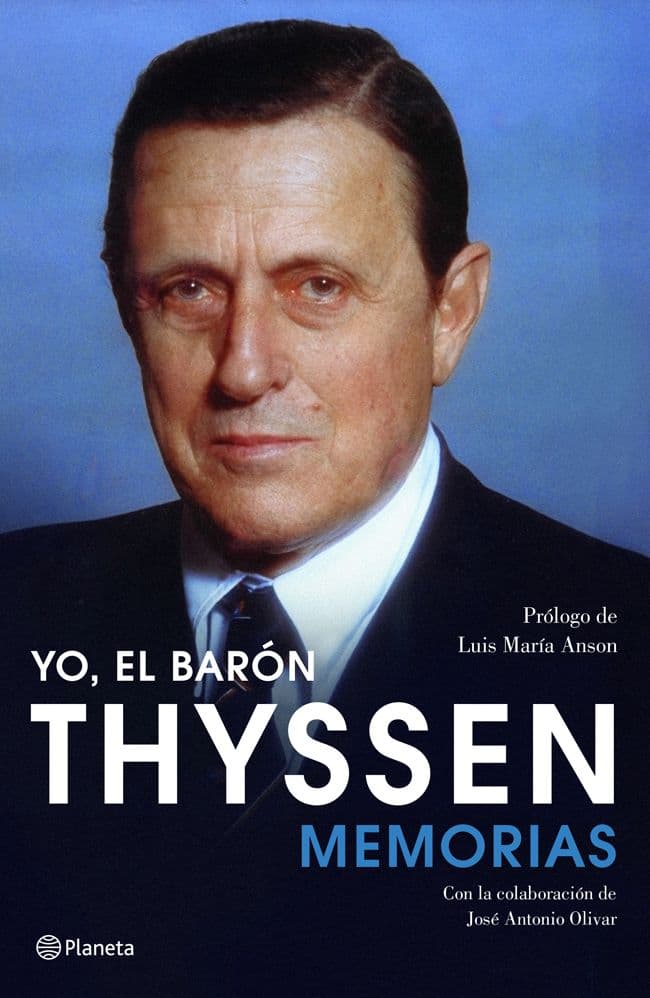
Heinrich Thyssen-Bornemisza
12 highlights · 16 themes · 2 cited people/companies
Baron Hans Heinrich Thyssen-Bornemisza, third-generation heir who at 23 took over a global industrial empire spanning steel, shipping, energy, and agriculture, then assembled one of the world's greatest private art collections valued at $1.2 billion.
Transferring businesses into a trust at his son Georg's urging cost Thyssen ownership and control of the family empire, teaching that structural concessions to heirs can be irreversible.
Failing to restrict financial access during a deteriorating marriage allowed Nina Dyer to run up millions in retaliatory spending, underscoring the need to separate emotional generosity from financial exposure.
Thyssen's own caution — and deference to his brother-in-law's concerns — prevented tripling the Dutch-to-Germany gas pipeline business, a missed fortune from under-betting on a conviction.
“I have always been a very tenacious man, but above all, I have been true to myself in making and deciding at all times what I have wanted. Additionally, I am very intuitive, although my intuition always involves deep reflection, never improvisation. However, I have neither had nor ever had a cohort of advisers: in my decisions, I am sufficient and more than enough because I consider myself the best adviser to myself.”
“He was a perfect visionary and had a clear concept of what a round business should be: for a steel factory to provide highly profitable benefits, it was necessary to have, at the same time, iron and coal mines to supply it; shipyards for building and repairing; tugs and ships that could transport raw materials and finished products between production and processing centers; own ports in which to store the products a…”
“what my grandfather had very clear when he repeated time and again: "Wenn Ich rasten Ich rosten" ("If I rest, I rust").”
“"When I was born, only my grandfather August was waiting for me." Thus, with this surprising and concise sentence, Baron Hans Heinrich Thyssen-Bornemisza began the story of his life one winter night as the snow fell incessantly over Saint Moritz. According to him, no one else was waiting; and, of course, no one could imagine that this child would be forced to take over the reins of the Thyssen empire at only twenty-…”
“"You should have another child, because in the three that you have given me so far, I cannot see my true heir, the descendant who can one day take over the business." In the end, and with the help of mustard, which my mother had relied on to avoid getting pregnant, my grandfather August got his way.”
“In the emblem or shield of the Thyssens, this maxim stands out: "La vertu surpasse la richesse" (Virtue surpasses wealth).”
“each of my ancestors has been raising the bar higher for their successor, which I find fantastic, because I believe that the most important thing in life is to always maintain impeccable conduct, based on principles of integrity, personal dignity, and chivalry.”
“what my great-grandfather was trying to do was to prepare his children to lead the industrial revolution that had started in England more than half a century earlier, and which Germany was just beginning to enter at that time. In 1861, at the age of nineteen, and after his time at Karlsruhe, Grandfather August enrolled in the Higher Institute of Commerce of Antwerp, a center founded in 1852 that was prestigious worl…”
“a sister of my grandfather, with a young man from the Bicheroux family, renowned entrepreneurs in the German industry of the time, gave my grandfather the chance to lay the symbolic first stone of the Thyssen empire, by partnering with his brother-in-law’s family to create, in 1867, a steel rolling company under the name Thyssen Foussol & Co., of which he would be the commercial director. It was three intense years…”
“In 1871, my grandfather resigned from his position as director, sold his share of the company to the Bicheroux, and founded his own in Duisburg, and then in Styrum, near Mülheim, because its geographical location was ideal. He created the Thyssen & Co. rolling mill, where, with five furnaces and a strip rolling mill, he employed about seventy people. The company was located on the grounds of an old farm and the barn…”
“At twenty-three years old—the same age I was when I took over my father's business—my grandfather, convinced that the future and fortune were in the steel industry, founded the Thyssen empire, starting with twenty thousand dollars that he borrowed from his father and about seventy workers, and grew to have commercial interests on all five continents.”
“His main ambition was always the development of his businesses and the German industry in general. His primary goal was the country's economy: as proof of this, there is his request to the German government to secure French iron ore and Ukrainian raw materials.”
Alain Jemain
Shares Karlsruhe and Germany.
Marie-France Pochna
Shares England and Germany.
Gregor Schöllgen
Shares Germany and German government.
asuycdg6.org
Shares England.
Margret Hucko & Martin Noé
Shares Germany.
Chet Richards
Shares Germany.
“"When I was born, only my grandfather August was waiting for me." Thus, with this surprising and concise sentence, Baron Hans Heinrich Thyssen-Bornemisza began the story of his life one winter night as the snow fell incessantly over Saint Moritz. According to him, no one else was waiting; and, of course, no one could imagine that this child would be forced to take over the reins of the Thyssen empire at only twenty-three years old, exactly the same age his grandfather August was when he laid the first stone of the said empire, which he started by creating his own rolling mill workshop with twenty thousand dollars he borrowed from his father.”
“"You should have another child, because in the three that you have given me so far, I cannot see my true heir, the descendant who can one day take over the business." In the end, and with the help of mustard, which my mother had relied on to avoid getting pregnant, my grandfather August got his way.”
“I have always been a very tenacious man, but above all, I have been true to myself in making and deciding at all times what I have wanted. Additionally, I am very intuitive, although my intuition always involves deep reflection, never improvisation. However, I have neither had nor ever had a cohort of advisers: in my decisions, I am sufficient and more than enough because I consider myself the best adviser to myself.”
“In the emblem or shield of the Thyssens, this maxim stands out: "La vertu surpasse la richesse" (Virtue surpasses wealth).”
“each of my ancestors has been raising the bar higher for their successor, which I find fantastic, because I believe that the most important thing in life is to always maintain impeccable conduct, based on principles of integrity, personal dignity, and chivalry.”
“what my grandfather had very clear when he repeated time and again: "Wenn Ich rasten Ich rosten" ("If I rest, I rust").”
“what my great-grandfather was trying to do was to prepare his children to lead the industrial revolution that had started in England more than half a century earlier, and which Germany was just beginning to enter at that time. In 1861, at the age of nineteen, and after his time at Karlsruhe, Grandfather August enrolled in the Higher Institute of Commerce of Antwerp, a center founded in 1852 that was prestigious worldwide. It was there that he acquired a solid education in both European and world economics, and where he specialized in business administration.”
“a sister of my grandfather, with a young man from the Bicheroux family, renowned entrepreneurs in the German industry of the time, gave my grandfather the chance to lay the symbolic first stone of the Thyssen empire, by partnering with his brother-in-law’s family to create, in 1867, a steel rolling company under the name Thyssen Foussol & Co., of which he would be the commercial director. It was three intense years in which he worked eighteen hours a day, seven days a week, clearly showing that his tenacity knew no bounds. It was there that he adopted the motto of his life “If I rest, I rust”.”
“In 1871, my grandfather resigned from his position as director, sold his share of the company to the Bicheroux, and founded his own in Duisburg, and then in Styrum, near Mülheim, because its geographical location was ideal. He created the Thyssen & Co. rolling mill, where, with five furnaces and a strip rolling mill, he employed about seventy people. The company was located on the grounds of an old farm and the barn was initially used as the main building. In the first year, he managed to manufacture three thousand tons of product, and very soon, after incorporating steel into his production, he began to exploit iron mines and foundries.”
“At twenty-three years old—the same age I was when I took over my father's business—my grandfather, convinced that the future and fortune were in the steel industry, founded the Thyssen empire, starting with twenty thousand dollars that he borrowed from his father and about seventy workers, and grew to have commercial interests on all five continents.”
“He was a perfect visionary and had a clear concept of what a round business should be: for a steel factory to provide highly profitable benefits, it was necessary to have, at the same time, iron and coal mines to supply it; shipyards for building and repairing; tugs and ships that could transport raw materials and finished products between production and processing centers; own ports in which to store the products and load them before sending them to their destinations; navigation and distribution lines; financial entities and banks with which to cover that temporal bridge generated between purchase and sale; and, finally, qualified people to perfectly coordinate the operations and ensure that these were carried out at the right time and place.”
“His main ambition was always the development of his businesses and the German industry in general. His primary goal was the country's economy: as proof of this, there is his request to the German government to secure French iron ore and Ukrainian raw materials.”