Obsession With Bendix Expansion
Expanding hastily into unfamiliar or ill-prepared sectors can trigger an empire’s unraveling.
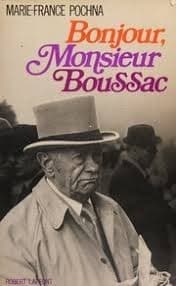
Marie-France Pochna
220 highlights · 16 themes · 27 cited people/companies
French industrialist and racehorse owner who built the Boussac textile empire, founded Christian Dior, and became France’s richest man.
Expanding hastily into unfamiliar or ill-prepared sectors can trigger an empire’s unraveling.
Excessive centralization and opacity may erode oversight and adaptability, especially when conditions change.
“Pater familias in the Roman sense of the term, Boussac has so far enlarged his house by drawing from his connections or by hiring a relative or friend duly recommended. This is true at all levels of his business. As a rule, he trusts people whose father he has known: thus the son of Pierre Forgeot is engaged in the advertising department; the son of his friend, Senator Etienne Dailly, is at the head of the agricultu…”
“The production tool will soon attest to the extraordinary productivity of methods that have the originality of combining modernization with the spirit of the small business. Since there has been a textile industry, performance there has depended on the skill of its workforce. Boussac wanted to go further by giving the human gesture a quality, an almost scientific precision. He succeeded in rationalizing that indefin…”
“Boussac buys back, under very favorable conditions, twelve textile companies which he acquires for the commonly cited sum of 1.2 million francs.”
“Seizing the pretext of a mistake made by his advertising agency, R.L. Dupuy (which had let a “typo” slip through in a promotional text), he parts ways with them and sets up his own agency, tylONSIE&R ßOiißjSAQ which soon employs 100 people. In the three floors of galleries of the building on rue Poissonnière, he sets up a permanent exhibition hall of all his articles; he invites at his own expense buyers-transformer…”
“We know Boussac’s ideas on beauty and perfection. There is no doubt that he found immediate agreement with Dior on this point. As crucial as it is, we might be surprised to see the birth of the only venture that contradicts the strong reputation of the autocrat and remains the only example of trust the industrialist placed in someone other than himself.”
“Boussac is ill at ease with an overly visible image: vulnerable to criticisms, indiscretions, and demands. Remaining as secret as possible: this is the condition for independence.”
“Another key—and not the least—of success: integration, that is, bringing together all decision-making into one hand: from spinning to the client. At the time when he was just a “factory shipper,” Boussac understood the cost of lost time, overheads, and ultimately the inefficiency of industrial compartmentalization. At the end of the war, he bought out manufacturers’ businesses exhausted from working on order, withou…”
“Starting in 1954, Boussac pushed concentration of decision-making to the maximum by removing the financial autonomy from all subsidiaries. Their liquid assets are “deposited” to the C.I.C. Alone at the top, Marcel Boussac sets and knows the costs and sale prices: “The balance sheets,” he said, “are for the bankers, the operating accounts are for the accountants, the cash flow is for the business leader!” And to call…”
“— We must address this issue without delay because the resellers are using our name without us having any control. — It’s a sign that our fabric sales are doing well! What are you complaining about? — We are starting to sell anything and everything under the name “Boussac.” Since the public attributes market control of cotton goods to us, as soon as a seller has difficulty selling a fabric, all they have to say is:…”
““I never trust papers. Statistics, curves, reports reveal whatever you want, except reality. Trust them, and you’ll be wrong two times out of three. Go there. If you can’t go, send someone whose eyes are yours.””
“Directors, workers, foremen, discover an outstanding boss! With an astonishing manual dexterity: with his hypersensitive hands, he feels the density of spindle banks’ coils and judges the appropriate quality; in weaving, he never fails to run his fingers between the warp threads to appreciate their proper arrangement. During these visits, conducted at a brisk pace, nothing escapes the master’s eye, which inevitably…”
“the three fundamental rules remain as firm as ever: absolute power, independence, and secrecy. Make no mistake, during these fifteen years of peak, the watchword remains the will to power.”
Hervé Maupin
Shares Marcel Boussac, Christian Dior, and Marie-France Pochna.
Airy Routier
Shares Marcel Boussac, Christian Dior, and Paris.
Nadège Forestier & Nazanine Ravaï
Shares Marcel Boussac, Christian Dior, and Paris.
Pierre de Gasquet
Shares Christian Dior and Elle.
Alain Jemain
Shares François Michelin, André, and General de Gaulle.
Tommaso Ebhardt
Shares Christian Dior.
“With machinery appearing in the last century, a new breed of business leaders emerged. Through their financial audacity, their energy in creating products and markets, and their uncompromising taste for personal power, they earned the name “captains of industry.” These adventurers of progress, these inventors of the industrial era, almost all escaped from the provincial bourgeoisie, a class of old tradition that managed its affairs frugally but rarely refused its prodigal—and prodigious—sons the financial support essential for their first takeoff.”
“His persona was multifaceted: a gray eminence of politics and the press, he was also the founder of “Christian Dior,” the creator of the world’s most famous racing stable, a billionaire like those only found in America, and finally, the happy husband of a diva whose voice and beauty had enchanted Europe in the roaring twenties. Through his single and long life, the history of this century appeared with all its proliferation of political, economic, and social events. Sacred monsters have always fascinated me. I resolved to write the biography of this one.”
“In the autumn of 1978, I had the chance to meet one of his closest collaborators: Antoine Aupetit. Antoine’s father, Albert Aupetit, had been the intimate friend and associate of Marcel Boussac. His own brother, André, had married the magnate’s only daughter. I learned that Marcel Boussac wanted to gather his memories, to look back, to take stock one last time of himself and his time…”
“Three residences, including this one, had been left at his disposal by the buyers of his possessions. More than the villa in Deauville, even more than the château of Mivoisin, the apartment at 74, boulevard Maurice-Barres, had been his “palace”. It is true that these three floors in a triplex, overlooking the Jardin d’Acclimatation from on high, deserved the appellation: the measured opulence of ancient woodwork, the sumptuousness of the bronzes and cartels, the muted ambiance of Aubusson and Savonneries… A half-light added to this decor the depth of a sanctuary.”
“When the beautiful and fiery Jeanne Boussac, yielding to the impulses of her heart and ambition, leaves, in 1892, her husband Louis and the provincial life of Châteauroux to share the brilliant existence of the famous poet, Catulle Mendès, in Paris, she abandons three little boys: Robert, five years old, Marcel three years old, and Raymond, barely a year old. Thus, the name of the woman who, just yesterday, was a wasp waist in a rustling dress, flitting on the lawn while holding her latest child, suddenly disappears from their babbles.”
“Marcel is quite the opposite. If not aversion, at least no marked interest in knowledge. He won the gymnastics prize several years in a row, but that seems to be the extent of his scholastic laurels. He failed his baccalaureate and will almost make it a point of pride throughout his life. Hundreds of times he will recount this story, drawn here from a speech given in front of English turf enthusiasts [6](private://read/01jjdy9maqdsy9c2bv37rfja01/#bookmark6):”
“He discovered a passion: horse racing. In Châteauroux, he never misses one. In Paris, when his father takes him there, these are moments of revelation. On such occasions, the preparation of attire, for young Marcel, is not taken lightly. A photo shows him at fifteen, impeccably dressed in a neat and well-tailored suit with a vest, from which a gold watch chain is prominently hanging. Wearing a straw boater with a silk ribbon, his binocular strap slung over his shoulder, he poses with a very studied stance on a cane that is too tall for him.”
“Horse racing, which at the time was only about fifty years old, remains the aristocratic—and snobbish—sport par excellence. It was in Chantilly, which had become a true English enclave, that the first track was built, at the time when Lord Henry Seymour presided over the Société d’Encouragement.”
“Longchamp, inaugurated in 1857, is the meeting place of elegance. Its stands with flowered balconies display a pageantry of parasols, floral and feathered hats, frills, and flounces, punctuated by the severity of top hats and morning coats. In contrast with the luxury of majestic landaus and gleaming victorias, is the bustling crowd on the lawn, trading cigars for betting odds.”
“Quickly: conquer all this. Eager to get to work, he begins by learning his father’s trade. He is soon tasked with visiting the clients. “When I started working for my father,” he told me, “I would leave with a horse-drawn carriage to present his fabric samples and take orders from his resellers throughout the region. Sometimes the distances were long. At that time, the roads were dusty, so I always made sure to bring a spare shirt and a shoe polish box with a shoe brush to never present myself to a client in less than perfect attire.””
“in 1907, at the age of eighteen, Marcel informs him that he feels confined in Châteauroux and dreams of venturing to Paris, Louis gives this son—all of his chances as a prodigy, who knows? Still too young to live alone, Marcel will stay with his aunt, Mrs. Auguste Boussac, on Avenue du Maine. And to facilitate the launch of his enterprise, he will receive financial support. And what support! It is unclear whether it was granted to him immediately or after a period of probation, in full initially or progressively. In any case, Louis has the family reputation of having vouched for an opening credit of 400,000 gold francs for the beginner, which is nearly 3 million of our 1979 francs. That is a mark of trust that is not just an empty word! The key now is to make this talent flourish.”
“However, the spinners in the Vosges work much more cheaply. Now, the young Boussac realized how much the first collection he prepared for his father was appreciated: fabrics intended for women’s clothing, in light colors, with more fantasy than was previously accepted. At that time, provincial women still dressed in black, navy blue, dark brown and wore undergarments, petticoats, corset covers, knickers in calico or thick cretonne. Men of modest means wore shirts in stiff shirting or madapolam. The frills, silk, taffeta, ribbons, and seductive undergarments remained the privilege of the fashionable in high society. The villages and even the towns and cities were populated with dark silhouettes dressed in toned-down colors. Why not make more attractive attire accessible to all women? Why not expand the fantasy inspired by Roanne fabrics? And if the Vosges produce more cheaply, why not manufacture the same items in the Vosges?”
“The eighteen-year-old conqueror knows exactly what he wants to do: sell cheaper than anyone new, pleasant, and good-quality fabrics.”
““One must,” he says, with that slightly sententious tone that will become a flaw for him, “know how to pay a little more for the thread; it is worth the profit gained.” He then takes this carefully selected thread to the best weavers, oversees the fabric production to gradually improve the quality, and finally has them dyed or printed according to his directives by the greatest dye specialist in the Vosges.”
“As for the industrialists of the Vosges, initially surprised by the unexpected orders, they discover a demanding and suspicious client who is meticulous about verifying everything and accepts only flawless goods, yet a partner whose market strengthens with surprising speed.”
“Manufacturers begin to offer him privileged commercial terms. Boussac himself practices a strict selection process. For instance, he only buys his yarn from Peters in Nomexy, as he is assured of perfect merchandise from them.”
“his unique client knows how to earn appreciation and, gradually, which is very important at a time when the manufacturer is king, he acquires a priority status. He has thus established excellent relations with Georges Cuny, director of the weaving company “Les Héritiers Georges Perrin,” and with René Laederich, spinner and weaver in Senones. Price discussions are often difficult; the buyer always tries to gain a cent here, another there. Meticulous about details, he haggles until he is completely satisfied. He requires the highest quality at the lowest price.”
“the precepts on which his success will depend: “do what others do not.””
“Eight words sum up one of ”
“He manufactures goods before being assured of selling them, whereas normally this entire industry, compartmentalized among spinners, weavers, bleachers, dyers, only works on order, never on speculation. Entering the trade through the narrow door of commerce, young Boussac imposed his ideas. But now he is embarking on a completely different maneuver: accessing the industrial Vosges, in a way, through their peaks.”
“This is the second asset he will wonderfully exploit, remembering the good address his father had given him.”
“Boussac acquires the friendship of two influential figures: René Laederich, who is at the head of a large spinning and weaving business, and Paul Léderlin, who has just succeeded his father as the director of the most important bleaching and dyeing company in the Vosges. About twenty years his seniors, they will become allies and one of them a partner. Under their protective wing, the novice penetrates the intricacies of the trade, becomes familiar with the different phases of production—he undergoes internships with each of them—and learns to mingle with important people. It is at their school that he perfects his training. From these models, he will draw inspiration when he himself becomes a Vosgian boss.”
“ers’ housing, instituted six-month maternity leaves, oversaw the development of the gymnastics society, drawing classes, organized theatrical tours, and boxing tournaments, and even created a casino for the workers.”
“Paul, who succeeded him in 1909, continued the paternalistic work: he installed the first bathrooms in work”
“He bought or acquired shares in about fifty companies throughout France. Boussac closely observed this fabulous venture because Léderlin became enamored with him. Alongside industrial lessons or initiation into paternalism, the bright neophyte refined his education in many other areas.”
“During the years when Boussac and Léderlin will get along like twin brothers, they will never part, sharing everything: business, cars, and, according to gossip, women. It is still the time when traders endure the dictatorship of manufacturers.”
“he newcomer has a chance to obtain, thanks to his protector, agreements on prices, assurances on quantities to deliver, guarantees on quality. When Marcel Boussac wants to create a cotton waste treatment business, Paul Léderlin will make a premises available at B.T.T. When he wants to hire a collaborator from the Dye Works, the generous mentor will respond to the subordinate who asks for permission to go work for “Monsieur Marcel””
“— Whether you work for him or for me, you know very well that it is the same thing. So do whatever you want.”
“— Whether you work for him or for me, you know very well that it is the same thing. So do whatever you want.”
“In the meantime, the brilliant retailer would have laid the foundations of his textile empire. Being in the right place at the right time: another maxim of success. His own!”
“Boussac then assigns Henri Jacquemin, who recounted it to me—a former employee of Léderlin, “poached” with his blessing—to visit each of the factories one by one. Circulating if necessary through the lines of the French armies, he will present manufacturers with the following deal: “You are offered to reopen your factories. You will be supplied with equipment and orders. Do you agree to resume manufacturing under these conditions?” The responses do not take long.”
“Boussac then assigns Henri Jacquemin, who recounted it to me—a former employee of Léderlin, “poached” with his blessing—to visit each of the factories one by one. Circulating if necessary through the lines of the French armies, he will present manufacturers with the following deal: “You are offered to reopen your factories. You will be supplied with equipment and orders. Do you agree to resume manufacturing under these conditions?” The responses do not take long.”
“The factories have reopened; now it remains to organize the supply of raw materials and energy. It is on this second front that the ingenious “intermediary” of twenty-five years old reveals his dynamism. In association with Paul Léderlin and a group of industrialists from the Vosges, he founded the Company for Import and Export of the North and the East, responsible for chartering Norwegian cargo ships, acquiring barges, and procuring the necessary raw materials. Boussac makes his first trip to England. There he buys cotton and coal. From Cardiff, his fleet transports the fuel and cotton to Rouen, which his barges then convey to the Vosges. This operation, once initiated, will be repeated throughout the war.”
“Work spontaneously undertaken by industrialists and businesspeople who are not afraid to take risks, skilled at seizing opportunities on the fly.”
“Marcel Boussac crossed his path: “When it was necessary to start war productions,” he told me, “I was in contact with Louis Loucheur. When the Germans attacked us with gas, I received a message from him that was roughly summed up as follows: ‘We urgently need to manufacture gas masks. Can you take care of it?’ “Fifteen days later, we started production, and everything necessary was delivered with extraordinary speed.””
“In Paris, urgency makes one forget the rule of “lowest bidder” awarding. Everything is handled by mutual agreement, without serious discussion of prices. The administration is lavish with its “approvals.” The wheeler-dealer proliferates. Abuses are so flagrant that Parliament becomes agitated. On December 14, 1915, a deputy questions the responsible minister [1](private://read/01jjdy9maqdsy9c2bv37rfja01/#bookmark1): “If you are fond of details, I refer you to the very documented report by Mr. Controller Bossut. There you will find a certain lady, maybe a meritorious artist, who proposed… camp effects and items, tents, flannel, blankets, socks, barbed wire, two salon wagons, etc.””
“notes: “It should be regretted that this administration (management) dealt at somewhat higher prices in the Vosges area where the fabrics were often lighter and less durable, and that it agreed to orders too large from suppliers in this region acting more as intermediaries than as direct industrialists, thus allowing them to achieve considerable profits…””
“On September 23, 1918, a letter from Marcel Boussac to the Minister of Commerce, regarding difficulties encountered in transporting 2,000 bales of cotton from Le Havre to Epinal, numbers 15,000 workers threatened with unemployment due to lack of supply. It is therefore 15,000 workers that Boussac employs. And if we believe the senatorial report, he would have sold to the administration for 24 million in goods, or 75 million current francs[3](private://read/01jjdy9maqdsy9c2bv37rfja01/#bookmark3) [4](private://read/01jjdy9maqdsy9c2bv37rfja01/#bookmark4), a count established at the beginning of 1917. Twenty-seven years old, two years of war: he has already built his fortune!”
“manufacturer from Châteauroux no longer operates three or four factories but about twenty. After checkered aprons and floral smocks, he converted the Vosges to the production of kilometers of tent fabric: nothing more useful to the soldier, it’s a two-meter square of waterproof fabric, serving as both a “roof” against the rain in the trenches and packaging for the soldier’s gear.”
“The weaving mills produce millions of meters of cotton flannel, cotton tennis, cretonne, and twill that will be transformed in garment workshops into jackets — the twill vest worn during drills — shirts, shorts, satchel cases, and gas masks. The factories produce in quantity a fabric designed to clothe the wooden wings of the nascent aviation and observation balloons. The linen thread formerly used for aircraft fabric becoming scarce, Boussac invents a cotton fabric made with special twisted yarns, which is adopted by English manufacturers.”