“"Kjell Inge is manic. When there is something he wants, he almost goes over dead bodies to make it happen the way he wants," says someone who knows him well.”
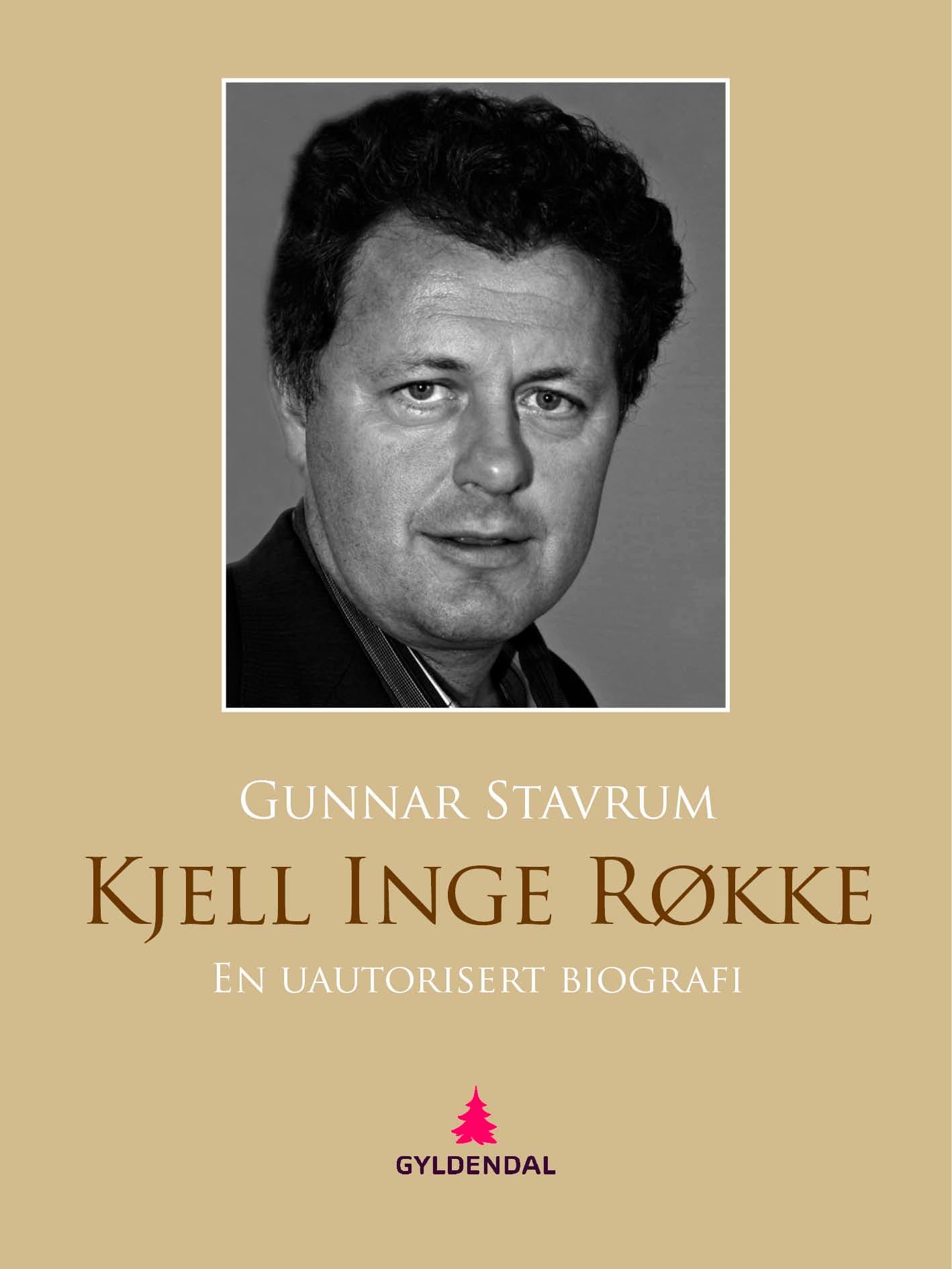
Kjell Inge Røkke (translated)
Gunnar Stavrum
125 highlights · 14 themes · 195 people/companies
Norwegian self-made tycoon who built a global business empire in fishing, real estate, and retail through aggressive deals and relentless restructuring.
Era
1980s-2000s: volatile fisheries markets, US/European real estate boom and bust cycles, Norwegian deregulation, global industry consolidation.
Scale
Transformed RGI into a multibillion kroner group spanning American Seafoods, Gresvig, Helly Hansen, Avantor real estate, and European football clubs.
Ask this book
125 highlights
Suggested questions
Notes
“What Røkke and Gjelsten had in common was a belief in what is known abroad as "relational business," which means doing business with a few individuals whom one builds long-term and good relations with. It can be customers, suppliers, or banks – the important thing is always to do business that is good for both parties.”
“It is in real estate that Kjell Inge Røkke has performed his toughest stunts, and it is here he has used some of the toughest methods. Method number one has been to buy up the debt of crisis-stricken companies and then pressure the management and owners to beg for mercy. When you sit with large loans and do not have money to pay interest, then you do not have much to say. With the merger with Avantor, Røkke's foreig…”
“The method is as simple as it is brilliant: Remove all the excess and squeeze the lemon to the maximum. Show how much the lemon was squeezed last year, and sell the lemon at a high price. Then the buyer can sit with their squeezed lemon and see how much more juice they can extract.”
“Røkke was bold enough to continue using American Seafoods as his own money bin, without caring about the partners. In total, he took out over 50 million kroner. Then Møgster and Torgersen found a loophole: For every dollar Røkke took out for himself, they put 50 cents into a separate account. Thus, they had also secured a straw into the cash register.”
“During some quick chess moves, Røkke, Gjelsten, and Storetvedt moved properties between their companies and hyped up the values. Once again, Kjell Inge Røkke was on all sides of the table when the deals were made. It started with ANS Gresvig Bygg, the headquarters of the sports wholesaler in Askim. The building was sold to Gjelsten & Røkke Eiendom and leased back again. Now, you might not think that had a significan…”
“The Gresvig coup also had other typical Røkke traits. It was here he first discovered how useful it is to sit on all sides of the table. The first thing Røkke and Gjelsten did was to pump goods from their own companies through Gresvig. The G-Sport stores were filled with clothing items from Frank Shorter and Tomra – "on business terms," as it was stated. At the same time, they bought Gresvig's buildings and leased t…”
“But creditors who wanted to get an overview of Røkke's fortune had no easy job. Even Kari didn't know about everything they owned. She could perhaps list about 10-15 different companies, while her husband said that "we own about thirty". The tax return didn't reveal much since both ships and properties were listed at the price Røkke originally reported. In the meantime, the prices could well have doubled without it…”
“When Røkke reflects on those early years today, the memories are characterized by the impoverished existence. The description is probably correct, but just a part of the truth, because Røkke did not save all his money, he also afforded some status symbols. People remember well that he bought an old, well-used Mercedes before he had a nail in the wall. He drove around in it and showed himself off in Ballard. Granted,…”
“Therefore, Wittusen brought the two together one afternoon for a meeting at Heyerdahl's office at Orkla's main office, which at that time was located at Lysaker. There was no talk of a partnership at first sight, as there was simply too much that separated the two: Kjell Inge Røkke was the unpolished and impulsive – a man of action, while Jens P. Heyerdahl, on the other hand, liked to take his time. As the most pati…”
“But what he did wasn’t too terribly foolish, to put it that way. Because the crisis taught Røkke to fill up the cash register ahead of possible bad weather. In autumn 1995, money poured into RGI's coffers. First they spun off Norway Seafoods and brought in 720 million kroner there. And since then, RGI sold new shares for a total of 800 million kroner.”
“Røkke was no different: Each ship was owned by one company. It looked simple on paper, but when one wanted to know who was behind the company, one came up short. For a spiderweb quickly formed that swarmed with owners. This suited Kjell Inge Røkke like a glove since he was almost the only one who had a complete overview. But more importantly, the network was constructed in such a way that Kjell Inge Røkke effectivel…”
Themes
Risk-Taker’s Necessary CallousnessRelational Business as Expansion EngineBuy the Debt, Control the BoardOperational Squeeze for Max ResaleHands-On Cash ControlOpportunistic Asset SwappingDeal Before RespectSecrecy as Power ShieldAct Like You Belong AlreadyOutwork and OutwaitCash Up Before the CrashMajority Means MandateTempt Key People, Extract CompaniesCross-Table Value Pump
People
Companies
Highlights
“At the dock, they look like small tugboats, while "Golden Alaska" in comparison resembles the Coastal Express. And it is aboard this larger ship that the 27-year-old Norwegian Kjell Inge Røkke reigns. He is the boss of the entire fishing operation, although all the boats have their own captains. It is Røkke who is the owner, it is his money that goes down the drain when production stops if the catcher boats do not deliver fish. So the signals from Røkke were clear: "Aleutian Harvester" and the other catcher boats had to go to sea. There was no plea. Røkke ran the fishing with a firm hand. Every pollock fish meant dollars in the register, and as a co-owner, Røkke was pleased that the money kept coming in despite the poor weather. Therefore, they defied the poor weather forecasts – a decision that was fine for everyone on board the large "Golden Alaska", but considerably tougher for the people on the small catcher boats.”
“The trio on board the "Aleutian Harvester" had one of the world's most dangerous jobs. Statistics show that it is seven times more dangerous to be a fisherman in Alaska than a fisherman elsewhere in the USA, and a whole 70 times more dangerous than being an industrial worker. Zimny knew from personal experience that the statistics hid tragedies. He personally knew several of the over 100 fishermen who in the last ten years had lost their lives fishing off Alaska. In his family, it was not an adage that "the sea takes and the sea gives."”
“When Røkke finally came up, the mood was somber. What were they to do? The rules are clear: The Coast Guard must be notified immediately if there is reason to believe that a boat has gone down. But that did not happen. For Kjell Inge Røkke, who had the operational responsibility on board, did not raise the alarm either. And even though the command lines formally had the captain at the top, the officers perceived Røkke as the real boss, and they registered with concern that Røkke did not want to do anything. On the contrary, he sat with his feet on the table and told stories about Norwegian fishermen who had gone down at sea.”
“Other teachers were less patient. His classmates remember well the time Kjell Inge brought a laughter machine to school. The teacher took it and threw it out the window where it smashed on the rocky ground below. Young Røkke was furious and demanded immediate compensation.”
“"What I remember best about Kjell Inge at school was that he was often sent into the hallway. Usually with the comment: 'Unfair. It wasn't in the hall this time,' to the teacher," one of the friends recounts. "He constantly got into trouble because he couldn't stand injustice, neither towards others nor himself. And he didn't care about authorities. Kjell Inge was often to blame, but just as often, he became a scapegoat for the teachers. He probably should have gotten more support from the rest of us."”
“Gjelsten's family was similar to Røkke's. The father, Per Gjelsten, was the manager at Tomren Factories, while the mother was a nurse. They were also working people used to putting in an effort.”
“One reason the fathers did not complain was that they had two child stars with them. In those years, it was hardly possible to open a Monday newspaper without reading a results table where either Kjell Inge or Bjørn Rune, or most often both, were on top in their category. It eventually became a routine to be interviewed by the local newspaper after yet another victory. "Kjell Inge was a charmer," one of the sports journalists recalls. "He was unstoppable once he started talking. He was so popular among the journalists that the other children eventually started complaining that he was the only one getting his picture in the newspaper."”
“Bjørn Rune, on the other hand, endured. He too was a late bloomer, but his father explained to him in detail what was happening and advised him to take it easy. The son followed the advice and maintained the discipline to train bravely even though it went just as badly on the tracks. He himself believes that the targeted patience from youth sports has been important: "I enjoyed the sport, even though I didn't win." Bjørn Rune distinguished himself as a methodical and targeted, meticulous young man. When he wasn't training, he was bent over his schoolbooks, or working and saving money.”
“Kjell Inge gained business sense early. He sold pictures of himself to sports fans, and he was great at saving money. The first money he saved, he earned as an assistant telegram boy in Tomrefjord. Gjelsten's grandmother, Beret, was a commanding lady, and as the station manager for the Telegraph Service, she was a hub in the industrial village. Bjørn Rune got to bike with messages for 25 øre per kilometer. After tough negotiations, he managed to get three kroner for a round trip to the innermost part of the fjord (6 kilometers), and with the activity in the village, there were many bike rides for Bjørn Rune. So many that he needed a subcontractor, and he hired Kjell Inge. Of course, at a lower payment than what he himself received from his grandmother.”
“"Something must be done!" Gunnvor firmly declared. She thought of her second cousin Jan Laukholm who she knew was soon going back to the fishing fields. He worked for the Ålesund shipowner Evvik and might know about some work for the son. Gunnvor called Laukholm and explained the situation. "He was not easy to handle, and it was not easy for a 17-year-old to find a job," recalls Laukholm, but he did what he could. He called the shipping company and it turned out they had a vacant job on a fishing boat that was heading to the Barents Sea just a few days later.”
“At the Molde police station, they had now started to take notice of Kjell Inge Røkke. They did not like at all that the city's youth were racing around in the streets, making life unsafe for innocent people. And especially not when it happened under the influence of alcohol with drivers who never had a driver's license.”
“Once again, Røkke was suspected of drunk driving without a license. And this time, he had a serious discussion with Gunnvor and Normann at home in the kitchen in H. Thiis Møllers street. There had to be limits to the foolishness, his parents thought, and for the police, the outcome was simple: There would be yet another criminal case, and in this round, there was no doubt that Kjell Inge Røkke had to prepare to serve time in prison if he was found guilty again, which was likely – the police lawyer had no doubt about it.”
“Chief of Police Oluf Sundt was the prosecutor himself, and now he was stern. Kjell Inge Røkke had to go to prison, he believed; it was time for the court to put a stop to the reckless behavior before it ended really badly. Sundt did not mince words when he described how intoxicated the youths had been. And Røkke saw no reason to deny this. In court, he openly admitted to having drunk between 12 and 15 bottles of beer before the fatal drive. Any other claim would have been of little use anyway. For the blood test taken the same night as the collision clearly showed his blood alcohol content.”
“At the end of 1979 came the turning point in Kjell Inge Røkke's life. The two Ålesund shipowners, Erik Breivik and John K. Sjong, bought a decommissioned supply boat from the Gulf of Mexico and transformed it into the state-of-the-art trawler "Arctic Trawler." They wanted to try their hand at cod fishing along the Pacific coast northward from Seattle. It was quite a daring venture, but the reason the shipowners took the chance was that they had no competitors. In Seattle, there were no major trawlers to speak of, so the two sunnmørings bet that they could make a catch. The problem, however, was that it was almost impossible to find proper professionals in Seattle. Sjong was big on crab fishing, and his people could not be used. Therefore, they agreed that Breivik should try to scrape together the best he could find in Ålesund. There, there were plenty of youths who would eagerly jump at this opportunity, they rightly assumed.”
“Røkke wanted to rise and succeed, eagerly seizing the opportunity when he heard that Breivik was looking for people with trawling experience. It was summer, and Gjelsten was home in Norway. Thus, he had his friend drive him to Ålesund for an interview with the fishing boat owner, and it was an optimistic pair of friends who jumped into Gjelsten's red Ford Capri and drove cheerfully over Ørskogsfjellet. However, the return was done in silence. The interview had gone south, Røkke believed. He had gotten worked up about the American dream, and now it was just to let it go. It didn't help that Gjelsten did everything he could to lighten his spirits.”
“When the "Arctic Trawler" went over to Seattle, Kjell Inge was on board. Kari stayed back home in Norway. They had agreed that Kjell Inge should go over first and check out the conditions. There wasn't much free time to speak of either, and that suited Røkke and the other Norwegian young men just fine. They didn't earn anything on land, and since all of them were interested in earning money in the form of percentages of the catch, they wanted to be at sea as much as possible. And should they be so unlucky to spend a few weeks on land in Seattle, Røkke knew what to do. He tried to earn some extra dollars then too.”
“But the job did not last forever, and once again they had little time together. Røkke was always fishing and the little free time in Seattle was spent by the industrious young man making money. Working with the trawl did not bring in many extra dollars, but it was enough to ensure he did not use up his painstakingly saved capital from fishing. Slowly but surely, the money built up in Røkke's bank account. He lived frugally on land, and at sea, there was nothing to spend money on. After two years he had $75,000. Not exactly a fortune, but a lot of money for an ambitious fisherman who thought he knew better than most how to fish efficiently.”
“It was the dream of owning his own boat that drove Røkke during these first two years. The dream of being his own boss with the opportunity to become rich made it easy to forsake pointless drinking and partying. Røkke was not a party pooper, indeed, but he found no joy in wasting his hard-earned money. So, he saved. And dreamed. It would take time, but one day he would become a shipowner, he told himself.”
“The old-timers were completely wrong about Kjell Inge Røkke. He quickly made his mark as someone who knew where he wanted to go, and he quickly became known for his big mouth in the Norwegian community in Ballard, a neighborhood just over the ship canal north of downtown Seattle. They laughed at Røkke's optimism, but the laughter was good-natured. The expatriate Norwegians had seen fortunes made – and blown – in the fisheries before. They had been with big shots up and down, and now here was a newcomer who wanted to live high from day one.”
“When Røkke reflects on those early years today, the memories are characterized by the impoverished existence. The description is probably correct, but just a part of the truth, because Røkke did not save all his money, he also afforded some status symbols. People remember well that he bought an old, well-used Mercedes before he had a nail in the wall. He drove around in it and showed himself off in Ballard. Granted, the engine block was cracked, but high oil consumption did not stop Røkke from appearing as a wealthy guy living by the principle: If you want to be rich, you must act accordingly – and no one believes you have money until you show it.”
“This rule also applied to the choice of housing. The whole Norwegian colony worked in Ballard, but those with better means chose to move further north, to Edmonds, a small, beautiful town beautifully located on a hillside, overlooking Canada. Mr. and Mrs. Røkke moved there too. They were cramped in their first small apartment, but they did not starve. If it pinched, Kari had several family members in the area at that time to lean on. Especially the uncle was good to have; he owned several apartments in the city of Tacoma south of Seattle, which Røkke could mortgage when needed. This is how the broke trawler base managed to finance his first real estate speculations. He bought the neighboring apartment in the building where he lived, refurbished it in his spare time, and later sold it with a handsome profit.”
“But it was at sea that Kjell Inge Røkke laid the foundation for his career. Despite his young age and lack of education, he earned respect for his knowledge on board. This came in handy in the Norwegian community in Ballard, where everyone knew everyone. He got acquainted with Tor Tollessen at Lunde Maritime and Sigmund Eriksen at Lunde Electric, key suppliers of ship equipment to the fishing fleet.”
“In February 1982, several thousand miles away from Seattle, John Kjønsvik heavily sat down in the director's chair at Vaagen Verft, at Kyrksæterøra in Sør-Trøndelag. He was desperate. The shipyard he had taken over from his father and founder Alfred Kjønsvik, was struggling. They were not making money, and it was almost impossible to fill the order books. The new director had himself steered Vaagen Verft to where it was now. Indeed, he had been hit hard by the economic downturn, but a combination of high consumption, the director’s many trips abroad, and aggressive business management meant that Vaagen Verft was in big trouble. But he had an idea to create a mini-trawler, and the engineers had designed a 69-foot small boat called Ruggen. Maybe this product could save them, so he wouldn't have to drive the family business off a cliff? The difficulties would have made a more cautious director slow down and try to weather the storm, but Kjønsvik decided to gamble his way out of the predicament. He wanted to bet on Ruggen.”
“And while Vaagen Verft needed the money for everything else, Kjønsvik ordered a boat from the American shipyard Flohr Metal Fabricators Inc. in Seattle, USA – with no buyer at hand, of course. It was enough to shake one's head at. The shipyard lacked both contracts and money, and yet the CEO went ahead and ordered a boat from another shipyard?!”
“The brokerage firm was run by a man named Pierre Rajotte. He was involved in several projects, including the travel agency Ballard World Travel across the street from Lunde Marine. Rajotte was a used-car salesman type, what the Americans call a "wheeler-dealer"; someone you need to count your fingers after dealing with. He had noticed the young man who frequently came in to inquire about new boats. Røkke was not the only one, as there was a steady stream of local fishermen coming in to buy boats, but this one stood out. "He might have been twenty years old, but looked like a 15-year-old," one of the people working at the firm said, and they joked among themselves that Røkke looked so young that he probably couldn't even have a driver's license – and that wasn’t a dumb assumption...”
“Opportunities are known to exist for those who have the knack and capital. Røkke had enough savvy and also a good reputation as a skilled deck boss, but no one could accuse him of having a large capital base, so normally he would not have had a chance. But time was running out for the shipyard and the bank. They knew that a completed Ruggen without a buyer would be doomed to failure. It would be like lying down and waiting for the wolves. Kjønsvik managed to convince the Commercial Bank that the youngster could really handle the heat. It probably helped that the bank didn't really have a choice. They had long since paid out the money for the boat because they had lent money to the shipyard, so they actually came out better off by at least getting the boat into the water and generating revenue. It was agreed to give Røkke a chance, and the Commercial Bank agreed to lend him the entire purchase sum. Thus, Kjell Inge Røkke became a shipowner at 24 years old and the proud owner of the prototype and the first boat of the Ruggen type – and that before the boat was fully equipped. For it was only the hull that was built at Flohr, the rest of the job was to be done at the neighboring shipyard, Union Bay Shipbuildin”
“On November 18, 1982, Kjell Inge and Kari Monsen Røkke signed the papers that made them shipowners. The young couple had no money, but they dared to bet everything they owned on the company Karina Corporation. If it went wrong, the bank would get everything. And everything really meant everything, down to furniture and bedding.”
“The circumstances surrounding the purchase of the trawler, which was called "Karina," illustrate the courage needed to become rich. For in the late summer of 1982, it was not just boat purchase negotiations that occupied the Røkke couple. In between everything else, Kari became pregnant. And as her belly grew, the family was in over their heads. When Kjell Inge and Kari signed the guarantee in mid-November, Kari was six months along and soon there would be another to support. Still, they risked everything they owned. It was do or die for the young couple.”
“Kari gave birth to Kristian on February 9, 1983. In many ways, Kari and Kjell Inge each had their firstborn. Back home in Seattle, there was baby crying, while Kjell Inge was so desperate that he could have cried his bitter tears out at sea. He quickly realized that he had bought a pig in a poke. The vessel might have looked good on the drawing board, but when faced with reality at sea off Alaska, 69 feet was just too small. The boat was simply too small to fish effectively for cod. Røkke worked around the clock, but the effort did not pay off – it was impossible to make money from the boat. But he had only himself to thank. Not only was the boat a hopeless little tub, but the demanding, young shipowner had indeed loaded it with extra equipment at the end of the building period. Now he experienced that the things that were good to have were difficult to pay back.”
“However, Røkke refused to appear as a loser. It was all about saving everything that could be saved from the creditors' claws. Together with his auditor, Pierre Rajotte, and lawyer Rex Stratton, he concocted a plan to dodge the guarantee to the bank and the shipyard. The means was to create a foundation for his son Kristian. Here, the father could transfer assets and shares, hoping they would then be safe from the creditors' long arms. Such a plan meant that Kjell Inge Røkke did not intend to settle his debts – the creditors were to be misled.”
“The report gives him little honor, and the story of "Karina" appears as a castle in the air that ended in financial ruin.”
“Røkke has chosen this way of presenting it for one simple reason: People do not like rich people who have become wealthy by exploiting their creditors. Especially not a man who roams around in expensive offshore boats and flies around the world in a private jet.”
“However, this portrayal of Røkke as a conscientious repayer is a truth with modifications. In reality, getting money from Røkke in the mid-80s was like pulling teeth with pliers. One of the first things he learned from Bob Breskovich was to keep creditors at bay with smooth talk and to otherwise cling to every single cent. "Røkke used his own money, the banks' money, and everyone else's money to get rich himself," is the testimonial from one of his former employees. This characterization tells the story of a man in incredible financial distress during the first difficult years. It was a tough period where he staggered from one due date to another, and bills piled up on Kari's office desk.”
“Therefore, there was no no in the supplier's mouth when Kjell Inge Røkke asked them to also join his next boat, "Karina Explorer". That autumn it went at express speed, no sooner was "Karina" destroyed, then Røkke turned around to look for a new boat. His only hope was to find a new business that could get the money rolling the right way. And he had no choice: Without the courage to take a risk, he might as well give up. Then he was done, plain and simple.”
“The problem was just that he had no money. Not a dime. Even though he wracked his brain, he found no way to get the money. At the same time, lawyers had already started to rattle with bankruptcy petitions and other inconveniences. It was all about buying time, which he had learned from Breskovich, whom he considered somewhat of a master at "stretching" his money.”
“Røkke chose to write out a check for 7,000 dollars from the account of Karina Fisheries Inc. at Peoples Bank. Then he neatly put it in an envelope, wrote a pleasant letter, and mailed the supposed payment. 'Supposed' because of course, there was no coverage on the check. And one can imagine how the management of Rapp Hydema reacted to this maneuver. Here they had trusted and supported a young upstart, and the thanks they got was being kept at bay with sweet talk and rubber checks! Suddenly, Røkke had as much goodwill as a porcupine in a nudist camp. He went from being a promising challenger to something of a nightmare for his creditors. For Rapp Hydema was far from alone; Røkke could likely have gathered a small May 17 parade of creditors if he had wished it. It turned out that he had promised and guaranteed in a similar style all around the town. Yet, he continued to issue worthless guarantees to extract even more money from the gullible suppliers. For example, there was no coverage for the personal guarantee Kjell Inge Røkke handwrote on February 24th of the same year to the cable supplier Gourock Division in Ballard. There he knew Doug Turnbull, and the firm supplied fishing equipment for 75,000 dollars which Røkke and his wife Kari personally guaranteed: "We also guarantee that Karina Corporation and Karina Fisheries Inc. will pay the debt to Gourock Division." Signed by Kjell Inge Røkke, both for himself and for the two companies.”
“Most creditors were patient, but patience had its limits. Doug Turnbull and Gourock Division reached their limit on June 26, 1985. They still had not received their last 60,000 dollars, so Doug confronted Kjell Inge and put the knife to his throat. The outcome was another worthless letter, a so-called non-negotiable debt note, where Gourock got a lien on the fish aboard the "Karina Explorer". And so was everyday life at Karina Fisheries. The elastic was stretched further than advisable, creditors called and nagged, and Kari sat in the office calming them down. "This is how this business is," says Tor Tollessen at Lunde Maritime. "Fishermen usually have money just twice a year, and in many ways, we suppliers become a kind of bank with large outstanding amounts."”
“The latter have a good memory and little forgiveness for those who dodge their bills and in such an environment, trust is everything. Many of the boats have a myriad of owners and make agreements here and there. Then one simply needs to be able to trust the people one does business with. So the cost of running from the bills is often greater than settling them. There come new times when one might need new credit. And there is a reciprocity in this. People who are skilled tend to bounce back, and suppliers are often willing to extend credit further in such cases. And kind, but not foolishly kind, Tollessen bet on Kjell Inge Røkke, giving him more credit, despite not having recovered his $100,000.”
“But what impressed Gjelsten the most was the sports star's ability to turn his own sporting triumphs into economic success. Shorter had indeed built up an entire conglomerate that made jogging attire under the brand name Frank Shorter Sportswear. He had managed to market himself as something of a jogging wave pioneer, and Gjelsten was given something to think about. He was in a similar situation himself – his sports career was waning. He had indeed received a free education through his skiing skills, but now it was the economist Gjelsten that mattered. What was he going to do?”
“In a meeting with the creditors at the end of April, all but one agreed to let mercy prevail over justice. The end result was that the creditors forgave 1.9 million in debt, or three-quarters of the money they were owed. They really had no choice. The alternative would have been bankruptcy, and that would not have yielded much – the young owners did not even have a nail in the wall. "It was a tough round, mentally as well, but we settled up and 90 percent of the suppliers continued with us. I had to mortgage my house and car," Bjørn Rune Gjelsten recounts.”