Crisis as Finest Hour Opportunity
Books Teaching This Pattern
Evidence
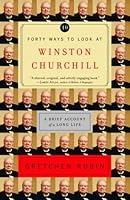
Forty Ways to Look at Winston Churchill
Gretchen Rubin · 3 highlights
"On June 16, 1940, France collapsed. Britain stood alone, under constant air attack and threat of invasion, while Germany controlled all of Europe. “Let us therefore brace ourselves to our duties,” Churchill exhorted, “and so bear ourselves that if the British Empire and its Commonwealth last for a thousand years, men will still say, ‘This was their finest hour.’"
"In these dark days the Prime Minister would be grateful if all his colleagues . . . would maintain a high morale in their circles; not minimising the gravity of events, but showing confidence in our ability and inflexible resolve to continue the war . . . whatever may happen on the Continent, we cannot doubt our duty, and we shall certainly use all our power to defend the Island, the Empire, and our Cause."
"On May 8, 1945, as Churchill announced victory in Europe, an enormous crowd gathered to cheer him. “In all our long history,” he thundered, “we have never seen a greater day than this.”"

Mr. Kaiser Goes to Washington - The Rise of a Government Entrepreneur
Stephen B. Adam’s · 3 highlights
"After the administration began to prepare for war in the wake of the Nazi invasion of the Low Countries in the spring of 1940, Kaiser quickly moved from domestic concerns to war production. Kaiser also offered the administration alternative entrants in industries that hesitated to increase production; his belief in production as the "Fifth Freedom" fit both prewar and wartime administration needs. By the time Kaiser and Franklin D. Roosevelt developed a personal relationship during the war, the president appeared sympathetic to Kaiser's goals for a simple reason: they coincided with Roosevelt's."
"In the summer of 1942, "fabulous" Henry J. Kaiser burst like a comet across the national sky. His West Coast shipyards had performed production miracles during the dark days of America's first six months in World War II, a time when merchant shipping across the Atlantic, a target of German submarines, was deemed the most crucial bottleneck to overcome for America's war effort. 1 He had made headlines for his magnesium enterprise and for the steel plant he was about to build, both of which provided the "arsenal of Democracy" with a West Coast alternative to sluggish East Coast producers. Kaiser was introduced at the National Press Club in July as "the modern"
"Contracting in the early twentieth century was a booming business. From the inception of Henry Kaiser's paving business in 1914 to the eve of the Depression in 1929, America's population increased by nearly 25 percent, while manufacturing output and new construction nearly doubled. During the same period, construction of highways, roads, and streets Kaiser's segment of the business tripled.10 The growth of road building in California (Kaiser's future base) was fairly representative of this construction boom. As of November 1910, "there were 28 contracts and day labor jobs under way on the state highway system, involving 280 miles. On July 1, 1922, there were 152 contracts and day labor jobs with a total of 1,063 miles."11"

Napoleon
Andrew Roberts · 4 highlights
"Napoleon made little effort to conceal his role-model as a lawgiver, civil engineer and nation-builder. ‘He reformed the calendar,’ he wrote of Julius Caesar, ‘he worked on the wording of the civil, criminal and penal codes. He set up projects to beautify Rome with many fine buildings. He worked on compiling a general map of the Empire and statistics for the provinces; he charged Varro with setting up an extensive public library; he announced the project to drain the Pontine marshes.’77 Although it is too early to say whether the institutions Napoleon put in place will last as long as Caesar’s, he clearly put down what he called ‘some masses of granite as anchors in the soul of France’."
"‘I returned to France at a fortunate moment, when the existing government was so bad it could not continue. I became its chief; everything else followed of course – there’s my story in a few words.’ Napoleon on St Helena"
"‘After great revolutions all sorts of events are to be expected, before things calm down.’ Napoleon to Jourdan, January 1800"
"‘I must give the people their full rights in religion. Philosophers will laugh, but the nation will bless me.’ Napoleon to Chaptal"