Incentives as Architecture, Not Decoration
Books Teaching This Pattern
Evidence
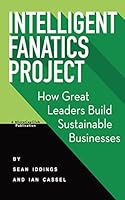
Intelligent Fanatics Project
Sean Iddings and Ian Cassel · 4 highlights
"According to Kenneth Iverson, Nucor’s success was ultimately tied to how the company paid its people; he really understood the iron rule of nature: At minimum, pay systems should drive specific behaviors that make your business competitive. So much of what other businesses admire in Nucor —our teamwork, extraordinary productivity, low costs, applied innovation, high morale, low turnover —is rooted in how we pay our people. More than that, our pay and benefit programs tie each employee’s fate to the fate of our business. What’s good for the company is good—in hard dollar terms—for the employee."
"Ken Iverson was quoted as saying that 40% bonuses used to “scare” him, but as he fully understood the power of the incentive structure, he began to worry when bonuses were too small. “If a man produces a great deal, you’d be amazed at how much you can pay him.”"
"If they make $100,000 a year, tell them you hope they make $200,000 someday. When you share half the profit, the company has half of $200,000 instead of half of $100,000. Don’t spend the $100,000 for anything but to build the company larger, to create more opportunity. It perpetuates itself."
"Reviews are done monthly, biannually, and annually. Productivity and cost goals, while lofty, have been achievable targets. Employees have always been stretched by their goals, and if they achieve these goals, employees can receive many times their fixed salary."