Manufactured Credibility from Thin Air
Books Teaching This Pattern
Evidence
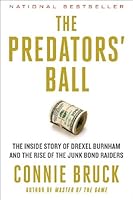
Predator's Ball
Connie Bruck · 3 highlights
"Drexel’s problem was that it had no Fortune 500 client with a billion-dollar bank line to wage a takeover. But what if Drexel had the billion dollars, at the ready? Or what if they said they did (and got it later)? And what if, by their staking the word of the firm on this claim, the world believed it and acted accordingly? In the new lexicon—and universe—that Drexel would soon create, this concept would become known as the “highly confident” letter. But for now it was christened (for its emptiness) the Air Fund. “We would announce to the world that we had raised one billion dollars for hostile takeovers,” one Drexel executive recalled. “There would be no money in this fund—it was just a threat. The Air Fund stood for our not having a client with deep pockets who could be in a takeover. It was a substitute for that client we didn’t have. “That concept led to our making Carl Icahn real instead of nettlesome. Carl ended up being our Air Fund. Boone ended up being our Air Fund. We manufactured out of thin air—almost thin air—a credible takeover guy.”"
"When major corporations launched their hostile takeovers, they did so on the basis of commitment letters for the financing from commercial banks. Drexel, Icahn suggested, should act like those banks and give him a commitment letter. Sorte and Black thought that Icahn’s demand was outrageous. Drexel, they argued, was acting merely as agent for the lenders to Icahn, and if it gave him a commitment letter, the amount would be charged against the firm’s capital. In two years, however, this strange notion would be known as “bridge financing” and would be the rage on Wall Street. Investment banks would commit their own capital to a deal, in a “bridge” between the time of the offer and the time it actually had to be funded. By funding time, the investment bank would have placed much if not all of the debt with bond buyers. Trying to respond to Icahn’s demand for a letter of commitment, Black finally ventured, “Why don’t we say we’re ‘highly confident’ that we can raise it? It’s really different. It hasn’t been done before.” “Carl looked at me,” Black recalled. “He turned to his lawyer and said, ‘What do you think?’ His lawyer said, ‘Leon’s full of shit. It’s not legally binding, what good is it?’ ” Sometime in the early hours of the morning the meeting broke up, with Icahn saying he was no longer interested in doing the tender offer. But the next morning he called Black and said, “You know that ‘highly confident’ letter you were talking about? . . .” That was the beginning of Drexel’s famed “highly confident”—the pronouncement that would seem, for a time, almost talismanic in its power. One after another, multibillion-dollar tender offers were launched on the power of those two words, uttered by Drexel. It became an article of faith for Milken that once he had said he was “highly confident” that he could raise a given amount of financing for a bid, he would never renege or cut back on the terms, because then, of course, the words would be just words."
"Drexel clients—in addition to Triangle Industries—would make bids for companies, all backed by Milken’s junk bonds. Mesa Petroleum, with a net worth of $500 million, would go for Unocal. Lorimar, with a net worth of $105 million, would offer $1 billion for Multimedia. Sir James Goldsmith would make a bid for Crown Zellerbach Corporation for $1.1 billion. Golden Nugget, with a net worth of $230 million, would go for Hilton Hotels for about $1.8 billion. And Farley Industries, with earnings of $6 million, would go for Northwest Industries, for about $1.4 billion. Other bids would take longer to germinate—but they would turn out to be the most fruitful of all."