Self-Sufficient Production Ecosystem
Books Teaching This Pattern
Evidence
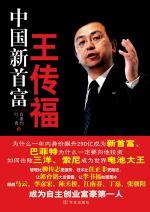
China's New Richest Man - Wang Chuanfu
叶青 · 3 highlights
"At BYD's Shenzhen headquarters, there are staff apartments, football fields, kindergartens, supermarkets, and middle schools."
"Fourth, cost-saving is the key to victory. At the onset of BYD's venture to cut costs, Wang Chuanfu broke down the battery production process and independently developed some key equipment, completing production through a combination of semi-automatic and manual labor. This approach reduced battery production costs by 40% compared to Japanese manufacturers. Through disassembling, learning, transforming, and innovating, Wang Chuanfu eventually became known as China's "Battery King." After entering the automotive industry in 2003, Wang Chuanfu, who had never been involved in this field, still relied on BYD's "semi-automated plus manual" production model. From battery production lines to subsequent car molds, Wang Chuanfu could be said to have utilized human resources to the utmost. Additionally, many of BYD's production facilities are self-sufficient. For example, the BYD F3 now sells over 20,000 units a month; it is said that Toyota once purchased it to study and was at one point surprised at how closely BYD could mimic their car, yet offer it at a much cheaper price than the Corolla."
"BYD Automotive has built a first-class R&D center in Shanghai, with an automotive R&D team of over 3,000 people, obtaining more than 500 national R&D patents each year. To date, BYD has established four major automotive industry bases in Xi’an, Beijing, Shenzhen, and Shanghai, reaching an international leading level in aspects such as vehicle manufacturing, mold R&D, and vehicle model development. The ultimate goal of BYD’s development is to utilize its unique global technological advantages to find the best solution for human society entering the "automobile society," addressing issues like energy shortage, clean environment, and convenient living."