Steal the Playbook, Then Outrun the Author
Books Teaching This Pattern
Evidence

Tales of ITT - an Insider's Report
Thomas S. Burns · 2 highlights
"When Geneen began picking up the pieces at ITT in 1959, he used a lifelong study of General Motors as his model. GM’s organizer, Alfred Sloan, was his personal hero; and the job of remaking ITT became a casting job in the General Motors’ mold. Finance was made a direct reporting function throughout ITT, engineering respon- sibility was centralized, and a large technical staff began to grow into dominance. ITT managers made in-depth studies of the policies under which General Motors op- erated. “If it’s good enough for General Motors, it’s good enough for ITT,” was the new anthem; and the Geneen- directed juggernaut began to roll on that high-octane formula."
"managed by their presidents. The organization consisted of a loose confederation of fifty-three companies and divi- sions, most of them involved in telecommunications and electronics businesses. Each company guarded its technical secrets and markets against incursion by the others as jealously as they did by competitors. The ITT system was plagued by financial mismanagement, excessively high production costs and duplication of effort. Geneen himself could not have written a better scenario in anticipation of his arrival on the scene."
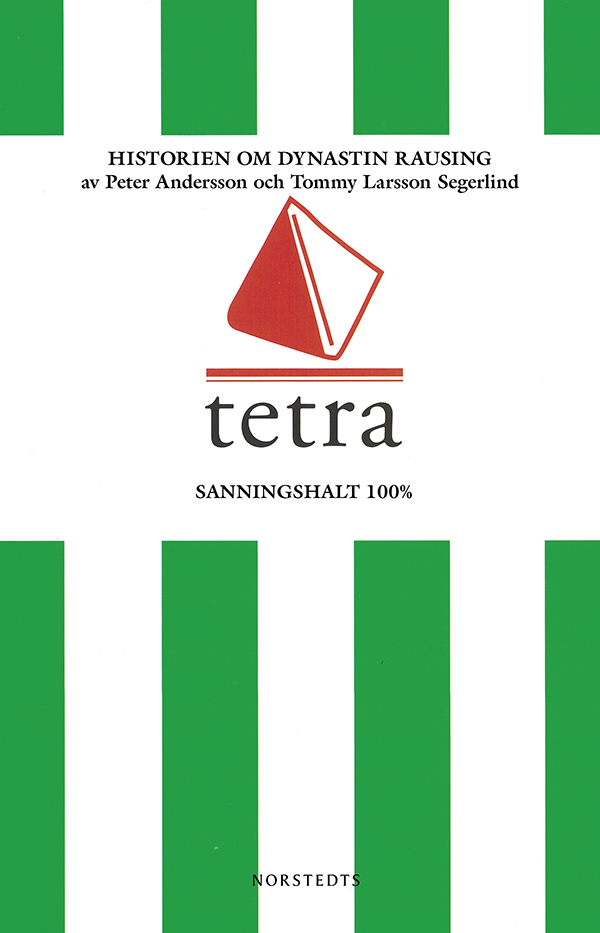
Tetra
Peter Andersson och Tommy Larsson Segerlind · 3 highlights
"After returning to Sweden, Erik Torudd continued to advocate for the use of the S-50 and to apply HP Smith’s method to it. Now, it seemed that the winds were changing within the company. The board of Tetra Pak now included Ruben, Gad, Hans, Holger Crafoord, Erik Torudd, and the company’s skilled lawyer, Carl Borgström. When the dark-suited gentlemen gathered for a board meeting on the morning of February 4, 1952, they decided to build a copy of HP Smith’s machine. Erik Torudd and Harry Järund, who was co-opted onto the board, fought hard against the decision. Both thought it was better to either buy a finished machine or drawings. Otherwise, they risked several years being lost to development. Moreover, they thought it was immoral to copy someone else’s work. But they spoke to deaf ears. Tetra would copy the HP Smith machine. Responsible for the project were the technical genius Nils Andersson and Gad. The decision was bold, but entirely legal. Carr Sherman had voluntarily shown them a design that was not yet patented."
"Nils Andersson and Gad enthusiastically took on the new project. But despite both of them constantly disparaging Americans and Frenchmen, who were already using the method successfully, their own results were poor. And both Gad and Andersson refused to consult anyone who already mastered the method. Quite soon, people began to wonder what was happening with the project. The reports gave clear signs that something was not right. And they never managed to show any paper where the plastic really stuck. “It’s damn strange that the paper department can’t make paper in the Eagan machine when everyone else apparently can,” Hans commented irritably on the missed development. “It’s not strange at all; they insist on doing everything themselves and refuse to learn from others’ experiences,” Erik Torudd replied. It was not until a year after the construction started that they figured out the temperature required for the plastic to really adhere. And that was due to an accident at work. A temperature regulator had malfunctioned, and the temperature of the extruder had begun to rise uncontrollably. Only then did the plastic adhere. The accident taught the Tetra Pak team something that the French and Americans had known for a long time. Only another year later would the method work well enough that it could be reliably used in production. But then, on the other hand, there were problems with Dupont, who was the rightful patent holder. “There is undoubtedly a patent infringement,” the company’s own patent engineer Tage Norberg also stated when the matter was discussed. However, Tetra Pak was saved by the fact that Erik Torudd had been shown the method already in 1951, and at that time there was no patent. Thus, Dupont had no legal ground against Tetra Pak. For the second time, Tetra Pak had cunningly appropriated a machine design."
"With age, Ruben became increasingly suspicious of other people. He was convinced that the majority of the world’s population consisted of swindlers and deceivers. And if they weren’t already, they would most likely become so. “If someone is given the opportunity for dishonesty, he will surely take advantage of it sooner or later,” was one of his common sayings. The examples with Carr Sherman’s hot-melt machine, Eagan’s Dupont machine, and Ruben’s own patent stories seemed to confirm that he was right."