Keigetsu
Strategic Concepts & Mechanics
Primary Evidence
"Jonathan often came to have lunch at Keigetsu with Apple founder Steve Jobs. When the number of customers rapidly declined in 2008 and the general lunch service was temporarily suspended, the store had opened exclusively for the two of them at Steve’s request (Photo 1-1). 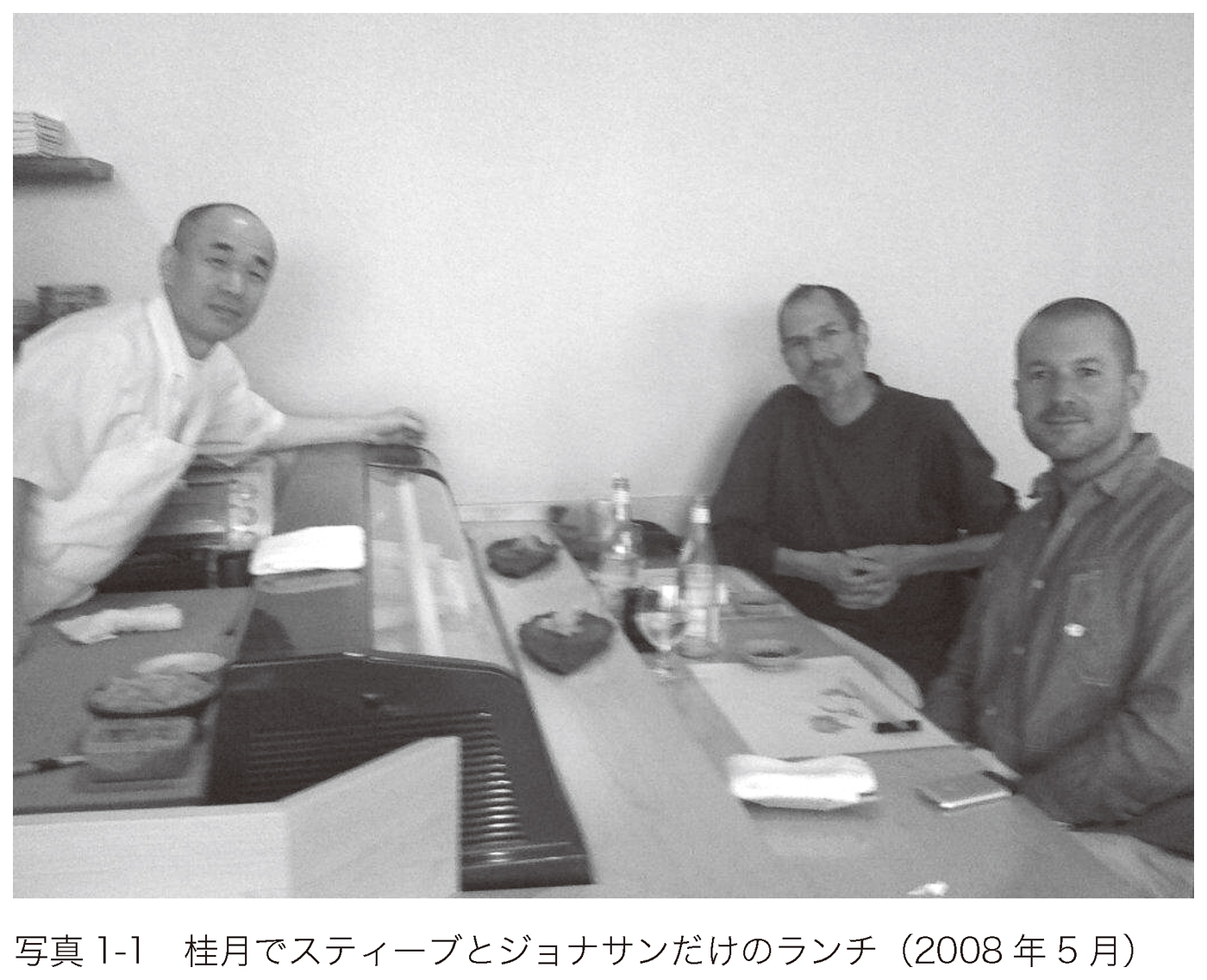 Given these circumstances, Jonathan probably visited Keigetsu with Steve the most, outside of his family."
"Steve officially returned to being Apple’s CEO in 2000 and created a big boom with the portable music player “iPod” in 2001. By the time Keigetsu opened in 2004, he should have already been “the world’s most attention-grabbing executive,” but actually, apart from the birthday party, there weren’t many memorable events from this time."
"the same ranking, Douglas Leone from Sequoia Capital, who placed 4th, was also a frequent customer at Sushiya, Toshi’s Sushiya, and Keigetsu."
"I think it was around 2005 when Reid began frequenting Keigetsu. When I asked Reid if I could send him a connection request, he smiled and said, “Of course.” However, in the end, I left it as-is and never used it."
"Five years after opening Keigetsu, various problems became apparent. Cost prices continued to rise, and the yen’s appreciation against the dollar became a strong headwind for imported goods from Japan. Due to the Lehman Shock in September 2008, restaurants, including neighboring ones, must have taken a big hit, but that didn’t mean cost prices decreased."
"The size of the restaurant also presented dilemmas. Keigetsu was started with the desire to provide detailed services that had not existed in Silicon Valley until then, and the staff consisted of 12 people, which was quite a crew. After actually running it, it became clear that in California, a store of this size is economically the most troublesome. The business was structurally problematic because it bore the same obligations for employee insurance and employment conditions as large companies, while revenues were meager. Despite many struggles, profits did not easily rise."
"Reflecting back to two years ago, by extreme coincidence, on October 5th, the day Jobs died, I had booked a final dinner reservation at the “Keigetsu” restaurant, run by Toshi-san, the protagonist of this book. That week was the last week before the closure of Keigetsu, with many regular customers rushing to make reservations. Amid this, I managed to secure a table for four, accompanied by Hiroshi Mikitani from Rakuten and Phil Libin, CEO of Evernote. It was also a meeting to introduce these two to each other for the first time."
"Toshi’s Sushi Bar launched a website in the mid-1990s, but full-scale utilization began with the opening of Keigetsu in 2004. What caught our eye at that time was a certain restaurant reservation site."
"It’s not that we’re particularly contrary, but we ended up turning away from trends. The result of sticking to doing what we first want to do without worrying about the surroundings is our real feeling. When a new Japanese restaurant opened near Keigetsu, Steve once asked if it was a competitor. At that time, I just briefly answered, “No, it isn’t,” but I regret not explaining more thoroughly."