“Bernard Arnault, from this time on, calls on specialized firms in what is now called economic intelligence, that is, the search for information, concerning his competitors as well as within his own group.”
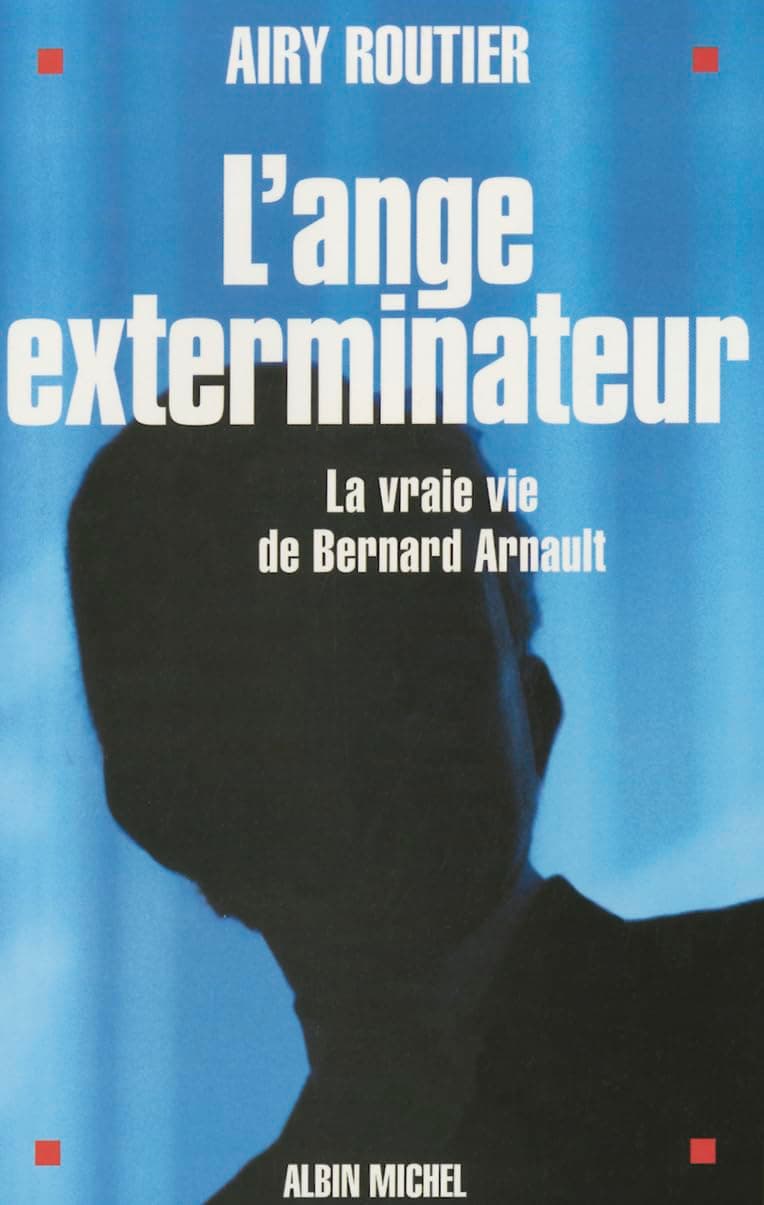
French industrialist who parlayed a 40 million franc stake into control of LVMH, the world's largest luxury conglomerate, through a series of audacious leveraged acquisitions, cascading holding structures, and ruthless power consolidation.
Era
1980s-2000s France: socialist-then-right government oscillation, Crédit Lyonnais easy money era, 1987 crash, luxury industry consolidation, dotcom bubble, and the birth of modern French capitalism without capital.
Scale
Built LVMH from a contested minority stake into the world's #1 luxury group — 110 billion francs market cap by 1996 — controlling Dior, Louis Vuitton, Moët, Hennessy, Krug, Sephora, DFS, and dozens more brands, with personal fortune rising from 40 million francs to an estimated 100 billion francs in fifteen years.
Ask this book
269 highlights
Suggested questions
Notes
“Did you say transparency? Bernard Arnault will once again, on May 25, 2000, change the names of his head companies, an unusual practice in large listed groups and which Bernard Tapie, at his beginnings, had made a specialty of to confuse the former shareholders of the companies he took control of. On”
“Arnault sells most of Boussac Saint-Frères' textile activities to the Prouvost group. In return, Boussac receives 27% of the capital of Lainière holding, valued at 300 million. To obscure the matter, Arnault will invest 250 million (21% of the capital) in Vitos Établissements Vitoux (VEV), the holding company that controls Prouvost. This allows him to say: "We are not selling. I am investing 250 million and becoming…”
“rnault saw potential in Christian Dior, a more attractive company within his group. He believed that he could better convince investors by showcasing the store on Avenue Montaigne. However, there was a problem: Dior was indeed a magical, universally known name, but it was a small business with only 600 million in revenue and 50 million in profits. It was valued at 1 billion at most, which was far from the 7 billion…”
“he sold Peaudouce to Môlnlycke, a subsidiary of the huge paper conglomerate Svenska Cellulosa, for an astronomical price: nearly 2 billion francs (300 million euros). Bernard Arnault summarized this deal succinctly in his book: "We went to Sweden with one of my collaborators to sign the transaction. The night following the official signature, the hotel where we were staying caught fire. We were able to rush down to…”
“Arnault will therefore use the third solution, that of cascading. This involves stacking control companies on top of each other and opening their capital to minority shareholders who wish to be associated with the presumed success. These can be anonymous small investors or clearly identified external partners. He had already practiced this in 1986 when he had to pay cash for the last Willot shares. To find the 400 m…”
“But in the spring of 1984, still according to the official version, when Pierre Godé called Bernard Arnault to reveal the name of the target company he had found, he wondered if he had gone crazy. Boussac does not meet any of the criteria he has set. The name is certainly known, but it's for the worst; nobody believes in the development potential of a bankrupt and failing group; as for the workforce, which Arnault w…”
“The head of Louis Vuitton and the head of Financière Agache sign a six-point protocol to jointly take control of LVMH. The document exists in only two copies and has only four pages. Each term has been weighed. It states in the preamble that "given the project under way to introduce a foreign shareholder to a significant extent into the capital of LVMH, a project carrying a very great danger in the long term for the…”
“Everywhere one goes, wherever one investigates, traces of these extremely complex operations can be found, but they boil down to one obvious fact: Bernard Arnault became a multi-billionaire because he most often came out ahead, personally, in the constant internal sales and purchases of companies, from the top to the bottom of his cascade.”
“On October 28, the Paris Stock Exchange literally collapses: faced with the massive influx of sell orders at any price, more than half of the 180 main stocks cannot be listed. The LVMH stock is particularly affected. It loses 40% of its value and falls to 1,200 francs, which brings the value of the group to 13 billion francs (2 billion euros). For Racamier and Chevalier, everything has to be redone. The bubble has b…”
“Bernard Arnault has won. Others in his position would extend a hand to yesterday's adversary to heal the wounds. It is a fundamental law of the business world that the winner spares the loser. But it is a mistake to believe that the exterminating angel is capable of doing so. For him, victory is only complete if he can make his opponents pay.”
“In his letter to Fabius, Bernard Arnault commits to respecting the plan he presented to the government, which promises in particular the "perpetuity" of the Boussac group and makes firm commitments on employment. In return, he presents the bill to the State: 940 million, partly (380 million) in the form of debt write-offs, the rest (560 million) in the form of new aid6. The money will be paid, but the promises will…”
Themes
Information War Before Every BattleOpacity Through Entity RenamingSell the Buyer His Own MoneyBrand Prestige as Holding Company CurrencySell at the Ceiling, Buy at the CrashStack the Cascade, Keep 51% at Every FloorBuy the Wreckage, Extract the JewelsTurn Every Ally Into a Stepping StonePersonal Enrichment Through Internal TransfersCrash as Invitation, Not CrisisVictory Without Mercy, Then Make Them PayGovernment Subsidies as Launch FuelGratitude Is a Disease of DogsProducer-to-Consumer Margin CaptureStock Options as Majority Shareholder Self-EnrichmentGrandmother's Cult of SuperioritySilence the Dissent, Control the NarrativeCreditor Coercion by Liquidation Threat
People
Companies
Highlights
“"My first principle is to never lie, which is also very important in business where transparency is essential, even decisive." Bernard Arnault, The Creative Passion, interviews with Yves Messarovitch.”
“He portrays himself as an unrecognized angel, while others describe him as a complex, courageous and calculating man, introverted, as implacable as he is polished, psychologically unstable, pathologically suspicious, an anxious person who kills out of fear of being killed. An exterminating angel.”
“the desire of a man of power to remain the sole master of his history, his image, and his life. Why and on what grounds did he complain that we were meddling in something that was none of our business?”
“At the same time, the executives of Kroll Associates in France, an American economic intelligence company engaged by LVMH for several weeks to find any exploitable weaknesses in both Gucci and De Sole and Ford, fax the news highlights to their European management in the UK, without hiding their surprise: "We are speechless," they write. The intelligence agency wasn't informed...”
“Like a spoiled child who only accepts the game's rules if victory is assured, Bernard Arnault cannot stand the intrusion of his capitalist rival, who has snatched the limelight by vying with him for the title of France's richest man.”
“the Arnault and Savinel families rub shoulders with Jean-Pierre and Régis Willot but do not socialize with them. The Willot brothers are neighbors, as are the Mulliez family (who would later found Auchan), but they are only greeted furtively. Instead, they seek recognition, even an invitation from the Tiberghien, Prouvost, Masurel, Dewavrin, and other prominent families, often in vain.”
“On the court, a different personality emerges: Bernard fights to the best of his physical abilities, has an excellent mindset, hates to lose, disputes points, and can sometimes be a sore loser.”
“He loves classical music, Mozart, Chopin, and Liszt. His talents emerge early, to the point that his family believes they have spawned a prodigy: nothing should hinder such talent. Therefore, his mother gifts him his first upright piano, a Pleyel, for his sixth birthday. At twelve years old, he receives his first grand piano, which must be hoisted through a window on the first floor of his grandparents' house. Bernard quickly showcases his talent. He performs Chopin's twenty-four Études brilliantly but somewhat mechanically. He delights his family by giving small recitals on any occasion, in front of guests, with his serious expression of a well-behaved child, wearing flannel trousers, a blazer, a white shirt, and a club tie. At fifteen, in 1964, he plays the organ at Notre-Dame de Roubaix and wins first prize in a small competition.”
“However, Bernard Arnault's state of mind is different, as he shares a deep bond with his grandparents. His suffering is not on behalf of someone else. Later, when asked about the most significant and painful events in his life, he will never hesitate to answer: the death of my grandfather in 1959 and that of my grandmother in January 1985. "I see her on her hospital bed, reading articles about me," he confides to Yves Messarovitch in his book.”
“In reality, and this is the enigma of his uneventful childhood, perhaps the key to his future personality lies in his emotional relationship with his grandparents. His true parents, on an emotional level, are the Savinels. As a young child, he divides his time between their house and his parents' house, where he has a bedroom and a study.”
“"I owe her a lot for the choices I made from my early childhood, especially for the unwavering certainty she instilled in me that only hard work paid off," Bernard Arnault will later say.”
“But their bond goes much deeper: the grandparents have devoted a genuine cult to their grandson since his birth, raising him to believe that he is the most handsome, intelligent, and strong. Nothing is ever good enough for him. His grandmother instills habits that he will keep for life: a taste for refined cuisine as well as chocolate, the need to go to bed early (which he will never abandon), and the sense of efficiency, of which she discreetly praises.”
“"She gave me principles for a balanced, orderly life in which there is a place for everything, but where we try to see what is essential,"”
“Above all, this inflexibly determined woman, who is filled with love and ambition for her grandson, instills in him the belief in his own superiority. This belief will guide him through all the important stages of his life and explain the audacity that often borders on recklessness.”
“can be both locked up, to the point of spending an entire meal or even a whole day on a boat with his guests without uttering a word, displaying the bored coldness that his colleagues perceive as contempt; and at the same time, driven by a taste for risk, tempted by fire, full of controlled violence, with an unusual inclination to associate himself with the most exuberant and eccentric personalities, such as John Galliano or Alexander McQueen—although never maintaining anything other than strictly professional relationships with them.”
“Bernard Arnault is neither one nor the other. From this point of view, his success is exceptional. It is not among the petit bourgeoisie that great predators are born.”
“In such families, children are generally programmed to either squander the family inheritance or gently grow it, depending on their character and talent, to climb or descend one or two steps in the French nomenklatura.”
“Is it by calculation, to test the determination of his son, or sincerely, to get rid of him, that Jean Arnault gives this instruction to Hugues Motte, his technical director, while Bernard, fresh out of Polytechnique, takes his first steps at Ferret Savinel? Does he secretly fear being marginalized by his own son who benefits from the blind support of his stepmother, that is to say, the main shareholder?”
“in reality, he knows perfectly well what he wants to do: to become, as soon as possible, the boss of the family business.”
“There had never been any social problems at Ferret Savinel. No strikes, no complaints, nothing. Paternalism worked perfectly there. And then suddenly, the strike. Total. Radical. Led by the CGT delegate, a certain Maquet, who until then had been quite unobtrusive. Bernard Arnault never forgot the image of his father, disoriented at the entrance to the offices, prevented from entering by the unionists, in direct confrontation with them. Bernard watched from afar as this world collapsed, and another was born. He was in Roubaix, still preparing for his exams.”
“From this observation, he draws at least one lesson: only the boss is responsible, he alone decides. And he, Bernard Arnault, will be the boss.”
“the Bernard Arnault of the time as a "young know-it-all, quick to talk back." In 1989, when his friend, in the midst of a battle for control of LVMH, was facing criticism from the press denouncing his coldness and insensitivity, Lefebvre even claimed to find him "more relaxed than he was a few years ago."”
“An evolution facilitated by the fact that he becomes a shareholder, thanks to his grandmother, who entrusted him with some of her shares. Close associates also claim that Bernard Arnault played an important role in buying back, a little earlier, at an interesting price, the shares still held by the Ferret family, which allows Savinel and himself to recover the entire capital.”
“Indeed, in 1976, the year of Antoine's birth, his second child, Bernard Arnault convinced his father to sell the industrial buildings and public works sector of the company to Quillery (of the Rothschild group) for 40 million francs and to focus only on real estate promotion and an embryonic activity, the construction of individual houses and apartments, under the name Ferret Savinel MIA.”
“It is a real break, which will change the nature of the company and reverse the balance of power between Bernard Arnault and his father. It marks the abandonment of Ferret Savinel's historical activity, which will now, by contraction, be called Férinel. Change of nature? The thousand employees are now only twenty. Promotion is more financial and more lucrative than industrial construction, where one is at the mercy of one's big clients and where margins are small. One fears the weather, watches the sky, deals with the sites, rubs shoulders with the workers.”
“In development, it's the opposite: you have to buy land, secure financing, find clients, and the margins are much higher. And above all, you're in control. You're free. In this new activity, Bernard shows off his talent. He works tirelessly and shakes things up. He doesn't mince words, breaks promises to sell land he covets, finds legal loopholes, and multiplies lawsuits. "To make a place for himself in his new profession, he didn't hesitate, at the beginning, to disrupt the peaceful competition climate that had gradually been established between companies in the region," testifies one of his former competitors.”
“The 40 million francs raised by the sale of Ferret Savinel's main activity to the Rothschild group makes it possible to redistribute the family capital, which has become liquid, in favor of son Arnault, who is now a 50/ 50 partner with his father in the new activities of promoting the construction of individual houses.”
“Jean Arnault is not naive. He understands perfectly what this reorganization means for him. But he doesn't have much choice, given the pressure from his stepmother in favor of her grandson.”
“As business prospers, Bernard Arnault decides to launch into leisure real estate, mainly vacation homes.”
“From then on, the airwaves of local radio stations will be flooded with advertising messages extolling the charms of "Férinel, owner by the sea."”
“target clients from the working classes, with a small capital and ready to go into debt.”
“In 1978, only one Férinel house was built in the North. It is the model house to attack the second home market in the South. From the summer of 1979, 100 homes are marketed, 1,000 in the summer of 1980.”
“In 1989, the company will employ 900 people. The success is spectacular: for many clients, who are not homeowners, it is their first real estate purchase.”
“"The economy was declining in the building industry, risking to make us lose our independence, and I thought it was more profitable to be in direct contact with the final client,"”
“It already shows the desire to remain in control of his business and to be close to the final consumer, in order to capture the entire margin.”
“The takeover became clear when Bernard decided to buy a Piper Cheyenne plane to travel, without asking his father's permission. When Jean learned of this, he was furious. He confronted Bernard: “Why did we buy a plane?” “It was Michel Lefebvre who told me we should buy one because it's convenient and economically justified.” Jean Arnault rushed into Michel Lefebvre's office: “Are you the aviation specialist?” “No, but we thought, with Bernard, that it was a wise investment due to the increase in our turnover and the many trips we have to make throughout France.” Jean Arnault is not convinced: “I need to see you both together, this is not acceptable.” A confrontation is organized on the spot. Jean Arnault speaks, addressing only Michel Lefebvre and never meeting his son's gaze, who stares intensely at him: “Things need to be very clear, and since they don't seem to be for you, I'm going to make it clear. In this company, I am the president and no one else.” “That's obvious, Lefebvre replies.” “Not as obvious as you think. In any case, I forbid you to buy a plane. It's an unnecessary expense. Do you hear me? It's over!” Bernard Arnault said nothing. And the Piper Cheyenne, already ordered, would be delivered a few weeks later...”
“Bernard Arnault did not resell Le Chasseur français to Tapie. "What agreement?" he says to him. The intermediary does not remember ever holding such an agreement and Arnault claims that it never existed. Tapie cannot file a complaint since the carry-over agreement, if it ever existed, was illegal given his legal situation. And Arnault will resell Le Chasseur français himself, with a nice profit.”
“"He made his fortune with public subsidies. Everything is accepted from him. Everything is forgiven him. While I am always pointed at, me who has not done a tenth of what he has done." Question: how can Bernard Arnault, at his age and with his background, dare to make a move like this against Tapie? Is he aware of the risks? Has he not, better than anyone else and before everyone else, identified the personality of the flamboyant businessman who intimidates, attempts coups, content to scare but never to act?”
“It was while listening to the radio in Nice that Jean Arnault learned that Bernard had bought Le Chasseur français. He was furious. He called him, but in the meantime, his son had gone to the United States. He turned to Michel Lefebvre, who immediately found an excuse for him: everything happened very quickly, Bernard didn't have time. Jean Arnault, once again, bowed down. Thus, facing his father, with the support of his grandmother, knowing how to become indispensable, working hard, masking his game, sheltered behind his appearance of a first communicant, taking risks, analyzing situations far from the fashions of the moment, using emotional strings, mastering power relations, playing three moves ahead with cold determination, Bernard Arnault succeeded in his gradual takeover of power, within the family framework. A pattern that he will reproduce later identically, adapting it to circumstances, and which will allow him, in a few years, to reach the heights of power and fortune.”
“This is how François Pinault thinks. On May 10, 1981, the Breton businessman, then relatively unknown, was in Rennes, where he had voted. As soon as the results were known, he went down to the street and spent the evening observing the jubilant crowd and smelling the air of the new times. He was skeptical but interested. And on Monday morning, he went to buy a high-end BMW in cash, both to "ward off bad luck" and to lift the spirits of his dealer, who was despairing at the thought of never selling another beautiful car again...”