Buy the Wreckage, Extract the Jewels
Books Teaching This Pattern
Evidence
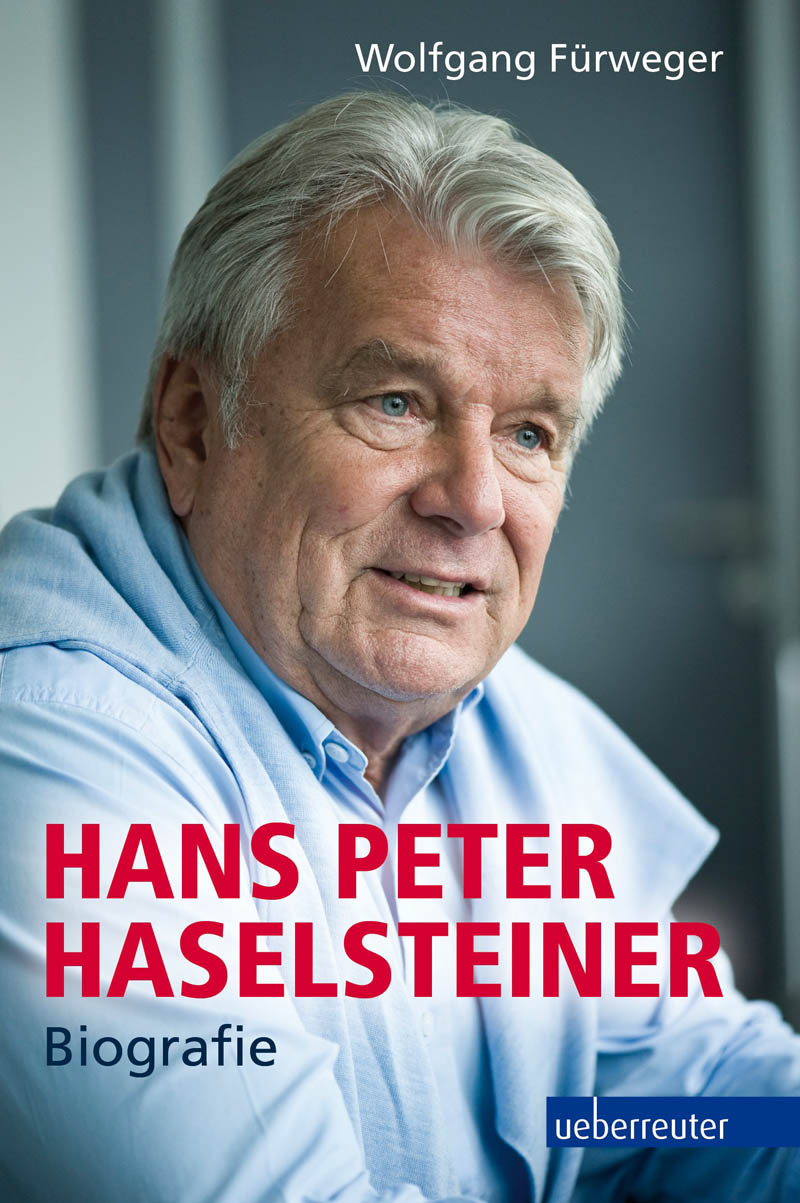
Hans Peter Haselsteiner Biography
Wolfgang Fürweger · 4 highlights
"Haselsteiner’s first entrepreneurial achievement: In 1977, he took over the construction company Soravia. It was almost as large, also based in Spittal an der Drau, and was Ilbau’s fiercest competitor. He is still proud today of how he vanquished and ultimately absorbed the competitor, wrote Die Zeit. The fight was fierce: “It was him or me, that’s all it was about. It was a fight for survival. If I had lost the game, my career would have been over.” With the takeover, the Soravia family became minority owners of Ilbau; and the then-junior chief Erwin Soravia would go on to become one of Haselsteiner’s closest companions in the following decades. Incidentally, he is almost the same age as Haselsteiner and the father of the well-known brothers Erwin Jr. and Hanno Soravia, who lead the Soravia Group. The company, based in Vienna, operates throughout Europe and specializes in real estate development, facility management, and corporate investments (Private Equity)."
"At the start of the Great Depression in 1929, the company already employed 1,400 people. In the 1930s, the headquarters were then moved to Cologne. After the collapse of the Third Reich, Strabag’s headquarters remained in the Rhine metropolis, which at the time belonged to the British occupation zone. In 1949, the company went public. In 1963, the German Strabag founded an Austrian branch in the prosperous steel city of Linz. This branch was also listed on the Vienna Stock Exchange from 1986 onwards. Initially, Haselsteiner had set his sights on this Austrian Strabag because its parent company was considered a restructuring case: “There was not unwarranted hope that they were willing to part with their Austrian subsidiary,” Haselsteiner said at the time. However, this deal did not come to fruition, but the red-white-red construction magnate snatched up the parent company instead."
"During this time, the Austrian construction tycoon was also a regular feature in the German media. Some did not quite know how to deal with a man who, on one hand, was from the country of Jörg Haider and was friends with him, yet on the other hand was also known for having worked on the futile attempt to establish an Austrian FDP. “Some praised him for having reorganized the German construction landscape, while others called him an insolvency profiteer,” wrote Die Zeit: however, Haselsteiner could not understand this criticism and always countered it with his economically liberal credo: “I always explained to the banks and major suppliers that they had no reason to be upset with me, but rather I had every reason to be upset with them. For they artificially kept incompetent competitors alive for years and prevented a necessary market cleanup.”"
"But no one yet knew about the impending catastrophe. And so Strabag, equipped with the necessary free capital and the financially strong Raiffeisen Group in the background, first went on a shopping spree. At the beginning of 2008, through company acquisitions, it gained access to the Italian, Albanian, and Swedish markets. In Germany, another larger construction company was acquired 85 percent: The Kirchhoff company from Baden-Württemberg, with its 1,600 employees and an annual turnover of 350 million euros, was a specialist in road construction and had special know-how in the construction of runways. In addition, it operated 15 gravel, chipping, and ballast plants, which meant it could partly produce its own raw materials, making the investment even more appealing: “With the majority takeover of the company, Strabag SE participates in one of the leading companies in southern Germany and opens up a regional market where it has not been comprehensively represented,” said an official Strabag statement at the time."

l'Ange Exterminateur
Airy Routier · 4 highlights
"But in the spring of 1984, still according to the official version, when Pierre Godé called Bernard Arnault to reveal the name of the target company he had found, he wondered if he had gone crazy. Boussac does not meet any of the criteria he has set. The name is certainly known, but it's for the worst; nobody believes in the development potential of a bankrupt and failing group; as for the workforce, which Arnault wanted to be as small as possible, it approaches 30,000 people. Legitimately agitated employees: to save their jobs, the Boussac regularly go on strike, cut down trees, and block the roads of the Vosges valleys where the factories are concentrated..."
"Looking at it, the assets of the group appear considerable. Dior alone, according to an evaluation based on indications from the company, which will prove to be largely underestimated, would be worth around 1 billion francs. This is followed by Conforama (between 600 and 800 million), the Bon Marché-Belle Jardinière group (600 to 700 million), buildings (600 million) and Peaudouce (300 million). Not to mention the stocks valued at 1 billion. In total, nearly 5 billion francs, or nearly three times the amount of liabilities and twice as much as Arnault had estimated in his 1984 plan!"
"he sold Peaudouce to Môlnlycke, a subsidiary of the huge paper conglomerate Svenska Cellulosa, for an astronomical price: nearly 2 billion francs (300 million euros). Bernard Arnault summarized this deal succinctly in his book: "We went to Sweden with one of my collaborators to sign the transaction. The night following the official signature, the hotel where we were staying caught fire. We were able to rush down to the hotel lobby in our pajamas with all our files!" The negotiation was remarkable, however. The deal had been on the market for over a year. In October 1986, the English company Smith & Nephew offered 800 million francs. Then, in January 1987, Môlnlycke outbid them with an offer of 1.5 billion francs. Not bad for a company still listed in the books for 300 million! Advised by his collaborator Christophe Mujagic, Arnault asked for 2.5 billion. The Swedes did not want to go beyond 1.7 billion. Finally, they agreed to just under 2 billion. Was it the tenacity of the businessman? Probably. Arnault was able to sell at the top of the stock market cycle. In addition, two years earlier, against the advice of his collaborators, he had decided to increase the prices of diapers to show a flattering financial result. The gamble was risky because if the major competitor Pampers (Procter & Gamble group) had not followed suit, Peaudouce could suddenly have been out of the market."
"For Arnault, on the other hand, the crash is a new stroke of luck. The opportunity is unexpected. Especially since, for months, he has been amassing ammunition. In September, one month before the crash, he put 13% of Conforama's shares on the stock market, which earned him nearly 300 million francs. A little later, it was Arnault and Associates, the head company, that was introduced to the second market. And in November, Financière Agache obtained a long-term credit of more than 800 million francs from a banking consortium led by Crédit Lyonnais. What does Arnault do with this war chest? With the support of Lazard bank, he buys LVMH shares, both personally and through Financière Agache."