Orphan Hunger Beats Comfortable Talent
Books Teaching This Pattern
Evidence
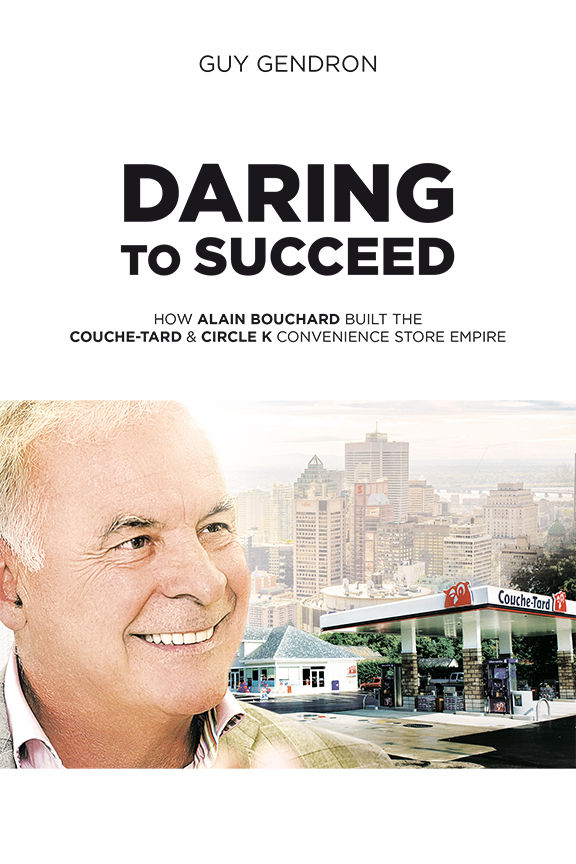
Daring to Succed
Guy Gendron · 3 highlights
"During his brief stays back home, Jean-Paul Bouchard would take them on an activity that left a deep impression. After they piled into his old car, the family embarked on driving tours of businesses of the region: garages, hardware stores, restaurants, trailer parks. Jean-Paul nurtured a single dream in his heart: to enter the business world once again. His children, brought along on these strange adventures, would see first-hand his yearning to find his way back to that road, that pathway to restoring his dignity. The unusual team would disembark, arrive unannounced abruptly and begin to examine the premises and question the owner about his or her revenue, traffic levels, the price of rent, inventory, employees and their wages, profit margins and sales prices. Then their father, who had only a third-grade education and had trouble with basic math, would turn to his son Alain. “He would say, ‘Alain, do the totals,’” Alain Bouchard recalls. Though the boy was just 12 years old, his father was conferring on him, symbolically at least, the responsibility of understanding the workings of a business, of identifying ways to alter the variables and increase profits. The task became deeply connected with having enough food on the table, restoring his father’s honour and lifting his mother’s spirits. It was the dream of returning to the life they had led before the tragedy. It would be hard to overstate the invisible weight carried by this exercise of mental calculation or the profound impression it would make on him."
"It is said that the survival of humankind rests on two pillars—a mother’s love and a father’s protection. But it is equally true that it depends on a powerful lever to propel it forward (or, in some cases, to drag it backward): a son’s desire to restore his parents’ honour."
"“I’m an entrepreneur at heart, in everything I do,” he says. He couldn’t overcome the instinct, which at times seemed to verge on compulsion. The tours of businesses with his father long ago, with the hope of climbing back to a state of dignity and happiness, had left a deep mark. It was like an unquenchable thirst. His mind was constantly working, doing calculations, everywhere he went. “When I go into a restaurant, I count the number of seats and I can say whether it’s profitable or not, based on the traffic. It’s like an innate reflex.”"
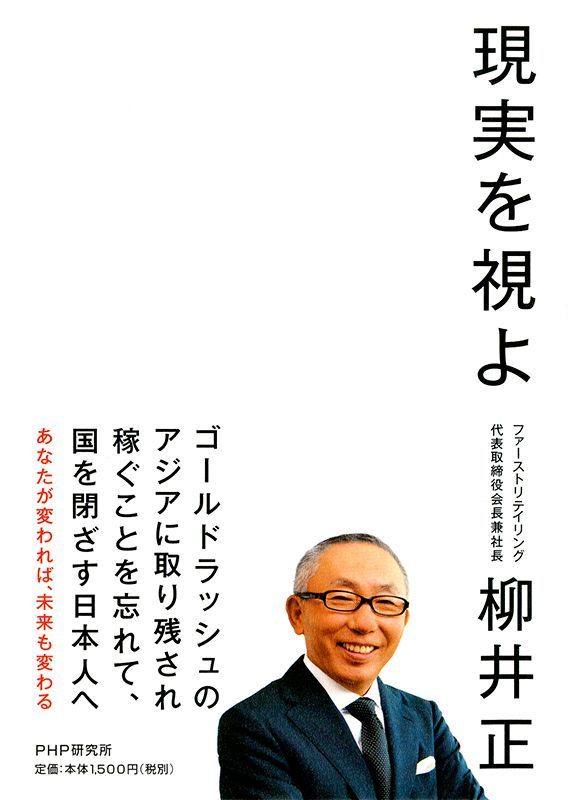
Face the reality (translated)
Tadashi Yanai · 3 highlights
"The strong impression of the founder of Giordano It's not just the youth. When dealing with Asian businesspeople, a fervent hunger to grow more and become wealthier comes through. In essence, they're hungry. Hence, the forcefulness with which they engage in their work is completely different, regardless of their abilities. The impression I got from Mr. Jimmy Lai, the founder of Giordano, a SPA (Specialty store retailer of Private label Apparel) I met while working in Hong Kong, was intense. Giordano not only produced its own products but also subcontracted for Limited, which used to be the world's largest SPA. What surprised me was the volume of their production, they produced as much as 300,000 pieces for a single item. When I asked Mr. Jimmy Lai about his background, he said that he had swam from mainland China to Hong Kong, an illegal entry so to speak. However, he did not consider this a disadvantage. Instead, he started a business entirely on his own and went on to become wealthy enough to drive a Rolls-Royce. To put it simply, this man has extraordinary vitality. Everybody in Japan is surprised when I tell this story, but if you go to China or ASEAN, you'll encounter as many people like Mr. Jimmy Lai as you want. That's the reality of rapidly growing Asia."
"Moreover, it is not just the number that is significant. Just as the Japanese people, who dreamed of a prosperous life after the war, sought after the 'Three Sacred Treasures' of television, washing machines, and refrigerators, these four billion people are hungry for prosperity. Their desire to consume is incomprehensible to today's Japanese."
"Poverty takes away dreams and hopes Among experts who deny economic growth, there are those who say, "It's not necessary to be rich." Isn't that statement somewhat irresponsible? Nothing is born from the "concept of being/remaining poor". Because people want to become richer, they strive to be innovative and keep up their hard work, which leads to growth. The argument that it's okay to be poor if you are spiritually rich is a joke that only those who are rich can make. There is a saying called "poverty dulls the arts". Having a bare minimum to survive in life, can one really lead a significant and fulfilling life?"
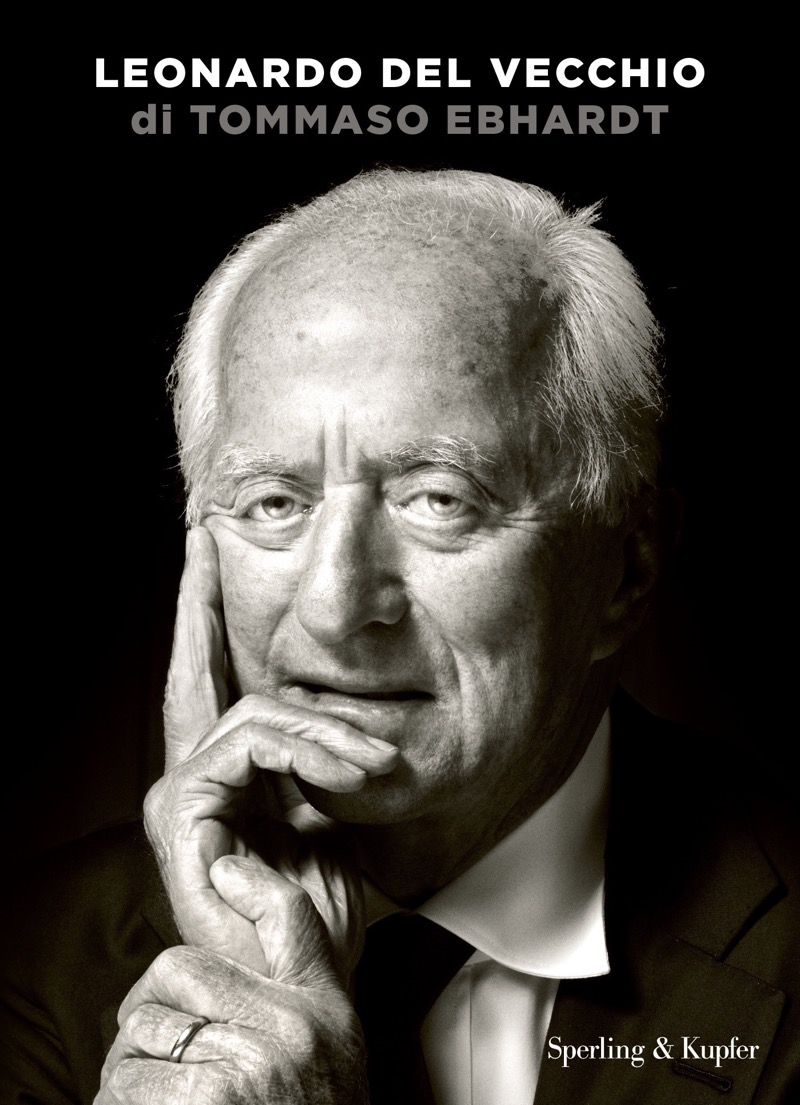
Leonardo Del Vecchio
Tommaso Ebhardt · 4 highlights
"Leonardo is fourteen years old and has a life to devour with one specific goal: to never again be forced to suffer the hardships of childhood. He has an obsessive desire to succeed. He is hungry for affirmation, ready for any sacrifice necessary to shake off poverty, hunger, misery."
""Martinitt we are called, this heroic and holy name, which we have been handed down, is for us such a noble pride, because we are certain, in a better tomorrow." It is the song and motto of the college. It doesn't matter if you are a child of nobody, if you start at a disadvantage: if you have strength of character and perseverance, you can go far and success will come."
"At seven years old, during wartime, Leonardo leaves his family and ends up in an orphanage. An experience that will change him forever. "I grew up without a father and in an institution. Growing up without a family is something you can't explain unless you've lived it. It marks you," are the few words I manage to get out of him about those years."
"Ambition and fear are the engines of development, two continuous forces that feed each other: on one hand the need to always prove something more, on the other the concern that any unforeseen event can suddenly erase everything that has been built."