Outsider Aggression as Market Entry
Books Teaching This Pattern
Evidence

A Time for Reflection
William E. Simon · 3 highlights
"WILLIAM SALOMON, FEBRUARY 22, 1994 Certainly at the time we were the largest risk-takers in the business. That wasn’t always necessarily out of choice. It was due to expediency. We didn’t have many people working for the firm who were members of the “right” clubs. Years ago, the old-time firms that became our major competitors had built-in business through family connections and college acquaintances. They were tied in because of who they were, while we were somewhat of a Johnny-come-lately with no Ivy League background and no tennis or other club memberships. We weren’t part of the “in” group in those days . . . So we had to fight our way in. The only way we knew how to fight was to take more risks than somebody else would take"
"We constantly had to illustrate we would pay more or sell cheaper. Our philosophy was taking chances . . . We were a risk-taking firm"
"The game, of course, is to “make the market,” and to make the market, you have to be in the market, and sometimes you are going to lose. But one thing is absolutely certain: You can’t hit so much as a foul ball, let alone a grand slam, unless you are willing to step up to the plate and face whatever is thrown your way. You’ve got to be in the game to play—an obvious observation, but one that bench warmers fail to grasp"
The Match King
Frank Partnoy · 2 highlights
"Ivar took the long view. He believed matches were an important staple, like steel or sugar, and that match factories inevitably would be consolidated. He also foresaw that Britain’s abandoning of the gold standard would open up international finance to newcomers, and that the war would not clog shipping lanes as much as people supposed. He thought that if he could manage the match business as well as he had managed construction, he would be able to acquire a monopoly on production. Then, he could raise prices and earn enormous profits. Just as Rockefeller controlled oil and Morgan controlled banking, Kreuger envisioned controlling matches, and thereby joining an élite group of global monopolists."
"When Swedish lawmakers decided to permit banks to invest in industrial companies for the first time, Ivar struck a deal with Oscar Rydbeck, a rising star at Skandinaviska Kredit A.B., known as “The Swedish Credit Bank.”11 When Rydbeck said he would be willing to take Ivar’s Kreuger & Toll shares as collateral for an investment in a new business, Ivar’s thoughts turned to his family - and to matches. Ivar’s father, Ernst August, had methodically saved enough money to buy stakes in two small match factories from their extended family’s consortium, Mönsterås Matchworks. Ivar’s brother Torsten now managed one of those factories in Kalmar, Ivar’s home town. The match business was highly competitive and not very profitable, but Ivar and the newly liberated Swedish banks agreed there was potential. Ivar saw that the match industry was in the same economic position oil, sugar, and steel had been in a few decades earlier. There were too many owners of too many factories. Competition was driving prices down so far that hardly any profit remained. Ivar knew his family, and the numerous other small factory owners, would never make much money this way. However, if these factories could be consolidated, the owner of a Swedish match monopoly could raise prices and make a fortune. Some factories in Sweden recently had combined, to form the Jönköping-Vulcan trust, but the men running the trust were conservative and slow. Ivar was sure he could dominate them. He began using loans from the Swedish Credit Bank to buy match factories throughout Sweden. During the next eight years, Ivar parlayed a few family match factories into a conglomerate. He modernized factories and expanded overseas sales. Production increased from 90,000 cases in 1914 to double that in 1916; his profits more than tripled.12 He reduced costs by purchasing the companies that made his machines, as well as companies that supplied chlorate acid potash for the tips. The hardball tactics Ivar used to take over competitors must have reminded Lee Higg’s partners of John D. Rockefeller, who used a similar approach to acquire competitors of his company Standard Oil. To get the money for these expansions, Ivar turned to Oscar Rydbeck. The Swedish markets were going through their version of a speculative frenzy during 1914-15, and Ivar was able to raise 5 million kronor from Swedish banks. During the war, when exports to Britain closed, Ivar turned to Russia, where he not only exported matches, but purchased aspen wood (the best wood for matches) and paper mills. After the war, he bought up virtually all of his competitors in Sweden, using more cash borrowed with Rydbeck’s help. He never gave up control. When he consolidated his match companies, he kept a majority of the voting shares."
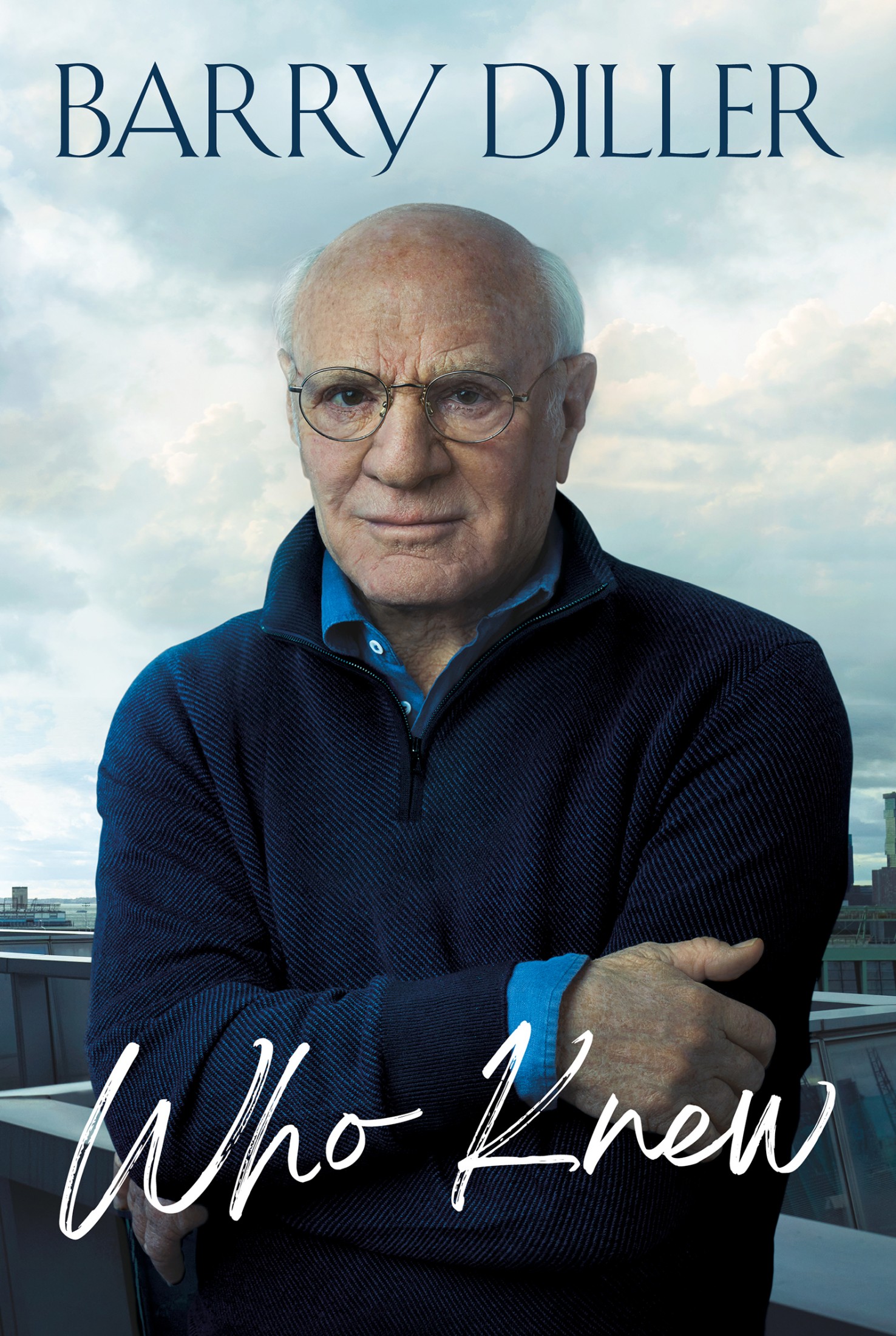
Who Knew
Barry Diller · 3 highlights
"Over time, the distinct images of the three networks had blended together. Initially, CBS had been Tiffany, NBC was live “specials” and color, and ABC was the shoot-from-the-hip network that would try anything. ABC had become number one, and as the other two tried to compete, the programming for all three networks had grown very similar. I’d always been a contrarian counterprogrammer and believed this opened the opportunity to start a brand-new independent network and began to scope out how to get it launched."
"Finding our own vein took some false and painful poking about. Finally, in the nick of time came a script that lit my contrarian spark and came to define what Fox was. The title on the first page woke me up: *NOT THE COSBYS.* At the time, *The Cosby Show* was the most successful program on television, a gentle sitcom about an idealized, decent, and loving family (just how idealized we now know, given the revelations about Mr. Cosby). *Not the Cosbys* was about a dysfunctional family saying and doing every impolitic, incorrect thing possible. And it was hysterically funny. We’d found our edge. We were going to be an *alternative network*! We had to change the title, of course—it became *Married… with Children.*"
"I’m drawn to things that don’t conform to the standard, which is, in some way, a rejection of the concept that normal is good. Normal is average, and I learned very early that concepts of normality not only didn’t apply to me but weren’t going to produce anything original. We were going to find, unfortunately not in the beginning, that all our successful shows were “different” from what the three networks offered. We learned not to program in the mainstream and instead be an alternative entertainment experience."