Owner's Equity as the Non-Negotiable Discipline
Books Teaching This Pattern
Evidence
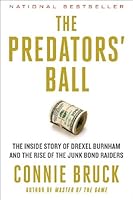
Predator's Ball
Connie Bruck · 4 highlights
"The difference in the attitudes of those who were owners and those who only felt like employees was clear to him. “If you get a guy with some of his money in a company, he’s going to do better than people who are getting a salary and bonus based on the size of the company,” declared Joseph, delivering the Drexel exegesis. “. . . We wanted to finance companies of the future by picking guys who were going to be successful entrepreneurs, and our main discipline was getting them to have their money in the company. And we insisted on it.”"
"In line with the Drexel tenet that people work best when they have an ownership stake, Perelman had made Drapkin a principal in this deal. In June ’85, the board of Pantry Pride had loaned Drapkin money to buy Pantry Pride convertible debentures. For a lawyer to become a principal in a deal with a client was a first at Skadden and a practice not followed at any other major New York law firm. It enraged some of Drapkin’s partners, but it was a measure of his new clout."
"Weinroth lapsed into the familiar refrain (articulated by Milken, Icahn and others of their persuasion) about the decline of corporate America in the hands of its managers, and its rescue by the new breed of manager-owners. “Old companies were started by true entrepreneurs, who had children some of whom were affected by the ills of the rich,” he continued. “They brought in professional managers, who ran the companies in a conservative fashion . . . but those professional managers didn’t have an ownership stake. Their risk-reward ratio was skewed to being a conservator, not an initiator. Then the second-generation [managers] grew to the top. And even if they were high quality as managers, they were certainly not entrepreneurial. And then that group promoted people who couldn’t threaten them, and they in turn hired people inferior to them, who lived for their perks and compensation and ran their companies conservatively because they had no upside interest. And by the time you go through several generations of these managers, you have a company run by dull-normals!"
"Milken would in effect create his own firm within the firm of Drexel Burnham, one which its members would refer to simply as “the Department.” He laid the groundwork for that autonomy in 1973. From the very beginning, Milken made it mandatory that a certain portion of his people’s profits were reinvested in trading accounts which he ran. It was a system of forced savings, in which these salesmen and traders were able to watch—from a distance—their wealth accumulate. With the kind of return Milken got, no one really had much to complain about. On the other hand, if one decided to leave him on less than amicable terms, as one trader would, there might be difficulty in getting one’s money out. It was a powerful disincentive to taking any secrets from Milken’s operation to a rival firm."

The Virgin Way
Richard Branson · 3 highlights
"Having what we like to call ‘serious fun’ is at the core of ‘the Virgin way’ and that’s something for which I will never apologise. Being passionately engaged and enjoying every minute of what you do is an attitudinal thing – a spark – that cannot be mandated, trained, put in a job description or an employee manual. It’s something that’s either in a person’s DNA or not, and as such has to come from within."
"As you will (I hope) understand, one of the keys to ‘the way’ we do things is nothing more complex than listening – listening intently to everyone who has an opinion to share, not just the self-professed experts. It’s also about learning from each other, from the marketplace and from the mistakes that must be made in order to get anywhere that is original and disruptive. And perhaps most importantly, it’s about having fun with a capital F while we’re doing it."
"‘Having a great time while building a highly diversified global business with an extended family of simply wonderful people’,"