Solve the Body Problem Then Own the Category
Books Teaching This Pattern
Little Black Stretchy Pants
Chip Wilson
3 evidence highlights
Michele Ferrero
Salvatore Giannella
4 evidence highlights
The Founder's Notes
Ji Qi
4 evidence highlights

Jan Kulczyk an Extraordinary Biography
Cezary Bielakowski, Piotr Nisztor
3 evidence highlights
The Score Takes Care of Itself
Bill Walsh, Steve Jamison, Craig Walsh
4 evidence highlights
Evidence
Jan Kulczyk an Extraordinary Biography
Cezary Bielakowski, Piotr Nisztor · 3 highlights
"“In that way, most of my ventures wouldn’t exist. Primarily, you must act as a pioneer. This is how it was with the motorway, the breweries, and telecommunications. And Era is the first mobile phone network in Poland. I had the courage to pave the way for others.”"
"few years ago, Kulczyk said: “I think it’s not enough to be an eagle to succeed. You also need what we can call a hunting ground. We know perfectly well that even the best eagle in the desert can still go hungry.”"
"He had often been encouraged to write a book about how to earn your first billion. – “When I hear someone say, write a handbook on how to make money, I say no. There is no such thing. It is the accumulation of many matters and circumstances. First, you need to see something others don’t see. You need to read and observe a lot. But it’s not like I walk from club to club, listening to who does business and where.”"
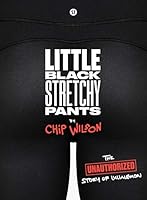
Little Black Stretchy Pants
Chip Wilson · 3 highlights
"What concepts or inventions could be attributed to you? As a technical designer, there is much that I am proud of having contributed to the world: Triathlete clothing (1979); • Technical apparel vertical retail model (1979); • The “streetnic” movement (1979); • “No smoking” in a retail store (1980); • Reversible shorts (1981); • Long surf shorts (1981); • Dual front chest zippers on jackets to allow for intake-outtake venting and airflow (1989); • Vent zippers on inner thighs in snowboard pants (1990); • Pop-up stores (1991); • Zipper guards at the top of the zipper to solve for neck rashing (1991); • 10 .Gator clips on snowboard pants to solve for powder in boots (1991); • Sleeve thumbholes to solve for sleeves riding up and for warmth (1992); • Chest pockets for cell phones to ensure the wearer could access their phone in two rings (1994); • Free in-store hemming to solve for perfect long pants made for taller girls (1998); • Flat seaming in stretch pants to solve for rashing (1998); • Yoga pant (Groove Pant) featured in the MoMA in 2017 (1998); • Matte look in yoga pants to solve for “lightbulb butt” (1998); • Diamond gusseted crotch in women’s yoga pants to solve for camel toe (1998); • Luon 12 percent Lycra fabric to solve for transparency of women’s tights (1998); • Rip out fabric content labels (1999); Retail stores with half-flush toilets and recycling (2000); • Removal of inner-thigh seams to eliminate rashing in running shorts (2002); • Silver threads sewn into first-layer tops to eliminate bacterial stink (2005); • Mindfulness model for business (2012); • Denser, thinner threads in athletic tights to solve for athletic compression without pilling (2013)."
"The following are a sample of the operating principles (I have over three hundred) that were critical in guiding our rocket ship trajectory. My next book will outline the entire set. Operating Principles Samples OP: Every piece of lululemon clothing must be able to be put through a hot water wash and a hot dryer and continue to look new for five years. WHY? Athletes are busy, and they may want to wear the same clothing the next day. A hot wash and dry is quick and kills all bacteria. As part of our quality guarantee, we promise clothing will not shrink more than 2 percent after being washed hot water and dried in a hot dryer. HISTORY: Before lululemon, people would buy garments one to two sizes too big, so after a wash, the garments would fit. We decided to make clothing that would continue to look exactly the way it did on the day it was purchased five years later. OP: Our store pant and short boxes must carry approximately 60 percent black or black-equivalent pieces at all times. WHY? Our Guests purchase solid black about 80 percent of the time, but we only show 60 percent black in the store boxes, so the Guests see 40 percent of the stock in an item in multiple colours. Most Guests want the perceived freedom to choose a colour, and then buy black. We show enough colour for the customer to have a choice and to make the store vibrant. To keep the black level at 60 percent, the pant wall person needs to be responsible for scanning the pant wall ten times per day and keeping inventory levels perfect. HISTORY: We found that if we didn’t stock 60 percent black, and we didn’t restock throughout the day, we lost sales because we would run out of stock by two o’clock in the afternoon. The entire concept of the boxes is to know exactly what inventory is on the floor in relation to the back room. We may sell 90 percent black, but the Guest wants choice before choosing black. We merchandise to the psyche of the Guests. OP: All invoices are paid in seven days. WHY? With retail stores, the worst thing that can happen to us is not to get delivery of product on time. The first company to pay the factories gets the first delivery, the best seamstresses and tailors, and access to the best technology, all of which is critical to quality-control and innovation. HISTORY: With Westbeach, I never had enough money to pay on time. As a result, I often got delivery last, the least experienced seamstresses and tailors and was the last to be offered innovation. OP: Every dollar a garment is discounted takes $10 off the company’s value. WHY? Guests subconsciously attach more value to full-priced garments and correlate full price to a strong brand. HISTORY: Customers are trained by merchandisers (who are incentivized by short-term bonuses) to wait for sales and these customers psychologically discount the value of the brand. OP: We value our customers’ time as though they are making $100/hour. WHY? We assume our Guests make $100 an hour, and if they are delayed fifteen…"
"Do you have any new manifesto sayings for the side of the lululemon shoppers? • Brains are designed for human survival. For the most part, the brain isn’t concerned with living a phenomenal life. The human being must consciously choose to override a life of mediocrity. • The brain is not necessarily correct about 80 percent of what we think and sense. We give the brain a bit of an idea, and it fills in the blanks. The brain is often not right. The brain connects immediate perception with all past experiences. • If I wasn’t concerned for my survival, with what would I be concerned and dedicate my life? • I know what is going to happen because I start in the future and work backwards. • Integrity is not right or wrong. It just gives workability and performance • The game of life is not looking good for others; the game is making life work. • The individual is a drop of water, and the family is the whole ocean. • Everyone learns differently, and I must find out what is important to other people. It is the key to having people want to work with me. 19. What was so different about lululemon’s design strategy? Lululemon was never about “enhancement” of women’s bodies. We never wanted to fool anyone. We were not a Spanx-like product that could to remould bodies, and we didn’t pad bras to create an illusion. Lululemon was all about being real a human being. We were comfortable with all bodies. This core belief came from a life of competitive swimming, Olympic clothing, and triathlon, where functional tight stretch apparel is a necessity for competition. The mission statement of “providing people with the components to live a longer, healthier, more fun life” dictated that lululemon was in the longevity business. The mission statement provided designers with a guiding light towards: • Athletic performance • Function before fashion (or more to the point, function is the fashion) As lululemon grew exponentially through the second half of the 2000s, finding the right designers became an interesting process. Big businesses and other large organizations – say, sports franchises – seem to always have three people on top who produce more than the five thousand people below them. This equation is a weird version of Pareto’s Principle where, instead of 20 percent delivering 80 percent, it’s more like 3 percent delivering 97 percent. With designers, I found there was usually one designer who could create consistently more than twenty others. To me, that one super-talented designer brought more value to lululemon than a CFO or head of HR. With financial, administrative, and managerial people, systems are in place where specific roles are quantifiable. It’s the opposite for designers, even those who’ve gone to design schools. Taking it a step further, designers must re-create four to eight times a year and the best can do it effortlessly. We would find the best designers by setting up labs. In these labs, the idea was to observe multiple designers and see who could…"
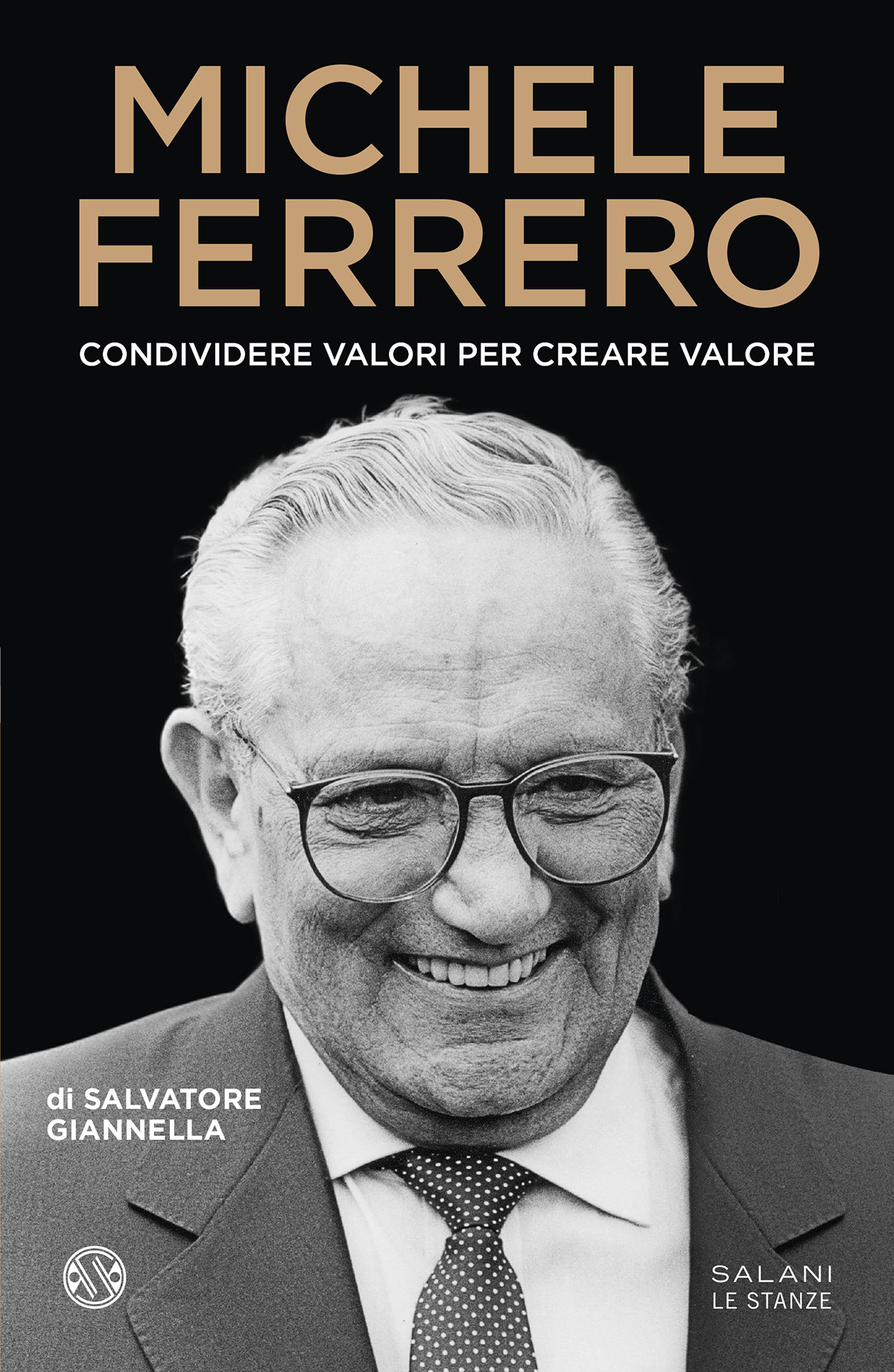
Michele Ferrero
Salvatore Giannella · 4 highlights
"Mr. Michele gave inspiration and momentum to the product creation process which took place through four essential phases, tending: 1) to discover the latent needs of the consumer; 2) to transform these needs into product concepts; 3) to concretely realize products capable of satisfying such needs; 4) to finally define new exclusive technologies for large-scale industrial production."
""If we imitate the products of the big competitor companies, we will inevitably lose, because they crush us with their strength. They are fighter bombers and we are a small boat. They can wipe us out with a single blow. We must keep our distance. Instead, we must invent new products that they do not have. If we can meet the new needs of consumers, then we have a hope of making it. We must invent a chocolate that kids like. They are known to be fond of it. But this chocolate must also be good for mothers, we have to convince the mothers.""
"“A memorable day for me was when, having been recently hired, we were presented by an expert with the ice cream market scenario. The speaker talked and presented charts for almost two hours. After him, Mr. Michele took the floor and said: 'Well, have you taken note of everything the expert has said? Are you able to repeat what he said?' Everyone said yes. And he said, 'Good, now throw away everything you've learned.' It might have seemed like an attack on that expert speaker, but instead he explained that the scenario presented, which cost a lot of money, was useful because we had learned what not to do: 'That is the scenario in which our competitors operate; we instead want and must do something new, different, unique, against the current.' It was an incredible lesson.”"
"In fact, the leap occurs precisely with the legendary little eggs, which are the result, once again, of the inventiveness of Michele Ferrero. The idea is to combine snack time with play. For children, the fact that there is a surprise inside the little egg is intriguing: for them, to use the creator's own words, "it's as if it were Easter all year round." But even more interesting is the thought behind the surprises. "We need to make quality surprises. We cannot disappoint the children," explains Ferrero himself. "Kinder Surprise is an 'emotion' because inside there is always something new and unexpected, something surprising. It is 'magic', because it enchants and amazes you. It is 'the game of imagination' but it is also 'the child that is inside each one of us'. So Kinder Surprise is good for everyone. Young and old. Because it is a tale where we all care about each other.""
The Founder's Notes
Ji Qi · 4 highlights
"At the time, Ctrip’s online bookings were already in the tens of thousands and we were quite familiar with hotel sales across China. Many clients pointed out that Ctrip did not have enough booking options for budget hotels. And, unlike most hotels that seemed to have limitless room supplies, the most popular budget hotel, Xinya Star Hotel, allocated us only a few rooms. The supply-demand situation told us that there was a market gap in budget hotel supply. Our company decided to test the water by investing in budget hotels and appointed me to explore. This later led to the emergence of Home Inns."
"I struggled for two years then returned to the budget hotel market. I must attribute this change to my friend Wu Jiong. Once he asked me: “How many budget hotel chains can China accommodate in the future?” “At least four or five,” I answered. “Is there anyone else in China who is more familiar with the budget hotel market?” he continued. “I won’t be the only one, but I am definitely one of the people who is familiar with this market,” I replied. So, it was natural for me to return to this market."
"Second, China’s long-term rapid economic development has stimulated robust demand which, in turn, has stimulated the market and motivated businesses. Supply now exceeds demand in the manufacturing sector, but in the service sector supply cannot satisfy demand. A budget hotel like Hanting hits full occupancy as soon as it is open for business."
"First, and most importantly, opportunities are abundant. Many an entrepreneur’s decision to enter a market is inspired by business opportunities that spring up right in front of them, not based on business analysis, investigation or strategizing."
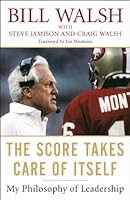
The Score Takes Care of Itself
Bill Walsh, Steve Jamison, Craig Walsh · 4 highlights
"When confronted with a “problem”—for example, how do we score touchdowns without a good running game or a strong passer? what is our communication process on the sidelines during a game when crowd noise becomes overwhelming? what are the specific duties of my executive vice president for football operations? and hundreds and hundreds more—Bill Walsh dissected the issue into its relevant parts, found a solution, and then taught the solution to the appropriate individuals. His creative and commonsense brilliance as a problem solver was unsurpassed and a major component in the installation of what he called the Standard of Performance."
"Bill didn’t jump on you for a mistake; he came right in with the correction: “Here’s what was wrong; this is how to do it right.” Over and over, without getting all upset, he taught…"
"You might think that trying to meet his extremely high expectations would tighten you up, but Bill didn’t jump on you for a mistake; he came right in with the correction: “Here’s what was wrong; this is how to do it right.” Over and over, without getting all upset, he taught the smallest details of perfecting performance."
"That, in my opinion, was his primary leadership asset: his ability to teach people how to think and play at a different and much higher, and, at times, perfect level. He accomplished this in three ways: (1) he had a tremendous knowledge of all aspects of the game and a visionary approach to offense; (2) he brought in a great staff and coaches who knew how to coach, how to complement his own teaching of what we needed to know to rise to his standard of performance; and (3) he taught us to hate mistakes."