Franchise Model Without Control
Brand franchising without direct operational control destroys quality and brand identity — Ji Qi abandoned Home Inn's initial franchise-only model after realizing it produced indistinguishable, uncontrollable hotels.
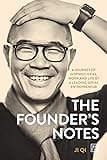
Chinese serial entrepreneur who founded Ctrip, Home Inn, and Hanting (Huazhu Group), transforming China's budget hotel industry into a world-scale chain hotel empire.
Brand franchising without direct operational control destroys quality and brand identity — Ji Qi abandoned Home Inn's initial franchise-only model after realizing it produced indistinguishable, uncontrollable hotels.
Straying from your deepest domain expertise wastes irreplaceable time — a friend's pointed questions about who knows budget hotels best brought Ji Qi back to the market he understood better than anyone.
Unchecked territory seizure without quality control creates a big company with equally big problems — Huazhu experienced consumer complaints from granting franchise contracts without proper due diligence.
“The three businesses – Ctrip, Home Inn and Hanting – have much common ground. First, the actual business models were not entirely the same as those conceptualized at the time of the initial financing Ctrip moved from an online travel agency to hotel room bookings, while Home Inn moved from the hotel franchise model to privately owned and operated…”
“At the time, Ctrip’s online bookings were already in the tens of thousands and we were quite familiar with hotel sales across China. Many clients pointed out that Ctrip did not have enough booking options for budget hotels. And, unlike most hotels that seemed to have limitless room supplies, the most popular budget hotel, Xinya Star Hotel, allocated us only a few rooms. The supply-demand situation told us that there…”
“Second, each of the businesses required about three years to take shape. For Ctrip it was from 1999 to 2002; Home Inn 2003 to 2005; and Hanting from 2007 to 2010. In a similar manner to human development, the basic shape of these three businesses, their teams, structure, character and culture was formed in the first three years. Thereafter it was just a question of continued growth. Three years is a critical time fo…”
“Kunshan at the time was a third or fourth tier city. My reasoning was that it would not be surprising if Hanting failed in Kunshan because, after all, there were not many tourist and business traveller flows. If we failed in Kunshan, we might make it work in Shanghai. But if we were successful in Kunshan, then we could make it work everywhere.”
“When an entrepreneur plans to create a large enterprise the first priority is to select a large market. If you were the biggest pencil manufacturer in China, that would be really something. However, if you make cruise ships or corporate jets, no matter how good you are, the market size is limited and so is the size of your company. If you are in the business of selling items people consume every day, like rice or ed…”
“For a newly-established enterprise, rapid expansion is the first priority. In a primitive market like China, a company that is not able to swiftly seize its territory will be crushed by others in no time. This is like playing a video game. Without a controlled territory, a company will have no chance to survive. This is the strategy I follow. When Huazhu was just established, our first strategy was ‘120% speed and 8…”
“I took the ‘fast fish eat slow fish’ ethos of the internet industry into the hotel business, advocating speed and efficiency, rather than simply following conventional thinking on development of a business. At the same time, I brought in modern management tools and…”
“From the outset of initiating the setup of Ctrip I had an absolutely professional team with James Liang establishing a solid foundation, Fan Min carrying it forwards, and Neil Shen dealing with the financial and legal aspects. I established the firm base for Home Inn, then Sun Jian took up the baton; I also initiated Hanting and established a solid base…”
“After emptying the mind and entering a peaceful state the thoughts of daily irritations can be guided in: Should I marry that person? Should I acquire that company? At that time your first intuition is invariably the right answer. It’s possible that when meditating the brain approaches its natural state, a state where desires are at a minimum. Now when you weigh up desires you can arrive at the correct weighting.”
“The ownership structure guaranteed the original team the largest number of shares, exceeding 50% of the total after listing. Too much dilution of equity would not help the company’s long-term planning, pushing emphasis on short-term profit taking. Several years of toiling in the industry convinced me that a hotel business will develop more smoothly and stably if there is a single large shareholder. As Liu Chuanzhi,…”
“Facing crises forced each company to mobilize all possible positive factors and put their most outstanding attributes into play, forcing every ounce of their potential into the fore. Crises became the driver of our growth. In the same way the petrel faces the storm in the Russian writer Maxim Gorky’s Song of the Stormy Petrel: Let it break in all its fury!1 These crises also destroyed or weakened many similar busine…”
“Sometimes aesthetics is a luxury and even linked to death. The exquisite aesthetic created in the Song dynasty was too fragile, and in the end, it led to the dynasty’s destruction. This prompts me to think: maintaining a good balance is vital for individuals and businesses. The foundation of the Huazhu group is Hanting and JI Hotels, and our crown will only have one or two dazzling diamonds, which I consider a good…”
“There are other downsides of holidays that we are all too familiar with: highway congestion caused by temporary toll waivers, the annual ritual of massive human migrations across the country during Chinese New Year, and the air and noise pollution caused by fireworks. A few years ago, I started to spend Chinese New Year overseas. I even gave it a name: New Year Escape. It worked well. But these days spending Chinese New Year abroad is the latest trend which is followed by social engagements. There is nowhere to flee.”
“Slow down for a moment, try to visualize this scene with me: outside the window, a range of mountains, rolling clouds, falling leaves, flowering chrysanthemums, a hazy mist, trees, the scent of rosemary, a stone house, reflections on a window pane, lights in the distance, smoke rising from a fireplace … Such scenes have existed for who knows how many centuries. I gaze at this vista lost in thought, absentminded, not knowing what day it is, or what year. All the complications of life, the struggles, the fighting, the manoeuvring for advantage, the scrambling for fame, the quest for wealth, the pursuit of achievements, the love, the hate, the jealousy, the passion, the revenge, the suspicions, the callings of life and social interactions, they all dissipate and float away, as if illusions, or could it be that at that moment ...”
“In this absentminded moment, I ask myself, can there really be incarnation, or is there only this one life? My life is limited, so how can I spend what little time I have on the most important things?”
“In recent years I have read widely the idealistic writings of Wang Yangming on the School of Mind, the Buddhist methods of enlightenment, Lao-tzu’s Tao Te Ching,10 as well as Nietzsche on power and consciousness, Arthur Schopenhauer on metaphysical will, Heidegger on existentialism, Foucault on life and aesthetics ... What appears to be a constant thread is idealism.”
“indulgence. On the contrary, we must do our best to create beauty to benefit all beings. All of the manoeuvring and striving for fame are in fact worthless, meaningless and unnecessary. All of the struggles, the fighting, are in fact self-imposed problems. The Tao models itself on nature, so we shall follow the order of nature. Avoid selfishness and cruelty, be not hypocritical and boastful, live a life of simplicity and avoid becoming obsessively materialistic.”
“If there is no such thing as reincarnation, and all we have is this life, then we should be even more committed to being better people, to not waste our lives. We should follow our hearts and be ourselves. We should spend our limited time on worthy matters, and share our time, wisdom and wealth with people we love, and those we are blessed to meet.”
“My life will one day come to an end, but beauty has no end. When I leave this world, I must not have regrets and feel I have wasted my life. Things that are worth treasuring the most and about which I will have no regrets over certainly will not be fame, wealth, vanity, success or failure. The most meaningful things will definitely be that I followed my heart, I lived a full life, I loved and I created.”
“I am merely a passer-by in this world. Regardless of my return or otherwise, I have no reason to be haughty or feel inferior. I have no fear of losing, nor glee at gaining. I do not recklessly clutch at sensual pleasures, nor will I indulge in self-imposed trouble and let myself be consumed by circuitous thoughts. A life with no return is how life should be. A life with return is how life is predestined. Everyone is thus, all are thus, eternally thus. All things have Mind and Mind follows all things, and all things return to unity.”
“In Conversations with Kafka, Franz Kafka says: “If one wishes to live, one must believe.” “In what?” “In the significant interrelation of all things and all moments, in the external existence of life as a single whole, in what is nearest and what is farthest.”12”
“Ideals and beliefs are Maugham’s moon. A life of yearning for the moon and ignoring the sixpence at his feet cannot be beautiful. In fact, the adherence of Eastern philosophy to the middle way is identical to the dialectic, the Socratic method of debate, in which everything must find balance and all extremes are bigotry.”
““You can ascend to the nine heavens to grasp the moon and descend to the five oceans to snare a turtle.” This line, from a poem by Mao Zedong, means you can do both the idealistic and the practical. That’s because in China a turtle is a euphemism for a bastard. It might be a little hard on the ear, but here the truth behind the vulgarity is not vulgar.”
“If you are determined to make great achievements in business, you must be able to grab the moon as well as snare the turtle. Attending to the tedious, meticulous details, and the computations of daily life are the snaring-the-turtle part, while the dedication to ideals and beliefs belong to the grasp-the-moon category.”
“The late Joseph Schumpeter said, “The capitalist achievement does not typically consist in providing more silk stockings for queens but in bringing them within the reach of factory girls in return for steadily decreasing amounts of effort.”14 Weaving silk stockings equals ‘snaring the turtle’ because a love of silk stockings is no longer the monopoly of queens when every female worker will be able to afford them. Looking at a business from this perspective, that is grasping the moon.”
“This is why a person, or an enterprise, must aspire to the heavens to grasp the moon and be able to descend to the depths to snare the turtle, and why the moon and sixpence are equally important.”
“People are one part of heaven. Overarching desire causes excessive interference, preventing an understanding of what heaven really is. Dislodge desire, integrate with nature, and understanding heaven’s laws will come naturally. Be peaceful and you will hear a kind of sincerity – some say that is God, some say that is nature, some say that is truth.”
“The value of our company’s stock was also very low, and the Chinese stock market was doing well. But I did not follow the trend because I entered the business world not solely to accumulate wealth. In addition, withdrawing from the market then re-entering the market would have taken up a lot of my time. If I had time to spare, why not spend the time on developing new products? Or on team building? I prefer that investors, not speculators, buy our company’s stock.”
“Maintaining inner peace is a process that requires a long period of consideration. Some say young people these days stay up late and drink. I use the time to think: Will my hotels survive? Should I operate bars? Or, if there is a well-managed hotel in the market, I will try to understand their products and understand why they are good. Changes in trends and clients are the things I care about.”
“We are all ordinary people who enjoy having a sip of fine wine, a cup of good tea, and other indulgences in everyday life. But we should have loftier ambitions. The different levels of desire determine the differences among people and among companies. But perhaps the most significant difference is an invisible one: whether or not one maintains an inner peace.”
“I try to meditate every day. Usually I meditate in my bedroom for about 40 minutes before going to sleep. This has been part of my daily routine, as is exercising. If I am too tired, I sometimes doze off while meditating, although it happens rarely, in which case I just go to sleep. When I am on business trips, I may go out with friends to have a few drinks until around midnight. It is not wise to meditate after consuming alcohol because the mind may be muddled. When I’m not too busy during the day I’ll meditate for 20 minutes or so to help me relax.”
“After emptying the mind and entering a peaceful state the thoughts of daily irritations can be guided in: Should I marry that person? Should I acquire that company? At that time your first intuition is invariably the right answer. It’s possible that when meditating the brain approaches its natural state, a state where desires are at a minimum. Now when you weigh up desires you can arrive at the correct weighting.”
“Wang Yangming said, “When desire is banished, that is where the natural order of things resides.”15 I understand this to mean, people are one part of heaven, but when desire and distractions are excessive, it is impossible to know what heaven is. When desire is banished, unity with heaven is achieved and then it is natural to become aware of heaven’s law. Tranquillity may allow you to hear a real kind of existence – some say that’s God, some say it’s nature, some say it’s truth.”
“Aesthetics is the manifestation of a value system in the arena of the visual and the experiential.”
“Our Singapore headquarters is in a black and white house, which is a unique colonial adoption in the tropics of local architecture and English Tudor style.”
“Beauty makes us happy and feel comfortable, yet this feeling of comfort is not desire. Desire is materialistic and beauty is metaphysical.”
“All beauty is an expression that transcends everyday experience, and aesthetics is what connects the expression. If you have desire there can be no aesthetics, it is just an experience, a pleasure of the senses.”
“People exist right between gods and animals, with a portion of godliness and a portion of beastliness. Many believe that godliness is best and that becomes their only pursuit. I believe that as people the best attitude is to enjoy both. On the godly side, we can enjoy the spiritual, such as philosophy, art and music; on the beast side we can enjoy the worldly pleasures of drinking, eating and lovemaking. Is that not also a kind of equilibrium?”
“I have recently been studying the history and culture of the Song dynasty (960-1279) because in my quest to create a truly top-class hotel I have found nourishment in the aesthetics of the Song dynasty lifestyle.”
“China’s many problems stem from a lack of consideration of the external environment. This is fine for a totally isolated and entirely independent economy. However, this is not how the world operates.”
“Sometimes aesthetics is a luxury and even linked to death. The exquisite aesthetic created in the Song dynasty was too fragile, and in the end, it led to the dynasty’s destruction. This prompts me to think: maintaining a good balance is vital for individuals and businesses. The foundation of the Huazhu group is Hanting and JI Hotels, and our crown will only have one or two dazzling diamonds, which I consider a good balance. If we paved our road to the future with gold and precious stones, this enterprise of ours would be in danger of becoming as fragile as the Song dynasty.”
“The relation of time to reality resembles that of language to thought. Just as language limits human thought, time also limits our understanding of the true nature of the universe. Ignore time and you can perceive information outside the realm of time and decode time.”
“Space is also relative – space is easy to understand. Einstein’s theory of relativity tells us that when mass has rapid motion, as fast as the speed of light, space will undergo change. When the timeline is smashed and compressed to zero, expanding distance to infinity, with sufficiently sensitive instruments, we can witness everything.”
“Meditation, in terms of physics, is negative entropy or entropic stability. The concept of entropy is that in a closed system, a vessel has many particles, which are initially ordered, perhaps into a straight line, but even without outside interference the straight line can bend and become disorganized.”
“As children, when we were asked to line up, we did. As soon as the teacher walked away, we’d begin to talk among ourselves and then run around, and the neat line became completely disorganized – that’s increased entropy.”
“And the process of growing up, getting old and dying is a process of progressing from order to disorder. Death brings complete disorder: cremation turns us into water molecules and carbon dioxide; burial changes us in a different way to disperse us into the universe.”
“Meditation is a process of negative entropy or entropy stability. When meditating you look inward and in order to shut out external distractions you concentrate all your thoughts on breathing. Then you will not think about the things that scatter your thoughts, enabling you to concentrate your spirit a little more, and as you pay close attention to that alone, your body, undistracted, will enter a state of nothingness.”
“If your thoughts distract you, you cannot meditate. Human thoughts can impact the outside world, but when your thoughts are zero, or more precisely, approach zero, when they are infinitesimally small, that is more or less when you can enter a meditative state, and that state is the least increase in entropy.”
“Lao-Tzu, Tao Te Ching, trans. John Minford, (New York: Viking, 2018), 87.”
“Spinoza believed there was a single kind of substance in the universe and that God and the universe were the same thing. His conclusion is based on a series of definitions and axioms and deduced logically.”
“Spinoza’s God not only includes the material world, it also incorporates the spiritual world. He believed human wisdom is a constituent part of God’s wisdom. Spinoza also believed that God was the ‘internal factor’ of everything, that God used natural laws to rule the world and therefore every material occurrence in the world was necessary. Only God is completely free; while people may attempt to remove external constraints, they can never achieve free will. If we are able to see the inevitability of things, it will be easier for us to be one with God. Thus, Spinoza held that we should look at the inherent nature of things.”
“Wang Yangming, Instructions for Practical Living and other Neo-Confucian Writings by Wang Yangming, trans. with notes by Wing-Tsit Chan,”