Competition as Survival Doctrine
“If society is not competitive, it is destined to disappear.”
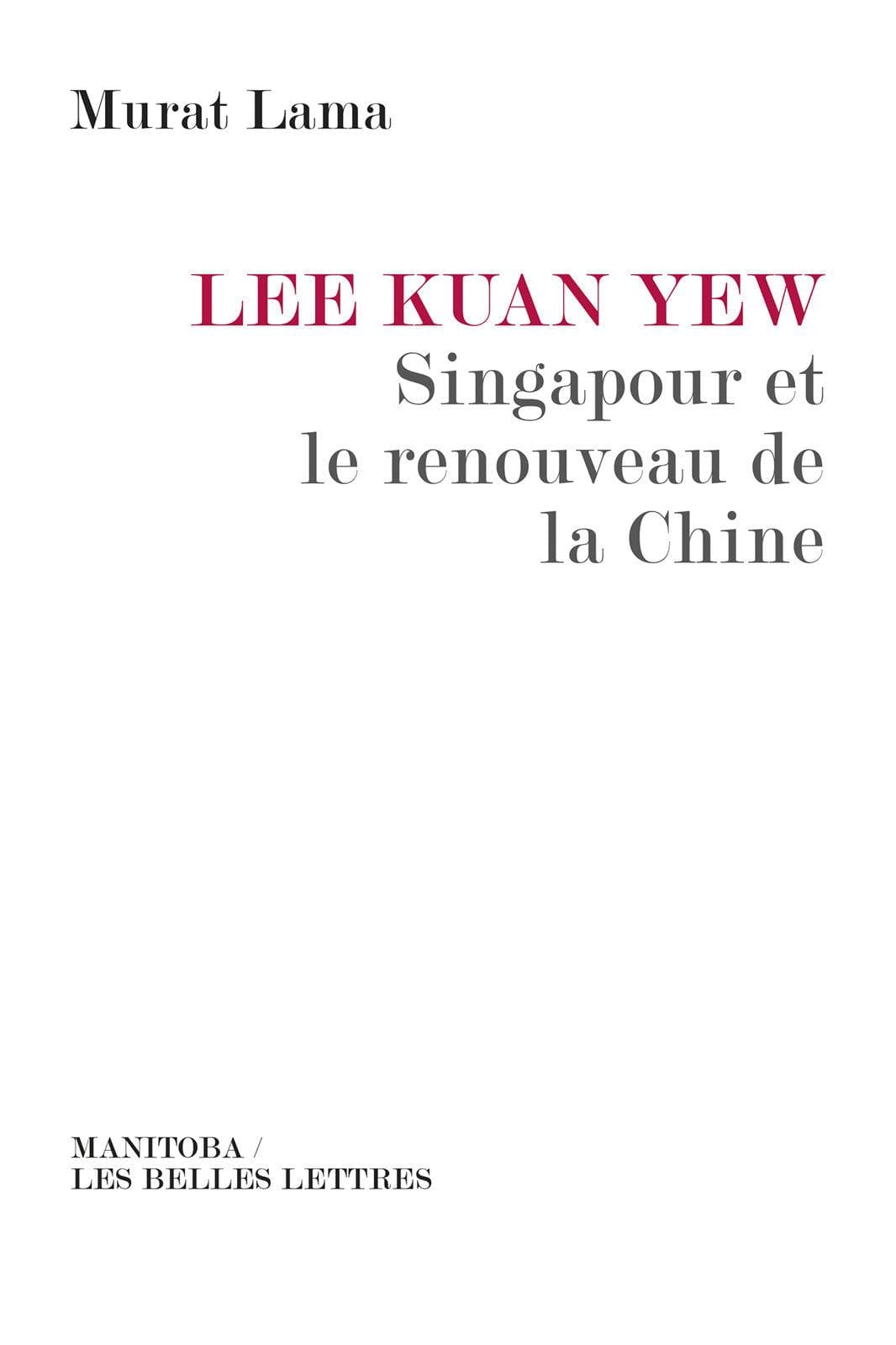
Murat Lama
23 highlights · 10 themes · 4 cited people/companies
Founding Prime Minister of Singapore who engineered a city-state's transformation from third-world port to first-world economic powerhouse, and whose governance model became the blueprint for China's modernization under Deng Xiaoping.
“If society is not competitive, it is destined to disappear.”
“Pressed by a question I had asked about the composition of the Prime Minister’s bonuses, he replied by explaining that in Singapore, when the economy shrinks, it is logical for civil servant bonuses to decrease to protect the private sector, which is the most exposed. A concept radically opposed to ours and worth contemplating.”
“Lee Kuan Yew never ceased to reflect on his actions regarding economic development, education, political science, culture, geopolitics, and ethnic issues. This intellectual has always read extensively on all these subjects to renew himself. He is characterized above all by the pragmatism and adaptability of his intelligence: he always knew how to differentiate between his ideals and what was possible to achieve, for…”
“If Lee Kuan Yew built a model of solidarity that is healthily funded, presented as an example to follow by the American Nobel laureate economist Joseph Stiglitz, he deliberately distances himself from our European social model, which is doomed to disappear, particularly due to Asian competition. Worse still, he believes that the welfare state has something pernicious: it demotivates those who work and encourages mas…”
“Lee Kuan Yew literally invented industrial outsourcing aimed at reducing production costs, with such a significant impact both on third-world development and on the deindustrialization of Western countries: “In the sixties, seventies, eighties, during the time of trendy and conformist theories held by third-world leaders influenced by the slogans ‘socialism,’ ‘communism,’ ‘the Soviet Republic,’ and ‘no to exploitati…”
“Ideology never blinded him. On the contrary, his ability to decipher reality, to see it as it is, has always been one of his constants. Very often, he bases his opinions on his observations. Moreover, he regularly begins his sentences with the expression “according to my observations.” And when his observations differ from what he thinks, then he changes his way of thinking.”
“Deng Xiaoping then sent tens of thousands of Chinese, officials and members of the Communist Party, to Singapore so they could make the most of Singapore’s achievements. China openly used the city-state as a cadre school to train numerous Chinese leaders, for example, by sending Jiang Zemin as early as 1980, who was the Vice President of the Commission for Foreign Investments and later the Mayor of Shanghai, to even…”
“Lee Kuan Yew emphasizes that the purpose of a political system is not to organize elections but to produce good government. In other words, those in positions of responsibility should be the most competent and of impeccable honesty.”
“Lee Kuan Yew sought to create the best possible conditions to encourage them to settle in Singapore: quality workforce and infrastructure, wage limitation, stable legal framework, regulated strike rights, etc. Lee Kuan Yew called this method “shortening the learning process.””
“He was both concrete and abstract at the same time, loved to start from the detail and move to the general. I heard him introduce his concept of secularity starting from an incident: a marriage between Singaporeans annulled by a Malay imam.”
“General de Gaulle liked to say that “behind Alexander was silhouetted Aristotle.” One is tempted to think that Lee Kwan Yew is both Alexander and Aristotle (or rather the Aristotelian version of Confucius!).”
“They do not speak of equality; they know it is not of this world. They expect a lot from the best without demotivating them by taking the fruits of their efforts, as the country needs them too much in this time of intense competition!”
Patrick McGee
Shares Singapore, China, and Deng Xiaoping.
Don Valentine
Shares Lee Kuan Yew and IBM.
asuycdg6.org
Shares Singapore, China, and India.
Alain Jemain
Shares General de Gaulle, Communist Party, and IBM.
Ebbe Dommisse
Shares Singapore and China.
Brad Jacobs
Shares China and India.
“He was both concrete and abstract at the same time, loved to start from the detail and move to the general. I heard him introduce his concept of secularity starting from an incident: a marriage between Singaporeans annulled by a Malay imam.”
“Pressed by a question I had asked about the composition of the Prime Minister’s bonuses, he replied by explaining that in Singapore, when the economy shrinks, it is logical for civil servant bonuses to decrease to protect the private sector, which is the most exposed. A concept radically opposed to ours and worth contemplating.”
“General de Gaulle liked to say that “behind Alexander was silhouetted Aristotle.” One is tempted to think that Lee Kwan Yew is both Alexander and Aristotle (or rather the Aristotelian version of Confucius!).”
“They do not speak of equality; they know it is not of this world. They expect a lot from the best without demotivating them by taking the fruits of their efforts, as the country needs them too much in this time of intense competition!”
“If society is not competitive, it is destined to disappear.”
“However, it is imperative to ensure a safety net for those who are unable to face the competition, allowing them to live with dignity. This is the condition for social harmony.”
“If Lee Kuan Yew built a model of solidarity that is healthily funded, presented as an example to follow by the American Nobel laureate economist Joseph Stiglitz, he deliberately distances himself from our European social model, which is doomed to disappear, particularly due to Asian competition. Worse still, he believes that the welfare state has something pernicious: it demotivates those who work and encourages mass dependency.”
“Despite everything, one cannot help but see astonishing convergences with the German model and its Rhineland capitalism associated with the demanding solidarity developed by Gerhard Schroeder. These traits are also found in every Swiss canton. Their prosperity is enabled by an extraordinary industrial fabric open to the world, but they know that the world is dangerous. Under these conditions, one must be united and work hard, very hard! (The Swiss recently rejected the fifth week of paid vacation, arguing that the rise of the Swiss franc prohibited them from working less.)”
“Lee Kuan Yew never ceased to reflect on his actions regarding economic development, education, political science, culture, geopolitics, and ethnic issues. This intellectual has always read extensively on all these subjects to renew himself. He is characterized above all by the pragmatism and adaptability of his intelligence: he always knew how to differentiate between his ideals and what was possible to achieve, for example, between his socialist aspirations and the capitalist laws of wealth creation.”
“Ideology never blinded him. On the contrary, his ability to decipher reality, to see it as it is, has always been one of his constants. Very often, he bases his opinions on his observations. Moreover, he regularly begins his sentences with the expression “according to my observations.” And when his observations differ from what he thinks, then he changes his way of thinking.”
“First, he invented in the sixties a new mode of economic development by doing exactly the opposite of all other member countries, like Singapore, of the non-aligned movement. These countries were taking protective measures against multinationals, considered as “supporters of Western imperialism.” For example, India not only shut the door to Coca-Cola but also to IBM, which delayed the development of the Indian software industry.”
“Lee Kuan Yew sought to create the best possible conditions to encourage them to settle in Singapore: quality workforce and infrastructure, wage limitation, stable legal framework, regulated strike rights, etc. Lee Kuan Yew called this method “shortening the learning process.””
“Lee Kuan Yew literally invented industrial outsourcing aimed at reducing production costs, with such a significant impact both on third-world development and on the deindustrialization of Western countries: “In the sixties, seventies, eighties, during the time of trendy and conformist theories held by third-world leaders influenced by the slogans ‘socialism,’ ‘communism,’ ‘the Soviet Republic,’ and ‘no to exploitative multinationals,’ I did not follow this trend and I succeeded. Then, the other countries in the region followed my example{{id_6}}.””
“The following year, in 1979, Deng Xiaoping recounted his trip to Singapore and what he had learned for China: “I went to Singapore to learn how they use foreign capital. Singapore allows foreigners to set up factories on its territory and benefits from this in at least three ways: firstly, foreign companies pay the state 35% of their net profits in taxes; secondly, labor incomes go to the workers; finally, this approach has energized their service industries and local incomes.” And he concluded: “My opinion is that from now on, when we study economic and financial problems, our starting point must be how to make the best use of foreign capital, and how to excel in this area{{id_9}}.””
“Deng Xiaoping then sent tens of thousands of Chinese, officials and members of the Communist Party, to Singapore so they could make the most of Singapore’s achievements. China openly used the city-state as a cadre school to train numerous Chinese leaders, for example, by sending Jiang Zemin as early as 1980, who was the Vice President of the Commission for Foreign Investments and later the Mayor of Shanghai, to eventually become the head of state in 1993 and Deng Xiaoping’s successor. From 1985 to the 1990s, the Chinese government did not hesitate to recruit Dr. Goh Keng Swee, one of Lee Kuan Yew’s lieutenants and often considered the architect of Singapore’s economic development, as an economic advisor.”
“Deng Xiaoping did not want to follow this path, which he considered too dangerous for the country’s stability. This is why he decided to suppress the Tiananmen Square protests in June 1989. However, China had to find an effective alternative. Only one leader proposed another proven path. This uniqueness was clearly perceived at the time, for example by Samuel Huntington when he wrote in 1997: “Apart from the special case of oil-rich Gulf States, all the wealthiest countries, except for Singapore, are democratic.””
“Chinese path was found by Deng; it is none other than the one professed and implemented by Lee Kuan Yew in Singapore: an authoritarian and meritocratic republic, an interventionist and social state managed by an elite serving the general interest within the framework of a market economy.”
“Deng Xiaoping declared: “Singapore enjoys good social order, the city is well managed […]. We should take advantage of their experience and why not do better than them.””
“Lee Kuan Yew recalls the instructions given by Deng Xiaoping during this trip: “Open up, learn from the rest of the world and, most importantly, learn from Singapore, for their good governance and discipline.””
“Lee Kuan Yew was able to apply a much more rational method. To solve a problem, he begins by considering all possible solutions: “I do not work on a theory.” “I am interested in what works.” “In the face of a difficulty, major problem, or an array of contradictory facts, I review what alternatives I have if the solution I propose does not work. I choose a measure that offers a strong probability of success, but if that fails, I have other options. I never find myself at an impasse.””
“options: “If, after trying several solutions, I discover that a certain approach works, then I extract the underlying principle of the chosen solution.””
““Seek truth from facts.””
“Lee Kuan Yew emphasizes that the purpose of a political system is not to organize elections but to produce good government. In other words, those in positions of responsibility should be the most competent and of impeccable honesty.”