Trusted Core Teams Across Borders
Books Teaching This Pattern
Evidence
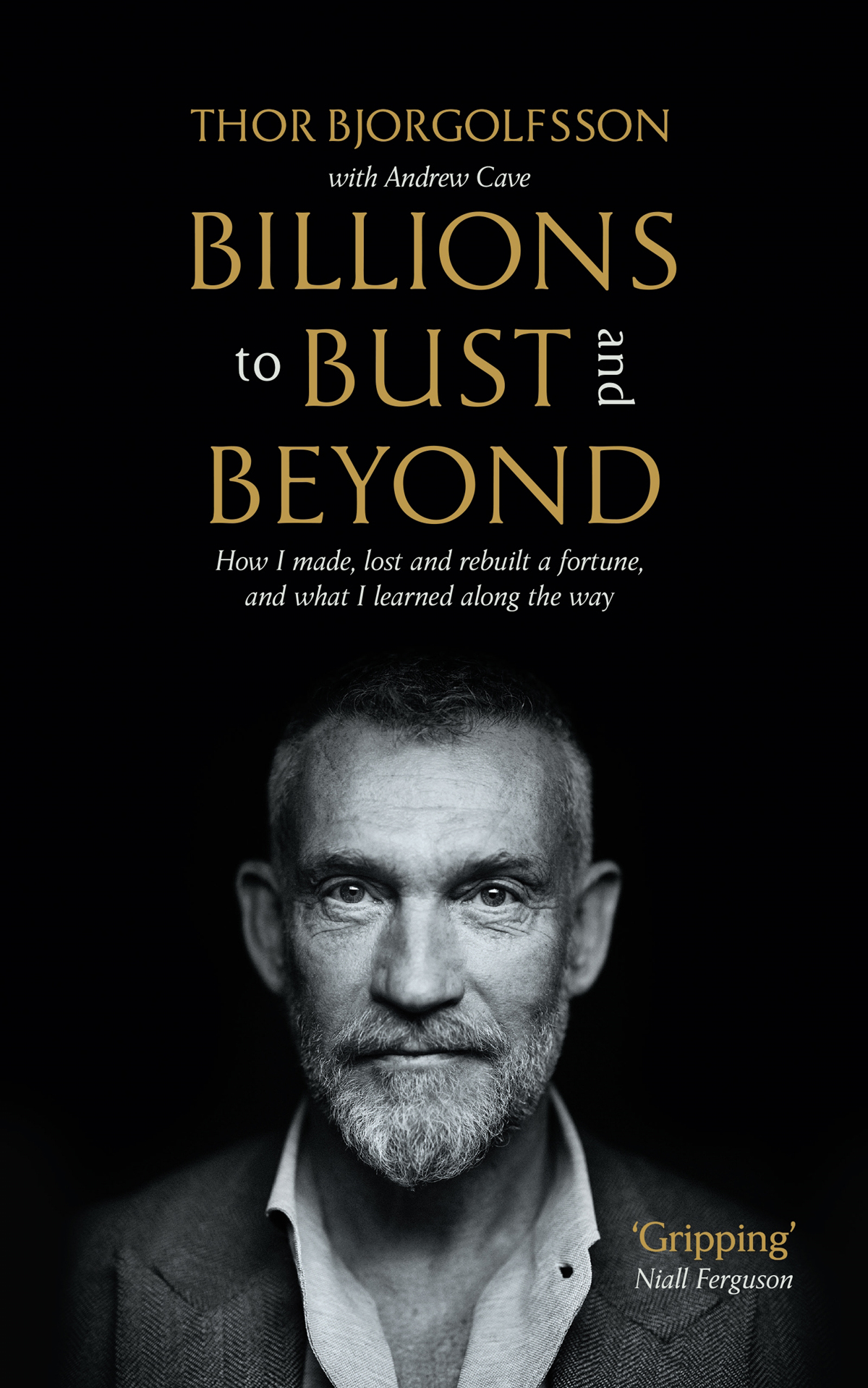
Billions to Bust – And Beyond
Thor Bjorgolfsson · 2 highlights
"Branding is a personal passion of mine, dating back all the way to the Bravo venture in St Petersburg, and it felt exciting and invigorating to be essentially building a start-up again. But what should we call our new baby? After discarding an initial notion to use the Play brand, we looked for a similarly dynamic name behind which to build a challenger, customer-centric culture and asked half a dozen marketing agencies to pitch their best ideas. None of them came up with anything that we liked, but another firm which had not been invited to pitch came up with a left-of-field suggestion that resonated with us straight away. Its concept was to brand the challenger around the ‘word-of-mouth’, viral way that we wanted to grow through personal recommendations offering great value and customer-centred service. ‘Word of mouth’ was shortened to WOM and that became our brand. My idea was to build a new Latin American challenger mobile telecoms brand using the playbook of Play in Poland and Nova in Iceland. I could use the same management team and external consultants who worked on both. The partners at Novator responsible for telecoms, who had worked with me since 2010, focused on financing the new venture and acquiring the necessary spectrum and telecoms licences. Chris Bannister, a personable Brit who became Play’s first chief executive in 2005 and had already lived and worked in nine countries, was brought back into the fold as chief executive. And the Icelandic chief technology officer oversaw the technical build-out design, along with his Swedish colleague. Members of our trusted teams from both countries helped in the beginning to transform a failed old-school US telecoms operator into a state-of-the-art ‘kick-ass’ mobile challenger. None of us spoke Spanish and most had never set foot in Latin America before, let alone Chile. It didn’t seem to matter. When we launched, Chile was the most expensive country in the Latin American region in mobile telecommunication, so we saw a market that was fertile for a new approach. Conventional new entrants like Nextel and a venture headed by US telecoms billionaire John Malone had failed to crack the nation. We needed to do things very differently. To achieve the maximum impact and truly disrupt the market, we knew that a key differentiator had to be price. Indeed, we priced our services so aggressively that Chile immediately became the cheapest country in South America for consumer mobile telephony. Alongside this value offer, we promoted WOM as an independent challenger offering honesty and integrity. We set out to be brave, innovative, bold and passionate."
"Mobile telecoms was a sector I knew well, having grown Play, my start-up in Poland, into a top-four independent challenger brand, and although Chile was on the other side of the Atlantic, it did bear some similarities to Play’s Polish homeland. Both were Catholic cultures with a high degree of conservatism. Another element they had in common was their domination by international behemoths. While Play in Poland was up against France’s Orange, Deutsche Telekom’s T-Mobile and Polkomtel, whose Plus brand was 24 per cent owned by Britain’s Vodafone, Nextel Chile had to contend with Entel, the former nationalised Chilean telecoms company whose 127-metre Torre Entel literally towers over central Santiago. Entel controlled about 30 per cent of the Chilean mobile telecoms market. Then there were Movistar, owned by Spanish giant Telefonica, which held a market share of around 28 per cent, and Claro, part of the America Movil telecoms giant, famously fronted by Mexican billionaire Carlos Slim, which had 23 per cent. Nextel Chile had possessed about 2 per cent of the market as a total underdog, and even that was falling steadily. However, we had grown Play from nothing into the leading mobile telecoms company in Poland with a 27 per cent market share, and we saw a similar potential growth trajectory for this Chilean minnow. The financial elements of a deal had to be put together very quickly. We completed the whole transaction in about two months and it was only later that we learned how close Nextel Chile had actually been to bankruptcy wipe-out. We refinanced the company with $400 million of equity and $420 million of debt and set about finding a way to rebrand and reposition it as a vibrant independent challenger brand – a far cry from its previous image as a distant South American offshoot of a major US carrier."