Twenty-Five Characters Before Every Decision
Books Teaching This Pattern
Evidence
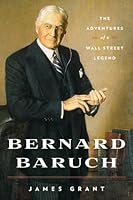
Bernard Baruch
James Grant · 2 highlights
"PERSONAL EQUIPMENT SELF-RELIANCE: Do your own thinking. Don’t let your emotions enter into it. Keep out of any environment that may affect your acting on your reason. JUDGMENT: Consider all the facts—meditate on them. Don’t let what you want to happen influence your judgment. COURAGE: Don’t overestimate the courage you will have if things go against you. ALERTNESS: To discover any new facts that change the situation; or which may affect public opinion. PRUDENCE: Be pliable or you won’t be prudent. Become more humble as the market goes your way. It is not prudent to buy when you think the bottom has been reached. It is better to wait and see, and buy too late. It is not prudent to wait for the top of the market to sell—it is better to sell “too soon.” (Never buy so that your margin will be less than 85, or hold if it drops below 80. In a particularly “clear sky” situation with[out] “buts” or “ifs,” one can lower these margins to 80–75%.) PLIABILITY: Consider and reconsider the facts, and your opinions. Stubbornness as to opinions—“cockiness”—must be entirely eliminated. A determination to make a certain amount within a certain time absolutely destroys pliability. When you decide, act promptly—don’t wait to see what the market will do."
"THE FACTS A. AS INDICATING THE FUTURE Money market, Bond market, Savings Fund Deposits, Insurance being sold. Federal Reserve Ratio and operations, Commercial loans. Yields of stocks including and excluding “rights” compared to bond yields and time money. Volume of new security offerings. Ratio stock exchange loans to price of stocks. Volume of stock transactions. ---------------------------- Trend of commodity prices (watch supply of gold and credit facilities). Crop situation Political situation; domestic and international. Bank clearings; Railway Traffic:—A falling off in tonnage is delayed for considerable time after depression begins; while an increase precedes recovery. Orders:—Construction permits and contracts awarded. Steel production orders. Automobile production orders. Volume Retail Trade:—Department and chain stores. Employment Foreign Trade B. HISTORY:—Inventories and instalment purchases. Production: Volume manufacturing, including electric power. Volume mining. Earnings. C. INDIVIDUAL COMPANIES: Is it a growing and standard business (not experimental) Is competition becoming too keen. Is it a dominant corporation. Is it experimenting. ONE MUST BE THOROUGH AS TO FACTS. PSYCHOLOGY Nearly all men are controlled by their emotions: they become alternately over optimistic and over pessimistic. After you have your facts and opinions, wait for the current. Have an opinion on what the market should do, but don’t decide what the market will do. The more the public becomes stock minded the greater it’s [sic] power. Don’t try to go against the mob on the one hand, and don’t go with it in it’s [sic] excesses. Don’t sell short if it is bullish, but don’t stay long if there is a chance that it may turn and rend you, and conversely. In a panic the best stocks may not be salable at any reasonable price. Be alert for anything which the public will greet with enthusiasm or fear. When the market is high beware of thinking of things that will make it go higher; think of adverse possibilities, and remember history; and conversely. Watch for the main currents, but be fearful of too much company. “Stop losses and let profits run.” In general run quickly. If you fail to do so hang on, reducing commitments. Always reduce commitments if doubtful. While you should act promptly when you make up your mind, irrespective of market action, nevertheless, you must at times consider the action of the market, in making your plans. In comparing any situation with a previous one be sure you have the facts of both, so make allowances in psychology. Over action is always followed by overreaction. The Unforeseen:—Always make allowances for chance. Keep a financial and mental and physical reserve. ----------------------------"
Son's Square Law (translated)
Hidenori Itagaki · 4 highlights
"The “Son’s Square Law” is something Masayoshi Son has adhered to each time he stood at a crossroads in management, using it as a guide for judgment and decision-making. Whenever facing new challenges or projects, he consistently recalled these “25 characters,” repeatedly questioning himself while deciding the direction of business."
"When challenging a new business or facing difficulties, Son recalls these “25 characters,” repeatedly asking himself if they match with each success factor, and making his decisions."
"These 25 characters are a combination of words from ‘The Art of War’ and my own creation. Every time I embarked on a new venture, and every time the business faced a new phase or turning point, I would envisage these 25 characters in my mind, repeatedly question myself, and determine the path and nature of the business.”"
"And when faced with important judgments or decisions in various situations in life, take a breath and calm down, then check this “twenty-five letters” one by one. In doing so, you will surely be able to find the “correct answer.”"