Committees That Decide Nothing
Collective deliberation without concentrated authority is worse than no action at all—somebody must decide.
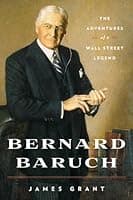
Bernard Baruch: Wall Street speculator turned wartime economic czar who parlayed trading fortunes and presidential access into decades of influence over American industrial mobilization and economic policy.
Collective deliberation without concentrated authority is worse than no action at all—somebody must decide.
“It is a central doctrine of Mr. Baruch’s philosophy of life that “able and high-minded” persons can, through force of circumstances, become the instruments of misguided and disastrous passions without ceasing to be able and high-minded. Indeed, it may be proof of their ability and high-mindedness that they should so acquiesce, because it may give them an opportunity unobtrusively to moderate their passions.”
“concerning capital: “It arises solely out of saving. It stands always for self-denial and abstinence.””
“PERSONAL EQUIPMENT SELF-RELIANCE: Do your own thinking. Don’t let your emotions enter into it. Keep out of any environment that may affect your acting on your reason. JUDGMENT: Consider all the facts—meditate on them. Don’t let what you want to happen influence your judgment. COURAGE: Don’t overestimate the courage you will have if things go against you. ALERTNESS: To discover any new facts that change the situation…”
“Extraordinary Popular Delusions and the Madness of Crowds, Charles Mackay’s”
“THE FACTS A. AS INDICATING THE FUTURE Money market, Bond market, Savings Fund Deposits, Insurance being sold. Federal Reserve Ratio and operations, Commercial loans. Yields of stocks including and excluding “rights” compared to bond yields and time money. Volume of new security offerings. Ratio stock exchange loans to price of stocks. Volume of stock transactions. ---------------------------- Trend of commodity pric…”
““He stated that the operation of the law of supply and demand, with as little Governmental control as possible, would be the best solution of the problem.””
““I have always thought that if, in the lamentable era of ‘New Economics,’ culminating in 1929, even in the very presence of dizzily spiraling prices, we had all continuously repeated ‘two and two still make four,’ much of the evil might have been averted,” he wrote. “Similarly, even in the general moment of gloom in which this foreword is written, when many begin to wonder if declines will never halt, the appropriat…”
““Now when you say ‘no,’ you must mean ‘no,’ and when you say ‘yes,’ you must mean ‘yes.’ Whatever you do, you must make your own decisions and never delay or wobble. You must decide.””
“HARRIS: I wish Mr. Baruch would form himself into a Committee. BARUCH: If you will give me the authority of all the Governments I will do it and I can assure you it will be done. HARRIS: There is nobody like a Committee of one. BARUCH: If there was ever a dictator wanted in the world there is one wanted now.”
“James J. Hill and J. P. Morgan”
“Whether a given increase in the money supply is inflationary depends on the rigor of business, just as whether a given number of calories is fattening depends on the metabolism of the diner.”
“some of the officers were so crooked that, in Keene’s words, “they could meet themselves coming around a corner.””
Lay Jr. Beirne
Shares Bernard Baruch.
Connie Bruck
Shares James Grant.
Patrick McGee
Shares Federal Reserve.
Peter Venison
Shares American.
Unknown
Shares American.
Felix G. Rohatyn
Shares American.
“James J. Hill and J. P. Morgan”
“Whether a given increase in the money supply is inflationary depends on the rigor of business, just as whether a given number of calories is fattening depends on the metabolism of the diner.”
““He stated that the operation of the law of supply and demand, with as little Governmental control as possible, would be the best solution of the problem.””
“Extraordinary Popular Delusions and the Madness of Crowds, Charles Mackay’s”
“some of the officers were so crooked that, in Keene’s words, “they could meet themselves coming around a corner.””
“his métier was peril.””
“THE FACTS A. AS INDICATING THE FUTURE Money market, Bond market, Savings Fund Deposits, Insurance being sold. Federal Reserve Ratio and operations, Commercial loans. Yields of stocks including and excluding “rights” compared to bond yields and time money. Volume of new security offerings. Ratio stock exchange loans to price of stocks. Volume of stock transactions. ---------------------------- Trend of commodity prices (watch supply of gold and credit facilities). Crop situation Political situation; domestic and international. Bank clearings; Railway Traffic:—A falling off in tonnage is delayed for considerable time after depression begins; while an increase precedes recovery. Orders:—Construction permits and contracts awarded. Steel production orders. Automobile production orders. Volume Retail Trade:—Department and chain stores. Employment Foreign Trade B. HISTORY:—Inventories and instalment purchases. Production: Volume manufacturing, including electric power. Volume mining. Earnings. C. INDIVIDUAL COMPANIES: Is it a growing and standard business (not experimental) Is competition becoming too keen. Is it a dominant corporation. Is it experimenting. ONE MUST BE THOROUGH AS TO FACTS. PSYCHOLOGY Nearly all men are controlled by their emotions: they become alternately over optimistic and over pessimistic. After you have your facts and opinions, wait for the current. Have an opinion on what the market should do, but don’t decide what the market will do. The more the public becomes stock minded the greater it’s [sic] power. Don’t try to go against the mob on the one hand, and don’t go with it in it’s [sic] excesses. Don’t sell short if it is bullish, but don’t stay long if there is a chance that it may turn and rend you, and conversely. In a panic the best stocks may not be salable at any reasonable price. Be alert for anything which the public will greet with enthusiasm or fear. When the market is high beware of thinking of things that will make it go higher; think of adverse possibilities, and remember history; and conversely. Watch for the main currents, but be fearful of too much company. “Stop losses and let profits run.” In general run quickly. If you fail to do so hang on, reducing commitments. Always reduce commitments if doubtful. While you should act promptly when you make up your mind, irrespective of market action, nevertheless, you must at times consider the action of the market, in making your plans. In comparing any situation with a previous one be sure you have the facts of both, so make allowances in psychology. Over action is always followed by overreaction. The Unforeseen:—Always make allowances for chance. Keep a financial and mental and physical reserve. ----------------------------”
“Work will cure everything, and I would be very unhappy and I know you would be if you did not have some object or ambition which involved study and continuous work.”)”
“PERSONAL EQUIPMENT SELF-RELIANCE: Do your own thinking. Don’t let your emotions enter into it. Keep out of any environment that may affect your acting on your reason. JUDGMENT: Consider all the facts—meditate on them. Don’t let what you want to happen influence your judgment. COURAGE: Don’t overestimate the courage you will have if things go against you. ALERTNESS: To discover any new facts that change the situation; or which may affect public opinion. PRUDENCE: Be pliable or you won’t be prudent. Become more humble as the market goes your way. It is not prudent to buy when you think the bottom has been reached. It is better to wait and see, and buy too late. It is not prudent to wait for the top of the market to sell—it is better to sell “too soon.” (Never buy so that your margin will be less than 85, or hold if it drops below 80. In a particularly “clear sky” situation with[out] “buts” or “ifs,” one can lower these margins to 80–75%.) PLIABILITY: Consider and reconsider the facts, and your opinions. Stubbornness as to opinions—“cockiness”—must be entirely eliminated. A determination to make a certain amount within a certain time absolutely destroys pliability. When you decide, act promptly—don’t wait to see what the market will do.”
“concerning capital: “It arises solely out of saving. It stands always for self-denial and abstinence.””
“John J. Raskob, Charles M. Schwab, and Walter P. Chrysler.”
“As a stock trader, he was accustomed to seeing the economy whole, of seeking the facts and of wondering (after taking action) whether the facts had changed.”
“James J. Hill, the railroad builder, and Jacob H. Schiff, the investment banker.”
“November. Eugene Meyer”
“It is a central doctrine of Mr. Baruch’s philosophy of life that “able and high-minded” persons can, through force of circumstances, become the instruments of misguided and disastrous passions without ceasing to be able and high-minded. Indeed, it may be proof of their ability and high-mindedness that they should so acquiesce, because it may give them an opportunity unobtrusively to moderate their passions.”
“(Once, in a feat of concision, he distilled this contradiction into a single sentence: “I have unlimited faith in the American people taking care of themselves—if they are told what to do and why.”)”
“E. H. Harriman.”
“Ludwig von Mises, a professor of the Austrian school, prescribed a first step of financing as much of the cost of a war as possible out of taxes, thereby reducing civilian consumption and expanding the purchasing power of the Army and the Navy. Since incomes would suffer and the demand for civilian goods would decline, businessmen would spontaneously converge on the growth market of armaments. Baruch had always said that voluntary conversion would be too slow. Von Mises countered that if prices were allowed to run their course, sizable profits would accrue to the firms that converted fastest. For that reason, he maintained, conversion would be lightning fast, and production would soar. Because business would be governed by market forces, no government planning apparatus would have to be built (except to ensure that the government itself knew what it wanted), and if the war were financed by savings and taxes, there would be little or no inflation.”
“Baruch recorded his disgust in homely intermittent diary entries. For example: “Fiddle while Rome burns,” “What is everybody’s job is nobody’s job,” and, apropos of a fruitless meeting to discuss the fixing of nickel prices: “It seems useless to have the whole board meeting and not deciding.””
““Your letter was so gratuitously irritating that it disturbed me,” said Baruch, “but it was not without value, for it will mark the end of our personal relations and thus relieve us both of personal embarrassment.””
“Swope kept a joint brokerage account with John Hertz, the Yellow Cab and car rental magnate; with Albert D. Lasker, the advertising man; and with Baruch.”
““Now when you say ‘no,’ you must mean ‘no,’ and when you say ‘yes,’ you must mean ‘yes.’ Whatever you do, you must make your own decisions and never delay or wobble. You must decide.””
““I have always thought that if, in the lamentable era of ‘New Economics,’ culminating in 1929, even in the very presence of dizzily spiraling prices, we had all continuously repeated ‘two and two still make four,’ much of the evil might have been averted,” he wrote. “Similarly, even in the general moment of gloom in which this foreword is written, when many begin to wonder if declines will never halt, the appropriate abracadabra may be: ‘They always did.’”
“Balzac,”
“To anyone who made an overture to him on the basis of his being a Jewish-American, Baruch’s response was invariably the assertion that he was an American, not a “hyphenate””
“HARRIS: I wish Mr. Baruch would form himself into a Committee. BARUCH: If you will give me the authority of all the Governments I will do it and I can assure you it will be done. HARRIS: There is nobody like a Committee of one. BARUCH: If there was ever a dictator wanted in the world there is one wanted now.”
“His lifelong approach to economic problems was the fundamental notion that people must work and save. (He preached this doctrine at home as well as in councils of state.”
“I say again that I think the coal and the transportation situation is the gravest one we have in front of us. We have formed committees and we have done nothing. The world will never excuse us for not doing it. It can be done only by mutual self-sacrifices and it cannot be done by everyone holding on to his little pile. This thing has to be done wholeheartedly and I would not give one penny to any nation that would not come through and work the situation out to the mutual benefit of all concerned.”