Greek Casino Bribery Scandal
Walk away from corruption even after winning, as reputation damage exceeds any profit.
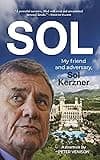
South African resort empire builder who transformed hospitality with theatrical destinations, from The Beverly Hills to Sun City to Atlantis in the Bahamas.
Walk away from corruption even after winning, as reputation damage exceeds any profit.
“Sol hated not being in control. Throughout his life and career, he was a control freak of note, and so, while others were encouraging him to start the project, he examined every line on the architect’s drawings with a microscopic lens and asked a thousand questions.”
“He knew little about construction or critical paths of building, but he could see what he could see. He would count the bricks that had been laid day to day. If the difference did not seem reasonable, he would question it. The answers were often unacceptable, and before long, Sol would be yelling at the workmen that he could “fucking well do it better myself”. To the annoyance of the construction firm, some workers…”
“When Sol proudly announced to his investors that construction had come in well below budget, they were thrilled – that is, until he told them, and not for the last time in his life, that he would blow the difference on the opening party.”
“What Sol and Barry created at the Landdrost was remarkable, especially considering that the basic structure had not been designed as a hotel. As usual, Sol was not shy to copy a good idea. The restaurant, Barnato’s, was a knock-off of the Rib Room at the Carlton Tower in London, with a brilliant innovation: a special dining table set up under a chandelier in the heart of the kitchen. Recognising the power of celebri…”
“This was also the project where Sol developed his life-long belief that landscaping was the secret to successful resort design. Clever landscaping can obscure an ugly or boring building.”
“Sol was also a stickler for detail, something he also hammered into his managers. Years later, his highly professional marketing executive, Howard Karawan, told this story: “We were walking around the construction site of the Royal Towers at Atlantis in the Bahamas, and I looked at a tradesman doing some plastering work some 40 feet above the Great Hall of Waters lobby. I said to Sol, ‘Nobody is going to pick up on…”
“Sol soaked up every ounce of knowledge that he could from the American. He now had to get back to South Africa and build his mini-Fontainebleau. Even if he did not fully realise it at the time, he had learned far more from Ben Novack than just how to design a resort hotel; he had also seen how to run one. The result was not a 1 000-room beachside hotel in an established resort town but a 72-room replica of the giant…”
“It also highlighted Sol’s talent for and obsession with siting his buildings in exactly the right spot. In this case, as you arrived at the hotel, the view through the long lobby was straight onto the bluest stretch of ocean water along the beach. A few metres one way or the other, and the view would not have been that good.”
“Sol strongly believed in giving his customers more than they expected.”
“Regarding the management of his hotels and resorts, Sol was a great proponent of the “management by walking around” method. “If you walk around enough,” he would tell his managers, “you will…”
“He was not ashamed to copy the decor of the original clubs in Paris, Monte Carlo or New York, but he always added a personal twist to make it even better. The “buzz” he created in his hotels made them vastly different from their competitors. It had kickstarted his first hotel, The Beverly Hills, with its Copacabana club, and it allowed him to charge more. The concept, now widely copied and cloned, transformed the ho…”
“His policy of finishing on time led to an important “Solism”. He would announce and plan for the grand opening of a project almost on the day construction started. This approach, which he pursued relentlessly…”
Ebbe Dommisse
Shares South Africa, New York, and London.
Tommaso Ebhardt
Shares New York, London, and Rolls-Royce.
Thor Bjorgolfsson
Shares SAB, US, and London.
Joanne Black
Shares US, New York, and George.
Anne Sabouret
Shares New York, London, and Paris.
Thomas Veszelits
Shares New York, London, and Paris.
“As we passed a huge billboard advertising a Frank Sinatra show, Sol – who was to address an international conference of casino owners and managers but had given little thought to what he would say – exclaimed, “That’s it! That is what I am going to tell them. Las Vegas has lost the plot.” The offending billboard that we’d just passed had announced: “Frank Sinatra – direct from his triumphant performance in New York!” “No one should ever come to Las Vegas from somewhere else,” said Sol. “They should only go somewhere after they have been in Vegas. Vegas used to be first in everything. Entertainment, hotels, gambling; now they even advertise that they are not. This is the fucking kiss of death – and I’m going to tell them!” Which, of course, he did later that night – expletives and all.”
“He was not shy to recognise and copy an innovative idea, but he would always find a way to make it better and bigger – and, therefore, completely his own. This was a man who transformed, even invented, the modern hospitality industry in South Africa and went on to build the largest casino resort in the US, the most successful beach resort in the western hemisphere and the most opulent hotel in the Middle East. Sol was indeed the Sun King.”
“Solomon Kerzner was born in Durban, South Africa, on 23 August 1935. He was, however, a citizen of the world. He had homes in London and the Chiltern Hills in the UK, the south of France, New York, Johannesburg and the Bahamas, as well as his beloved Leeukoppie estate in Hout Bay, Cape Town.”
“It quickly became apparent that he was a genius with numbers. On graduating, he was headhunted by Wolpert and Abrahams, one of the largest accounting firms in the country, where he quickly became their prized audit manager and impressed some of South Africa’s leading entrepreneurs. By the age of 26, he had been promoted to junior partner.”
“For a few years, at least to all outward appearances, the marriage stayed on track. But Sol was not cut out to be a devoted family man. His appetite for a bigger and more successful life was far greater. With his rudimentary insight into the hospitality industry, he realised that there was an opportunity just waiting to be exploited. He was tired of auditing others’ books; he wanted his own business, and he believed he knew how to get it.”
“The selection of uMhlanga as a location for his first major foray into the hotel business also highlighted other aspects of Sol’s business philosophy. At the time, the obvious place to build a new hotel would have been Durban’s Marine Parade. The small but elegant Edward Hotel had been successfully trading there for many years, and boarding houses and small hotels for domestic tourism flourished in the area. The Parade offered views of a long, sandy beach that appealed to the tourists who flocked to “Durbs” from the Highveld every year.”
“Investing in a hotel development in uMhlanga was a huge risk, particularly when the hotel was aimed solely at the wealthy. Sol would probably have preferred Durban’s Marine Parade but simply did not have the funds. And, putting aside the budget limitations, if he had invested in the popular Parade, he would not have been the “first”. In uMhlanga, he was taking a risk on the location but knew that he would be the only one doing so. If he got it right, his hotel would have something that he rated highly: he understood that people paid for exclusivity. In doing so, he set a precedent for a lifetime of being the first to establish exclusive destinations, underpinned by his talent for drama and flair.”
“Perhaps even more importantly, Ben was not only the developer and owner of the Fontainebleau. He was also the general manager. He patrolled his kingdom with an eagle eye, criticising his staff when required but also praising and encouraging them. Not a day passed without Ben visiting every corner of his empire, greeting both staff and guests while his all-seeing eyes noted the tiniest of details. Maintaining high standards was, to him, imperative. It was, therefore, not a surprise that he discovered on his rounds a young man from South Africa, a guest at the hotel, who appeared to be asking lots of questions.”
“Sol soaked up every ounce of knowledge that he could from the American. He now had to get back to South Africa and build his mini-Fontainebleau. Even if he did not fully realise it at the time, he had learned far more from Ben Novack than just how to design a resort hotel; he had also seen how to run one. The result was not a 1 000-room beachside hotel in an established resort town but a 72-room replica of the giant Miami hotel, located in an undeveloped village on South Africa’s Natal coast. Sol stopped short of naming his hotel the “Fontainebleau”, which his prospective local clientele would not have understood. Instead, he settled for “The Beverly Hills”. Everyone in South Africa knew what that meant.”
“Sol hated not being in control. Throughout his life and career, he was a control freak of note, and so, while others were encouraging him to start the project, he examined every line on the architect’s drawings with a microscopic lens and asked a thousand questions.”
“Construction finally began in 1962 and, to the amazement of the builders, Sol was everywhere. Although his wife, Maureen, and their young family were now residing in Johannesburg, Sol practically camped out in Natal. He visited the building site daily, but mostly at different times. Much to his frustration, he discovered that the people he had interacted with during the planning phase were almost never there. The actual construction work had been delegated to the site foremen. Those who had worked on the designs were nowhere to be seen, apart from monthly review meetings. Sol was apoplectic. The people he had entrusted with control of his project – and, by extension, his money – had presumably moved on to their next project.”
“He knew little about construction or critical paths of building, but he could see what he could see. He would count the bricks that had been laid day to day. If the difference did not seem reasonable, he would question it. The answers were often unacceptable, and before long, Sol would be yelling at the workmen that he could “fucking well do it better myself”. To the annoyance of the construction firm, some workers did what Sol had suggested: they “fucked off”. Others realised that he was right, and in a strange way, it motivated them to do better and work harder. At least he showed a keen interest in what they were doing. And, to Sol’s surprise, some of those workers suggested shortcuts or ideas that would reduce the cost of the project. Working with the men at the coalface became a lifelong habit of Sol’s, and in the years that followed, it surprised many of his backers and partners.”
“did not take long for Sol to figure out that the planned critical path to construction work was often flawed. He would spot men tiling bathrooms when the plumbing work had not been finished, or painters daubing away at surfaces that would be covered up and did not need paint. He would see men doing nothing because they were waiting for others to finish something before they could start. Although he complained angrily to the general contractor, things rarely improved for long and he would soon be prowling the site again, demanding more efficiency and, of course, at less cost. With a supply of rand notes in the back pocket of his jeans, he would frequently cajole a…”
“Sol, time was money. From those early days at The Beverly Hills to the day that he stopped creating dream destinations, he never started a construction job without projecting when it would be completed. Overruns can be costly, and, in the…”
“His policy of finishing on time led to an important “Solism”. He would announce and plan for the grand opening of a project almost on the day construction started. This approach, which he pursued relentlessly…”
“Having settled on a finishing date, Sol would share it with the travel trade, which meant that they could take bookings in advance, knowing they would be honoured. This meant, of course, that he would have immediate cash flow from the established opening date. It also meant that the hotel staff had to be ready. There was no debate. There was, in Sol’s…”
“When Sol proudly announced to his investors that construction had come in well below budget, they were thrilled – that is, until he told them, and not for the last time in his life, that he would blow the difference on the opening party.”
“On 6 December 1964, The Beverly Hills opened with a splash. Sol organised the biggest fireworks display that South Africa, at that point, had ever seen. Pictures of the hotel, the party and the glamorous invitees were plastered all over the front pages of every newspaper in the country and beyond. Articles soon appeared in magazines and journals in countries that had been carefully selected by Sol as potential sources of business. Back then, the printed word or photograph was the most important means of promotion, long before social media and influencers. Sol was demonstrating what would become one of his most potent tools: his ability to promote his unique products.”
“Within days of the grand opening, most people in South Africa had heard of The Beverly Hills. It became an instant “must-see/must-visit” destination, even to the many who could not afford it. “If they can’t afford it, they can fucking dream about it,” Sol would mutter while lighting yet another Peter Stuyvesant.”
“Much to the satisfaction of his investors, Sol worked hard at every operational aspect of The Beverly Hills. Just like Ben Novack, his mentor at the Fontainebleau, he was everywhere. He was just as likely to pop up in the laundry or the boiler room as he was to be found at the front desk. He wanted to know what was going on at all times. He knew exactly how many people had visited the Copa or dined in the restaurant the night before. He knew how many check-ins and check-outs there had been and whether he had too many or too few staff on hand. He met his guests frequently and observed his staff while doing so.”
“He did have a manager, Herbert Ointman, but had omitted to build an office for him. “Managers don’t need fucking offices,” he would exclaim. “They need to be where the action is, not reading reports about it later.””
“In the late 1960s, Sol approached Ted Sceales, then the chairman of SAB, with a proposal to build and operate a chain of resort properties in South Africa, aimed at both domestic and foreign tourists. The proposal went way beyond SAB’s modest plan to build motels for travelling salesmen. Sol’s proposal was straightforward. He would contribute his controlling interest in The Beverly Hills and a 50-year land lease that he had recently acquired on Durban’s Marine Parade, while SAB would fund the construction of resort hotels in Durban (on Sol’s land and on other sites), in the Eastern Transvaal (near the Kruger National Park), in Plettenberg Bay on the Garden Route, and at other sites still to be agreed. Financially, Sol’s proposal was simple: SAB would put up the money, he would do the work and they would split the ownership 50/50.”
“The attraction between Sol and SAB was too strong for them not to work out a deal, and it was finally agreed that SAB would fund his resort chain. Provided he continued to match their investment with 10% of his own, he could also maintain 10% ownership in all the properties. He would, however, be given a management contract for their operation, which he would own outright.”
“The two sides clearly had different views regarding their new arrangement. To SAB, Sol’s new Southern Sun was a subsidiary of their huge company. To Sol, SAB was his banker, not his boss. However, to protect their position, SAB insisted on planting two of their men in Southern Sun’s management company – one at a very senior level and the other in administration. Gordon Hood, a long-time SAB employee, was duly installed in Southern Sun, effectively as Sol’s “number two”.”
“Two weeks later, Sol was back at the Carlton Tower to offer me a job as personnel director of Southern Sun. He explained that he had started a fledgling hotel company, but his goal was to develop a chain of resorts across South Africa and beyond. He needed a man who knew where to find – and how to attract – quality hotel management, and he believed that man was me. I was taken aback by the offer. I thanked Sol for his interest but politely explained that I had no intention of leaving my current managerial job and no interest in working in South Africa.”
“The first hotel to open that year was the Malibu. It was also the first project for which I would be operationally responsible. The dynamics of the situation played into Gordon’s hands. He had to deliver a completed building for me to operate. All sorts of things could therefore go wrong between the cup and the lip – things under Gordon’s control that would make life difficult for me (and it was already difficult enough).”
“Even before concluding the deal with SAB in 1969, Sol had identified Plettenberg Bay as a potential jewel on the future tourist map of South Africa. The first time he set eyes on it, Plett was a tiny village near the Port Elizabeth (now Gqeberha) end of the Garden Route, which runs primarily from George to Storms River. The village comprised a short main street with a tiny stone church, elevated above two spectacular ocean bays on the southern side. A mountain range to the north curved around the sides of the village until it touched the sea. Cradled by the mountains, this little gem overlooked an ocean replete with whales, dolphins and other exquisite marine life. A small peninsula divided the two bays at the point where the Piesang River trickled – and sometimes gushed – into the sea.”
“The Beacon Isle was the first of its kind in the world of tourism – and, due to its unique placement on a rock against one of the most beautiful backdrops in the world, it could never be copied. The size and shape of the building contrasted spectacularly with the natural setting that it bisected. Whether from the Robberg Peninsula to the west or the mountain road to the east, the Beacon Isle stood out, a gleaming piece of modern art in an exquisite seascape setting. The striking design was not confined to the exterior. Inside, the floor-to-ceiling atrium was replete with live palm trees that waved gently in the breeze. The floor glistened with aqua-blue glass tiles. The slightly uneven beach-coloured walls of the balcony walkways to the hotel rooms curved around the lobby like an elegant, multitiered cake. As much as people were impressed by the striking building from the outside, the interior took their breath away when they entered through the sliding glass doors for the first time. South Africans were proud to say that this unique building had been created by one of their own, and everybody wanted to see it. Not only were December and January fully booked, but full occupancy soon extended to the rest of the year. The success of the Beacon Isle was secured.”
“Most, if not all, of the black residents of King William’s Town had never put foot in a hotel and, therefore, had none of the skills or knowledge required to cook or serve in a five-star establishment. I had to come up with a plan. With the help of Mossie Mostert and the mayor of King William’s Town, I got permission to use the magistrate’s office as an interview site. Word was put out in the community that Southern Sun intended to hire 120 workers for a new hotel in the Cape, and that we would offer free training courses to teach the new recruits the skills of cooking and serving. The plan was to send the new staff to the only hotel school in the country, located in Pretoria, where they would receive six months’ training in the art of restaurant operations before starting work in Plettenberg Bay. Unfortunately, they would not be allowed to take their loved ones to Pretoria or Plett, but at the end of the course, they could take a two-week break back home before going to Plett. Despite these strict conditions, when Mossie and I arrived at the magistrate’s office, we were astounded to find hundreds of eager applicants cheerfully lining up to be interviewed. Many of the potential new recruits clutched battered little suitcases or bags, ready to travel to Pretoria.”
“In South Africa, the construction industry practically shuts down from mid-December to mid-January. If the building was not finished in time, there would be a delay of up to two months. The only guaranteed customers would arrive over this period, and missing the proposed opening date would be a disaster. If Sol and Gordon did not have the hotel ready by 5 December, Sol’s reputation would take a severe hit – as would his pockets and the confidence of his investors. Not completing the Beacon Isle on time was simply not an option.”
“With the clock ticking and only two weeks to the deadline, Sol was still making changes to the construction work and adjusting costs in his quest to improve the finished product. As he flew over the unfinished building en route to Plett airport from Johannesburg for one final “push”, he asked the pilot to make another pass over the building. “Shit!” he said loudly. “We’ve built the wrong fucking pool!” Since Sol’s last visit a couple of weeks earlier, Gordon Hood had started and finished construction of the hotel’s swimming pool, a rectangular structure in the centre of the beach-facing garden. Sol, browsing an international travel magazine on the plane, had just seen a picture of a resort swimming pool of highly irregular shape, wrapping its way around a rocky crag and an island bar. It was, at the time, an extremely unusual design. “Shit,” said Sol again. “We should have fucking well done that.” When he reached the construction site, he stomped into the hotel lobby, head down and walking swiftly with distinct purpose. Gordon was waiting for him. “Fuck, Gordie,” said Sol, even before greeting his colleague. “We’ve built the wrong fucking pool!” Gordon had no idea what Sol was talking about. In fact, he was proud of the pool project he had just overseen. He thought it looked great. “No, man,” Sol ranted on, seeing that Gordon was about to get defensive. “Look at this.” He thrust the travel magazine in Gordon’s face. “Come on, man. We haven’t got much fucking time. Let’s find a place for a new pool, and rip that one out.” Gordon looked at the magazine as he scurried after his boss. He liked the picture, but he did not like the idea of ripping up what he had just painstakingly built. “It can’t be that important,” he mumbled to himself, “and we are already over budget for the job. Building a new pool will just exacerbate the problem.” As he hurried along behind a striding Sol, he tried to protest. “But Sol, we can’t afford to build a new pool. We don’t have the budget.” “Now listen to me, Gordie,” his boss retorted. “If we don’t change it now, we never will – and that would be a huge mistake. So, fuck the budget. Rip this one out and build another.” Sol was right, of course.”
“Before you host any guests in your hotel, you can make as much of a mess with construction as you like. Once you are open, it’s a different story. Among all the other…”
“It was also crucial to fill the place from day one, as had been his practice at the Elangeni and the Malibu – especially as the window of opportunity was tight: he needed to get as many patrons as possible through the doors in December and January. Word of mouth had to spread to Johannesburg, the hotel’s prime market. And so Sol decided to offer, for a limited period only, ridiculously low room rates. By restricting sales to a package that comprised room, breakfast and dinner, and by…”
“For several nights before the nearly 400 guests invaded, Sol hardly slept. Like the Duracell battery in the adverts, he just kept going – and bit by bit, corner by corner, things fell into place. The last thing to do was to tarmac the sloped drive from the road up to the entrance of the building. At 10pm the night before the opening, Gordon and I were astounded to see our boss wielding a rake as he smoothed out the hot, black goo right up to the front door. Finally, at midnight, just hours before opening, the hotel was ready – or, to be precise, the hotel building was ready.”
“As day one at the Beacon Isle progressed, a steady stream of guests checked in. There was a buzz in the air as they stepped into the stunning lobby. Their first reaction, as South Africans, was one of pride. Their fellow South Africans had devised and built this place, and there was nothing else in the world like it – not only the building itself but also the outstanding views from every corner. It was a world first, and it had been achieved in their own land.”
“Although they had been taught the differences between Burgundy and Claret, Champagne and Prosecco and so on during their training, by the end of service they were resorting to “red”, “pink” or “white” in their descriptions of the copious wine list. As things started to go wrong, Sol’s anger rose. He’d had no time during construction to concern himself with service; now his attention was clearly required. His scowling face told me everything. But then two strange things happened. Shirley, sensing that her fiancé was about to blow a fuse, got him to laugh. She was the only person in the world who could do that when tensions were running high. Second, the seasoned travellers who were our guests found the restaurant experience charming. They knew that they were in Africa, that the hotel had just opened its doors and that the staff were doing their best. In fact, the people who had arrived that day were so impressed by the achievement of building and opening such a unique place that Sol could have served them baked beans on toast and gotten away with it. They were in awe of him, and as they drifted out of the restaurant to the bar or to bed, many told him so. As chaotic as it had been, the first day in the life of the Beacon Isle was over. Somehow we had managed to pull it off.”
“What I did not find were any of the morning kitchen staff who were supposed to be signing in to prepare the breakfast, nor any of the staff who had to prepare the restaurant for service. As the minutes ticked by, any hope of having workers to prepare and serve breakfast for up to 400 guests began to evaporate. I rushed back to my room and woke up Diana. “Round up as many wives and partners as you can. I am going to need every bit of help in the kitchen and dining room. Now!” I then called Sol. Shirley answered, and I explained the situation. I would be supervising in the kitchen. As my bleary-eyed crew of bookkeepers, housekeepers and wives slowly traipsed into the kitchen, I handed out the jobs. Adele Lucas, the effervescent public relations executive, was primed to handle the door, while Sol pressed oranges. Shirley boiled eggs while I orchestrated a simple breakfast buffet.”
“What Sol and Barry created at the Landdrost was remarkable, especially considering that the basic structure had not been designed as a hotel. As usual, Sol was not shy to copy a good idea. The restaurant, Barnato’s, was a knock-off of the Rib Room at the Carlton Tower in London, with a brilliant innovation: a special dining table set up under a chandelier in the heart of the kitchen. Recognising the power of celebrity, Sol set out to position the Landdrost as the hotel of choice for the rich and famous in Joburg. He loaded the new hotel with sumptuously decorated suites and a fabulous nightclub, cheekily called Annabel’s after London’s celebrity-packed disco nightclub. Annabel’s boasted columns around the dance floor that, when the cabaret acts appeared, miraculously disappeared into the glass ceiling.”
““We’re going to reorganise,” he announced as he called me into his office one morning. “I think we should divide the operations into three geographical areas, with three regional operational managers reporting to you. What I have in mind is the Cape, the Transvaal, and Natal and the Indian Ocean. I think you need to find these people soon. If you don’t, we will not have the firepower”
“grow, and you may not have a wife anymore.””