Authority From Relationships Not Position
“There was a personal side to every relationship with Steve. It was never all business. He derived his authority from his relationships, not his position.”
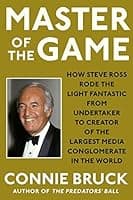
Steve Ross, the charismatic dealmaker who built Warner Communications into a media empire through relationship mastery and visionary deal-making, ultimately creating the foundation for Time Warner.
“There was a personal side to every relationship with Steve. It was never all business. He derived his authority from his relationships, not his position.”
““When I was a teenager, my father was dying—he knew he was dying, I knew he was dying—and he gave me the best advice possible. He said, there are three categories of people in this world. The first is the individual who wakes up in the morning and goes into the office and proceeds to dream. The second category is the individual who gets up in the morning, goes into the office, and proceeds to work sixteen hours a da…”
“Before Warner, virtually everything Ross had done had been a preface; transient; utilitarian. Alliances he had formed had been little but handholds to enable him to climb higher. Now, for the first time, he had appropriated a business that he would not just as happily discard. He would continue to climb—he could not not—but he would never leave its province. He did not need to. It offered him everything he might wan…”
““Most companies that are run by boards are failures,” Ashley said to Ross. “There is no evidence, furthermore, that you know how to read a script, or how a budget can be shaved, or which actor is better in what movie. Leave me entirely alone. Let me hire and fire anyone, make all the decisions about what to finance—and you’ve got a great remedy. You can always fire me.” This pact”
““Ross liked businesses with hidden oil wells, where you could get nothing or a five-fold gain. He preferred that to a business where you were likely to have steady 15 percent returns,”
“(“You never play a shareholders’ meeting to win, you play to tie”) as,”
“What would later become vintage Ross was already in place: always coming to a meeting well prepared, which for him meant researching not only all angles of the business deal but also the personality of the principal, and trying at the outset to strike a personal chord—surprisingly personal, if possible, one that might set the other person slightly offbalance, albeit in a pleasant way. (“You’re going to see Joe Albri…”
“gave more to every friendship than he took. He made all of us feel important and good. . . . He considered nothing impossible. He inspired us to perform beyond the limits of our abilities and made us better than we were.”
““I love distribution businesses. I love to control our own destiny. If you develop a product and you have distribution, that’s the name of the game.”
“perestroika.”
“He said, there are three categories of people in this world. The first is the individual who wakes up in the morning and goes into the office and proceeds to dream. The second category is the individual who gets up in the morning, goes into the office, and proceeds to work sixteen hours a day. The third is the individual who comes into the office, dreams for about an hour, and then proceeds to do something about his…”
“internecine”
Don Valentine
Shares Ross and Warner.
Felix G. Rohatyn
Shares Steve.
John Malone
Shares Warner.
Richard Koch
Shares Steve.
Edited by Nikkei Business Publications
Shares Steve.
Patrick McGee
Shares Steve.
“(“You never play a shareholders’ meeting to win, you play to tie”) as,”
“perestroika.”
““I love distribution businesses. I love to control our own destiny. If you develop a product and you have distribution, that’s the name of the game.”
“He said, there are three categories of people in this world. The first is the individual who wakes up in the morning and goes into the office and proceeds to dream. The second category is the individual who gets up in the morning, goes into the office, and proceeds to work sixteen hours a day. The third is the individual who comes into the office, dreams for about an hour, and then proceeds to do something about his dreams. “He said, ‘Go into the third category for only one reason: there’s no competition.”
“Before Warner, virtually everything Ross had done had been a preface; transient; utilitarian. Alliances he had formed had been little but handholds to enable him to climb higher. Now, for the first time, he had appropriated a business that he would not just as happily discard. He would continue to climb—he could not not—but he would never leave its province. He did not need to. It offered him everything he might want: seemingly infinite vistas of business possibility; astronomical compensation; entree to a glamorous, star-studded world. And it was, moreover, a business where his instincts with people—cultivating them, catering to them, winning their favor—would be extraordinarily, even uniquely, useful.”
“internecine”
““Ross liked businesses with hidden oil wells, where you could get nothing or a five-fold gain. He preferred that to a business where you were likely to have steady 15 percent returns,”
“seigneurial,”
““Most companies that are run by boards are failures,” Ashley said to Ross. “There is no evidence, furthermore, that you know how to read a script, or how a budget can be shaved, or which actor is better in what movie. Leave me entirely alone. Let me hire and fire anyone, make all the decisions about what to finance—and you’ve got a great remedy. You can always fire me.” This pact”
““When I was a teenager, my father was dying—he knew he was dying, I knew he was dying—and he gave me the best advice possible. He said, there are three categories of people in this world. The first is the individual who wakes up in the morning and goes into the office and proceeds to dream. The second category is the individual who gets up in the morning, goes into the office, and proceeds to work sixteen hours a day. The third is the individual who comes into the office, dreams for about an hour, and then proceeds to do something about his dreams.”
“Jack Tramiel.”
“There was a personal side to every relationship with Steve. It was never all business. He derived his authority from his relationships, not his position.”
“Hotel San Pietro,”
“What would later become vintage Ross was already in place: always coming to a meeting well prepared, which for him meant researching not only all angles of the business deal but also the personality of the principal, and trying at the outset to strike a personal chord—surprisingly personal, if possible, one that might set the other person slightly offbalance, albeit in a pleasant way. (“You’re going to see Joe Albritton? Walk in, and say, ‘How’s Cut ‘n Shoot?’ ” Ross would urge me. “That’ll really get him!”
“gave more to every friendship than he took. He made all of us feel important and good. . . . He considered nothing impossible. He inspired us to perform beyond the limits of our abilities and made us better than we were.”