90% Startup Failure Odds
Green acknowledges most craft-retail startups fail and treats each new venture as a learning-and-volume race where losses are expected before the model proves out.
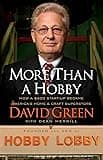
David Green, founder of Hobby Lobby, who built a family-owned arts-and-crafts retail empire from a $600 picture-frame operation in his garage into a national chain with 50,000+ rotating SKUs.
Green acknowledges most craft-retail startups fail and treats each new venture as a learning-and-volume race where losses are expected before the model proves out.
“Retailing, at least in my personal view, has four keys. And the sequence is important. They are: 1. Run your business in harmony with God’s laws. This will keep you on an ethical footing. Seek to please God in everything you do. 2. Focus on people more than money. Without employees and customers, you’re going nowhere. Make sure you never stop thinking about the customer’s perspective. And make sure you have the righ…”
“We call the standing warehouse items “pull items”; the stores continually pull them into their facilities to offer their customers. The seasonals and onetimers, on the other hand, we call “push items”; we in the home office in Oklahoma City make the decision to push them into the stores for a given period. Every week, a store manager fills out his or her “pull” order. A computer printout lists all 46,000 items and t…”
“Another thing I don’t have to mess with is dealing with stockholders and all the federal and state paperwork of being a public company. We’re still family-owned, which keeps life a whole lot simpler. When my wife and kids and I decide to make a business move, we don’t have to ask Wall Street about it.”
“Time after time, surveys of our customers tell us they come to Hobby Lobby most of all for the amazing selection. Newcomers walk in the front door and don’t get halfway to the back wall before uttering, “My goodness—this place has everything!” That’s exactly the reaction our company’s creative director (who happens to be my daughter, Darsee) is seeking. She calls it a creative frenzy. “Nobody brings together so many…”
“Our most popular frame style is the rustic, unfinished wood we call “barnwood.” People have a soft spot for the past, it seems—for simpler days, for their rural roots. So they put country scenes in these frames . . . paintings of old-time kitchens, for example. The barnwood line is perfect for this. I’ll let you in on a little secret: The wood in these frames doesn’t come from barns. It comes from old picket fences…”
“During the course of a year at Hobby Lobby, you will see approximately 50,000 new items. That is because of two practices: 1. About a fifth of the year-round items (more than 9,000) are retired and replaced every year. We’re constantly purging the warehouse of items whose sales pattern is slowing. Meanwhile, new items, as well as new colors, new styles, and new sizes, are always coming online. 2. About four-fifths o…”
“This means thinking about what’s best for the customer and the individual store, not what’s easiest for the central warehouse. Anything we can do to help the store and make things work, we must do, no matter how cumbersome it is. In the long run, it pays dividends.”
“To explain what makes Hobby Lobby tick, i’ll start this section of the book with the obvious things that appeal to everyday customers. After all, if customers don’t find enjoyment and satisfaction by coming into your store, it won’t matter if you have the greatest, fanciest, most sophisticated business model in the world. I’m not into complicated theories; I just get up every morning and say, “What are home-and-craf…”
“To serve customers in the home decorating and crafting area, you simply have to have a wide selection. A few years back, Sam Walton opened five craft stores called Helen’s (named after his wife). Before long, he found it so different, so opposite to the Wal-Mart model, he got out of the field. A craft store is in “the parts business.” If a woman wants to do a project that requires ten parts, and Hobby Lobby has only…”
“One of our most enduring categories is the product line that started it all for Barbara and me: frames. The small picture frames we made in the beginning were strictly a craft item. Customers would use them to hold small paintings for a grouping on the wall. Then a wholesale company (the same one that sold us that first frame-chopper machine) wanted to get out of the ready-made frame business. The owner sold us a fo…”
“FROM THE VERY BEGINNING, I LOVED THEWORK—AND THAT’S AN IMPORTANT POINT: TO SUCCEED IN RETAIL, YOU HAVE TO LOVE IT.”
“I know that my odds of succeeding with this venture are only one out of ten; 90 percent of start-ups in this field don’t make it. I fully intend to be in the 10 percent! So far we’re losing money, but we’re learning a great deal, and we’re pushing to get the sales volumes up and the margins up. This is my sport.”
Iverson, Ken
Shares Wal-Mart and Wall Street.
Wild, Hans-Peter, Dr.
Shares Wal-Mart and Sam Walton.
John Malone
Shares Wall Street.
Erik Palm
Shares Sam Walton.
Tommaso Ebhardt
Shares Wall Street.
Lotta Engzell-Larsson
Shares Wall Street.
“FROM THE VERY BEGINNING, I LOVED THEWORK—AND THAT’S AN IMPORTANT POINT: TO SUCCEED IN RETAIL, YOU HAVE TO LOVE IT.”
“Another thing I don’t have to mess with is dealing with stockholders and all the federal and state paperwork of being a public company. We’re still family-owned, which keeps life a whole lot simpler. When my wife and kids and I decide to make a business move, we don’t have to ask Wall Street about it.”
“Retailing, at least in my personal view, has four keys. And the sequence is important. They are: 1. Run your business in harmony with God’s laws. This will keep you on an ethical footing. Seek to please God in everything you do. 2. Focus on people more than money. Without employees and customers, you’re going nowhere. Make sure you never stop thinking about the customer’s perspective. And make sure you have the right people at the helm of each area. 3. Be a merchant. Notice, I didn’t just say “businessperson.” That’s too generic. Your core activity is buying and selling merchandise.That’s what it’s all about. The rest is periphery, or even distraction. 4. Install the proper systems to support the first three keys.”
“I know that my odds of succeeding with this venture are only one out of ten; 90 percent of start-ups in this field don’t make it. I fully intend to be in the 10 percent! So far we’re losing money, but we’re learning a great deal, and we’re pushing to get the sales volumes up and the margins up. This is my sport.”
“I want to be the very best competitor I can be. The Bible says, “Whatever your hand finds to do, do it with all your might, for in the grave, where you are going, there is neither working nor planning nor knowledge nor wisdom” (Ecclesiastes 9:10).”
“To explain what makes Hobby Lobby tick, i’ll start this section of the book with the obvious things that appeal to everyday customers. After all, if customers don’t find enjoyment and satisfaction by coming into your store, it won’t matter if you have the greatest, fanciest, most sophisticated business model in the world. I’m not into complicated theories; I just get up every morning and say, “What are home-and-craft customers looking for today, and how can I provide it to them?” The target customer for me is a woman who wants to make her home better in some way. Yes, men shop at Hobby Lobby, too, but the overwhelming majority are female. They may be interested in making an item themselves, or they may want to buy it ready to use. Either way, their goal is to create a more attractive, beautiful place to live.”
“What does this kind of woman want when she goes shopping? First of all, she appreciates a wide selection of interesting merchandise, so that’s our topic for this chapter. She also wants to enjoy the shopping experience;we’ll talk about that next. And of course, she doesn’t want to pay any more than she has to. Therefore, the subject of chapter 4 is pricing.”
“Time after time, surveys of our customers tell us they come to Hobby Lobby most of all for the amazing selection. Newcomers walk in the front door and don’t get halfway to the back wall before uttering, “My goodness—this place has everything!” That’s exactly the reaction our company’s creative director (who happens to be my daughter, Darsee) is seeking. She calls it a creative frenzy. “Nobody brings together so many unique things under one roof,” she says.”
“During the course of a year at Hobby Lobby, you will see approximately 50,000 new items. That is because of two practices: 1. About a fifth of the year-round items (more than 9,000) are retired and replaced every year. We’re constantly purging the warehouse of items whose sales pattern is slowing. Meanwhile, new items, as well as new colors, new styles, and new sizes, are always coming online. 2. About four-fifths of the seasonal and onetime items (some 40,000 of them)won’t be repeated next time around. Put the two groups together, and you have nearly 50,000 items you didn’t see a year ago.”
“We call the standing warehouse items “pull items”; the stores continually pull them into their facilities to offer their customers. The seasonals and onetimers, on the other hand, we call “push items”; we in the home office in Oklahoma City make the decision to push them into the stores for a given period. Every week, a store manager fills out his or her “pull” order. A computer printout lists all 46,000 items and tells how many of each should be on hand in that store to constitute a two-month supply. If the store’s stock is below that number, it should reorder. Within twenty-four hours (or forty-eight at the most), a truck will show up with that merchandise, so the store doesn’t even come close to running out.”
“To serve customers in the home decorating and crafting area, you simply have to have a wide selection. A few years back, Sam Walton opened five craft stores called Helen’s (named after his wife). Before long, he found it so different, so opposite to the Wal-Mart model, he got out of the field. A craft store is in “the parts business.” If a woman wants to do a project that requires ten parts, and Hobby Lobby has only eight of them, she’s going to give up in frustration. We have to carry all ten parts.”
“This means thinking about what’s best for the customer and the individual store, not what’s easiest for the central warehouse. Anything we can do to help the store and make things work, we must do, no matter how cumbersome it is. In the long run, it pays dividends.”
“One of our most enduring categories is the product line that started it all for Barbara and me: frames. The small picture frames we made in the beginning were strictly a craft item. Customers would use them to hold small paintings for a grouping on the wall. Then a wholesale company (the same one that sold us that first frame-chopper machine) wanted to get out of the ready-made frame business. The owner sold us a forty-foot truckload of inventory for $2,000. We had no way to store this much in our small facility, so we parked the trailer out front and began running newspaper ads for a big sale. We spread some frames out on the lawn, while the rest could be seen by climbing up a ladder into the back of the trailer. (Fortunately, nobody slipped and fell and sued us!) It turned out to be a tremendous success; we netted five or six times our investment. So we bought another truckload for $4,000, and a third for $8,000, still managing to be profitable. This showed us the potential of large, ready-made frames. It’s still one of our mainstays. Today we stock every size from 2 x 3 inches to 24 x 36 inches. Granted, frames consume a lot of floor space, and they come in lots of different styles. But people will always want to hang a picture of their child or their mother on the wall, and Hobby Lobby will always be there to help them.”
“Our most popular frame style is the rustic, unfinished wood we call “barnwood.” People have a soft spot for the past, it seems—for simpler days, for their rural roots. So they put country scenes in these frames . . . paintings of old-time kitchens, for example. The barnwood line is perfect for this. I’ll let you in on a little secret: The wood in these frames doesn’t come from barns. It comes from old picket fences that are being replaced! The fence companies are more than happy to give us the old, weathered, paint-peeling wood that they otherwise would have to haul to the city dump and pay a fee to get rid of it. We take it off their hands, put it through our specially calibrated router machines, and glue it into frames for people to buy.”