“Revenue growth, improved results, cost control, and international expansion became trademarks of Schörling and Douglas. As long as the company develops, the value of the owners’ holdings also increases. Melker Schörling was the driving force behind Securitas’s international expansion and the company became enormously successful for a Swedish-owned service company. Melker Schörling stepped down from the chairmanship…”
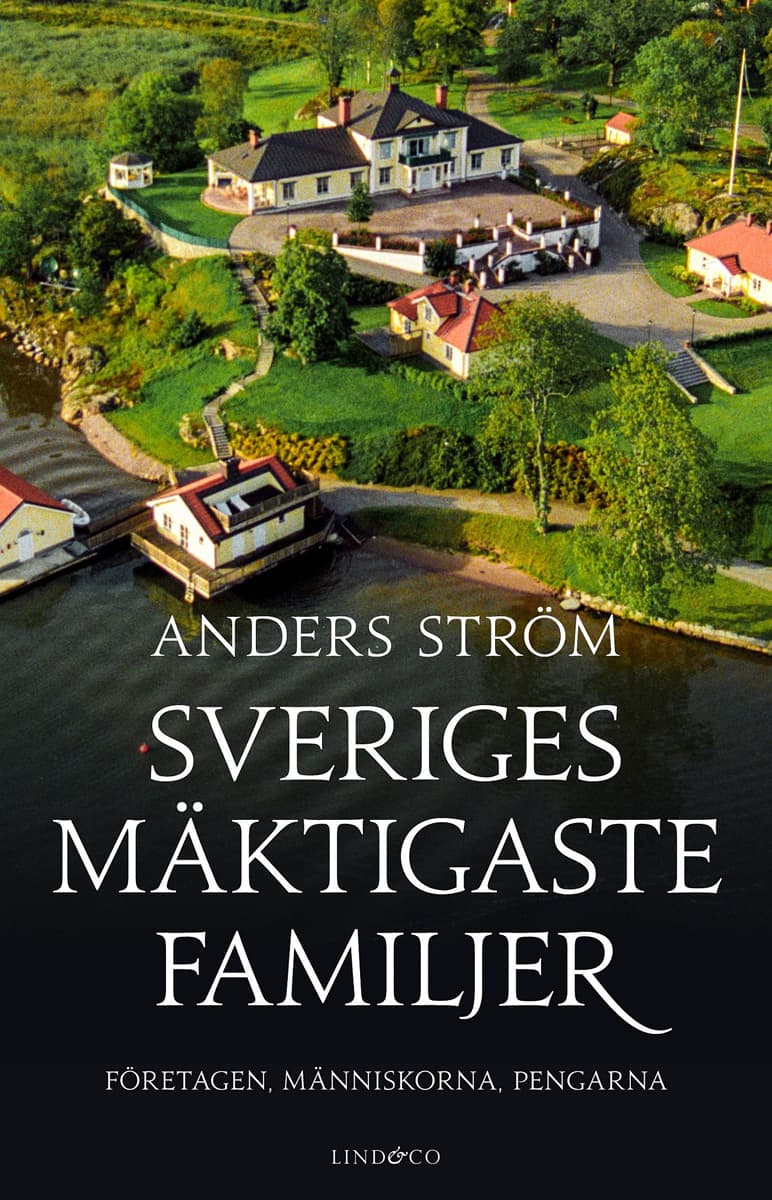
Sweden's Most Powerful Families - The Companies, the People, the Money
Anders Ström
51 highlights · 16 themes · 97 people/companies
Two self-made Swedish dynasty builders—Melker Schörling and Frederik Paulsen—who each turned modest origins into multi-billion-dollar empires through radically different vehicles (public equity spin-offs vs. private pharmaceutical ownership) but shared an obsession with long-term control, global expansion, and generational transfer.
Era
1960s–2010s Sweden: high-tax social democracy, nationalization threats to pharma, 1990s crisis-era bargain valuations, and successive waves of globalization that rewarded patient Swedish exporters.
Scale
Schörling built a 55 billion SEK fortune from a 25 million SEK Securitas stake, spawning listed companies like Assa Abloy and Loomis; Paulsen grew Ferring from 120 employees and ~100M SEK revenue to a 6,000-employee, €1.9 billion global pharma group, debt-free and wholly family-owned.
Ask this book
51 highlights
Suggested questions
Notes
“As soon as a year after the stock listing of Securitas, Melker Schörling bought the Edeby manor by Lake Båven outside Norrköping in 1992 for 32 million kronor. The area was close to 3,200 hectares at the time of acquisition, mostly forest. Schörling has gradually bought more land since then and is described by Forbes as one of Sweden’s largest landowners.”
“A series of successful acquisitions, investments, and spin-offs—not least parts of Securitas that became new listed companies, such as Assa Abloy and Loomis, and Hexapol, which was spun off from Hexagon—made Schörling a major owner in an increasing number of listed companies.”
“The pharmaceutical company Ferring conducts research and develops medications in five areas. The most important are gastroenterology, urology, and gynecology/obstetrics. The company is a world leader in fertility treatment. Among its proprietary drugs are Minirin, used in the treatment of bedwetting, and Degarelix, which counteracts prostate cancer. These two drugs have achieved significant sales success worldwide.…”
“The investigation and Hermansson exposed the networks and described how different actors collaborated. They also showed that the major owners had managed to gain power and influence in the leading industrial companies of the time through relatively limited capital investments and often thanks to voting-strong A-shares.”
“But in the beginning, money mattered to Melker Schörling. He did not inherit a fortune but built it himself. Today, he manages the capital and invests the money where it yields the greatest return in the long term. During his upbringing in a farming family in the small community of Götlunda with three hundred twenty inhabitants, in the municipality of Arboga outside Örebro, he learned that it required effort to make…”
“In the beginning, it was possible to buy the companies for relatively little money because no one else wanted them. There wasn’t much trading in the shares either. The banks had no coverage, and the institutions did not want to buy. This led to “nice price tags,” as Melker Schörling expressed it in an interview with Affärsvärlden in 2016. It was also important that there were conditions for an international business…”
“it comes to multiple expansion, meaning that a company is valued significantly higher when acquired by the right principal owner. He himself believes it is logical for a company to be valued higher when bought by someone with a proven ability to make companies grow. And one would probably agree with him on that.”
“One of Melker Schörling’s personal traits is said to be his backing of business decisions all the way without interfering in the operational work. It’s a good way to get selected CEOs and capable colleagues to stay.”
“During Frederik and Eva Paulsen’s time with the company, the business was established. Ferring developed, produced, and sold pharmaceuticals independently. Foreign expansion had begun, partly because Frederik Paulsen wanted to protect the family business from the Swedish state. The heavy tax burden and the ongoing discussion about nationalizing the pharmaceutical industry risked destroying everything the Paulsen fam…”
“The family’s fortune largely consists of the value of holdings in the company Melker Schörling AB. Melker Schörling and family control the investment company with 86.1 percent of the votes (31.12.2016). The ownership in MSAB causes the value of the fortune to fluctuate between years, and the actual value is not realized until the shares are sold. And that is not the intention. It is a long-term capital that continua…”
“The founder is in his 70s, and the eldest daughter, Sofia Schörling Högberg, has not yet turned forty. The process has been ongoing for a few years, but it was brought to the forefront in October 2016 when Melker Schörling unexpectedly announced he would be ending all his assignments as chairman in conjunction with the general meetings. He has been affected by gradually deteriorating health. Carl-Henric Svanberg was…”
Themes
Global Expansion from a Small-Country BaseLand and Forest as Parallel Wealth StoreSpin-Off to Multiply, Never ConglomerateDrug Repurposing as Market ExpansionControl Architecture Over Capital EfficiencyDebt Aversion from Farming RootsCrisis-Price Entry as Wealth OriginMultiple Expansion Through Proven OwnershipBack the CEO, Never Touch the ControlsFlee the State to Protect the CompanyEternal Horizon, Never Sell the CoreBuy at 'Nice Price Tags' During CrisisGenerational Transfer as Strategic Design, Not InheritanceExplorer-Billionaire: Eight Poles as IdentityPeptide Hormone Bet Held for Seven DecadesPhilanthropy as Market-Building
People
Companies
Highlights
“Invaluable Values. Pantbanken Sverige – the first 150 years, RBK Communication and Pantbanken Sverige, 2016.”
“Aktiespararna 50 years 1966–2016, one of two main authors, Aktiespararna, 2016.”
“Melker Schörling”
“Frederik Paulsen Jr”
“off. Stefan Persson led H&M’s”
“Fredrik Lundberg gave the family business its second leg, the investment company, which now complements the real estate business.”
“The international successes of Swedish companies are nothing new. Ever since the breakthrough of modern growth and international trade from the 1850s to the 1890s, Swedish owners and companies have had the ability to ride the waves of globalization that have swept across the world at various times.”
“Monopol och storfinans – de 15 familjerna, which was first published in 1962. For a nonfiction book on economics, it gained wide circulation and was released in several revised editions during the 1960s and 1970s, including an abridged pocket edition in Rabén & Sjögren’s Theme Series in 1971.”
“The investigation and Hermansson exposed the networks and described how different actors collaborated. They also showed that the major owners had managed to gain power and influence in the leading industrial companies of the time through relatively limited capital investments and often thanks to voting-strong A-shares.”
“At the turn between the 1960s and 1970s, Asea, L.M. Ericsson, Volvo, Skånska Cementgjuteriet, and Rederi AB Nordstjernan were the five largest companies in Sweden. In Hermansson’s book, the fifteen original families were named Wallenberg, Söderberg, Wehtje, Johnson, Bonnier, Kempe, Klingspor, Jeansson, Dunker, Broström, Schwartz, Hammarskiöld, Jacobsson, Åselius, and Throne-Holst.”
“Melker Schörling is an active and long-term owner who has created one of Sweden’s largest fortunes through business development, dividends, and spin-offs of companies that have become new stars on the Stockholm Stock Exchange.”
“With many good deals since the first major investment of 25 million kronor in Securitas in 1987, Schörling’s capital has grown rapidly over a generation. As the owner of Edeby Manor, he is also one of Sweden’s largest real estate owners. Melker Schörling announced in the fall of 2016 that he would scale back for health reasons. Active in the next generation are his daughters Sofia Schörling Högberg and Märta Schörling Andréen. Melker Schörling’s fortune is valued at 55 billion kronor.”
“The farmer’s son Melker Schörling has made a remarkable journey. He has gradually built an enormous fortune, valued at 55 billion, starting from two empty hands. Nothing has come for free, even though global growth and the stock market have contributed. As recently as 2005, the fortune was valued at “only” 5 billion kronor according to Veckans Affärer 2016.”
“The founder is in his 70s, and the eldest daughter, Sofia Schörling Högberg, has not yet turned forty. The process has been ongoing for a few years, but it was brought to the forefront in October 2016 when Melker Schörling unexpectedly announced he would be ending all his assignments as chairman in conjunction with the general meetings. He has been affected by gradually deteriorating health. Carl-Henric Svanberg was elected in May 2017 as a new board member of MSAB. Schörling and Svanberg have been colleagues and friends for a long time. Svanberg has previously served on the MSAB board and is also a shareholder in the investment company. Svanberg has extensive experience in Swedish industry, including as CEO of Assa Abloy and Ericsson, and as chairman of BP and AB Volvo. Mikael Ekdahl has been appointed chairman of Melker Schörling AB after many years as vice chairman. It cannot be easy to take over after a masterful investor who is called a magician in terms of creating growth and value. Melker Schörling remains on the board as a member.”
“But in the beginning, money mattered to Melker Schörling. He did not inherit a fortune but built it himself. Today, he manages the capital and invests the money where it yields the greatest return in the long term. During his upbringing in a farming family in the small community of Götlunda with three hundred twenty inhabitants, in the municipality of Arboga outside Örebro, he learned that it required effort to make money in small business and that bank loans and repayments could give a sense of lack of freedom. His father lay awake at night pondering how to make the money stretch to cover the loan repayments for the agricultural machinery.”
““I decided quite early on to become financially independent, remembering my father’s words. At home, money had been a scarce resource and it gave me three options: to win the lottery, to try to make some stock deals, or to become a co-owner in a good company. It became a combination of the latter two. Before I joined Securitas, I had made several good stock deals,” he said in an interview with Veckans Affärer in 2006.”
“In the business press, Melker Schörling is most often described as a major shareholder and investor with a focus on large wealth. It is easy to forget that he had nearly two decades of operational experience in Swedish industry and service behind him when the main owner Gustaf Douglas wanted to engage him as CEO of the troubled security company Securitas. He was a sought-after CEO at that time.””
“In the 1970s, he had pursued a career as a civil servant to build a solid knowledge base, as he himself puts it. He worked as a controller for four years at LM Ericsson in Mexico and spent a few years at ABB Fläkt in Stockholm before being appointed CEO of Essef Service, where he did such a good job that he was offered to become CEO of Crawford Door in the 1980s. Then the Securitas deal became the starting point for Schörling as a businessman, when the civil servant was given the opportunity to become a business builder and owner. He was forty years old and was about to start his own business. Therefore, it was far from certain that Douglas would succeed in persuading Schörling to take on the role as CEO. This gave him a good negotiating position.”
“Gustaf Douglas only wanted to part with 10 percent of the shares, but Melker Schörling wanted 25. They met halfway. After a well-conducted negotiation, Schörling paid 25 million SEK for 17.5 percent of the company’s share capital. Schörling had some money after a few successful stock investments, but he borrowed most of the purchase price for the shares in Securitas from the bank.”
“Melker Schörling and Gustaf Douglas became a dynamic duo, and their approach to driving development in companies left a mark on Swedish business. In many ways, they are contrasts as individuals. Douglas is impulsive and has strong opinions that he readily expresses. Schörling is calm and thoughtful. But not when it comes to business, where they strive in the same direction. Their contrasting personalities provided dynamic collaboration that led to one of the major stock market successes of the 1990s when Securitas conquered the world. This is how Bengt Ericson describes Schörling’s and Douglas’s collaboration in the book The New Upper Class from 2010.”
“Revenue growth, improved results, cost control, and international expansion became trademarks of Schörling and Douglas. As long as the company develops, the value of the owners’ holdings also increases. Melker Schörling was the driving force behind Securitas’s international expansion and the company became enormously successful for a Swedish-owned service company. Melker Schörling stepped down from the chairmanship at Securitas in the spring of 2016 after thirty years with the company. The new chairman is Marie Ehrling.”
“A series of successful acquisitions, investments, and spin-offs—not least parts of Securitas that became new listed companies, such as Assa Abloy and Loomis, and Hexapol, which was spun off from Hexagon—made Schörling a major owner in an increasing number of listed companies.”
“Schörling, the common thread has always been to invest in smaller companies with the potential to grow internationally.”
“In the beginning, it was possible to buy the companies for relatively little money because no one else wanted them. There wasn’t much trading in the shares either. The banks had no coverage, and the institutions did not want to buy. This led to “nice price tags,” as Melker Schörling expressed it in an interview with Affärsvärlden in 2016. It was also important that there were conditions for an international business within a foreseeable time. That Schörling managed to buy into companies at a low price increased the possibility of substantial value growth.”
“Melker Schörling is an active owner and company builder with a focus on global expansion. The long-term development of companies with a focus on value creation has always been at the center of his attention.”
“Melker Schörling has fundamentally worked in the same way in MSAB as he did at the beginning of his career as CEO and major owner of Securitas and owner of Assa Abloy. Through his own company, he has invested in Swedish-owned quality companies that have had the potential to develop and grow internationally. He wants to have significant influence in the companies in which he invests. When the company grows and makes money with global risk distribution, it is not only good for the company but also for the owner. If value is created in the company, it also creates value for the shareholders. And capital in the form of dividends.”
“The growth in companies is expected to occur through organic growth, establishment in new geographic markets, and investments in new products. For most holdings, acquisitions are also part of the growth strategy. It is also important to tightly control costs and maintain low debt levels.”
““Melker Schörling has shown that he is truly long-term as a principal owner. He has an eternal investment horizon. Building good companies seems to be his life’s elixir. And he makes things happen in the companies.””
“it comes to multiple expansion, meaning that a company is valued significantly higher when acquired by the right principal owner. He himself believes it is logical for a company to be valued higher when bought by someone with a proven ability to make companies grow. And one would probably agree with him on that.”
“According to the business description, Schörling’s investment company is to distribute at least half of the dividends that the investment company receives from its core holdings. Thereafter, the owners, who mostly comprise Melker Schörling and family, receive dividends from MSAB.”
“The family’s fortune largely consists of the value of holdings in the company Melker Schörling AB. Melker Schörling and family control the investment company with 86.1 percent of the votes (31.12.2016). The ownership in MSAB causes the value of the fortune to fluctuate between years, and the actual value is not realized until the shares are sold. And that is not the intention. It is a long-term capital that continually grows.”
“Melker Schörling also has private ownership outside of Melker Schörling AB. He owns 40 percent of Greenbridge Partners, which is run by Ola Rollén. He owns as much of the company as Schörling. The rest is shared among a smaller number of shareholders. The company, among other things, has invested in the Norwegian biometric company Next Biometrics.”
“Melker Schörling also owns shares in the heating pump company Nibe and the engineering group VBG Group. Melker Schörling’s fortune is valued at 55 billion kronor. This placed him in 6th position on the list of Sweden’s billionaires in 2016, just after Antonia Ax:son Johnson. Her fortune was valued at the same amount.”
“Everyday life as a farmer’s son ended already at the age of 15. The father thought that the brother was more suitable as a farmer and handed over the farm to him. Melker Schörling became an economist at the School of Business, Economics, and Law in Gothenburg instead, after a technical high school in Örebro. He started by acquiring solid industrial experience before making the deal of his life with Gustaf Douglas during the crisis years following the prosperous 1980s. Schörling entered at the right level when he became both CEO and owner of Securitas—and that was something he had consciously aimed for. The investment in Securitas, and several successful deals that followed the first in 1987, meant that the goal of becoming financially independent was realized faster than planned.”
“As soon as a year after the stock listing of Securitas, Melker Schörling bought the Edeby manor by Lake Båven outside Norrköping in 1992 for 32 million kronor. The area was close to 3,200 hectares at the time of acquisition, mostly forest. Schörling has gradually bought more land since then and is described by Forbes as one of Sweden’s largest landowners.”
“An estate in Södermanland with historical lineage carries high status in Swedish business circles. To truly count, the estate should be rural but reasonably close to Stockholm. In Björn af Kleen’s book “The Land They Inherited,” it is referred to as the “one-hour rule.””
“The lands on Edeby’s property invite high-level hunting. Melker Schörling has always appreciated hunting and fishing. Since the early 1990s, he has been able to hunt deer, roe deer, hare, and partridge on his own land. With his successes in Swedish business and ownership of Edeby, he has also been invited into the exclusive circle that hunts with King Carl XVI Gustaf. Moreover, the forest is a valuable investment. “It’s forestry that I’m interested in because I come from a farming family. I think it’s good to invest in Swedish forests,” he told Lantbrukets Affärstidning.”
“Melker Schörling has a well-documented ability to choose the right people to have in his business environment. Among the selected was Thomas Berglund for a long time, who succeeded Schörling as CEO when he became chairman of Securitas, but he lost his CEO position after the company’s weak performance in the USA. After that, he disappeared from the picture. Carl-Henric Svanberg and Ola Rollén have long been engaged in Schörling’s sphere of influence. Schörling is evidently long-term in both business and relationships.”
“Melker Schörling is also aware of his role as a role model, not only over two decades as CEO but also as an owner and chairman. Active ownership requires commitment. Sitting on many boards and assuming a passive role is not for Melker Schörling. For him, ownership and active board work go hand in hand: “As chairman of the board, you work three times more than as a board member. As non-operational, you work normal hours, which actually means much more than normal time,” Melker Schörling stated in Sydsvenskan.”
“One of Melker Schörling’s personal traits is said to be his backing of business decisions all the way without interfering in the operational work. It’s a good way to get selected CEOs and capable colleagues to stay.”