Forsinvest Overpriced Acquisition
Due diligence must uncover what's actually in company archives before paying premium prices.
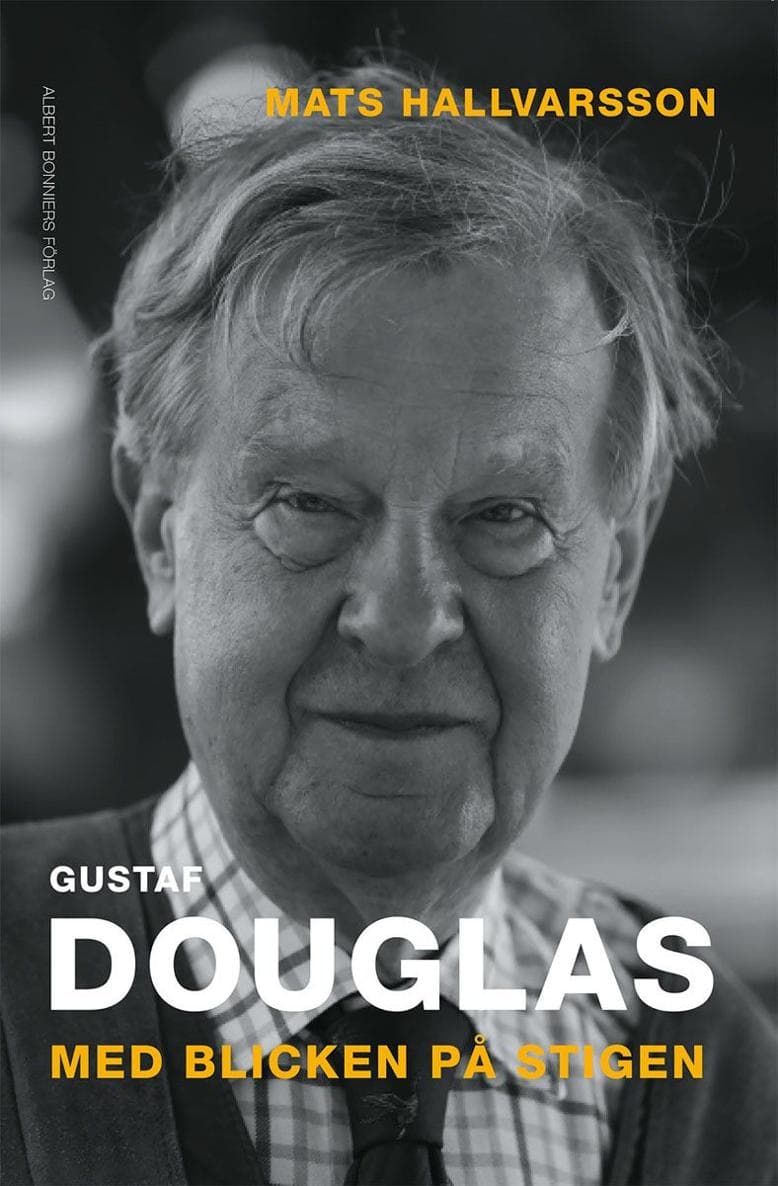
Gustaf Douglas
172 highlights · 15 themes · 26 cited people/companies
Swedish industrialist and investment company founder who built Latour into a major active ownership platform across industrial and security companies.
Due diligence must uncover what's actually in company archives before paying premium prices.
It's risky to mix money and personal relationships - bad partnerships require expensive exits.
Stripped of inflated accounting, acquisition prices should reflect true operational value.
“At home at the kitchen table, we agreed to try to fly significantly higher. I wanted a publicly traded company as a base for an investment operation in industrial companies. My role would be an active owner, not voting with my feet but taking responsibility for governance and control with a strong confidence in my own ability.”
“My personal experiences with borrowing have greatly taught me in this regard. For example, we do not believe that a chain-linked company group reduces risk, such as forest+saw+joinery, but rather that the risk obviously becomes higher with great dependence on a single industry area. We do not want to take particularly high risks. We want to be sure to be able to preserve our traditionally shaped ownership where we f…”
“Even though my family has a long history, it has never developed into a dynasty or ownership aristocracy. Ownership has always been linked to land and farms to be responsible for and pass on within the family. This has been done with great feeling, but also with the unimaginative traditionalism that sometimes characterizes the land-owning nobility. For me, the land heritage has been a cornerstone and a driving force…”
“My analyses of the prospective companies gave me a wish list. We wanted an ownership position in the rubber company Trelleborg for its stable operations, and therefore good dividends, to live on, furthermore the undervalued Boliden and Ahlsell to turn them around, and the majority of the security company Securitas for future long-term development. It would also be good to have an option on the skilled textile compan…”
“Over the years, I have gained both a little and a lot of respect for money. They can be measured in so many different ways, such as in purchasing power and the power to decide over others, or in the ability to invest in one's own and others' projects and dreams. I find it so incredibly easy—perhaps too easy—to identify with and be captivated by the enthusiasm of entrepreneurs. It gives me a fantastic recharge of pos…”
“Bo Sandell's investment company Skrinet was listed on the stock exchange in 1977 and quickly acquired positions in nearly a hundred small and medium-sized companies as well as a couple of larger stakes in big businesses. He was very skilled at winning the trust of family business owners and solving their succession problems in high-tax Sweden at the time, under the threat of employee funds. Skrinet grew, restructure…”
“What distinguishes these leaders, among other things, is an almost supernatural ability to understand and develop the culture that exists in a company. They listen to it and become catalysts. As owners, it is important to capture those who have this catalytic ability. They are unique in being able to unleash the creative in the company and create confidence. It is difficult to move forward if many employees worry ab…”
“I have a very firm belief that those who work in our companies should never ever think that jobs are filled on any basis other than competence. To make this credible, we in the family should never make a career in the companies. I am a strong opponent of the idea that owner children should have more or less guaranteed positions in the family’s businesses. I believe this not least for the sake of the owner children a…”
“Having an intuition for finding so-called "good people" to collaborate with is simply a key explanation for my successful sphere-building. It's a skill that, fortunately, improves with age.”
“If you want to put a job title on me that explains what I have been doing during the days of the last forty years, you come pretty close with the label board worker. An endless amount of my time has gone to reading materials, preparing materials, leading and participating in board meetings. Meetings and decision-making were my everyday work.”
“I gained an understanding that financial management at its best can be a kind of humble art form that builds material resources for creative activities.”
“The years have taught me what constitutes a good board and good board work. With few exceptions, a principal owner should be the chairman in the companies he or she owns. It is, so to speak, the physical and mental manifestation of the ultimate responsibility - "the buck stops here," as the Americans say. It is also the expression of an active and lively interest in how the company is managed. Leading board work wit…”
Lotta Engzell-Larsson
Shares Gustaf Douglas, Boliden, and Sweden.
Anders Ström
Shares Gustaf Douglas, Sweden, and Securitas.
Peter Andersson och Tommy Larsson Segerlind
Shares Sweden, Wallenbergs, and DN.
Erik Palm
Shares Securitas, Stockholm, and Germany.
Alain Jemain
Shares Sweden, Volvo, and Germany.
Unknown
Shares Sweden, Germany, and grandmother.
“In my younger years, I often kept my gaze fixed on the peaks I wanted to conquer. Sometimes I stumbled significantly along the way. On a few occasions, I seriously injured myself. As I write this, I am seventy-eight years old, and my life's journey is nearing its end. I have learned two things. To keep my eyes steadily on the path without losing sight of the peak, and that the journey becomes much easier in the company of others.”
“As we eventually entered the English Channel, we were struck by the horrors of war. Those sights came to balance my boyish interest in military achievements and warlike heroes for the rest of my life. M/S Industria frequently changed course between various shipwrecks where masts and smokestacks stuck up from the sea. We saw the white cliffs of Dover, though without the significance they would later hold for me as a symbol of freedom for Britain's decisive contribution where tyranny faltered.”
“When I begin my life in Sweden, I am eight years old and naturally a child. But it can be said that for those who had responsibility, I am a child more as an object for upbringing. In my childhood and youth world, my father will be absent for long periods due to travels and long-term foreign postings. My mother will occasionally be with him in a foreign land. Therefore, other people and their values came to play a significant role in my life.”
“When I begin my life in Sweden, I am eight years old and naturally a child. But it can be said that for those who had responsibility, I am a child more as an object for upbringing. In my childhood and youth world, my father will be absent for long periods due to travels and long-term foreign postings. My mother will occasionally be with him in a foreign land. Therefore, other people and their values came to play a significant role in my life.”
“When I begin my life in Sweden, I am eight years old and naturally a child. But it can be said that for those who had responsibility, I am a child more as an object for upbringing. In my childhood and youth world, my father will be absent for long periods due to travels and long-term foreign postings. My mother will occasionally be with him in a foreign land. Therefore, other people and their values came to play a significant role in my life.”
“The atmosphere around us children was gloomy. An episode that stuck in my memory was a New Year's Eve at Stjärnorp in the early 1950s when we four siblings had been promised to be awakened for the stroke of midnight but would have been forgotten if it hadn't been for our good fairy, the housekeeper Julia. She woke us up, and we went to the stairs down to the library. We stood there, as the closest relatives sat and talked about Carl's (dad's) kids. We listened, became increasingly depressed by the conversation, and eventually started crying and went back to bed. Afterwards, we reached a kind of silent agreement not to forget. Over the years, this event has become a shared reminder to support and encourage each other in difficult times. However, relations with my brother Philip became difficult, and we no longer have any connection.”
“At Broms School on Sturegatan, I found companionship and openings towards another and more tolerant adult world. My best friends became Gustaf Lindencrona, Gustaf Qvennerstedt, and Magnus af Ugglas. I spent a lot of time after school at the homes of both Gustafs. There, one could be in peace while the parents were positively engaged and encouraged their children. I discovered that my defense of corporal punishment was the defense of a bird in its cage. I promised myself never to lay a hand on my children if I were to have any. For me, it was a joy to be at home with these families. What I saw and felt had a significant influence on how my life and values would turn out to be. However, the company did not make life easier at home, as I began to strongly doubt authority of a violent kind.”
“We liked to spend our free time sitting on the floor with games and play, especially at Gustaf's home. We combined his impressive collection of ship models into fleets that fought for or against various political alliances, invented by us to balance the power relations. The Swedish Fleet Association had developed bases for naval war games in different tables for the ships' firepower, speed, and protection, so it was just a matter of setting up movements, firing, and measuring damage for us. This was determined using dice rolls. Extensive records were made of the damage and the effects on the remaining ships' firepower and speed. The games contained a considered balance between luck and skill, making it quite realistic, except for the fact that we did not include the decisive importance of aircraft carriers and aviation for the outcomes of modern naval warfare. Today, some ship models are in my study, and I easily recall the fervor and seriousness of our play.”
“All the "private students" would be tested on all subjects in late spring. Jane Lindencrona kept a friendly watchful eye on both her son Gustaf and me. Gustaf was very nervous despite being the brightest in the class, while I, strangely enough, hardly even thought about what awaited at home if I didn't get in. I think that was why it went very well. Mother Lindencrona spoke several times about this calm of mine. I actually believe she thereby strengthened my self-image—that I gained further calm in the face of expected trials and difficult situations, a kind of destiny-laden determination to endure and get through. But when the new school started, the order was soon restored with Gustaf Lindencrona at the top, Magnus af Ugglas doing well, and me in the lower half. My friend Gustaf Qvennerstedt went to another school, but we continued to socialize.”
“In 1950, my father became Sweden's first envoy to the independent Indonesia, and together with a couple of colleagues, he established diplomatic relations under rather primitive conditions. For two years, my mother lived half the year in Sweden and half in Indonesia. I was informed that I would start the third grade at the Sigtuna Foundation’s Humanistic Gymnasium (SHL), which today corresponds to seventh grade, and live in the dormitory Kvarnbranten. It was terrible news.”
“Peer upbringing occurred, also in its form of bullying. I have never been able to understand how adults can believe that children in puberty, filled with their own problems, could develop any talents for raising other children. Many of the teachers at SHL were among Sweden's best in their subjects, but they lived in a bright world of classical educational ideals and idealistic humanism. They rarely saw what happened beyond the classrooms, on the schoolyard, in the corridors, at night, out in the woods, or at the quick moments when unnoticed pinches, hits, or insults could be delivered. For many of us, this was part of everyday life and left its marks.”
“In my case, the bullying had a brutal solution. I grew, became strong, vigilant, and so ruthless that I could take revenge on the tormentors one by one. It happened so thoroughly that they didn’t try again. Together with some friends, I formed an opposition against the bullying culture, discussed it, and questioned it in front of teachers. We defended the younger students against bullying and quite successfully tried to break the loyalty to the tormentors. We argued that it was right to tattle and not right to suffer in silence. In retrospect, I have understood that most of our tormentors came from difficult circumstances we were unaware of. A school psychologist would have been good in that situation. But the school turned a blind eye. I remember a late evening when we, with pounding hearts, searched for a bullied friend, fearing to find him hanging dead from a tree. He had run away, but he returned to school, went far, and now lives a good life. These memories are difficult for me to talk about. I was harmed by the bullying, and it is important to say it as it was. I took revenge with my fists, and that is part of the shame, but my desire for revenge on old tormentors has been gone for decades. I feel no urge to remind about past wrongs.”
“Reading had been an important part of my life since the age of six. I binge-read lying on my stomach in bed with the flashlight hidden under the covers, long after the goodnight order.”
“My life, on the whole, was beginning to shape up really well. I was a privileged upper-class boy in materially acceptable condition, on my way through good schools towards a good life, although the emotional quality of the care provided by the upbringing council was second-rate. There was a lack of normal, close, warm, and loving relationships in what children usually call home. The upbringing council's efforts also included keeping me occupied in the summers, not in the way of children, but more as part of my upbringing. During the 1950s, the solution was to send me to Germany for stays with various relatives.”
“One memorable summer, I visited my mother's side of the family, the von Bülows in Düsseldorf-Lohausen. Uncle Niels was the manager of the Gerresheim glassworks, and he and Aunt Lily took care of me with friendly attention. One day he took me to a coal mine with the words: "There are so many firm opinions about miners being overpaid troublemakers. It's good for you to see how they work." We went down a couple of hundred meters in the mine and crawled through the galleries to a place where the coal seam and ceiling height were not even a meter. There, a machine moved back and forth, tearing down coal. Where the machine couldn't reach, half-naked men lay hacking away in the heat, blackened by coal dust. I received a thorough presentation of the entire technical system for extraction and transportation, but what has never left my memory are those blackened half-naked men. It was a sudden and impactful experience for a schoolboy who had hitherto gotten his images of real life from the sheltered world of books and home.”
“Taking responsibility for other people's most common daily survival needs gave me an entirely unknown sense of life's fragility and the conditions under which "these least of our brethren" are forced to struggle against incomprehensible illnesses. From my own normality and with responsibility, providing them care and humanity required endless calm and patience and is one of the most important things I have done in my life.”
“Snörmakare Lekholm får en idé, the great depiction of the Swedish class cycle.”
“Then the miracle happened. Herbert Tingsten took me seriously. He treated me as an equal adult, and the discussion became elegant and thorough. The amazing thing was that he made me grow in the moment, pushing my thoughts and arguments more than anyone had ever managed before. It was a star moment in life. When the guests left us, I had gained some reluctant respect from the family for my participation in the debate. I had found a great role model in the process.”
“Military exploits are part of the family's folklore. The family annals are filled with marshals, generals, and officers, and my own grandfather was a well-known general with significant command positions during a long life, as well as an eloquent and publicly debating military man. My own disposition was non-military, except for a boyhood fascination with war and heroics on the battlefields, which is why I was not at all inclined toward a military career.”
“Military service went well, and I am glad that I made an effort for the best possible result, it simply became more fun, and the time passed faster. I was quite proud of my final score of nine in suitability. But a downside was that as a soldier in Linköping and Uppsala, you were hopeless on the dance floor because there were pilots and students to compete with.”
“Then came freedom. A strong sense of liberation overwhelmed me when I had completed my exams and military service with good results. It was an experience that fundamentally was not about freedom to, but rather from—authorities and constant directives on how I should be. Here was fertile ground for a need for revenge that could now sprout. In slightly melodramatic terms, I wanted to take destiny into my own hands and prove that I was capable.”
“I was captivated by the American spirit of believing in the freedom to create one's own success, although gradually tempered by the Swedish view of social responsibility and humanism. At the School of Economics, I realized in the company of fellow students from wealthy industrial and financial families that money was a tool for increased freedom of choice. This perhaps somewhat stark attitude became a strong driving force in my studies and career. My longing for freedom was linked to the pursuit of financial independence.”
“It was not a given that I would start at the School of Economics. My academic inclination rather suggested that I would become a history teacher or something in that direction. But it was entirely my own decision, met with some snorts from the family. One reason was my growing interest in companies and stocks. In addition to my voracious appetite for history, during the last years of high school, the world of companies and company founders emerged. Out at Parkudden on Djurgården, where my grandparents lived, there were plenty of anecdotes about the neighborhood, the Wallenberg’s Täcka Udden, Torsten Kreuger's villa with a large motorboat moored at the dock, the Bonnier villas, and the Thielska Gallery. It was a concentrated piece of Swedish business history that I absorbed.”
“There is something strongly sympathetic about the way many adult Americans address the younger generation. There exists the belief that conversations with young people are not a waste of time.”
“My breach of the family-founded authority naturally reached my grandmother and grandfather, and I was called down to Stjärnorp for reckoning. My grandmother began with strictness and one-sidedness, it was law without gospel. Every attempt to lay the responsibility for the bad relationship on both of us was completely in vain. It was I who had to conform and obey. It was that simple. We went on for a long time without my grandfather saying many words. Then he asked to speak with me alone, and we went into his study. I was upset and in despair. "Why do I always have to back down, why is it always me who has to crawl to the cross?" I wondered. Then something happened that became one of the most emotionally charged memories of my life. My grandfather turned to me with tears streaming down his face: "Because you are the stronger one." The aggression drained from me, and I found the strength to take the first step.”
“It was never entirely good with my father, but we found a modus vivendi that was civilized. The incident and grandfather's words shattered the last shackle to parental authority and became the final step towards a life of my own in freedom, a memory my thoughts touch upon in contemplative moments. I can only marvel at grandfather's empathy in his son and grandson's relationship. That I would have been the stronger was unthinkable, but it naturally reveals a wisdom that comes to the old about how generations follow generations, take over, and succeed—not without sacrifice. I have often wondered how our relationship would have developed if my father had lived longer, had successes as an ambassador in Brazil, and ended his diplomatic career in Spain, as he dreamed of. Perhaps his negative outlook on life would have changed then, and he would have dared to show that he liked me.”
“It was a wonderful feeling to start studying at the renowned school. The students had very different backgrounds, which created a rare dynamic in the collaborative work. At that time, my type of foreigner was rare; it would take decades before talented Eastern Europeans and Asians would compete. The most noticeable category outside the Anglo-Saxon was the French, with rigorous training from elite schools in Paris such as École Polytechnique and École des Mines. They interacted a lot with each other and had their own lunch table where French was spoken. I became friends with a French section mate, Alain Rondest. We said we would astonish the world when the time was right.”
“Harvard's study methodology was phenomenal and suited me. It was about reality, solving concrete problems, and gaining the best theoretical experiences. Case analyses were ongoing all the time. It was truly liberating to know that there was never just one correct analysis—a problem could be solved in different ways. But there was one conclusion that was almost always wrong: It was not right to dismiss someone even if the problem seemed to lie there. If the subject was Production, it was not necessarily the case that the course of action was strictly about Production. It often happened that the class discussion steamed in a certain direction for almost an hour until someone made a contribution that immediately got everyone to cheerfully steer in a completely new direction. Some of the classmates were truly brilliant, and it felt like a privilege to listen to them. The joy of experiencing others' brilliance undisturbed by personal envy is very enriching and was an important component for the future.”
“Eventually, and quite late, I realized what the game—because it was a game—was all about. There were good reasons why many Harvard students were quickly dismissed from their first job. We needed to learn the hard way that communication is everything.”
“Unfortunately, hierarchical principles apply in life. If the authorities don't know what oligopoly is, this becomes Your problem, not the WAC grader's or the boss's.”
“It was something of a disaster to arrive unprepared. I remember a dialogue between teacher and student: "How do you dare to come unprepared." Student: "How can you expect a student to work through a hundred pages of case material, work on a WAC and read some three hundred pages of recommended reading in one day." Cold response: "Nobody expects you to do all this – we expect you to exercise good judgment, and you have not." Good judgment was to help each other with the texts that were distributed in the study group, read the case studies where someone in the group had done a deep dive, and then go through everything for an hour or two where seriousness and levity were mixed.”
“Just before leaving for Östra Ryd's church, Elisabeth's mother, Lillan, took me aside and said, "Now you must not back out of this. You've had all the chances, but now it's too late." She truly sounded worried, and I—somewhat shocked by the intensity and the question—answered that I absolutely had no such plans. And I never have. At my seventieth birthday party, there were seventeen of us who had been at the wedding forty-five years earlier.”
“The honeymoon trip went to Stockholm, where we lived a life of luxury for a few days and stayed in Elisabeth's grandfather Wilhelm's one-bedroom apartment on Strandvägen. We had no need to travel anywhere. Soon it was time to move to Boston. We arrived a few days before the start of school and quickly rented a three-room apartment in Watertown, where there were many student accommodations a few miles from the school. Elisabeth applied and got a job as a receptionist at a steel construction company, A. O. Wilson's Structural Steel. She got the job because her accent reminded them of Ingrid Bergman, and the owners were of Swedish descent.”
“Myles Mace had been involved in building Litton Industries—one of the first financial conglomerates. He was an expert in board work and corporate acquisitions. He believed that three professional categories should not be on industrial company boards: lawyers, because they thrive on conflicts, bankers, because they start with financing rather than operations, and consultants, because they always have more alternative solutions than exist in reality. One should absolutely collaborate with these professional categories but never let them have control over decisions”
“So Fuller says in an entirely ordinary tone: "But you have to remember one thing. If you don’t have humility, you will FAIL." Then he quickly walks out through the door. It's as if a bomb has gone off. After an eternity, the applause begins and continues for a long time. I never forget it. For me, that experience alone was worth the cost of the two years. Fuller had an amazing sense of people and leadership. He also had a special ability that is few are granted: When he spoke, people listened. He combined warmth and toughness in a unique way and was always clearly interested in challenging us students to elevate our potential. What he gave me was an invaluable insight into the importance of humbly questioning myself and my actions.”
“Elisabeth and I persevered. Her salary paid for the food, and my stock trading covered the costs for studies and housing. Afterwards, I have often felt great joy that we managed Harvard together. It is unfortunate when one has not shared the struggles in life, especially when the reward for the effort comes as a shared blessing. After we had been married for a month, I thought it was time to celebrate with a bit of luxury for dinner, but I forgot an important detail. I rushed back to the supermarket and met Elisabeth. "Where are you going?" she asked. "To the grocery store," I answered, "I'm going to buy mayonnaise." To my surprise, she burst into loud laughter. She had the same thought but hadn't forgotten the mayonnaise. Four lobsters worked well too—and thereafter we celebrated our wedding anniversary every month with lobster, which was very cheap in New England. Thinking the same thought simultaneously is something she and I often do and marvel at even today, after more than fifty years of marriage.”
“Ludwig Erhard, the German finance minister and later chancellor and one of the fathers of the German economic miracle”
“Myles Mace”
“Writing about one's own life is like seeking out a person whose life story one knows well, to follow them in their footsteps backwards, but to discover that the goal of the journey was not at all obvious. I fumble my way back to a flow of events and experiences, each one a trace, a few steps on a journey that could have ended elsewhere, in another life. But I want to believe in rational life choices. To not lose my footing in thoughts about who I could have been, I let the drive for meaning organize my memories so that my life appears ordered in logical steps.”
“How else could I have ended up in the media world where I started as a freelance stock columnist, took on leading tasks in the development of TV2, and was the CEO of the Dagens Nyheter group—nearly ten years of dramatic and engaging operational work in total. Many years later, in 1988, I was trusted to be a board member and vice chairman of Sveriges Television.”