Management Avoidance as Operational Principle
Books Teaching This Pattern
Evidence
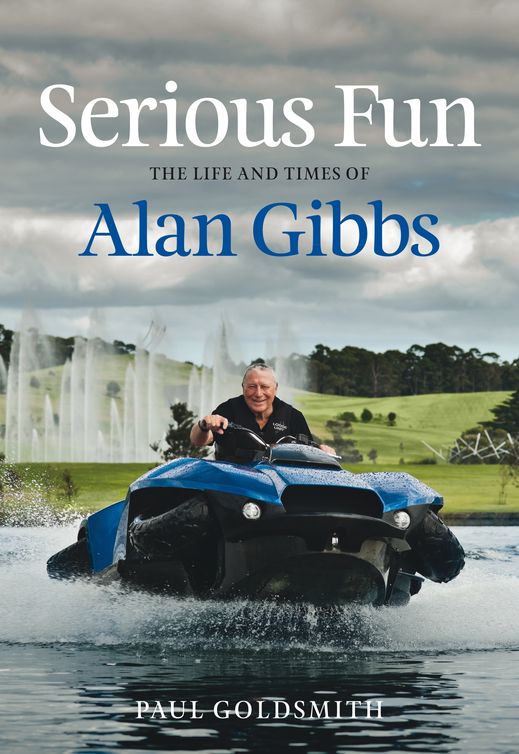
Serious Fun
Paul Goldsmith · 3 highlights
"The nature of Gibbs’ involvement in Forestry Corp was similar to that of his role at Atlas, Freightways and Bendon. His style was markedly different to John Fernyhough’s, for example, who as chairman of Electricorp spent most of his working week in Wellington and operated as an executive chairman. Gibbs gave Kirkland clear direction and then limited his role to challenging, provoking and guiding — and then stepping back to allow the chief executive to do his job. After an initial burst in February and March 1986, he spent no more than two or three days a month on the task. Gibbs says he’s always been ‘very cunning at avoiding the time-consuming business of managing people or of getting sucked into detail’. As a result he was able to cover an extraordinary amount of ground in business and public service, while still retaining enough freedom to travel for as much as three months a year and to think of new schemes. When most of Gibbs’ counterparts could tell him what meeting they’d be attending in a year’s time, Gibbs worked hard to avoid commitments that denied him spontaneity. Wherever he was, in New York or Harare, Gibbs kept on top of his half-dozen work streams with a steady flow of handwritten fax messages, channelled through Jacquie Turner at the West Plaza office."
"One of the joys of Gibbs’ style of operation — carrying out a relatively small number of large deals, then stepping back from ongoing management, interspersing business with frequent travel, and always allowing plenty of time for thinking and reading — was that he was free to pick up projects that interested him."
"He’d also worked out how he woulfd operate. He didn’t want to be running around putting together lots of deals. ‘If you’re working frantically,’ he reasoned, ‘you haven’t got your brain free to see the big opportunities that come from left field or the ability to devote yourself absolutely till a particular deal is done.’ He also wanted to be free to travel whenever it suited him. At the same time he’d realised that the further up the chain towards the biggest deals you got, the less competition there was. There were simply fewer players with the resources and the nerve to take on the largest prey. His philosophy, therefore, would be to concentrate on large deals. The pay-off would match that of 10 little deals, with less hassle."