Privatization Partnership Arbitrage
Books Teaching This Pattern
Evidence
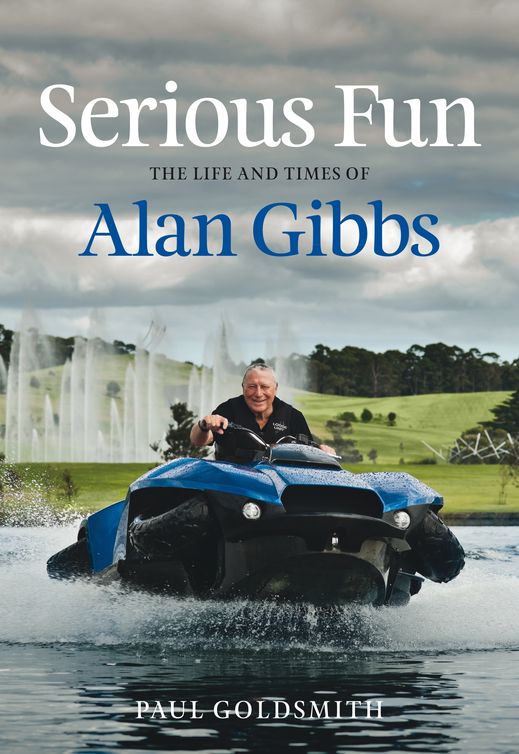
Serious Fun
Paul Goldsmith · 4 highlights
"Alongside Gibbs and Richwhite, two Fay, Richwhite men, Rob Cameron, a former senior Treasury official, and Steve Walker (‘Wakka’), a young thruster, rounded off the core of the team. For a while they called themselves the ‘Steam Team’, after a local brew in San Francisco (Anchor Steam) which they’d drunk in large quantities on American visits. In May 1989, a few months into their quest for Telecom, Gibbs was stunned to learn that Michael Fay had successfully obtained a 30 per cent stake in the Bank of New Zealand for Capital Markets, a public company Fay, Richwhite controlled. Richwhite remembers Gibbs yelling, ‘Why the hell did you want to buy a bloody bank?’ ‘He rang up a few hours later to apologise and said it was an amazing deal, well done; but Gibbsie’s first reaction was right.’ It emerged that the BNZ was laden with bad debts, mostly in Australia, making the investment a sour one."
"Meantime, Gibbs and Richwhite ruminated constantly on how they could make the maximum amount of money out of the deal. Initially, reflecting their different mindsets, Richwhite concentrated on extracting the largest possible merchant banking fee from the Americans, while Gibbs focused on gaining an option to take an equity stake in the business. ‘The real value opportunity is to become a principal,’ he repeatedly said. Later Gibbs joked that he was happy to ignore the fee if he got an option, but Richwhite quickly decided that they needed the option *and* the fee. But Gibbs’ quest for a slice of the action was critical to their relationship with the Americans; as merchant bankers seeking only a fee, they were servants and the Americans were masters; as partners they stood more as equals."
"In a decade of deal making, this one had brought Gibbs close to heaven. The $4.25 billion privatisation of Telecom proved to be the sixth largest deal done anywhere in the world in 1990.[24](private://read/01jrsfvkjy84rkprtbz9amfvj8/#rw-num-note-477273-050103421-24) The merchant banking fee that the Americans would pay Freightways and Fay, Richwhite, which they calculated at $52 million, was unmatched internationally that year. Gibbs was cock-ahoop. It had been a great team effort that combined the determination and deal-making brilliance of Gibbs with the breadth of talent and relationships that Richwhite had fostered at his merchant bank. The Telecom deal was also Richwhite’s proudest moment in business. He summed up their collaboration: ‘Gibbs wouldn’t have won it without us; we wouldn’t have made so much money without Gibbs.’[25](private://read/01jrsfvkjy84rkprtbz9amfvj8/#rw-num-note-477273-050103421-25)"
"Gibbs was happy now. As September 1993 drew near, when Freightways and Midavia Holdings had to buy their 224 million Telecom shares from the Americans at the privatisation price of $1.81, the share price was floating upwards towards the $4.00 range. Gibbs’ and Farmer’s pay day arrived when they outlaid around $200 million for their 112 million shares and immediately sold 67.5 million on the open market for $256 million (at an average price of $3.80 a share). They’d made more than $50 million instantly and still retained 50 million shares, with a market value of $210 million. Gibbs was convinced these shares would continue to rise in value; Fay and Richwhite, who had other pressing calls on their money, sold down their shareholding more rapidly.[41](private://read/01jrsfvkjy84rkprtbz9amfvj8/#rw-num-note-477273-050103421-41) Brilliant negotiations in 1990 and the insistence of a second round of restructuring in 1992 to set the company back on track had produced the highlight in a successful career of deal making. Real money is often made at the point of discontinuities: when seismic shifts occur in the economy, such as from a regulated environment to a deregulated one, or from state enterprise to privatisation. Such conditions provide the opportunity for a few smart entrepreneurs who are in the right place at the right time to prosper extraordinarily. But, as the purchasers of the Bank of New Zealand, New Zealand Steel and the Central North Island Forest discovered, there was nothing automatic about profiting from privatisations."