Market Concentration Then Expansion
Books Teaching This Pattern
Evidence
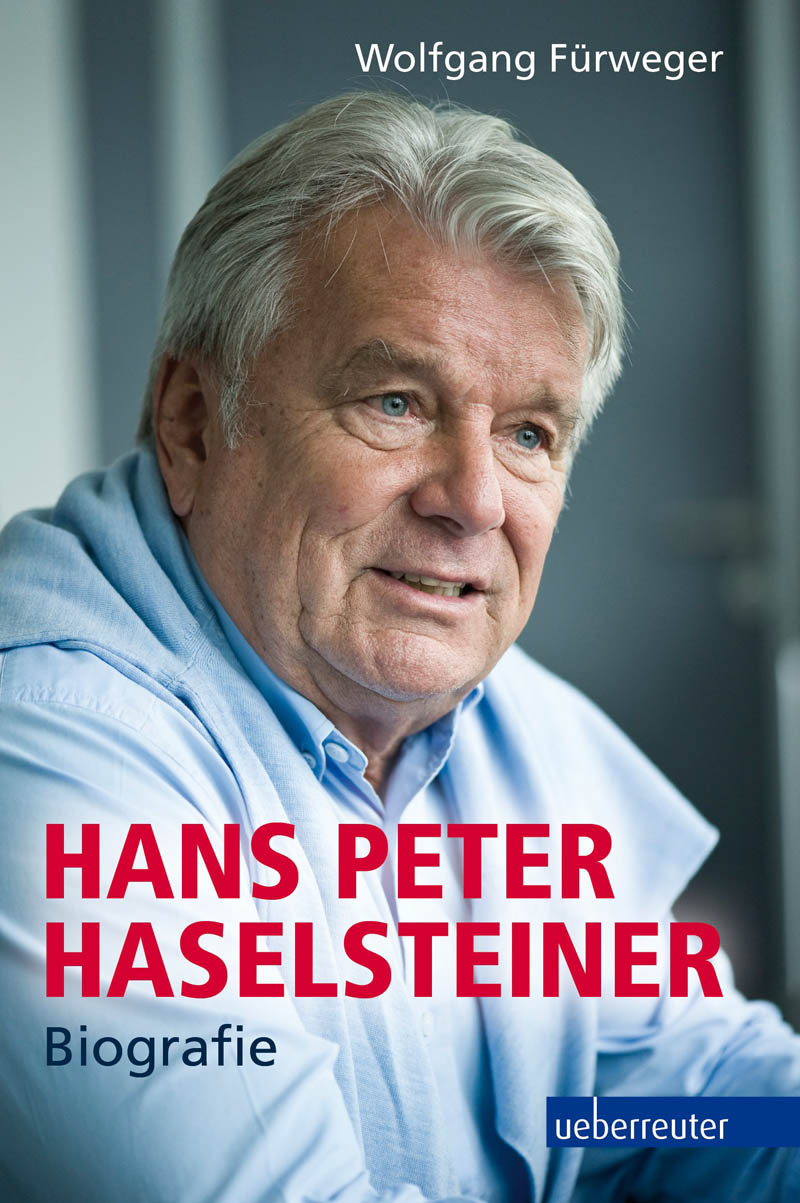
Hans Peter Haselsteiner Biography
Wolfgang Fürweger · 3 highlights
"At the beginning of 1990, Haselsteiner announced plans to tackle the market in the still-existing East Germany with five regional construction companies. He founded new German companies in Berlin, Dresden, Magdeburg, Rostock, and Schwerin, behind which, as he mischievously noted at the time, “by chance Austrian capital is standing.” He equipped each new East company with 100 million schillings (seven million euros) in initial capital. For the time, this was an enormous expansion of a domestic company into foreign markets. The company managed to raise the money at the Vienna Stock Exchange, where Bau Holding was listed from mid-September 1990. For his wife’s family, who had previously owned 40 percent of Bau Holding through the Carinthian Industrial Holding, the stock exchange listing was “a certain psychological problem,” Haselsteiner later admitted."
"The big goal was clear: Hans Peter Haselsteiner wanted to make his Strabag the largest construction company in Europe. To achieve this, he couldn’t avoid gaining a foothold in the continent’s largest market: Russia. The conditions seemed ideal in 2006. The company received its new, modern structure, which should make it flexible and powerful. Haselsteiner wanted to raise the necessary funds for expansion in the East from the capital market. At the beginning of 2006, he announced that he wanted to return Strabag SE to the Vienna Stock Exchange, which he had left in 2003 with Bau Holding. In the medium term, his family and the Raiffeisen sector, as core shareholders, were to reduce their holdings from the current 100 percent to up to 40 percent: “We will commit to a minority role because that belongs to a modern stock market standard. Stock markets do not want a majority owner,” Haselsteiner had learned from Bau Holding’s unsuccessful stock market appearance. But: “We will continue to be core shareholders—for as long as I live or have something to say.” As a reminder: the shares of the German Strabag, which still existed, had always been traded on the stock exchanges in Frankfurt and Cologne."
"The takeover of Strabag was entirely financed from the cash flow of Bau Holding. Haselsteiner then wanted to recoup the money through an IPO of Ilbau, which was supposed to take place within a year. To achieve this, he planned a restructuring of the group: Bau Holding was to be at the forefront. Below it, there should be three equivalent companies: the German Strabag, the Austrian Strabag, and Ilbau. According to the “Bau Holding 2000 Eurofit” plan, both the Bau Holding and the three subsidiaries were to be listed on the stock exchange. However, after skeptical opinions from major investment banks, Haselsteiner had to revise this plan: In the year 2000, only Bau Holding was to be listed on the stock exchange."

The Tiger
Andrew Paxman · 4 highlights
"Azcárraga’s main maneuver was to sell Radio Programas de México. His partner in the network, Clemente Serna Martínez, had been pressuring Azcárraga to define his stake. “Let me buy your share or I’ll sell you mine,” Serna went so far as to tell him. Since Don Emilio was investing most of his radio profits in TSM, and as many performers increasingly had to choose between working for radio or for television (with Azcárraga pressuring them to choose the latter), Serna was concerned about the evident conflict of interest. In 1961, Azcárraga completed the sale of his shares in RPM in favor of Serna and kept only a few stations, among them his beloved XEW and XEQ. As part of the deal, Serna ceded his stake in TSM’s stations in the provinces. Azcárraga owned shares in broadcasters outside RPM, and he sold most of these to his nephew Rogerio Azcárraga, who grouped these and others into the Organización Radio Fórmula."
"The expansion of the television business undertaken by Don Emilio was not limited to Mexico. The same year he sold his stake in RPM he acquired a station in Texas, which would become the cornerstone of the Spanish International Network, the first and largest Spanish-language television network in the United States, today known as Univision."
"Azcárraga and his partners invested first in San Antonio, the Texas city where he went to school and where his son was born. In September 1961, they put up $200,000 to acquire KCOR-TV (Channel 41), which had been founded in 1955 as the country’s first all-Spanish station and obtained most of its programming from TSM. Unfortunately for its founder, Raúl Cortez, it had never sold enough ads to be profitable. Fortunately for Don Emilio, Cortez—who had been resisting the idea of new shareholders—chose to throw in the towel just as the Mexican government’s complaints about TSM imports were reaching a climax. Close to the border, an affiliate station in San Antonio would be the perfect anchor for a string of acquisitions in the United States. Fouce and Noble took 20% each. Azcárraga kept the legal maximum of 20% in shares, but since his employees Anselmo and Kaufman took 35% and 5%, respectively, and since Noble was surely a front man for Don Emilio, he was in fact illegally controlling a majority of 80%. There were no objections from the powerful regulatory body, the Federal Communications Commission (FCC); this was, for the time being, too small a business to attract Washington’s attention."
"In 1963 it was evident that someone was needed to devote full time to operations in the United States, who could also lead the efforts to acquire more stations or licenses. That person could also develop the business begun by Teleprogramas of selling programs to English-language stations, for their broadcast in late-night slots and on Sunday mornings. He would have to settle in New York, home to Madison Avenue, where all the important decisions about advertising expenditures are made. Don Emilio’s man was René Anselmo. He appointed him president of SIN and sent him to Manhattan. The company set up in the ostentatious offices at 270 Park Avenue, a choice that began the tradition—continued by both Anselmo and Emilio Jr.—of choosing extravagant offices for their operations in the United States. The three men were very sensitive to the way the Anglo-Saxons looked down on Mexicans, so they always tried to maintain an imposing appearance, even if the costs were excessive."