Order for 500 When You Have 200
Books Teaching This Pattern
Evidence
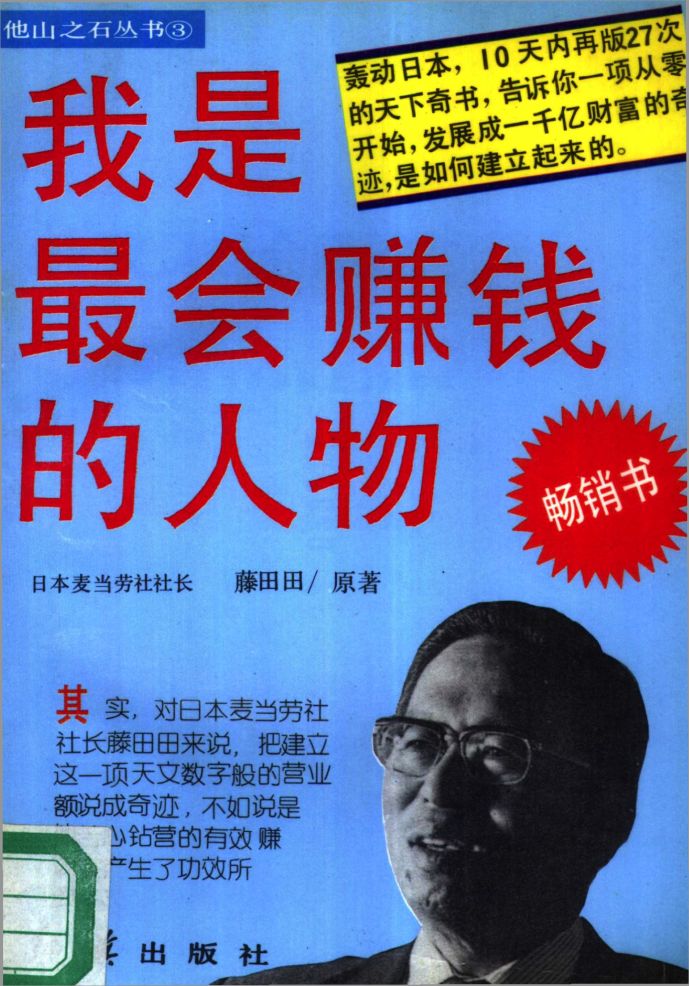
I Am the Person Who Makes the Most Money
Unknown · 2 highlights
"To align with the "drive-thru" shopping method, I decided to computerize the cash registers. Because traditional cash registers lacked efficiency and could not keep up with the times. Therefore, I entrusted the development of a new type of cash register to Matsushita Communications Industry of Japan. Matsushita Communications Industry agreed to take on the commission; however, they still asked me how many units I planned to order, as the cost would relatively increase if the quantity were too small. Around the year 1979, there were only about 200 McDonald's outlets in all of Japan, yet I boldly assured Matsushita Communications Industry that I was willing to order the new cash registers for 500 stores. My approach startled them. Once Matsushita Communications Industry received my commitment, they immediately began development and manufactured a new type of computer cash register system, called POS—Point of Sale. This computer cash register system, unlike traditional cash registers that make a lot of noise, and at the moment the money is inserted, the day's sales statistics appear, including the total sales amount and how many of each type of burger were sold. Moreover, the work hours of shift staff are also instantly displayed on the cash register system's screen. Thus, the head office could quickly grasp the sales conditions of stores nationwide. Before McDonald's adopted this computer cash register system, every morning from 10 a.m. to noon, ten female employees from the head office had to call each of the hundreds of stores across the country to inquire about the previous day's sales and then compile the statistics. When communicating by phone, it is often impossible to omit the pleasantries of greeting—employees would inevitably start the conversation with “Hello!" “Good morning,” or “How's the weather?” before getting to the point and reporting the previous day's sales. Such a method was not only a waste of time, but long-distance phone charges were also substantial. More critically, with telephone communication, mishearing or recording errors were inevitable. The head office would compare sales reports sent by the stores from the previous day with the numbers heard over the phone and often found discrepancies. However, since computerization, what used to take three hours of statistical work from 9 a.m. to noon is now completed from 9 a.m. to 9:05 a.m., with instantaneous delivery to the head office. This saves two hours and fifty-five minutes every day. Then, by laying off the ten employees who were making phone calls and saving on personnel expenses, and replacing the use of phones with computers entirely. This also saved 25 million yen in annual telephone expenses."
"I believed that by the watershed year, McDonald's in Japan must expand to have at least 100 stores, or else McDonald's in Japan would not be successful. Thus, I set the target customer for McDonald's to be the "young class who is not averse to bread and beef." Then, using 1975 as the target, I aggressively expanded the business. After the watershed year, with the post-war population in Japan continuously increasing, the young class who are not averse to bread and beef also increased year by year. Since then, we entered the whirlwind era of McDonald's burgers."