Restructure the Org Chart Every Expansion Cycle
Books Teaching This Pattern
Evidence
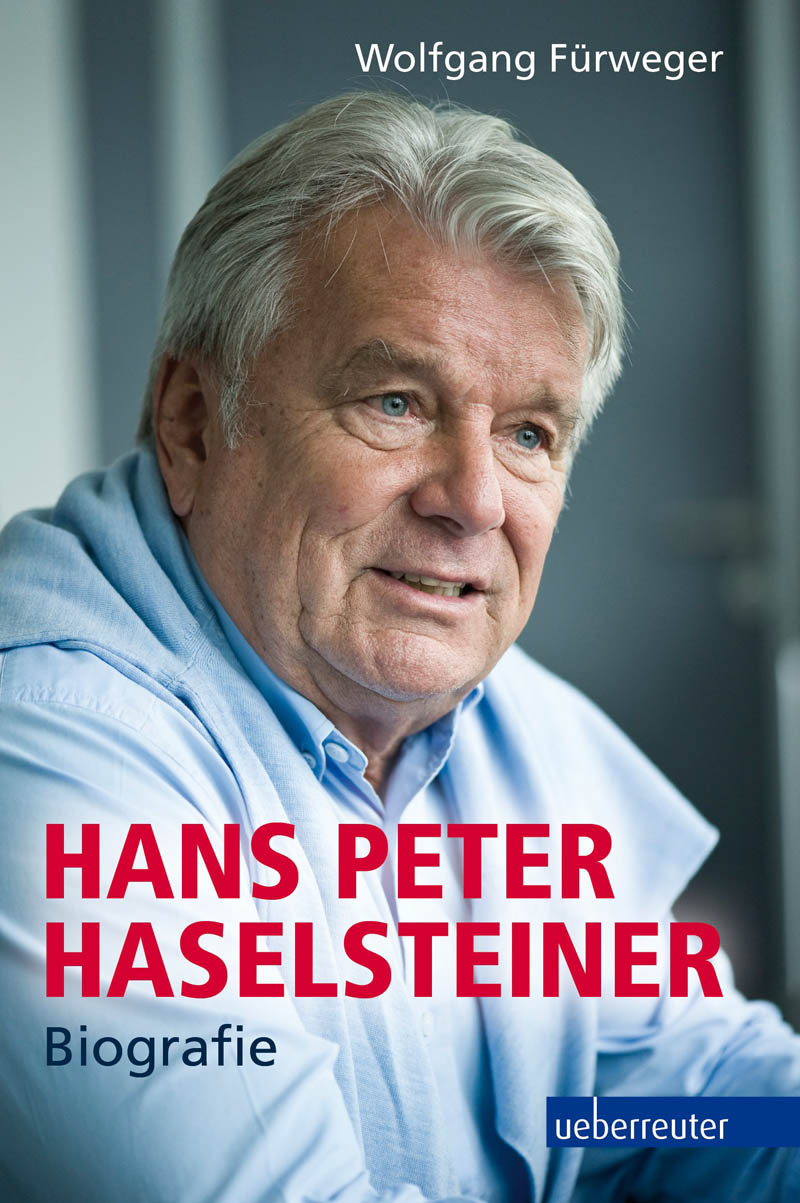
Hans Peter Haselsteiner Biography
Wolfgang Fürweger · 4 highlights
"For his expansion plans in the East and also due to an economic downturn during this time, which was one of the reasons for stepping abroad, Haselsteiner transformed his Ilbau Group from late 1986 from a difficult-to-manage conglomerate of individual companies and their various subsidiaries into a real corporation with streamlined structures and short decision-making paths: The parent company Bauindustrie Holding AG (BIHAG) was established, later simply called Bau Holding. Beneath Bau Holding were Ilbau GmbH, Negrelli Bau AG, and Asphalt & Beton GmbH. Each of these three subsidiaries, in turn, had several regional subsidiaries. With an annual turnover equivalent to just under 440 million euros and 5,000 employees, Bau Holding was the second-largest construction group in Austria at the time of its founding. With fresh capital from Girozentrale, in 1987, Haselsteiner ventured into Hungary, two years before the fall of the Iron Curtain: “We Austrians felt responsible for what used to be the monarchy.” With this move, he was ahead of leading domestic companies from other industries such as the car dealership Porsche Holding (Porsche Austria) or Red Bull, which only expanded their businesses to Hungary after the end of Communism."
"The takeover of Strabag was entirely financed from the cash flow of Bau Holding. Haselsteiner then wanted to recoup the money through an IPO of Ilbau, which was supposed to take place within a year. To achieve this, he planned a restructuring of the group: Bau Holding was to be at the forefront. Below it, there should be three equivalent companies: the German Strabag, the Austrian Strabag, and Ilbau. According to the “Bau Holding 2000 Eurofit” plan, both the Bau Holding and the three subsidiaries were to be listed on the stock exchange. However, after skeptical opinions from major investment banks, Haselsteiner had to revise this plan: In the year 2000, only Bau Holding was to be listed on the stock exchange."
"The big goal was clear: Hans Peter Haselsteiner wanted to make his Strabag the largest construction company in Europe. To achieve this, he couldn’t avoid gaining a foothold in the continent’s largest market: Russia. The conditions seemed ideal in 2006. The company received its new, modern structure, which should make it flexible and powerful. Haselsteiner wanted to raise the necessary funds for expansion in the East from the capital market. At the beginning of 2006, he announced that he wanted to return Strabag SE to the Vienna Stock Exchange, which he had left in 2003 with Bau Holding. In the medium term, his family and the Raiffeisen sector, as core shareholders, were to reduce their holdings from the current 100 percent to up to 40 percent: “We will commit to a minority role because that belongs to a modern stock market standard. Stock markets do not want a majority owner,” Haselsteiner had learned from Bau Holding’s unsuccessful stock market appearance. But: “We will continue to be core shareholders—for as long as I live or have something to say.” As a reminder: the shares of the German Strabag, which still existed, had always been traded on the stock exchanges in Frankfurt and Cologne."
"The split corporation with the Austrian Bau Holding and the German Strabag was merely an interim step for Haselsteiner. His long-term goal was to create a unified construction group of European dimensions. This group should not only handle the actual construction business, including planning, but also capture the profits of suppliers, such as the cement industry, and downstream areas, like real estate management. There was a whole series of acquisitions, mergers, spin-offs, restructurings, and new formations. Even Haselsteiner is unlikely to remember the exact number—external observers found it hard to keep track. Below are only the largest and most spectacular acquisitions listed—detailing every single expansion step of Bau Holding and Strabag, which later became Strabag SE, would exceed the scope of this book."