Sell Abroad Before Selling at Home
Books Teaching This Pattern
Evidence

Francois Pinault
Pierre Daix · 3 highlights
""So, Jean Leprince explained to me, François Pinault had to arrange things to anticipate the arrival of the ship.” As he sees me wince at his repetition of the word anticipate, he adds: "You can really highlight the word anticipation, his ability to anticipate greatly helped what we might call his luck. He sells the wood that is still on the ship before it has docked and which he has therefore not yet paid for, in order to be able to mobilize the drafts that will allow him to pay for the wood on its arrival.""
"Coniferous trees are used for structural timber. When they are of the best quality, they are used for joinery and decoration. François Pinault hires to organise his storage and equips himself with a representative, and then a second one who will approach the joiner-carpenters in order to expand his sector and create a network of transactions with the obsession of reaching the size that will allow him to obtain the best wholesale prices. When his clientele has become large enough, as he still doesn't have any cash flow, he comes up with the idea of taking pre-orders, in order to group them together and be able to buy more in bulk, which is naturally also in the interest of his customers. In 1964, with such methods, he reaches a turnover of one million (to be multiplied by seven to get the figure in 1997 francs)."
"François Pinault has indeed already been able to inspire confidence in Roger Puéchaldou, from Crédit Lyonnais in Rennes. And, already, he works with the money he borrows. His debt unsettles the augurs of good homes in the area who, reproducing their profits identically, do not think about modernising, neither by the benefits they garner, nor, especially, by attracting other capitals."
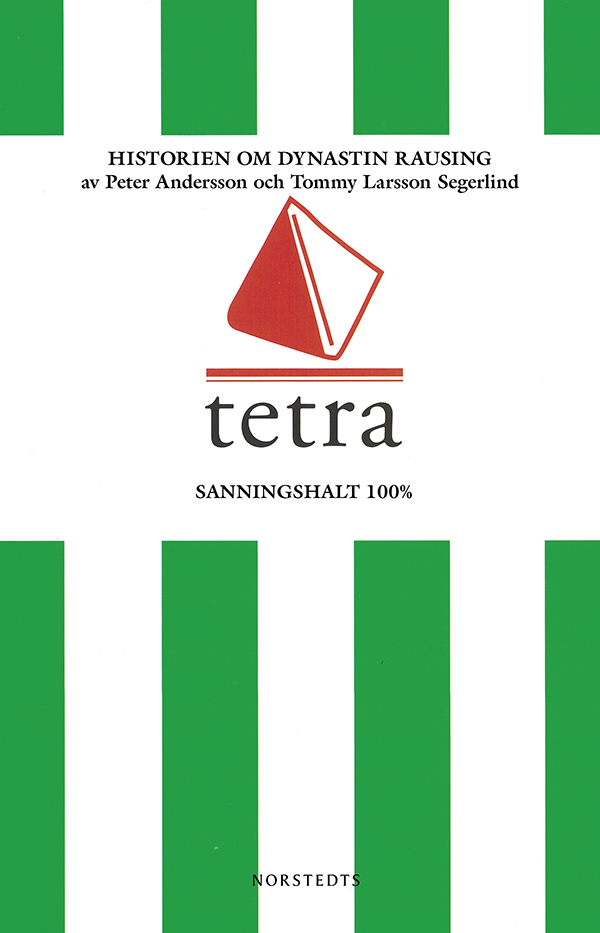
Tetra
Peter Andersson och Tommy Larsson Segerlind · 3 highlights
"The classic theory of how companies internationalize is based on the companies first establishing a stable domestic market. Once that is done and operations at home are consolidated, they start working on the export markets. It is a process that often takes several years. In the case of Tetra Pak, it was exactly the opposite. While they were working on the Swedish market, they tried to spread their products all over the world."
"A very important reason for the intense international marketing was Ruben’s very thoughtful strategy of solving the underfunding problems through rapid expansion in foreign markets. By living on long credits from domestic suppliers and simultaneously giving short credits to its customers abroad while keeping most of the money overseas, they were able to build up capital for further international expansion. The strategy was not at all foolish, although it went against previous experiences and textbooks in international marketing. However, it is also true that it was far from problem-free; expansion is costly – technology development and marketing are expensive. In the end, however, it proved to be a successful path to take, even though the stakes were incredibly high in Ruben’s game."
"“Erik. At 100 machines, we’re just breaking even, but in order to be able to repay the 20-30 million kronor that we owe Åkerlund & Rausing, it requires us to make 4-5 million a year. In other words, between 400 and 500 machines must go out this year. You have to travel everywhere yourself and stay so long in each country that you, for example, sell 100 machines in Brazil. And the whole of India is open. They should take hundreds of machines. You’ll have to give up everything here at home and instead be on the non-European markets for 9-10 months per year,” he demanded."