Sell Before the Floor, Buy the Next Thing
Books Teaching This Pattern
Evidence
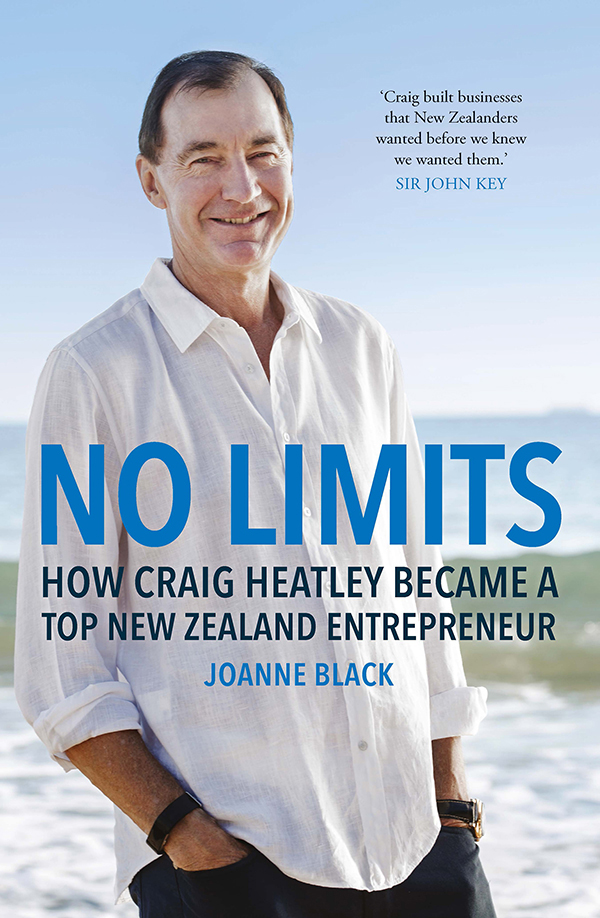
No Limits: How Craig Heatley Became a Top New Zealand Entrepreneur
Joanne Black · 4 highlights
"‘Rainbow would have completely crashed and gone like the others because it was a bubble company and the share price was totally in bubble territory and he’d paid big prices for all those stakes in the companies he had,’ Alan Gibbs says. ‘The clever thing he did was to sell out to Brierley before the crash so he must have had some presentiment of it. If he’d stayed five more minutes, he’d have been on his belly. He was lucky.’ Sir Bob Jones recalls Ken Wikeley saying to him, ‘You know, Craig has an almost animal intuition to know when to jump out of something.’"
"But Heatley needed something new. Brierley’s had offered him the role of heading their North American operations but working in a market in which he had no contacts held no appeal for him. While they never said it, he had the sense that Brierley’s had been disappointed by his decision not to go. Maybe it would have suited them to have him out of the way, he thought. Nothing else that interested him seemed on offer. Telecommunications and broadcasting were fields about which he knew nothing but gradually, and with full disclosure to Brierley’s, he started working on the project with Jarvis and Green. By late 1988, after about a year on the BIL board, the new project was requiring all his attention and he resigned from Brierley’s. He sold all his shares in the company, making a loss on much of the stock because he had bought at $3 after the crash, thinking it was a good buy, and was selling at $2–$2.40. But as the price gradually sank to 50–60c, he was simply relieved to have got out when he did. Now he was free, cashed up and keen for a new venture."
"Heatley was reluctant. His instinct was not to agree, but by then Rainbow had its back to the wall. Brierley’s had more mana, its executives had more longevity and credibility with the public and its campaign against the merger with Progressive had damaged Rainbow’s image and substantially diminished its market value. Rainbow had been overstretched and Heatley had been out-manoeuvred. ‘There is no question they intimidated us,’ Heatley says, although he told *Personal Investor* magazine afterwards, ‘I must add that if the situation was reversed, then I probably would have done the same thing.’[9](private://read/01jectdbce729daxqkxt7cbe8r/#mn14) Additionally, despite being willing to defend his ground, Heatley’s preference was the personal and cordial approach. He had never liked the public fight and knew that Rainbow could not win it. In fact, the battle of public opinion had already been fought and the outcome was that Rainbow shares were now trading for just over $2, about half their value since the battle for Progressive started. In April 1987, the wrangling was brought to an end with the announcement that BIL would buy 30 per cent of Rainbow Corporation from its directors. That would take BIL’s stake in Rainbow to 32 per cent and allow BIL to effectively control Woolworths."
"Matthew had to stand up and tell shareholders that the meeting could not go ahead. The injunction granted to Rainbow had been upheld. ‘I remember Bruce Hancox from Brierley’s coming up to me at the meeting and saying, “Craig, we want this animosity to finish. We want this fight to be over. You’ve won. We want to buy your 18 per cent and all this can go away.” So I said, “Well, there’s a price at which we’d sell.” And of course there was a price at which we would sell because, after all, we’d bought it in order to make money.’ The two companies negotiated, Brierley’s accepted Rainbow’s price and Rainbow came out of the deal with a $22 million profit. It was a lot of money and, equally important, it was a win."