“‘I don’t want a fixed package, and you can fire me on 24 hours’ notice,’ Bekker told Vosloo. But he added: ‘I want 3 per cent of the long-term value created above inflation.’11”
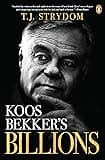
South African media and technology entrepreneur who built Naspers from a modest Afrikaans publishing company into a $50B+ global technology investment powerhouse, anchored by the century's best tech bet — a stake in China's Tencent.
Era
1980s–2010s South Africa: post-apartheid economic transformation, global pay-TV expansion, the dot-com era, and the explosive rise of Chinese internet companies.
Scale
Grew Naspers from a R6 billion to R530+ billion market cap over 17 years as CEO; founded M-Net, MIH, MTN, and M-Web; secured one of the 21st century's best tech investments in Tencent.
Ask this book
19 highlights
Suggested questions
Notes
“‘So I said, all right, I’ll come, but I don’t want a salary or a bonus or a car or a medical scheme or anything like that,’ Bekker told an interviewer later in life.8 The job on offer was Vosloo’s, as CEO of Naspers. The starting date was 1 October 1997.”
“‘From a personal point of view, the risk is high,’ he said in 2015. ‘Unless you’ve made some money early in life that can tide you over if things go wrong, you can actually land up in financial difficulties.’”
“His approach was a clever combination of reading the wind, throwing caution to the wind and embracing the winds of change.”
“‘Because you think as an owner, you don’t think as an employee,’ he commented later. ‘So you don’t say, I want to stay in a good hotel, or how could I improve my bonus? There is no bloody bonus.’”
“During his tenure, Naspers made a number of bad investments, a few mediocre ones, a few good ones and one that shot the lights out. The stake Bekker and his team bought in 2001 in the Chinese technology firm Tencent outperformed everything else, and was one of the best technology investments of the twenty-first century.”
“Bekker chose the latter. That year, he and his wife, Karen, bought Babylonstoren, an expansive estate in the Cape Winelands. The hundreds of millions he pocketed from the share sale came in handy – redeveloping a historic site into a world-class tourist destination does not come cheap.”
“‘When you make the first few million euros, it’s going to change your life totally. You can look after your parents, you can eat in any restaurant in the world, you can travel for a holiday ... it gives you liberty.’”
“A few years later, however, he did return to start a pay-TV company soon to be known as M-Net. When it became profitable, Bekker took the concept to Europe, where he stitched together a business that spanned more than a dozen countries on the continent, selling it for a tidy profit a few years later.”
“‘When the internet started, I completely underestimated it,’ he told an interviewer in 2016. ‘Only by about 1997 did we realise, here is something really big.’21 And by then, he was the CEO of a listed company with money to allocate to new ventures.”
“M-Net was only the first of the so-called M-group of companies he founded. The others – MIH, MTN and M-Web – each became what could have been a decent success story for any entrepreneur. Bekker took it to another level.”
“Ebbe Dommisse in an interview for the latter’s book Fortunes: The rise and rise of Afrikaner tycoons.6”
Themes
Fire Me on 24 Hours' NoticeNo Salary, No Bonus — Only Ownership UpsideHigh Personal Risk as Selection FilterRead the Wind Then Throw Caution to ItThink as Owner, Never as EmployeeOne Moonshot Bet Covers All the MissesWealth Converted to Legacy AssetsDiminishing Returns of WealthBuild It, Prove It, Export the ModelCEO as Listed-Company Venture CapitalistThree Percent of Value Created
People
Companies
Highlights
“A few years later, however, he did return to start a pay-TV company soon to be known as M-Net. When it became profitable, Bekker took the concept to Europe, where he stitched together a business that spanned more than a dozen countries on the continent, selling it for a tidy profit a few years later.”
“M-Net was only the first of the so-called M-group of companies he founded. The others – MIH, MTN and M-Web – each became what could have been a decent success story for any entrepreneur. Bekker took it to another level.”
“Ebbe Dommisse in an interview for the latter’s book Fortunes: The rise and rise of Afrikaner tycoons.6”
“‘So, we start on a certain day, and then there is a value, and then we measure it again after five years. And we say, if the value is only that, or only that plus inflation, then you take home nothing,’ went his conversation with Vosloo.16”
“When he retired as CEO seventeen years later, congratulations were certainly in order. Naspers had grown from its R6 billion market cap to more than R530 billion. And Bekker held nearly 16,4 million shares worth more than R1 000 each. An impressive haul, comfortably making him a dollar billionaire.”
“‘When the internet started, I completely underestimated it,’ he told an interviewer in 2016. ‘Only by about 1997 did we realise, here is something really big.’21 And by then, he was the CEO of a listed company with money to allocate to new ventures.”
“Gorilla in the Room: Koos Bekker and the rise and rise of Naspers,”
“‘From a personal point of view, the risk is high,’ he said in 2015. ‘Unless you’ve made some money early in life that can tide you over if things go wrong, you can actually land up in financial difficulties.’”
“Bekker chose the latter. That year, he and his wife, Karen, bought Babylonstoren, an expansive estate in the Cape Winelands. The hundreds of millions he pocketed from the share sale came in handy – redeveloping a historic site into a world-class tourist destination does not come cheap.”
“‘The sole benefit to Mr Bekker consists of an offer made on the day before assuming duty, i.e. on 31 March 2008, of an option in terms of the rules of the Naspers Limited Share Trust to acquire 11 687 808 Naspers N ordinary shares, which, as before, equals 3 per cent of the company’s outstanding shares,’ the company announced.”
“‘When you make the first few million euros, it’s going to change your life totally. You can look after your parents, you can eat in any restaurant in the world, you can travel for a holiday ... it gives you liberty.’”
“‘So, the first million is very important, but then there is a diminishing return. Between 10 million euros and 100 million, nothing much happens. Between 100 million and 200 million, absolutely nothing happens, right?’”
“During his tenure, Naspers made a number of bad investments, a few mediocre ones, a few good ones and one that shot the lights out. The stake Bekker and his team bought in 2001 in the Chinese technology firm Tencent outperformed everything else, and was one of the best technology investments of the twenty-first century.”
“‘Because you think as an owner, you don’t think as an employee,’ he commented later. ‘So you don’t say, I want to stay in a good hotel, or how could I improve my bonus? There is no bloody bonus.’”
“‘Beyond a certain point, money is pretty pointless and certainly not worth devoting your life to,’ he added.”
“His approach was a clever combination of reading the wind, throwing caution to the wind and embracing the winds of change.”
“‘So I said, all right, I’ll come, but I don’t want a salary or a bonus or a car or a medical scheme or anything like that,’ Bekker told an interviewer later in life.8 The job on offer was Vosloo’s, as CEO of Naspers. The starting date was 1 October 1997.”
“‘I don’t want a fixed package, and you can fire me on 24 hours’ notice,’ Bekker told Vosloo. But he added: ‘I want 3 per cent of the long-term value created above inflation.’11”
“This basically means giving the CEO the option of buying his or her company’s shares at the current price, but on a predetermined date in the future.”