Zodiac Liquors Initially Rejected
Limited-edition collectible lines only acquire value after the core brand's scarcity premium is fully established — launching them too early meets indifference.
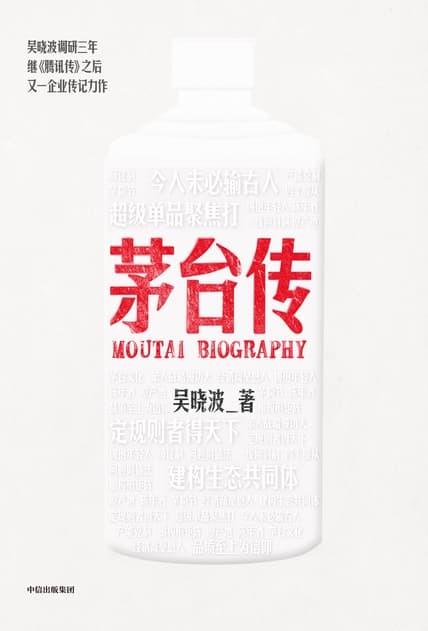
A Chinese distillery in a remote Guizhou valley that turns three ingredients — sorghum, wheat, and water — into the world's highest-market-value liquor company by weaponizing slowness, rewriting an entire industry's quality language, and treating a five-year production cycle as competitive advantage rather than liability.
Limited-edition collectible lines only acquire value after the core brand's scarcity premium is fully established — launching them too early meets indifference.
Revered tradition ('clear spring water') can be scientifically wrong — Moutai's masters eventually discovered that 'light' river water from the Chishui River outperformed 'heavy' spring water, showing that craft improvement requires willingness to overturn your own origin story.
“The natural conditions of Maotai Town are unique, with over 1940 types of microorganisms discovered in the core brewing area. Moutai Distillery established China’s first “Baijiu Microorganism Species Resource Bank.” When I went for a survey, the researchers told me that currently, more than 200 types of microorganisms have been definitively identified, and they can understand nearly 20 more each year. Hearing this m…”
“In the history of contemporary baijiu, Moutai’s most astonishing innovation was changing the evaluation criteria of baijiu quality that had been set for hundreds of years—from tasting to scent assessment. In the “Moutai pilot project” of 1964, Moutai people discovered three typical characteristics of Moutai and then defined “sauce aroma” as the fundamental feature of Moutai. At the third national wine competition in…”
“In my traveling experience, there are two most distinctive places globally where craftsmen gather to manufacture high-end consumer goods. One is the Jura Valley in Switzerland, and the other is Moutai Town.”
“From the perspective of national consumption power and aesthetic iteration, Chinese products with strong cultural symbols will achieve cognitive surplus, an indisputable law. From a competitive perspective, Moutai’s rise is related to its adherence to high pricing and super single-item strategy.”
“As a traditional craft producer with strong regional characteristics, Moutai distillery proposed the protection of the origin and core production area in 2001 and successfully applied to the National Quality Inspection Administration to establish China’s first geographical indication range for the liquor industry, the current “National Geographical Indication Product Protection Demonstration Zone.” This action provi…”
“There is a French proverb: “A good craftsman shows his creative talents within strict rules, while a great craftsman tries to create rules.” It reveals the first rule of business competition: those who control the discourse on rules control the world. Many brands are happy to construct their “mythical origins”: a long history, powerful ancestors, divine appearances, and exclusive secrets. In fact, upon deeper invest…”
““We are ‘slow individuals,’ and slow individuals have a slow strategy. We look at a problem slowly, think about it slowly, and at least spend ten years on it.””
“Even the market price of Moutai is determined by consumers. In the early 1980s, its retail price tag was 8 yuan per bottle, but due to tight domestic sales, the black market price was as high as 140 yuan. Even today, there remains a surprising gap between the manufacturer’s suggested retail price of Moutai and the actual market sales price, a rare phenomenon in China’s consumer goods sector.”
“The super single-item strategy strengthened consumers’ high brand awareness of Moutai liquor while creating ample and leisurely marketing and profit space for channel merchants. Globally, only Apple’s iPhone in the United States achieved similar success.”
“Moutai is a slow company. It takes five years to produce a bottle of liquor: one year from raw materials entering the factory to brewing, three years of storage, during which the base liquor doesn’t just sit; it requires blending adjustments after a year of storage, and then it must be stored for another two years before it can be used for blending. The blended liquor is then aged for another half year before factor…”
“This strategy is also a manifestation of the “fool’s” philosophy—not extending, not covering, not penetrating, but focusing solely on the consumer’s mind, calling for market enthusiasm with the uniqueness of the product. I did a study, and since 1982, the second-hand market price of 53-degree Feitian Moutai liquor has been steadily rising, with an annual compound growth rate of about 8%. This is an awe-inspiring fig…”
“The third of the “Moutai Six Principles”: Quality above all as faith At the Moutai Distillery, if there is corporate faith, then quality is the only belief. Even in extremely harsh and tumultuous times, this faith was not abandoned. During those years of “movements,” the leadership of the distillery experienced turmoil, yet the three technical deputy directors appointed in 1956 worked stably until retirement. This w…”
Patrick McGee
Shares Coca-Cola, Apple, and iPhone.
Edited by Nikkei Business Publications
Shares Apple, iPhone, and United States.
Peter Thiel, Blake Masters
Shares Nietzsche, Apple, and United States.
Tommaso Ebhardt
Shares Apple, United States, and Switzerland.
Barry Diller
Shares Coca-Cola and United States.
Chet Richards
Shares Apple and United States.
“When drunk and unaware of the sky in the water, the whole boat is filled with dreams pressing against the Milky Way. ——[Yuan] Tang Gong, “Inscription on Qingcao Lake in Longyang County””
“In the hymns to Dionysus, man is inspired to mobilize all his symbolic capabilities to the highest degree. ——Nietzsche, “The Birth of Tragedy””
“The ingredient list of Moutai liquor contains only five words: sorghum, wheat, water. I wrote “The Story of Moutai” just to answer one question— Why can these three most ordinary substances on earth brew the most complex and mellow liquor and achieve the liquor company with the highest market value globally and the most valuable manufacturing company in China’s A-shares?”
“This seems to embody two extremes of Chinese corporate growth—one starting from innovation, the other from tradition—and ultimately both become trillion-dollar giant companies. Their development histories are textbook-worthy.”
“Compared to the young and vibrant Tencent in Shenzhen, the Moutai Distillery is located in a valley in the mountains of Yunnan and Guizhou, a typical traditional craft-based manufacturing enterprise. Its evolution seems static, like its brewed wine, yet it is bold, slow, and in step with time. Its understanding of craftsmanship and technology is entirely different from that of the internet industry. If Tencent’s corporate history is an “explosion from 0 to 1,” then Moutai’s history is a brewing history transitioning from tradition to modernity, from “alchemy” to science.”
“Moutai wine uses only three ingredients: sorghum, wheat, and water. So why has wine brewed from these ingredients become a legend in contemporary product history? This question has three keywords. Complex and rich: Without Moutai, the world would lack a flavor known as “sauce aroma.” From the birth of the first bottle to its finalized form, it took 147 years, a result of continuous relay by several generations. This was not an inevitable process but one filled with all the twists and drama of product creation. Super single product: Moutai is in the first tier of Chinese baijiu, and its single product’s annual revenue exceeds 100 billion yuan. Globally, there are three similar “super single products”: Coca-Cola, Pepsi, and iPhones, but Moutai is very different in product characteristics. Highest market value: This is a company with a product gross margin of 93%, whose market value surpasses all factories, banks, and energy companies in China, making it a maverick in the capital market. Even today, some see it as a “disgrace,” while others consider it a glory.”
“The brewing process of baijiu involves raw materials, fermentation pits, water use, blending, and storage, among other steps. The brewing of a bottle of Moutai goes through 30 processes and 165 technical treatments, with the entire brewing process taking at least 5 years. Each of these steps presents opportunities for improvement, whether it’s optimizing processes, replacing materials, or improving efficiency and quality through technological means.”
“For instance, if drinking leads to headaches, the ancients surely didn’t know why. We now know that it’s due to an imbalance in the proportion of esters and the high content of aldehydes and fusel oils produced during fermentation. So by lowering their proportions, we can possibly produce less intoxicating wine. Ji Kelian discovered through experiments that after the base wine is stored for two years, the content of acetaldehyde and low-boiling sulfur compounds in the wine decreases significantly. These compounds, when high in content, bring stimulating and spicy sensations to the body and can cause discomfort like headaches after drinking.”
“Additionally, during the distillery era, Moutai emphasized using clear spring water in packaging. In general knowledge, spring water is certainly better than river water. In Ouyang Xiu’s “The Pavilion of the Inebriated Old Man,” there is the famous line, “Where the stream is deep, the fish is fat. Wine brewed from springs, springs fragrant and wine clear.” However, later Moutai masters found that spring water is “heavy water,” while the water from the Chishui River is “light water,” so light water is better for brewing Moutai. Therefore, the current Moutai is brewed with river water.”
“Another example is that the pits used for brewing Moutai are different from the mud pits used for producing strong aroma baijiu, with the former having walls built with local stones. From the old pits excavated later, it is found that most of the pits from the distillery era were gravel pits, which are well-ventilated and make it easy to dry distillers grains. Today’s pits are all made with neat strip stones.”
“There is a French proverb: “A good craftsman shows his creative talents within strict rules, while a great craftsman tries to create rules.” It reveals the first rule of business competition: those who control the discourse on rules control the world. Many brands are happy to construct their “mythical origins”: a long history, powerful ancestors, divine appearances, and exclusive secrets. In fact, upon deeper investigation, almost none of them withstand scrutiny.”
“The history of Chinese strong spirit (baijiu) is not very long, roughly maturing during the late 14th century at the end of the Yuan dynasty and the beginning of the Ming dynasty. The distillation technique of baijiu is not originally from China but was learned from the Persians in the Middle East. Li Shizhen mentioned in the “Compendium of Materia Medica” that distillation techniques came from the Western world. There is much debate among academics on this, including my studies on Li Shizhen. Before the late Qing dynasty and the early Republic of China, literati and officials valued yellow wine, and baijiu was not considered elegant. In the early days, the prosperous regions for baijiu brewing were Shanxi and Shaanxi, with Sichuan spirits learning and innovating from them.”
“After the 20th century, Chinese baijiu was divided into two major schools, namely the Fen-type baijiu from Xinghua Village in Shanxi and the Luzhou-type baijiu from Luzhou in Sichuan. Moutai stands out as the baijiu that uses the most grain and has the longest brewing time, annually commanding the highest price, gaining fame during the Republic of China for winning awards at the Panama Pacific International Exposition. After the founding of the People’s Republic of China, Moutai was listed as one of the four “national famous wines” at the first national wine competition held in 1952, establishing its exceptional status. In terms of baijiu schools, Moutai should belong to the Sichuan-Guizhou branch.”
“In the history of contemporary baijiu, Moutai’s most astonishing innovation was changing the evaluation criteria of baijiu quality that had been set for hundreds of years—from tasting to scent assessment. In the “Moutai pilot project” of 1964, Moutai people discovered three typical characteristics of Moutai and then defined “sauce aroma” as the fundamental feature of Moutai. At the third national wine competition in 1979, the Chinese baijiu industry first distinguished major famous wines by aroma, initially proposing the four main aromas of sauce, clean, strong, and rice, which later evolved into twelve aroma categories. Henceforth, the baijiu industry entered an era of “one aroma ruling the world.” As the initiator of the “aroma revolution,” Moutai undoubtedly became the biggest beneficiary of this industry upheaval. It not only participated in establishing new industry evaluation standards but also became an independent school.”
“From aroma theory to national standards, and then to original location protection, Moutai Distillery has constructed an unbreakable moat and wall for the sustainable development of the company. For any enterprise, moving from excellent to outstanding, from a crowded field to “only me,” the possible paths are no more than two: ownership of patented technology and formation of industry rules. Moutai’s success on the second path can serve as the most real reference for all enterprises.”
“The third of the “Moutai Six Principles”: Quality above all as faith At the Moutai Distillery, if there is corporate faith, then quality is the only belief. Even in extremely harsh and tumultuous times, this faith was not abandoned. During those years of “movements,” the leadership of the distillery experienced turmoil, yet the three technical deputy directors appointed in 1956 worked stably until retirement. This was not the result of active perseverance by the company but was due to a special case: because of the special connection of the “Three Crossings of the Chishui River,” Moutai was favored by Premier Zhou Enlai and high-ranking generals. As early as during the founding ceremony of the nation, it was one of the designated national banquet wines. Moreover, in the fields of Chinese diplomacy and foreign trade, Moutai once played a unique role.”
“Even the market price of Moutai is determined by consumers. In the early 1980s, its retail price tag was 8 yuan per bottle, but due to tight domestic sales, the black market price was as high as 140 yuan. Even today, there remains a surprising gap between the manufacturer’s suggested retail price of Moutai and the actual market sales price, a rare phenomenon in China’s consumer goods sector.”
“During the planned economy era, the quality control system of Moutai was very strict. For the distillery, “quality is the greatest politics,” the enterprise could be non-profit, could have no scale—in many years, it was indeed in such a painful state—but the quality of the wine had to be guaranteed supremely. Over time, the “quality faith” integrated into the blood of the enterprise, becoming as unchangeable as a gene. When the market economy arrived, this “obsessive” insistence earned Moutai a huge number of loyal users.”
“Moutai is a slow company. It takes five years to produce a bottle of liquor: one year from raw materials entering the factory to brewing, three years of storage, during which the base liquor doesn’t just sit; it requires blending adjustments after a year of storage, and then it must be stored for another two years before it can be used for blending. The blended liquor is then aged for another half year before factory inspection and packaging. Therefore, it takes at least five years from raw material entry to packaging for a bottle of Moutai.”
““We are ‘slow individuals,’ and slow individuals have a slow strategy. We look at a problem slowly, think about it slowly, and at least spend ten years on it.””
“For many years, the Chinese market belonged to those who moved fast. In martial arts, speed is invincible. Slow companies and “slow individuals” found it difficult to stand in the center of the arena.”
“The natural conditions of Maotai Town are unique, with over 1940 types of microorganisms discovered in the core brewing area. Moutai Distillery established China’s first “Baijiu Microorganism Species Resource Bank.” When I went for a survey, the researchers told me that currently, more than 200 types of microorganisms have been definitively identified, and they can understand nearly 20 more each year. Hearing this made me a bit anxious for them: “At this rate, you probably won’t finish it in this lifetime.” The person smiled bitterly and said, “That’s the way it is.””
“Zeng Guofan used this method to fight the Taiping troops. He said, “Only the most clumsy can win over the most skillful in the world.” “Those with many desires surely lack the spirit of generosity, those who talk much surely lack sincerity, and those with much bravery surely lack cultural elegance.””
“In the past 40-plus years, the Chinese liquor industry has gone through three “king eras”: From the 1980s to the mid-1990s was the “Fen Leader” period, where Shanxi Xinghuacun Fenjiu was the first liquor company with an annual production of over 10,000 tons, winning by scale. From 1994 to 2009, Wuliangye began to dominate the field. It successively incubated more than a thousand sub-brands, winning through channels and brand matrices. Then, it entered the “Moutai era.” During this period, China’s per capita GDP crossed the $10,000 mark, the new middle class led consumption upgrades, and value-for-money replaced cost performance as the new core competitive factor.”
“From the perspective of national consumption power and aesthetic iteration, Chinese products with strong cultural symbols will achieve cognitive surplus, an indisputable law. From a competitive perspective, Moutai’s rise is related to its adherence to high pricing and super single-item strategy.”
“Starting in 2014, Moutai began releasing limited edition zodiac liquors. Initially, they were not well-received by the market. However, as time passed, the brand’s value continued to expand, and zodiac liquors began to have collectible attributes, with prices rising in the secondary market. By 2023, the recycling price of the Ox zodiac liquor was around 3,400 yuan, while the price of the Sheep zodiac liquor, the one with the least production, reached as high as 28,000 yuan.”
“The super single-item strategy strengthened consumers’ high brand awareness of Moutai liquor while creating ample and leisurely marketing and profit space for channel merchants. Globally, only Apple’s iPhone in the United States achieved similar success.”
“This strategy is also a manifestation of the “fool’s” philosophy—not extending, not covering, not penetrating, but focusing solely on the consumer’s mind, calling for market enthusiasm with the uniqueness of the product. I did a study, and since 1982, the second-hand market price of 53-degree Feitian Moutai liquor has been steadily rising, with an annual compound growth rate of about 8%. This is an awe-inspiring figure, implying that Moutai has acquired the attributes of a hard currency, unaffected by economic cycles.”
“The “Book of Documents: The Counsel of Great Yu” says, “The human heart is precarious, the way is delicate, only refined and united, always maintaining the middle course.””
“The reconciliation of grievances between Moutai and other famous liquors is both a result of common interests and mutual recognition achieved through years of market competition. In this process, Moutai took the initiative to make concessions, opening up spaces, and eventually forming a relatively harmonious industry atmosphere.”
“As a traditional craft producer with strong regional characteristics, Moutai distillery proposed the protection of the origin and core production area in 2001 and successfully applied to the National Quality Inspection Administration to establish China’s first geographical indication range for the liquor industry, the current “National Geographical Indication Product Protection Demonstration Zone.” This action provides theoretical and legal support for the development of the sauce-flavored liquor ecological area centered around Maotai Town. In 2022, Ding Xiongjun, chairman of Moutai Group, proposed the construction of the “mountain, water, forest, soil, river and micro-organism” life community, further enhancing the concept of ecological construction.”
“In my traveling experience, there are two most distinctive places globally where craftsmen gather to manufacture high-end consumer goods. One is the Jura Valley in Switzerland, and the other is Moutai Town.”
“The Jura Valley is in southwestern Switzerland, adjacent to France’s Provence region. Its narrow, elongated shape spans only a few kilometers in width and over ten kilometers in length, featuring a snowy mountain lake and cottages on the slopes throughout. To the eye, it appears like a completely inconspicuous Swiss village. In the early 17th century, clockmakers from cities like Zurich sought refuge here, turning this backwater into Europe’s most famous gathering place for watchmakers, forming a “lineage.” Over 90% of young people born in the Jura Valley attend watchmaking schools. The watch industry there has more than 40 types of jobs, gradually forming a manufacturing ecosystem. Today’s world-class luxury watch brands, such as Audemars Piguet, Blancpain, Breguet, and Vacheron Constantin, all have factories there, with more than half of famous watch movements produced in this region.”
“In the history of human civilization, the latitude range of 25°-35° north is quite magical. The Yangtze River in China, the Nile in Egypt, the Euphrates flowing through Syria and Iraq, and the Mississippi in the U.S. all empty into the sea at this latitude. China’s Liangzhu and Sanxingdui, the Egyptian pyramids, and the ancient Babylonian kingdom all lie within this latitude range.”