Cook Industries Collapse
Even large commodity traders can fail catastrophically — Cook Industries' demise became a cautionary tale about concentration risk and inadequate hedging discipline in agricultural trading.
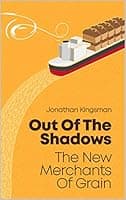
The ABCD+ grain trading oligopoly — a secretive cartel of seven companies (ADM, Bunge, Cargill, Dreyfus, Glencore, Wilmar, COFCO) that controls half the world's grain trade, where opacity is the product, optionality is the strategy, and feeding the planet is the leverage.
Even large commodity traders can fail catastrophically — Cook Industries' demise became a cautionary tale about concentration risk and inadequate hedging discipline in agricultural trading.
The industry learned that relying on certification bodies run by non-producers creates parallel bureaucracies that don't actually improve sustainability outcomes — results-based accountability works better than process-based compliance.
“Are there any other solutions that we may be missing and which we should be looking at to make supply chains more sustainable? There are two. First, we should be looking at different ownership and finance models. We should explore worker and producer equity models as ways to help the transition to a more sustainable food system that poses less risk for both producers and buyers. Second, Codex Alimentarius took healt…”
“Do you think a time will come when Rabobank will only finance commodities that are certified as sustainable? This year, we were the sustainability coordinator of a $2.5 billion revolving credit facility with green features. Customers are getting discounts on the interest rates they pay as long as they meet certain sustainability criteria. I suspect that, going forward, companies that aren’t green, or less green, wil…”
“Governments must stop the conversion of forests to plant oil palm. But having said that, oil palm is the world’s most productive source of vegetable oil. If palm is done correctly, it has the least environmental impact of any vegetable oil. There’s nothing else that can touch it. Expanding any other vegetable oil crop would have far bigger impacts on the environment than expanding oil palm. Oil palm makes it possibl…”
“You need to have optionality in your trading book to be successful in procurement. That means having third-party trades.”
“‘Foxhole Theory’. A fox will use one hole to go into its lair, but it will always have another way out. It’s about the alternatives in life that allow you to optimise your negotiation and your margin.”
“That rule still applies today: it’s better to keep facilities running, even at low throughput margins, than to close them. It’s better to try to extract some revenue to cover something against variable expenses than to have no revenue and still have to pay full overhead costs.”
“Small companies will continue to add value in countries and markets that are too small or too dangerous for the bigger companies to get involved in.”
“The weather is one of the most decisive factors in determining the supply of agricultural commodities. Market participants spend a huge amount of their time worrying about the weather.”
“In 1976, the French magazine L’Expansion called Louis Dreyfus ‘a commercial empire of which one knows nothing’. Pierre Louis-Dreyfus, the company’s president, invited Dan Morgan to lunch in his private dining room. The fish with cream sauce was apparently superb, as was the wine, but the journalist left without learning anything of interest about the company. Georges André, president of André & Cie – and the origina…”
“saw that your mission statement is ‘Growing a better world together’. I recently did a presentation to the bank’s executive board where I looked at the mission statements of the ABCD+ group. They all had similar statements; we’re aligned. Growing stands for sustainable, healthy growth, development and progress. A better world goes beyond our clients, employees and members and includes our communities and association…”
“Governments can also influence the prices of agricultural commodities and differentials between the prices of different origins. At the time of writing, the trade dispute between China and the U.S. has increased the price of Brazilian soybeans relative to the price of U.S. beans. Events can also impact price. For example, the outbreak of African Swine Fever in China has reduced Chinese demand for animal feed and had…”
“Out of an average 44,000 items in a U.S. supermarket, 40 percent contain corn, and 50 percent contain palm oil or one of its derivatives.”
Patrick McGee
Shares China.
Murat Lama
Shares China.
Andrew Rule
Shares China.
Brad Jacobs
Shares China.
Peter Andersson och Tommy Larsson Segerlind
Shares FAO.
Hidenori Itagaki
Shares China.
“Out of an average 44,000 items in a U.S. supermarket, 40 percent contain corn, and 50 percent contain palm oil or one of its derivatives.”
“ABCD group of companies, with ABCD standing for ADM, Bunge, Cargill and Dreyfus. The acronym, though, ignores the other three giants of the food supply: Glencore, COFCO International and Wilmar.”
“Together, ABCD+ handle just under 50 percent of the international trade in grain and oilseeds. On the processing side, they crush and process 35 percent of the world’s production of soybeans, with a total crush capacity of close to half a billion tonnes.”
“annual revenues of around $115 billion, profits of around $3 billion (in 2018) and over 150,000 employees. By some estimates, they handle 25 percent of the grains and soybeans produced by U.S. farmers, and every year, they trade as much as 140 million tonnes of agricultural commodities worldwide.”
“Publicly listed ADM is the second biggest of the seven, with annual revenues in excess of $60 billion, a market capitalisation of more than $20 billion and profits that touched nearly $2 billion in 2018. Founded in 1902, and NYSE listed since 1924, today the company has 40,000 employees, processes as much as 60 million tonnes of agricultural commodities each year, and sells into nearly 200 countries.”
“Commodity Conversations – A Brief Introduction to Trading Agricultural Commodities,”
“The conditions and timelines were specific and results based. We want to see results, not tell people how to achieve them. If we agree on the problems and what success would look like, the producers can find the best way to fix them. The fundamental question, however, is, ‘Why do we have certification bodies?’ The answer is ‘because governments aren’t doing their job to protect the planet for future generations’. Consequently, we’re creating parallel structures run by people who mostly don’t know much about producing products, much less about producing them sustainably. Certification is not the best”
“Governments must stop the conversion of forests to plant oil palm. But having said that, oil palm is the world’s most productive source of vegetable oil. If palm is done correctly, it has the least environmental impact of any vegetable oil. There’s nothing else that can touch it. Expanding any other vegetable oil crop would have far bigger impacts on the environment than expanding oil palm. Oil palm makes it possible to turn degraded land into an asset. But existing plantations can do better as well. Many oil palm plantations – and virtually all smallholder plantations – use genetic varieties that produce between half and two-thirds of what better varieties can produce. You could nearly double production simply by replanting poorer-performing plantations with better genetics. You’d also have more resistance to diseases. And you’d have shorter trees, which would make it easier for the producers to harvest.”
“My main motivator is my children’s future, but also the future of all other living things on the planet. This is literally about life on earth.”
“We need to bring together the best thinking to explore ways to address these issues. We need to look backwards – what solutions in the past didn’t work for reasons that may no longer exist? Would they work today? We need to focus on new technologies. However, the solution is not about finding a silver bullet. What are the best alternative proteins? What’s the lighting system that’s going to let us get away from the sun and soil? For the next fifty years, farming on most of the planet is not going to look a lot different than it does today. We will still focus on incremental increases in productivity per unit of land, water, labour or other inputs. But the model is likely to be similar to what we have today.”
“Are there any other solutions that we may be missing and which we should be looking at to make supply chains more sustainable? There are two. First, we should be looking at different ownership and finance models. We should explore worker and producer equity models as ways to help the transition to a more sustainable food system that poses less risk for both producers and buyers. Second, Codex Alimentarius took health and safety standards for globally traded food out of the hands of thousands of certification programmes nearly 60 years ago. Could a Codex Planetarius, run by the FAO, ensure a set of six to eight environmental performance standards for globally traded commodities?”
“In 1976, the French magazine L’Expansion called Louis Dreyfus ‘a commercial empire of which one knows nothing’. Pierre Louis-Dreyfus, the company’s president, invited Dan Morgan to lunch in his private dining room. The fish with cream sauce was apparently superb, as was the wine, but the journalist left without learning anything of interest about the company. Georges André, president of André & Cie – and the original ‘A’ of the ABCD group of trading companies – invited Dan Morgan to ‘an excellent lunch of brook trout in a village restaurant’, but all he got out of it was historical data. Although Dan Morgan wrote little about ADM – the new ‘A’ in the ABCD group after André exited the business – the company was no more open. When Dwayne Andreas became CEO in 1974, one of the first things he did was to eliminate a 27-person public relations department. He once famously said, ‘Getting information from me is like frisking a seal’. (2)”
“Hirschs or the Borns, the ruling families of the Bunge Company’.”
“The King of Oil, (3) Daniel Ammann”
“‘Foxhole Theory’. A fox will use one hole to go into its lair, but it will always have another way out. It’s about the alternatives in life that allow you to optimise your negotiation and your margin.”
“Glencore and Toepfer”
“You need to have optionality in your trading book to be successful in procurement. That means having third-party trades.”
“the A.B.C.D.+ (ADM, Bunge, Cargill, Dreyfus, Glencore, Wilmar and COFCO International)”
“Small companies will continue to add value in countries and markets that are too small or too dangerous for the bigger companies to get involved in.”
“saw that your mission statement is ‘Growing a better world together’. I recently did a presentation to the bank’s executive board where I looked at the mission statements of the ABCD+ group. They all had similar statements; we’re aligned. Growing stands for sustainable, healthy growth, development and progress. A better world goes beyond our clients, employees and members and includes our communities and associations. Together is important because, as a cooperative bank, we believe in the power of coalitions. Our strength lies in connecting people and knowledge. It’s much more than an empty slogan! This mission is part of our Banking for Food (B4F) strategy. It entails the meaningful role we want to play in food transition and how we can help feed the nine billion people that will be on this planet in 2050, while respecting planetary boundaries.”
“In terms of sustainable financing, which commodity presents the greatest challenges? If you look at my area of responsibility, most challenges are in cocoa and coffee, simply because of their level of complexity and the need to improve the livelihood for smallholders. We spend a lot of time on those two commodities, even though they’re much smaller in terms of volume than grains and oilseeds. Our challenge is to stop deforestation and prevent climate change, while feeding the world: how can those two objectives coexist? We have to embed sustainability in the business and our daily thinking. Our ‘sustainable toolkit’ includes services and financing from Rabo Foundation/Rural Fund, as well as the fund we established with the United Nations called Agri3 to combat deforestation and enhance the livelihood of smallholder farmers.”
“Do you think a time will come when Rabobank will only finance commodities that are certified as sustainable? This year, we were the sustainability coordinator of a $2.5 billion revolving credit facility with green features. Customers are getting discounts on the interest rates they pay as long as they meet certain sustainability criteria. I suspect that, going forward, companies that aren’t green, or less green, will still get financing, but they’ll have to pay a premium. It’s different for palm oil. The consumer pressure is different. We don’t finance companies that aren’t RSPO members. We may sometimes make an exception if a company isn’t RSPO certified as long as it’s committed to become RSPO certified and has put the correct milestones in place. We can help them on that journey.”
“Lenin once said, ‘Grain is the currency of currencies’. Money may not have value at the moment, but grain does.”
“The weather is one of the most decisive factors in determining the supply of agricultural commodities. Market participants spend a huge amount of their time worrying about the weather.”
“Governments can also influence the prices of agricultural commodities and differentials between the prices of different origins. At the time of writing, the trade dispute between China and the U.S. has increased the price of Brazilian soybeans relative to the price of U.S. beans. Events can also impact price. For example, the outbreak of African Swine Fever in China has reduced Chinese demand for animal feed and had a significant impact on the world’s import demand for soybeans. However, the most important factor that affects the supply and demand of a commodity is the price of the commodity itself, both in outright terms and relative to alternative, competing crops. This leads to a circular situation where the price of a certain commodity will depend on its supply and demand, while the supply and demand depend, at least partially, on its price. This is a feedback loop with a time lag; the length of that time lag depends on which commodity you are discussing.”
“‘The best cure for high prices is high prices – and the best cure for low prices is low prices’.”
“Cook Industries,”
“That rule still applies today: it’s better to keep facilities running, even at low throughput margins, than to close them. It’s better to try to extract some revenue to cover something against variable expenses than to have no revenue and still have to pay full overhead costs.”